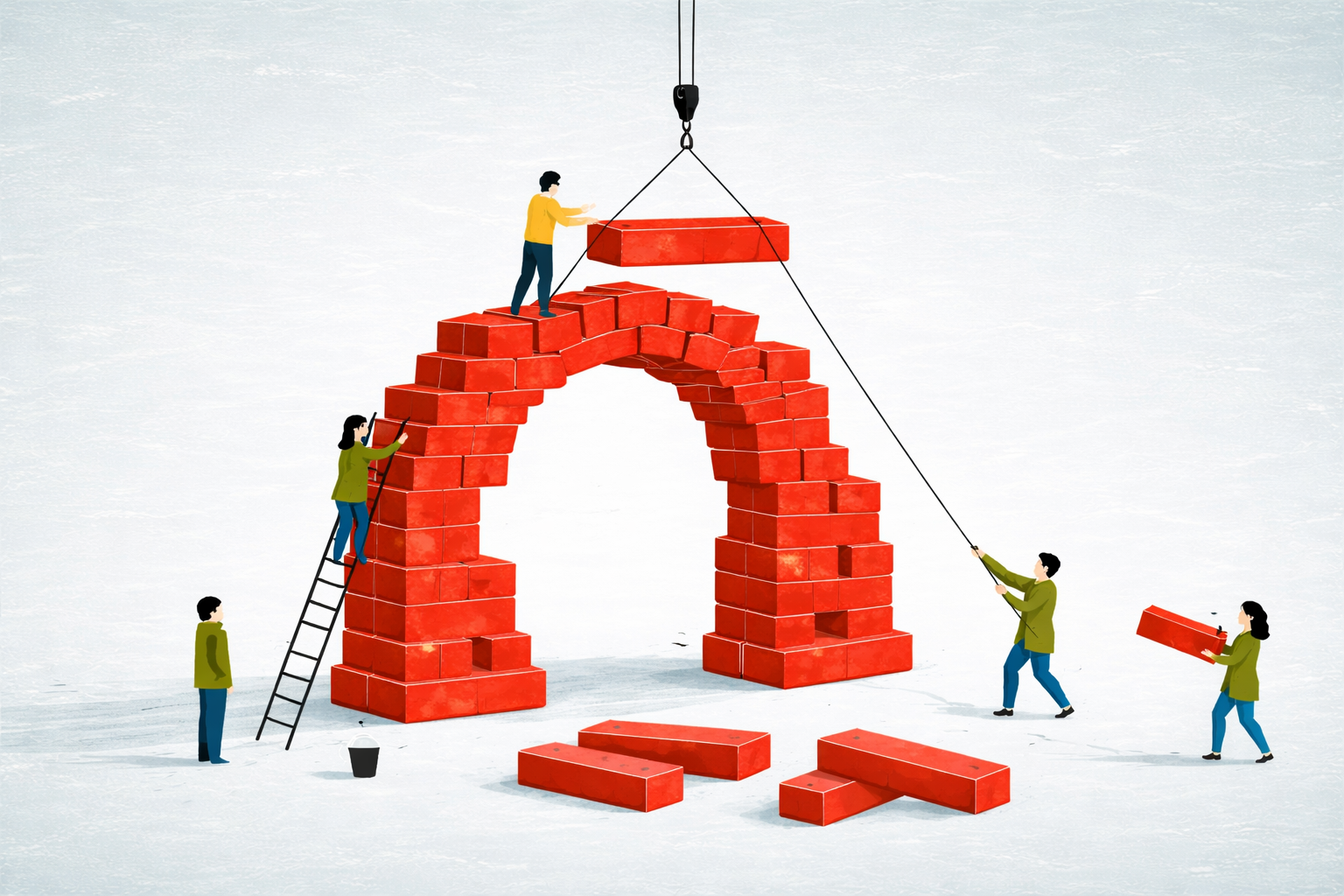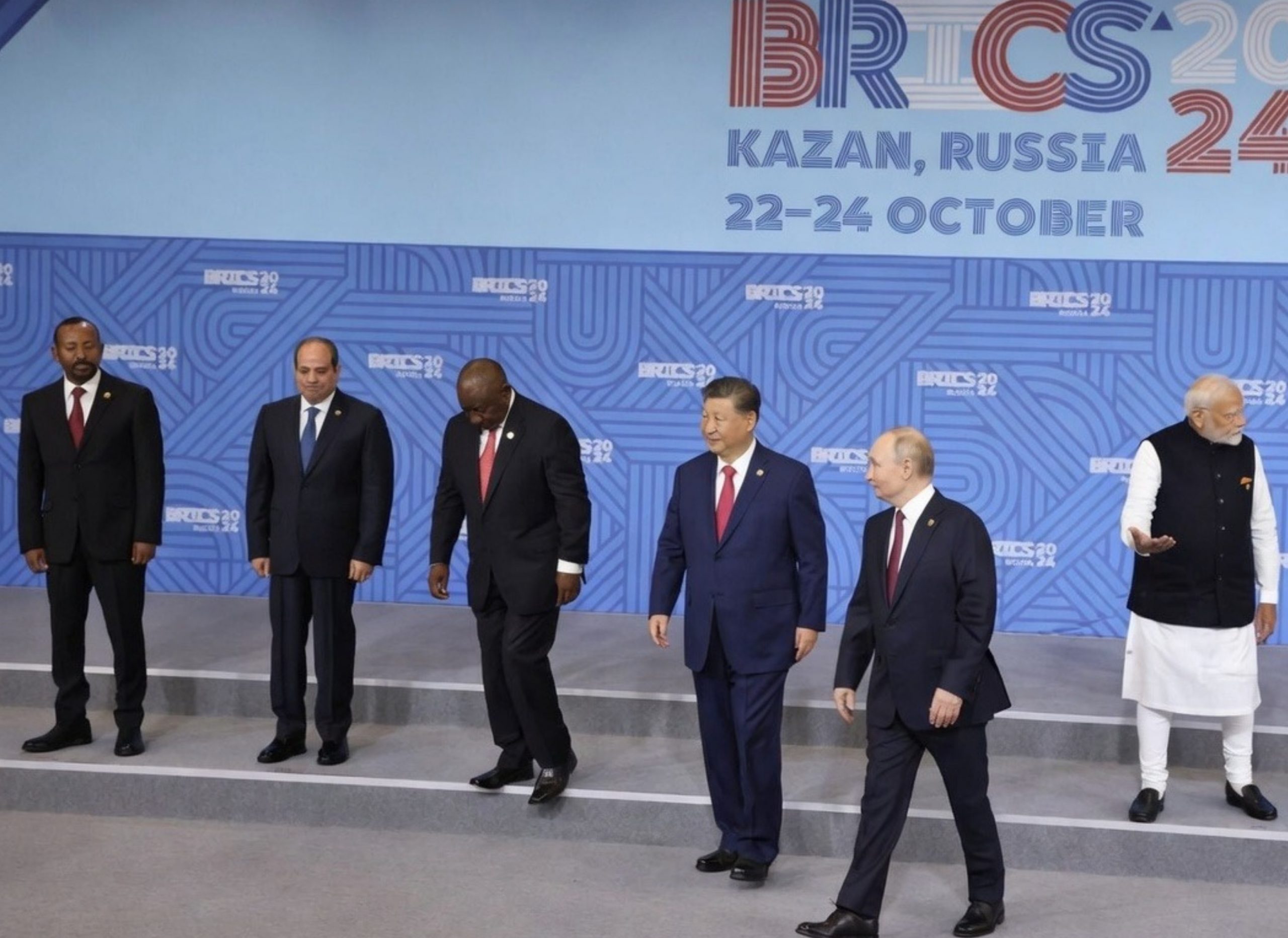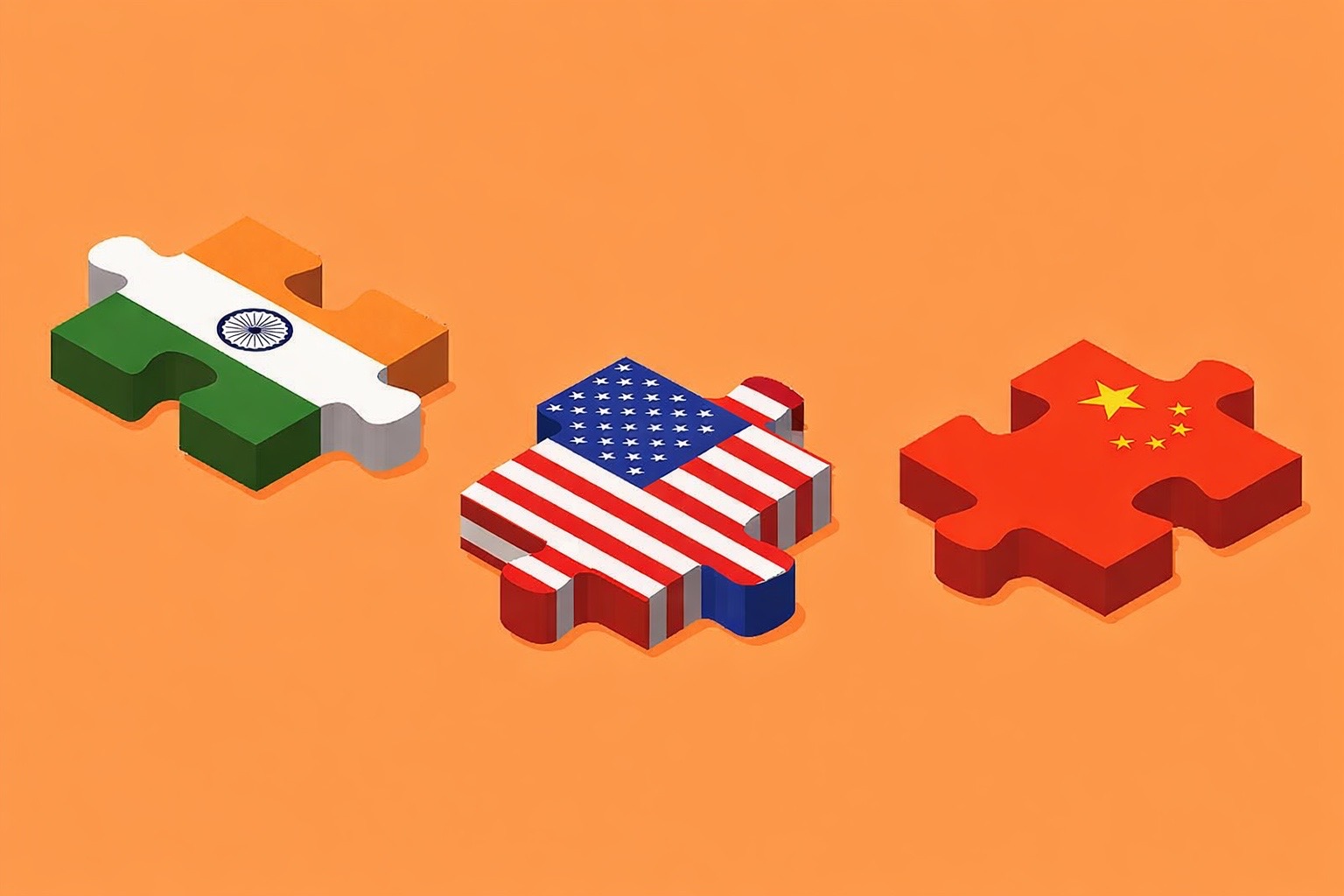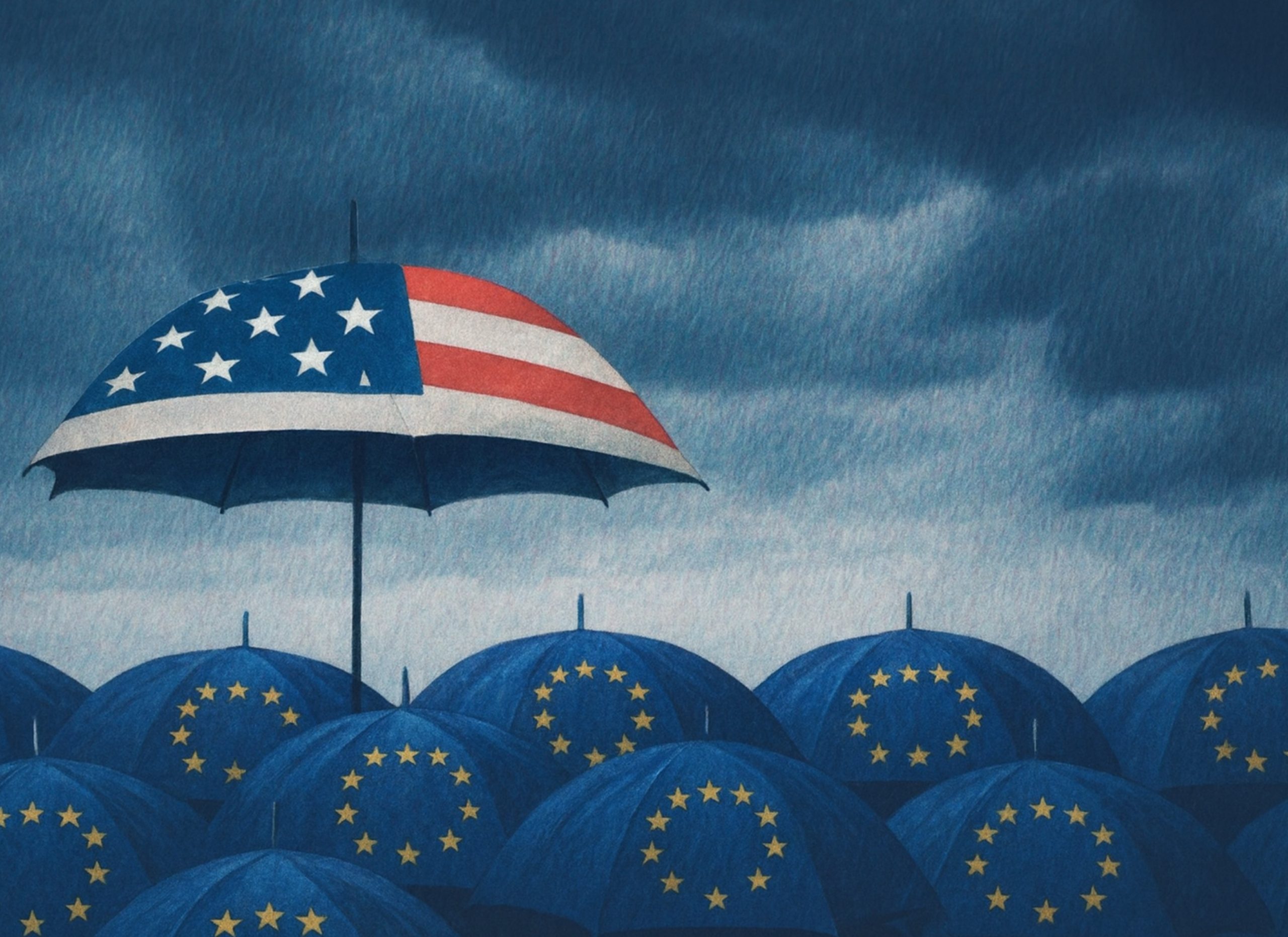


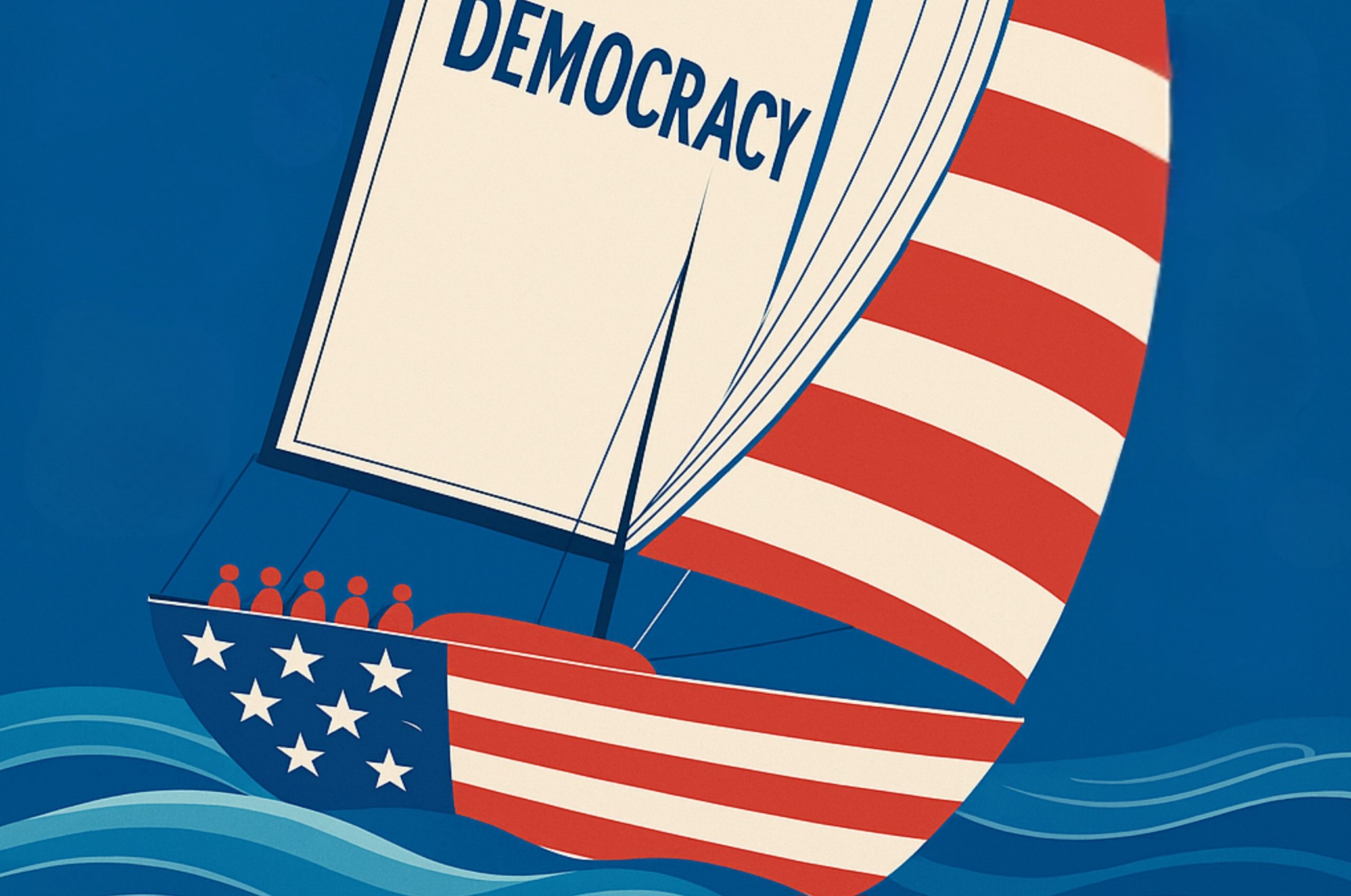
This illustration has been created by AI to use only in this article.
When rioters stormed the U.S. Capitol on January 6, 2021, the world watched in disbelief. For decades, Washington had lectured others about free elections, peaceful transfers of power, and the sanctity of democratic institutions. Yet that day, it was America’s own democracy under siege—beamed live into living rooms from Bangkok to Berlin. That moment did more than trigger a political crisis; it shattered a myth. The self-proclaimed “arsenal of democracy” suddenly looked fragile, even fallible. For much of the past century, promoting democracy abroad had been central to American foreign policy—from Ronald Reagan’s “freedom agenda” to George W. Bush’s invasion of Iraq to Joe Biden’s Summit for Democracy. It was not just idealism—it was anchored in the nation’s strategic DNA.
During the Cold War, democracy promotion served as a counterweight to Soviet authoritarianism, embodied by the Marshall Plan, NATO, and Radio Free Europe. Even in the chaotic aftermath of 9/11, the rhetoric persisted, though increasingly hollow. But after two decades of costly wars, rising populism, and moral fatigue, the machinery of democracy promotion looks threadbare. The uncomfortable question now looms: Can the United States still export democracy when it struggles to sustain it at home? Or has democracy promotion become a relic—too exhausted, too compromised, and too expensive to survive in an era when authoritarian rivals now offer alternative models with increasing confidence?
When Freedom Was Strategy
From the beginning, Washington’s democracy project was never pure idealism—it was strategy. American policymakers framed democracy promotion as a moral duty, but its real purpose was geopolitical containment. The Marshall Plan rebuilt Europe not only to relieve postwar suffering but to block Soviet influence. Radio Free Europe broadcasted liberal ideals not simply to educate, but to challenge communist control. “Freedom” functioned as the brand; containment was the strategy.
The post–Cold War era amplified this confidence. In the 1990s, with the Soviet Union gone and China still cautiously opening to global markets, America stood alone at the height of its power. Francis Fukuyama’s The End of History captured the prevailing conviction that liberal democracy was not just ascendant—it was inevitable. It described a world that felt settled. But history did not settle. It reasserted itself with force. Russia’s invasion of Ukraine, Myanmar’s democratic collapse, and the rise of illiberalism in Hungary, India, and the Philippines reveal a global landscape moving in the opposite direction from the 1990s’ optimism. Democracy’s future is no longer presumed; it is actively contested. At the same time, America’s own actions have weakened the credibility of its message. Iraq, once sold as a mission of liberation, became a lesson in overreach. Afghanistan, held up as the model of postwar reconstruction, collapsed in mere days after U.S. withdrawal. These failures did not spread democratic ideals—they spread skepticism.
is a Program Assistant at the Office of Justice Innovation, Thailand Institute of Justice. Recently graduated master’s in Democracy and Governance from Georgetown University.
When rioters stormed the U.S. Capitol on January 6, 2021, the world watched in disbelief. For decades, Washington had lectured others about free elections, peaceful transfers of power, and the sanctity of democratic institutions. Yet that day, it was America’s own democracy under siege—beamed live into living rooms from Bangkok to Berlin. That moment did more than trigger a political crisis; it shattered a myth. The self-proclaimed “arsenal of democracy” suddenly looked fragile, even fallible. For much of the past century, promoting democracy abroad had been central to American foreign policy—from Ronald Reagan’s “freedom agenda” to George W. Bush’s invasion of Iraq to Joe Biden’s Summit for Democracy. It was not just idealism—it was anchored in the nation’s strategic DNA.
During the Cold War, democracy promotion served as a counterweight to Soviet authoritarianism, embodied by the Marshall Plan, NATO, and Radio Free Europe. Even in the chaotic aftermath of 9/11, the rhetoric persisted, though increasingly hollow. But after two decades of costly wars, rising populism, and moral fatigue, the machinery of democracy promotion looks threadbare. The uncomfortable question now looms: Can the United States still export democracy when it struggles to sustain it at home? Or has democracy promotion become a relic—too exhausted, too compromised, and too expensive to survive in an era when authoritarian rivals now offer alternative models with increasing confidence?
When Freedom Was Strategy
From the beginning, Washington’s democracy project was never pure idealism—it was strategy. American policymakers framed democracy promotion as a moral duty, but its real purpose was geopolitical containment. The Marshall Plan rebuilt Europe not only to relieve postwar suffering but to block Soviet influence. Radio Free Europe broadcasted liberal ideals not simply to educate, but to challenge communist control. “Freedom” functioned as the brand; containment was the strategy.
The post–Cold War era amplified this confidence. In the 1990s, with the Soviet Union gone and China still cautiously opening to global markets, America stood alone at the height of its power. Francis Fukuyama’s The End of History captured the prevailing conviction that liberal democracy was not just ascendant—it was inevitable. It described a world that felt settled. But history did not settle. It reasserted itself with force. Russia’s invasion of Ukraine, Myanmar’s democratic collapse, and the rise of illiberalism in Hungary, India, and the Philippines reveal a global landscape moving in the opposite direction from the 1990s’ optimism. Democracy’s future is no longer presumed; it is actively contested. At the same time, America’s own actions have weakened the credibility of its message. Iraq, once sold as a mission of liberation, became a lesson in overreach. Afghanistan, held up as the model of postwar reconstruction, collapsed in mere days after U.S. withdrawal. These failures did not spread democratic ideals—they spread skepticism.
is a Program Assistant at the Office of Justice Innovation, Thailand Institute of Justice. Recently graduated master’s in Democracy and Governance from Georgetown University.

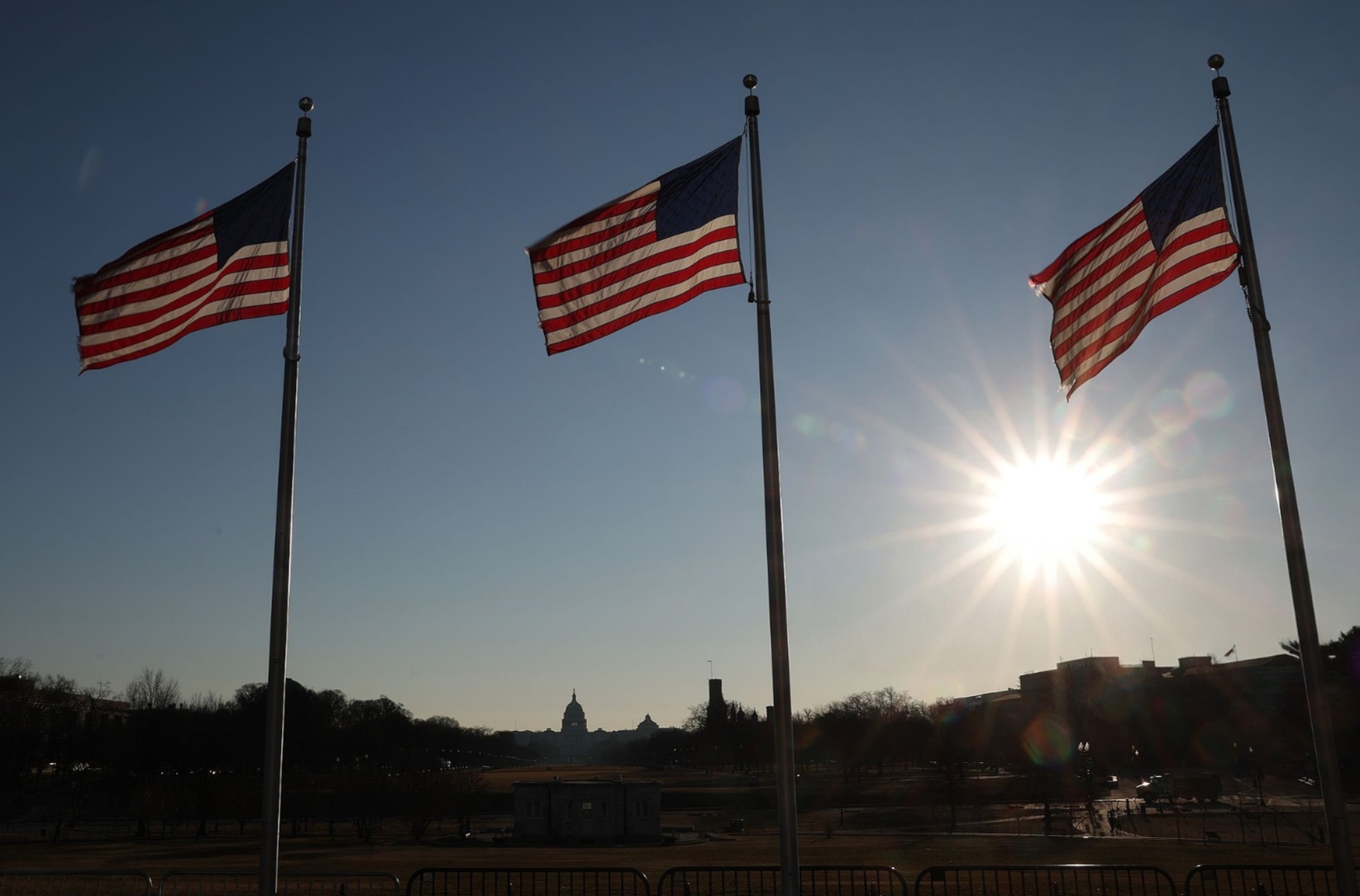
This credibility deficit shapes how Washington is received around the world. In the Middle East, democracy rhetoric is overshadowed by military occupations and partnerships with autocratic regimes. In Southeast Asia, talk of “good governance” often signals conditional aid or external intrusion. Even among European allies, questions persist about the consistency of America’s principles. The gap between Washington’s ideals and its actions has become impossible to ignore. The result is a freedom agenda that no longer inspires as it once did. Instead, it serves as a reminder of broken states, displaced populations, and unfulfilled promises. A project born from strategic clarity now struggles under the weight of its own contradictions—and this is the challenge the United States must confront before it can credibly speak of democracy again.
The Costs of Exporting Democracy
Few policy projects have been as costly—or as demoralizing—as America’s effort to export democracy through military and economic intervention. The financial burden alone is staggering. Economists Joseph Stiglitz and Linda Bilmes estimate that the Iraq and Afghanistan wars cost between $4.4 and $6 trillion once long-term care for veterans and interest payments are included.
The Watson Institute at Brown University places the figure near $4.8 trillion. Yet these enormous expenditures produced little more than fragile states, hollow parliaments, and elected governments that collapsed the moment U.S. protection was withdrawn. Inside Washington, this legacy has produced a different kind of exhaustion. The issue is not only war fatigue but institutional fatigue. Defense budgets have been stretched to their limits. Diplomats are routinely expected to defend the indefensible. Think tanks continue to publish democratic transition blueprints that even their authors no longer believe will work. The machinery of democracy promotion is running, but with no conviction left behind it.
At the same time, America’s domestic foundation has grown increasingly unstable. The financial crisis, rising inequality, opioid addiction, and political radicalization eroded confidence in the country’s own governance. Even as Americans faced housing foreclosures, mass shootings, and widening social fractures, Washington continued to lecture other nations about stability, rule of law, and public order. The contradiction between domestic turmoil and global preaching became impossible to reconcile.
This disconnect culminated in a simple, unavoidable question: How can a nation unable to mend its own wounds claim the authority to heal others? The tension between U.S. self-perception and U.S. reality began to hollow out the moral basis of its foreign policy, raising doubts not only abroad but within American society itself. The moral toll of the war years deepened this crisis further. Abu Ghraib, Guantánamo Bay, errant drone strikes, and civilian deaths written off as “collateral damage” became symbols of democratic hypocrisy. Authoritarian powers like China and Russia were quick to weaponize these images, pointing to them as evidence that American-style democracy was neither principled nor humane. The narrative of liberal superiority became harder to sustain.
This credibility deficit shapes how Washington is received around the world. In the Middle East, democracy rhetoric is overshadowed by military occupations and partnerships with autocratic regimes. In Southeast Asia, talk of “good governance” often signals conditional aid or external intrusion. Even among European allies, questions persist about the consistency of America’s principles. The gap between Washington’s ideals and its actions has become impossible to ignore. The result is a freedom agenda that no longer inspires as it once did. Instead, it serves as a reminder of broken states, displaced populations, and unfulfilled promises. A project born from strategic clarity now struggles under the weight of its own contradictions—and this is the challenge the United States must confront before it can credibly speak of democracy again.
The Costs of Exporting Democracy
Few policy projects have been as costly—or as demoralizing—as America’s effort to export democracy through military and economic intervention. The financial burden alone is staggering. Economists Joseph Stiglitz and Linda Bilmes estimate that the Iraq and Afghanistan wars cost between $4.4 and $6 trillion once long-term care for veterans and interest payments are included.
The Watson Institute at Brown University places the figure near $4.8 trillion. Yet these enormous expenditures produced little more than fragile states, hollow parliaments, and elected governments that collapsed the moment U.S. protection was withdrawn. Inside Washington, this legacy has produced a different kind of exhaustion. The issue is not only war fatigue but institutional fatigue. Defense budgets have been stretched to their limits. Diplomats are routinely expected to defend the indefensible. Think tanks continue to publish democratic transition blueprints that even their authors no longer believe will work. The machinery of democracy promotion is running, but with no conviction left behind it.
At the same time, America’s domestic foundation has grown increasingly unstable. The financial crisis, rising inequality, opioid addiction, and political radicalization eroded confidence in the country’s own governance. Even as Americans faced housing foreclosures, mass shootings, and widening social fractures, Washington continued to lecture other nations about stability, rule of law, and public order. The contradiction between domestic turmoil and global preaching became impossible to reconcile.
This disconnect culminated in a simple, unavoidable question: How can a nation unable to mend its own wounds claim the authority to heal others? The tension between U.S. self-perception and U.S. reality began to hollow out the moral basis of its foreign policy, raising doubts not only abroad but within American society itself. The moral toll of the war years deepened this crisis further. Abu Ghraib, Guantánamo Bay, errant drone strikes, and civilian deaths written off as “collateral damage” became symbols of democratic hypocrisy. Authoritarian powers like China and Russia were quick to weaponize these images, pointing to them as evidence that American-style democracy was neither principled nor humane. The narrative of liberal superiority became harder to sustain.
America’s crusade to spread democracy did not strengthen faith in democratic ideals. It eroded them, both globally and at home.
Yet the most profound damage was internal. As trillions of dollars flowed to distant theaters of war, Americans questioned the cost. Why rebuild Kabul’s parliament, they asked, while Detroit’s democracy buckled under water crises, municipal collapse, and voter suppression? The perception that Washington cared more about nation-building abroad than nation-healing at home fed a deep sense of abandonment. This sense of betrayal has had lasting consequences. Trust in U.S. institutions has fallen to historic lows. What was once framed as a noble mission—promoting democracy abroad—is now widely seen as an elite-driven overreach. The tragic irony is unmistakable: America’s crusade to spread democracy did not strengthen faith in democratic ideals. It eroded them, both globally and at home.
Democracy’s Global Decline
America’s crisis of credibility unfolded just as a deeper global shift was taking place: the realization that elections alone do not guarantee democracy. For decades, policymakers treated ballots, parliaments, and constitutions as automatic indicators of legitimacy. But the 21st century has shown how easily these democratic symbols can mask undemocratic realities.
In several major states, elected leaders used democratic mandates not to strengthen institutions but to erode them. In Hungary, Viktor Orbán dismantles judicial independence under the banner of national sovereignty. In Türkiye, Recep Tayyip Erdoğan holds elections while imprisoning opposition figures. In India, Narendra Modi advances Hindu nationalism behind the legitimacy of the ballot box. Citizens continue to vote, and parliaments continue to meet. But the core elements of democracy—pluralism, checks on power, and protections of rights—are steadily stripped away.
This pattern has a name: competitive authoritarianism. It preserves democratic form while hollowing out democratic function. Leaders maintain elections, constitutions, and legislatures, but use them as instruments of control rather than vehicles of accountability. The façade remains. The substance disappears. At the same time, fully consolidated autocracies have moved from defense to offense. China promotes the so-called “Beijing Consensus,” arguing that economic growth without democratic accountability is not a compromise but a superior alternative. Russia pushes “managed democracy,” where elections are performative, opposition is choreographed, and disinformation is weaponized to portray liberal democracy as hypocrisy. Authoritarianism is no longer embarrassed—it is confident and global.
This shift has reshaped the geopolitical balance. The United States once claimed to make the world “safe for democracy.” Today, authoritarian powers work to make the world safe from democracy, using tools Washington once relied on: infrastructure financing, strategic loans, media influence, and expanding digital surveillance networks. Power flows not through ideals but through connectivity, capital, and control. The result is a new global narrative: the future of governance is no longer predetermined. Democracy is not the default setting of modern politics—it is one contender among many. And in the emerging competition of models, its outcomes are anything but guaranteed.
The Crisis at Home
America’s democratic crisis can no longer be described as an external concern. What began as a foreign-policy dilemma has become an internal unraveling. The erosion of democratic norms is happening inside the United States itself—and it is accelerating. The most visible dimension of this decline is the weakening of electoral integrity. Voting rights are under attack, gerrymandering distorts representation, disinformation floods public debate, and extremist candidates increasingly appear on mainstream ballots. Behaviors once considered impossible—election denial, armed groups near polling sites, and lawmakers openly challenging peaceful transfers of power—have become part of the country’s political reality.
This internal deterioration has transformed America’s global image. A nation that once presented itself as the standard bearer of democratic governance is now viewed as a cautionary tale. The United States no longer symbolizes democratic strength; it symbolizes democratic fragility. Economic inequality deepens that fragility. For millions of Americans, the freedom Washington claims to defend internationally is overshadowed by medical debt, stagnant wages, and housing insecurity. When economic precarity defines daily life, democratic participation feels disconnected from material outcomes, and disenchantment quickly turns to resentment.
That resentment is now shaping the country’s political culture. Grievance, identity politics, and nationalist rhetoric fill the vacuum left by declining institutional trust. Slogans like “Make America Great Again” or “Defund the FBI” thrive not because they offer solutions, but because they speak to the sense that institutions are failing to serve the people they claim to represent. America’s democratic breakdown has also become a geopolitical narrative. Authoritarian governments in Beijing, Moscow, and Tehran broadcast images from the January 6 attack to discredit U.S. democracy. They no longer need to wage an information war against the United States—the evidence of dysfunction is supplied from inside America’s own borders.
Democracy in Practice
America’s internal democratic crisis now shapes the way the world sees its power. A nation once regarded as the guardian of democratic norms is increasingly viewed as uncertain about its own purpose. That ambiguity has weakened Washington’s ability to lead at a moment when global authoritarianism is gaining confidence—yet it has not erased the possibility of renewed leadership. The danger is that U.S. foreign policy drifts toward pure transaction. When realism becomes detached from democratic ideals, diplomacy reduces to bargaining: tariffs exchanged for alliances, troops for minerals, sanctions for influence. Allies recognize this shift, and adversaries exploit it. Without principle, even power loses its meaning.
To prevent this slide, the United States must move beyond the doctrines of the past. The old playbook—exporting elections, funding NGOs, issuing democracy statements—no longer persuades. If Washington wants democracy to remain a credible global idea, it must reinvent rather than recycle. Reinvention is possible; what is missing is the political will to articulate a new vision. That reinvention starts at home. A country cannot defend democracy abroad while deferring it at home. Voting rights, institutional trust, and constitutional stability are not domestic issues isolated from foreign policy—they are its foundation. No global strategy can compensate for a democracy that is weakening at its core.
The next U.S. president will inherit this credibility crisis. Kyiv and Taipei question America’s reliability, but so do Atlanta and Phoenix. An “America First” turn toward isolationism would retire democracy promotion to the museum of Cold War artifacts. Another misguided attempt at military intervention would destroy what remains of its legitimacy. Yet neither outcome is inevitable; the direction depends on political choices, not fate. A different path remains open: reframing democracy for the twenty-first century. The goal is not to export election procedures but to defend the freedoms that define modern life. This approach positions Washington not as a lecturer but as a partner—and it restores the possibility of U.S. leadership through relevance, not nostalgia.
Yet the most profound damage was internal. As trillions of dollars flowed to distant theaters of war, Americans questioned the cost. Why rebuild Kabul’s parliament, they asked, while Detroit’s democracy buckled under water crises, municipal collapse, and voter suppression? The perception that
Washington cared more about nation-building abroad than nation-healing at home fed a deep sense of abandonment. This sense of betrayal has had lasting consequences. Trust in U.S. institutions has fallen to historic lows. What was once framed as a noble mission—promoting democracy abroad—is now widely seen as an elite-driven overreach. The tragic irony is unmistakable: America’s crusade to spread democracy did not strengthen faith in democratic ideals. It eroded them, both globally and at home.
Democracy’s Global Decline
America’s crisis of credibility unfolded just as a deeper global shift was taking place: the realization that elections alone do not guarantee democracy. For decades, policymakers treated ballots, parliaments, and constitutions as automatic indicators of legitimacy. But the 21st century has shown how easily these democratic symbols can mask undemocratic realities.
In several major states, elected leaders used democratic mandates not to strengthen institutions but to erode them. In Hungary, Viktor Orbán dismantles judicial independence under the banner of national sovereignty. In Türkiye, Recep Tayyip Erdoğan holds elections while imprisoning opposition figures. In India, Narendra Modi advances Hindu nationalism behind the legitimacy of the ballot box. Citizens continue to vote, and parliaments continue to meet. But the core elements of democracy—pluralism, checks on power, and protections of rights—are steadily stripped away.
This pattern has a name: competitive authoritarianism. It preserves democratic form while hollowing out democratic function. Leaders maintain elections, constitutions, and legislatures, but use them as instruments of control rather than vehicles of accountability. The façade remains. The substance disappears. At the same time, fully consolidated autocracies have moved from defense to offense. China promotes the so-called “Beijing Consensus,” arguing that economic growth without democratic accountability is not a compromise but a superior alternative. Russia pushes “managed democracy,” where elections are performative, opposition is choreographed, and disinformation is weaponized to portray liberal democracy as hypocrisy. Authoritarianism is no longer embarrassed—it is confident and global.
This shift has reshaped the geopolitical balance. The United States once claimed to make the world “safe for democracy.” Today, authoritarian powers work to make the world safe from democracy, using tools Washington once relied on: infrastructure financing, strategic loans, media influence, and expanding digital surveillance networks. Power flows not through ideals but through connectivity, capital, and control. The result is a new global narrative: the future of governance is no longer predetermined. Democracy is not the default setting of modern politics—it is one contender among many. And in the emerging competition of models, its outcomes are anything but guaranteed.
The Crisis at Home
America’s democratic crisis can no longer be described as an external concern. What began as a foreign-policy dilemma has become an internal unraveling. The erosion of democratic norms is happening inside the United States itself—and it is accelerating. The most visible dimension of this decline is the weakening of electoral integrity. Voting rights are under attack, gerrymandering distorts representation, disinformation floods public debate, and extremist candidates increasingly appear on mainstream ballots. Behaviors once considered impossible—election denial, armed groups near polling sites, and lawmakers openly challenging peaceful transfers of power—have become part of the country’s political reality.
This internal deterioration has transformed America’s global image. A nation that once presented itself as the standard bearer of democratic governance is now viewed as a cautionary tale. The United States no longer symbolizes democratic strength; it symbolizes democratic fragility. Economic inequality deepens that fragility. For millions of Americans, the freedom Washington claims to defend internationally is overshadowed by medical debt, stagnant wages, and housing insecurity. When economic precarity defines daily life, democratic participation feels disconnected from material outcomes, and disenchantment quickly turns to resentment.
That resentment is now shaping the country’s political culture. Grievance, identity politics, and nationalist rhetoric fill the vacuum left by declining institutional trust. Slogans like “Make America Great Again” or “Defund the FBI” thrive not because they offer solutions, but because they speak to the sense that institutions are failing to serve the people they claim to represent. America’s democratic breakdown has also become a geopolitical narrative. Authoritarian governments in Beijing, Moscow, and Tehran broadcast images from the January 6 attack to discredit U.S. democracy. They no longer need to wage an information war against the United States—the evidence of dysfunction is supplied from inside America’s own borders.
Democracy in Practice
America’s internal democratic crisis now shapes the way the world sees its power. A nation once regarded as the guardian of democratic norms is increasingly viewed as uncertain about its own purpose. That ambiguity has weakened Washington’s ability to lead at a moment when global authoritarianism is gaining confidence—yet it has not erased the possibility of renewed leadership. The danger is that U.S. foreign policy drifts toward pure transaction. When realism becomes detached from democratic ideals, diplomacy reduces to bargaining: tariffs exchanged for alliances, troops for minerals, sanctions for influence. Allies recognize this shift, and adversaries exploit it. Without principle, even power loses its meaning.
To prevent this slide, the United States must move beyond the doctrines of the past. The old playbook—exporting elections, funding NGOs, issuing democracy statements—no longer persuades. If Washington wants democracy to remain a credible global idea, it must reinvent rather than recycle. Reinvention is possible; what is missing is the political will to articulate a new vision. That reinvention starts at home. A country cannot defend democracy abroad while deferring it at home. Voting rights, institutional trust, and constitutional stability are not domestic issues isolated from foreign policy—they are its foundation. No global strategy can compensate for a democracy that is weakening at its core.
The next U.S. president will inherit this credibility crisis. Kyiv and Taipei question America’s reliability, but so do Atlanta and Phoenix. An “America First” turn toward isolationism would retire democracy promotion to the museum of Cold War artifacts. Another misguided attempt at military intervention would destroy what remains of its legitimacy. Yet neither outcome is inevitable; the direction depends on political choices, not fate. A different path remains open: reframing democracy for the twenty-first century. The goal is not to export election procedures but to defend the freedoms that define modern life. This approach positions Washington not as a lecturer but as a partner—and it restores the possibility of U.S. leadership through relevance, not nostalgia.
Those freedoms now include digital rights—privacy, AI regulation, and protection from state and corporate surveillance. They include climate justice—transitions to clean energy shaped by democratic oversight
rather than authoritarian efficiency. They include economic equity—fair taxation, anti-corruption, and shared prosperity. And they include civic empowerment—youth participation, community governance, and open data that rebuilds trust. These are not optional reforms; they are the contemporary pillars of democratic life. Such a vision moves beyond the “freedom agenda” of 1983. It imagines a democracy project built on dignity rather than dominance, on lived rights rather than imposed institutions. Success is measured not by how many elections the United States funds, but by how many human possibilities it helps expand at home and abroad.
The stakes for U.S. leadership could not be higher. A second Trump presidency may push Washington fully into transactional geopolitics, where alliances become commodities and human rights negotiable. A Democratic victory will matter only if it rejects nostalgia and commits to a democratic vision anchored in global realities rather than American exceptionalism. Either path is still open—and the world is watching. Ultimately, the decisive question is not whether the United States can promote democracy. It is whether it can practice it credibly enough for others to believe again. The answer is not predetermined. Washington retains the capacity to lead—if it chooses renewal over retreat, reinvention over repetition, and democracy not as a slogan, but as proof.
The Burden of Proof
The question of Washington’s future role leads to a larger truth: the world no longer needs an American sermon about democracy. It needs evidence. Evidence that democracy can still function in an age of fragmentation, polarization, and accelerating crisis. Proof that democratic systems can repair themselves without collapsing into chaos, that they can deliver security without repression and justice without rage. What matters now is not proclamations of democratic virtue, but demonstrations of democratic competence.
This is the heart of Washington’s dilemma. For decades, American leadership rested on a wager: that free societies, despite their flaws, could solve problems more effectively—and more humanely—than strongmen or empires. That wager powered the Marshall Plan, sustained U.S. alliances, and inspired movements far beyond American borders. Today, it is under strain from two directions: a domestic political system fighting to maintain its own coherence, and a global arena where autocratic models openly compete for legitimacy.
The test, therefore, begins at home. A country that cannot protect its own institutions—its voting rights, its rule of law, its basic economic fairness—cannot credibly defend those principles abroad. If Americans choose leaders who treat power as a commodity, who reduce governance to transaction, who mistake grievance for strategy, the democracy project will not collapse because authoritarians defeated it. It will collapse because Americans abandoned it.
Yet decline is not destiny. The United States still holds the capacity to reinvent what democracy means in the twenty-first century. A leadership willing to confront new realities—climate disruption, digital surveillance, economic dislocation, and social fragmentation—could redefine democracy not as nostalgia, but as futurism. A model built on dignity rather than dominance; on rights that extend into the digital sphere; on economic fairness as a democratic requirement, not a policy option; on civic empowerment that makes democracy feel lived rather than symbolic. If the United States embraces that reinvention, then the story of democracy is not over. It is unfinished—and potentially on the verge of a new chapter. And so the dare returns to us—readers, voters, citizens: Can Washington still lead—and are we still willing to believe?
The world no longer needs an American sermon about democracy. It needs evidence.
Those freedoms now include digital rights—privacy, AI regulation, and protection from state and corporate surveillance. They include climate justice—transitions to clean energy shaped by democratic oversight rather than authoritarian efficiency. They include economic equity—fair taxation, anti-corruption, and shared prosperity. And they include civic empowerment—youth participation, community governance, and open data that rebuilds trust. These are not optional reforms; they are the contemporary pillars of democratic life. Such a vision moves beyond the “freedom agenda” of 1983. It imagines a democracy project built on dignity rather than dominance, on lived rights rather than imposed institutions. Success is measured not by how many elections the United States funds, but by how many human possibilities it helps expand at home and abroad.
The stakes for U.S. leadership could not be higher. A second Trump presidency may push Washington fully into transactional geopolitics, where alliances become commodities and human rights negotiable. A Democratic victory will matter only if it rejects nostalgia and commits to a democratic vision anchored in global realities rather than American exceptionalism. Either path is still open—and the world is watching. Ultimately, the decisive question is not whether the United States can promote democracy. It is whether it can practice it credibly enough for others to believe again. The answer is not predetermined. Washington retains the capacity to lead—if it chooses renewal over retreat, reinvention over repetition, and democracy not as a slogan, but as proof.
The Burden of Proof
The question of Washington’s future role leads to a larger truth: the world no longer needs an American sermon about democracy. It needs evidence. Evidence that democracy can still function in an age of fragmentation, polarization, and accelerating crisis. Proof that democratic systems can repair themselves without collapsing into chaos, that they can deliver security without repression and justice without rage. What matters now is not proclamations of democratic virtue, but demonstrations of democratic competence.
This is the heart of Washington’s dilemma. For decades, American leadership rested on a wager: that free societies, despite their flaws, could solve problems more effectively—and more humanely—than strongmen or empires. That wager powered the Marshall Plan, sustained U.S. alliances, and inspired movements far beyond American borders. Today, it is under strain from two directions: a domestic political system fighting to maintain its own coherence, and a global arena where autocratic models openly compete for legitimacy.
The test, therefore, begins at home. A country that cannot protect its own institutions—its voting rights, its rule of law, its basic economic fairness—cannot credibly defend those principles abroad. If Americans choose leaders who treat power as a commodity, who reduce governance to transaction, who mistake grievance for strategy, the democracy project will not collapse because authoritarians defeated it. It will collapse because Americans abandoned it.
Yet decline is not destiny. The United States still holds the capacity to reinvent what democracy means in the twenty-first century. A leadership willing to confront new realities—climate disruption, digital surveillance, economic dislocation, and social fragmentation—could redefine democracy not as nostalgia, but as futurism. A model built on dignity rather than dominance; on rights that extend into the digital sphere; on economic fairness as a democratic requirement, not a policy option; on civic empowerment that makes democracy feel lived rather than symbolic. If the United States embraces that reinvention, then the story of democracy is not over. It is unfinished—and potentially on the verge of a new chapter. And so the dare returns to us—readers, voters, citizens: Can Washington still lead—and are we still willing to believe?
Recommended
How Progressive America Redefined Its Stance on Israel?
How One Man Became Russia
How the Chinese Military Could Shape China’s Next Chapter
The Machinery of Wealth and Obedience
How Warsaw and Kyiv Anchor Europe’s Defense