The Collapse of Modernization Theory in China
The Chinese Experience That Challenges the Universality of Liberalism
ADRIENNE LIVINGSTON
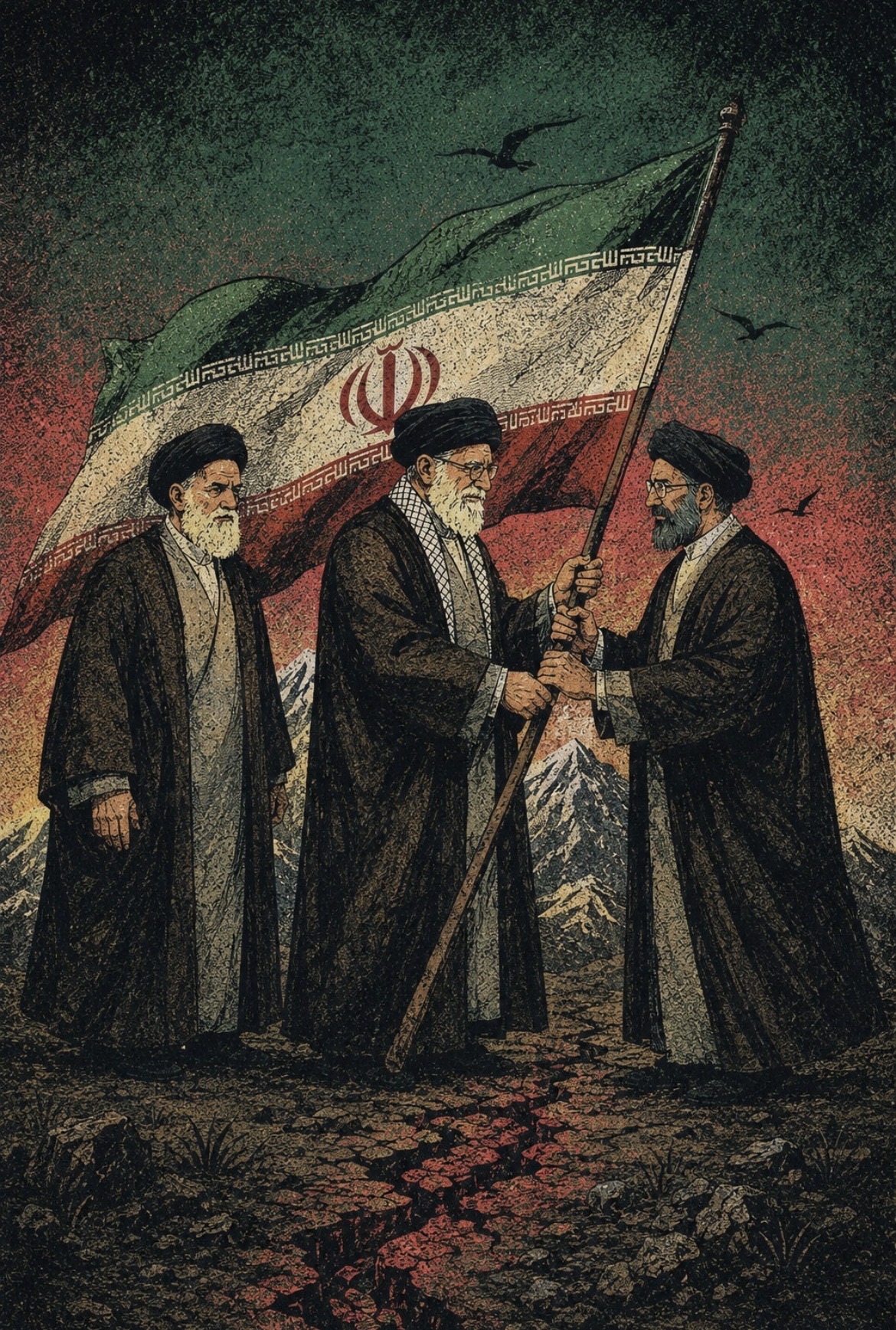
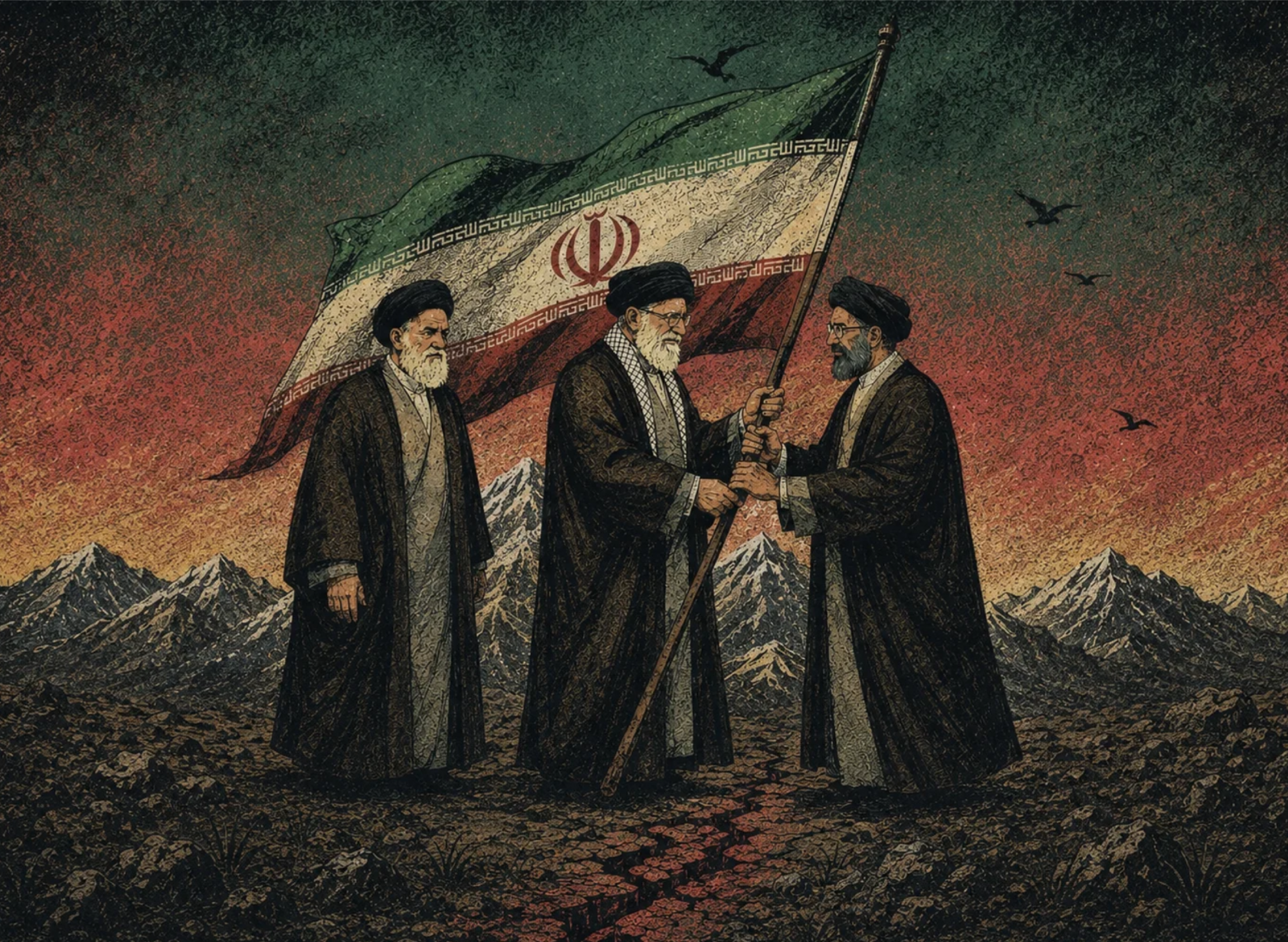
The war in Iran has left many contemplating how the Islamic Republic has successfully maintained its grasp on power rather than collapsing after months of sustained military pressure from both the United States and Israel. The war saw multiple leaders of the IRGC eliminated and the head of state, Ayatollah Khamenei, assassinated. It would not be unreasonable to assume this would bring the ruling power to the verge of collapse. However, the IRGC quickly adapted to its newfound conditions. Based on this outcome, it is clear that this war has strengthened and empowered this authoritarian state rather than weaken or removed it.
The IRGC has proven itself to be a malleable power source that can take the full onslaught of American and Israeli military might and reshape itself politically, institutionally, and ideologically to its new conditions. The Islamic Republic’s response to the war was a true display of their capabilities and the preparations the IRGC has made to defend itself. The strongest weapon in their arsenal, shutting off access to the Strait of Hormuz, was implemented without hesitation causing a massive ripple effect throughout the world. The Islamic Republic’s decision to attack their Gulf State neighbors also demonstrates their willingness to drag the entire region into war if necessary. Not only did this war prove the United States to be much weaker militarily than it presents itself on the world stage, but it also propped the Islamic Republic up to be the region’s most unpredictable yet formidable actor.
It is hard to conceive how such an ideologically oppressive regime came to fruition and has held power for over fifty years. The people of Iran have not had a reprieve or taste of freedom for a century. One dictatorship overthrows another and the cycle continues. The Islamic Republic is no different. The regime that preceded the Islamic Republic was not guided by religious fervor but rather monarchical ferocity. Prior to the Islamic Republic, the Pahlavi monarchy controlled Iran. Reza Shah Pahlavi ascended to power in 1925.
His tenure focused on military might and Western allyship to modernize Iran. His reign also saw the repression of Iran’s minority groups, as well as political dissidents, and centralized power in the monarchy. Following in his father’s footsteps, Mohammad Reza Pahlavi ascended as the leader of the dictatorship in 1941, with any opposition arrested by a secret police force, the SAVAK, and taken for torture in prisons whose locations were unknown to the populace. This created an environment of constant terror. Anyone and everyone could have been a SAVAK agent.
is an MA graduate in international relations at James Madison University. Her interests include radical terror ideologies, Middle East affairs, and women’s rights issues internationally.
The Chinese Experience That Challenges the Universality of Liberalism
Even if one had not voiced opposition to the Shah, detainment and torture were still a possibility, as charges were often nonexistent. Trials consisted of one judge while the defendant had no legal representation, and the sentences were set immediately. Extrajudicial executions were a commonplace sentence under the Shah, with the bodies often not returned to the families. Through this time marred by silence, people found respite in their mosques, where they were free to discuss ideas, complaints, and even dissent. This cultivated the people’s dependence on religion, and eventually Islam became their path to liberation.
Ayatollah Khomeini became a resounding voice for the fall of the Shah. Revolution came in 1979 when the young leftists joined with the religious fanatics. War broke out in the streets, and Tehran became a battlefield with blood covering every part of the city. The Shah was quickly overthrown and banished from Iran. Mohammad Reza Pahlavi would die a year later in Egypt. In order to consolidate power as quickly as possible and impose Khomeini’s ideology as absolute, the leftists who revolted alongside the religious faction were executed, enforcement of hijab was implemented, and no other religion besides Islam was allowed to be practiced.
Instead of liberation, the Iranian people traded a dictatorial monarchy for a dictatorial theocracy. The Islamic Republic was born. Not long after the Islamic Republic’s inception, the IRGC, the Islamic Revolutionary Guard Corps, was developed. In 1980, the Islamic Republic’s power would be tested with Iraq’s invasion. Saddam Hussein’s thirst for power led him to invade neighboring Iran with the hopes of increasing Iraq’s territory to establish Iraq as the Middle Eastern hegemon. The acquisition of Iranian land would also give Iraq access to vast oil reserves that would boost Iraq’s economy.
Saddam Hussein invaded soon after the revolution to capitalize on the chaos that resulted from the revolution. He counted on the newly formed Islamic Republic being unable to coordinate an effective attack against the Iraqis due to the downsizing of the military and ousting of military leaders. This strategy proved fateful when the Islamic Republic consolidated its power further as a direct result of the invasion. This attack on its sovereignty created a boom of nationalism and support for the Islamic Republic, which gave the regime further ability to repress political dissenters.
The regime framed this invasion as a “holy war,” which also invigorated the people to fight for the regime, which naturally gave those in power legitimacy. Instead of becoming the hegemon, Iraq created a much more formidable neighbor that would become the center of the Middle East. This desire to resist foreign invaders and oppressors was not a new phenomenon for Iranians. Over the millennia, Iranians fought invaders until there was nothing left. Even when the Arabs sought to colonize Iran and convert the people to Islam, they converted to Shiite Islam instead of the majority-practiced Sunni Islam.
If the Iranians were to be colonized and converted, they were going to do it on their terms. This independence and resistance have always been inherent in every Iranian; the Islamic Revolution was no exception. From this desire to resist, the ideology of individual terrorism was born. One could use their own body or resources to inflict terror and violence against the entity deemed the oppressor, and it would be a legitimate form of resistance. The individual would then be classified as a martyr of the cause.
Sacrificing oneself is an honor that should be celebrated and encouraged. Terrorism in this form would lead to the terror factions existing today, such as Hamas, Hezbollah, and the Houthis—all of which are funded by the Islamic Republic. The terrorism of the regime is not contained within the Middle East. One of the most notable international terror attacks was the 1994 bombing of the Asociación Mutual Israelita Argentina (AMIA) Jewish center, which saw the deaths of 85 people and dozens more injured, committed by Hezbollah at the behest of the Islamic Republic.
Although attacks like these are considered acts of terror under international law, the Islamic Republic views them as legitimate forms of resistance against those deemed enemies of the state—which includes Jews, Israelis, or any country in the West. This is one of the main reasons the regime is such a strong threat to any Western democracy; their ruling ideology is the death of our civilization and the imposition of theirs. When applying the regime to any modern conflict, this context must be included.
Even if one had not voiced opposition to the Shah, detainment and torture were still a possibility, as charges were often nonexistent. Trials consisted of one judge while the defendant had no legal representation, and the sentences were set immediately. Extrajudicial executions were a commonplace sentence under the Shah, with the bodies often not returned to the families. Through this time marred by silence, people found respite in their mosques, where they were free to discuss ideas, complaints, and even dissent. This cultivated the people’s dependence on religion, and eventually Islam became their path to liberation.
Ayatollah Khomeini became a resounding voice for the fall of the Shah. Revolution came in 1979 when the young leftists joined with the religious fanatics. War broke out in the streets, and Tehran became a battlefield with blood covering every part of the city. The Shah was quickly overthrown and banished from Iran. Mohammad Reza Pahlavi would die a year later in Egypt. In order to consolidate power as quickly as possible and impose Khomeini’s ideology as absolute, the leftists who revolted alongside the religious faction were executed, enforcement of hijab was implemented, and no other religion besides Islam was allowed to be practiced.
Instead of liberation, the Iranian people traded a dictatorial monarchy for a dictatorial theocracy. The Islamic Republic was born. Not long after the Islamic Republic’s inception, the IRGC, the Islamic Revolutionary Guard Corps, was developed. In 1980, the Islamic Republic’s power would be tested with Iraq’s invasion. Saddam Hussein’s thirst for power led him to invade neighboring Iran with the hopes of increasing Iraq’s territory to establish Iraq as the Middle Eastern hegemon. The acquisition of Iranian land would also give Iraq access to vast oil reserves that would boost Iraq’s economy.
Saddam Hussein invaded soon after the revolution to capitalize on the chaos that resulted from the revolution. He counted on the newly formed Islamic Republic being unable to coordinate an effective attack against the Iraqis due to the downsizing of the military and ousting of military leaders. This strategy proved fateful when the Islamic Republic consolidated its power further as a direct result of the invasion. This attack on its sovereignty created a boom of nationalism and support for the Islamic Republic, which gave the regime further ability to repress political dissenters.
The regime framed this invasion as a “holy war,” which also invigorated the people to fight for the regime, which naturally gave those in power legitimacy. Instead of becoming the hegemon, Iraq created a much more formidable neighbor that would become the center of the Middle East. This desire to resist foreign invaders and oppressors was not a new phenomenon for Iranians. Over the millennia, Iranians fought invaders until there was nothing left. Even when the Arabs sought to colonize Iran and convert the people to Islam, they converted to Shiite Islam instead of the majority-practiced Sunni Islam.
If the Iranians were to be colonized and converted, they were going to do it on their terms. This independence and resistance have always been inherent in every Iranian; the Islamic Revolution was no exception. From this desire to resist, the ideology of individual terrorism was born. One could use their own body or resources to inflict terror and violence against the entity deemed the oppressor, and it would be a legitimate form of resistance. The individual would then be classified as a martyr of the cause.
Sacrificing oneself is an honor that should be celebrated and encouraged. Terrorism in this form would lead to the terror factions existing today, such as Hamas, Hezbollah, and the Houthis—all of which are funded by the Islamic Republic. The terrorism of the regime is not contained within the Middle East. One of the most notable international terror attacks was the 1994 bombing of the Asociación Mutual Israelita Argentina (AMIA) Jewish center, which saw the deaths of 85 people and dozens more injured, committed by Hezbollah at the behest of the Islamic Republic.
Although attacks like these are considered acts of terror under international law, the Islamic Republic views them as legitimate forms of resistance against those deemed enemies of the state—which includes Jews, Israelis, or any country in the West. This is one of the main reasons the regime is such a strong threat to any Western democracy; their ruling ideology is the death of our civilization and the imposition of theirs. When applying the regime to any modern conflict, this context must be included.
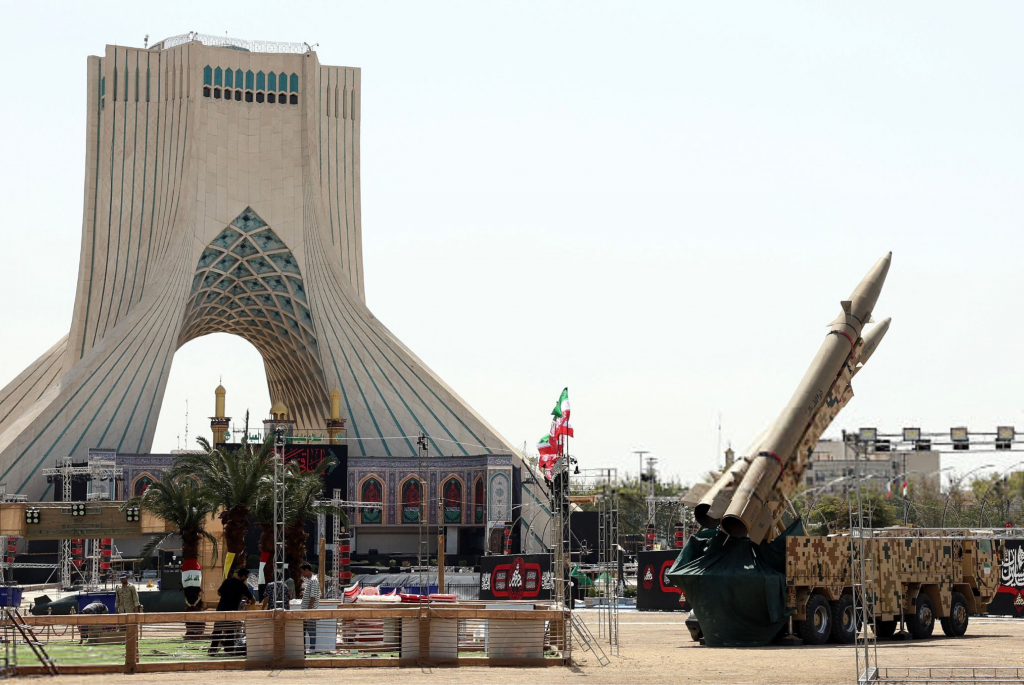
The Islamic Republic is not unlike monarchies where the head of state is separate from the elected institutions that run the nation. The Islamic Republic has its head of state in the form of the Supreme Leader whose guidance dictates the direction of the country’s foreign and nuclear policy while also being the spiritual epicenter. The Supreme Leader is supported by the Guardian Council, which is comprised of six clerics and six legal scholars. The President is over the implementation of the constitution. However, the elections to choose the President are corrupt and fixed.
Voter turnout is often forced, and the opponents of the government’s choice are simply for show. Although the President has power over the economy and day-to-day decisions, national security issues fall back onto the Supreme Leader. The Supreme Leader is the core of the governing bodies of the regime. He dictates ideology, anchors institutions, commands the armed forces, and heads the judiciary. The regime is beholden to him; the people look to him for religious guidance; and the West sees him as the center of terrorism in the Middle East.
The power held by the Supreme Leader is absolute, but the regime can survive in the absence of leadership, as evidenced by the assassination of Ayatollah Khamenei and the mysterious ascension of his hardliner son, Mojtaba Khamenei. In order to understand the success and longevity of the Islamic Republic, the enforcement entity must be discussed. The IRGC began as a force created by Ayatollah Khomeini to gather all the scattered militias in order to create one large military force.
Post-revolution, the IRGC was the primary military authority used to safeguard the fledgling regime and ensure its success. The IRGC’s might was then immediately tested with the Iran-Iraq War in 1980. It evolved from a simple intermediary militia group to a strong, battle-hardened cornerstone of the regime. Today, the IRGC answers directly to the Supreme Leader. The domestic paramilitary branch, the Basij, is used to impose the regime’s strict rules on the populace. The morality police are often seen kidnapping women off the street who do not follow the mandatory hijab policy.
It is the Basij that came to the streets during the January 2026 protests, supported by Iraqi militias funded by the regime, and murdered upwards of forty thousand protesters who rose up against their repressive government. The IRGC is not the only factor that has contributed to the regime’s entrenchment in Iranian society; international sanctions on the economy have also been instrumental. With economic sanctions imposed largely by the United States, the Islamic Republic’s economy has been extensively contained to a small number of countries friendly to the regime based on mutual hatred for the United States.
In practice, although Iran has vast amounts of oil reserves, which should make the nation one of wealth and abundance, the only nations that can purchase oil are mainly China and Russia. The economic sanctions that limit these resources, as well as trade, compounded with severe ideological hardlines, have greatly limited potential allies. The outcome is an isolated populace that has no outlet other than the regime, which seeks to repress them. Consequently, it also further entrenches the regime in Iran’s institutions and maintains the strength of its influence on its terror proxies abroad.
The Iranian regime has used this disappointing outcome as a propaganda opportunity to frame the United States as weak and the Islamic Republic as the beacon of resistance against the West.
How has the war with Iran affected the regime and the people suffering under it? Like other authoritarian regimes, the Islamic Republic uses external attacks as a rallying cry for support and proof that the West is truly an enemy that can never be trusted. The consequences have led to believers becoming further radicalized in their support for the regime, leading to their willingness to enact violence against dissent. Any of the regime’s members lost during the United States’ and Israel’s bombing campaign were deemed martyrs who died defending their nation against “the Great Satans.” During the war, with increased military mobilization, the masses who were bravely protesting were forced to retreat under threat of execution. The majority of Iranians who do not support the regime and wish to live under a democratic system fervently hoped that the war would lead to regime change and Trump would be their liberator.
Alas, the Trump administration had no intention of supporting regime change or any concrete goals for the war to achieve. In the end, both the Iranian and American people were given unforgivable results that left them worse off than prior to hostilities. The Iranian regime has used this disappointing outcome as a propaganda opportunity to frame the United States as weak and the Islamic Republic as the beacon of resistance against the West. The regime has relentlessly posted across different platforms how they have humiliated the great American war machine and proven our gusto was only a bluff. The regime’s ability to negotiate their asks and receive large concessions from the United States only legitimizes their authority. This has also sealed their position as the great power of the Middle East, in direct competition with the United States’ allies, Saudi Arabia and the United Arab Emirates.
The IRGC of the revolution and the IRGC of today are two different entities. However, the plan was always to have the IRGC evolve into the repressive body whose tendrils have invaded every part of Iranian life. The IRGC’s influence over politics, security, and the economy is absolute. There is no room for dissent, for factions, for differing ideologies, or something so simple as expression of self. This has been a cornerstone of the Islamic Republic since its inception and has been enforced by the IRGC ever since. The IRGC has immense influence over the politics of the nation, as many veterans of the institution have taken positions in the parliament, cabinet, and provincial political positions. This ensures their power is never questioned and the desires of the Supreme Leader are always supported by the government. Although elections are held, the IRGC is suspected of interfering with them to fix their outcomes. On the security front, the IRGC works in conjunction with the military and must have parallel branches to it in order to operate efficiently. This includes a paramilitary force, air force, navy, and ground forces.
The IRGC also aids the military with espionage, distributing propaganda, and cybercrimes. The economy also plays a vital role in the IRGC as well as the structure of the governing bodies. The Islamic Republic is riddled with corruption that aims to deplete the wealth of the people and distribute it to the ruling class. This is most evident in the steadily decreasing value of the rial. One U.S. dollar is equal to 42,000 rials. Although the populace must suffer with their money equaling close to nothing, the Supreme Leader has a net worth estimated at around 150 billion dollars due to the strict control over Iran’s resources.
Not only is this wealth extraction endemic to the government, but the corruption also extends to the IRGC. The IRGC originally was not involved with the economy, but this changed when it was tasked with rebuilding the infrastructure damaged during the Iran-Iraq War. From there, its involvement in vital industries, such as shipping and banking, grew larger. According to the Council on Foreign Relations, companies affiliated with the IRGC are awarded business contracts from the state, which allows it to build infrastructure and oversee the oil sector.
The financial benefits the IRGC receives do not only come from official businesses but also from the black market. The black market allows sanctions to be bypassed and money to be funneled directly to the IRGC instead of the government and populace. The money incurred from all of its financial operations funds its acquisition of weaponry and the nuclear program. The pervasiveness of the IRGC only intensifies in times of hostilities and outright war. Protests and anti-government sentiment are likely to grow during these times, and people are prone to be more outspoken or act against their oppressors.
In order to maintain its hold over power, the Islamic Republic cannot allow any weakened state to inspire citizens’ hope for freedom and democracy. The best means of repression in times of hostilities are increased surveillance and censorship. Many examples of the increased surveillance exist but can most easily be understood in the growing number of morality police that line the streets looking for anyone, especially women, violating the law. The internet shutdown, which lasted for months, is another glaring example of the strength of the surveillance state.
The internet shutdown was implemented to prevent the outside world from documenting or bearing witness to the crimes against humanity committed by the regime. After the protests in January, the Basij greatly increased the number of checkpoints throughout the nation to intimidate the populace against protests or voicing dissent. The Supreme Leader and IRGC use the excuse of possible national security threats or foreign espionage during wartime to increase these surveillance tactics. Unfortunately, many Iranian civilians have been executed under the charge of “spying for Israel.” These charges likely have no merit, and the accused have no way to dispel suspicion.
Those who are executed are usually those who have participated in protests previously or have voiced dissent against the government. Wartime gives the government an outlet to rid dissidents from the population. With the recent Iran War conducted by the United States and Israel, the Islamic Republic did just this. People are more terrified of voicing their dissent due to increased surveillance and patrolling by the Basij. News of increased executions also dissuades society from revolting. The surveillance state imposed by the Islamic Republic leads to either imprisonment or execution for those seeking freedom.
During the Iran War, the United States and Israel targeted many high-ranking people within the government of Iran and the IRGC. While Israel was hoping to initiate regime change, the Trump administration had no such goals. One of the strike campaigns was targeting the Supreme Leader, Ayatollah Khamenei. As stated previously, that strike was successful, and he was assassinated. What followed was the question as to who would take his place. The conflict continued to rage as those with the constitutional authority to select a successor discussed their options.
The composition of the Islamic Republic’s government and institutions, as I have explained, has embedded itself so deeply throughout the nation that this instant loss of leadership did not lead to chaos. During the absence of a Supreme Leader, the National Security Council took on the role of leader of the regime during the war. Other leadership positions that were vacated as a result of assassinations were quickly filled with IRGC hardliners, leading to little fragmentation of government. Eventually, Khamenei’s second-eldest son—Mojtaba Khamenei—was appointed the new Supreme Leader.
He was not the only candidate, however. Before Khamenei’s demise, he chose three clerics as possible successors. Mojtaba was not nominated without concerns. These concerns included his lack of administrative experience, his theological qualifications, and the optics of a possible nepotistic leadership lineage. Although this transition was smooth and followed constitutional processes, this was not the only likely succession scenario. Scholars determined there to be three possible succession scenarios: constitutional, IRGC coup, or complete regime collapse.
The Islamic Republic is not unlike monarchies where the head of state is separate from the elected institutions that run the nation. The Islamic Republic has its head of state in the form of the Supreme Leader whose guidance dictates the direction of the country’s foreign and nuclear policy while also being the spiritual epicenter. The Supreme Leader is supported by the Guardian Council, which is comprised of six clerics and six legal scholars. The President is over the implementation of the constitution. However, the elections to choose the President are corrupt and fixed.
Voter turnout is often forced, and the opponents of the government’s choice are simply for show. Although the President has power over the economy and day-to-day decisions, national security issues fall back onto the Supreme Leader. The Supreme Leader is the core of the governing bodies of the regime. He dictates ideology, anchors institutions, commands the armed forces, and heads the judiciary. The regime is beholden to him; the people look to him for religious guidance; and the West sees him as the center of terrorism in the Middle East.
The power held by the Supreme Leader is absolute, but the regime can survive in the absence of leadership, as evidenced by the assassination of Ayatollah Khamenei and the mysterious ascension of his hardliner son, Mojtaba Khamenei. In order to understand the success and longevity of the Islamic Republic, the enforcement entity must be discussed. The IRGC began as a force created by Ayatollah Khomeini to gather all the scattered militias in order to create one large military force.
Post-revolution, the IRGC was the primary military authority used to safeguard the fledgling regime and ensure its success. The IRGC’s might was then immediately tested with the Iran-Iraq War in 1980. It evolved from a simple intermediary militia group to a strong, battle-hardened cornerstone of the regime. Today, the IRGC answers directly to the Supreme Leader. The domestic paramilitary branch, the Basij, is used to impose the regime’s strict rules on the populace. The morality police are often seen kidnapping women off the street who do not follow the mandatory hijab policy.
It is the Basij that came to the streets during the January 2026 protests, supported by Iraqi militias funded by the regime, and murdered upwards of forty thousand protesters who rose up against their repressive government. The IRGC is not the only factor that has contributed to the regime’s entrenchment in Iranian society; international sanctions on the economy have also been instrumental. With economic sanctions imposed largely by the United States, the Islamic Republic’s economy has been extensively contained to a small number of countries friendly to the regime based on mutual hatred for the United States.
In practice, although Iran has vast amounts of oil reserves, which should make the nation one of wealth and abundance, the only nations that can purchase oil are mainly China and Russia. The economic sanctions that limit these resources, as well as trade, compounded with severe ideological hardlines, have greatly limited potential allies. The outcome is an isolated populace that has no outlet other than the regime, which seeks to repress them. Consequently, it also further entrenches the regime in Iran’s institutions and maintains the strength of its influence on its terror proxies abroad.
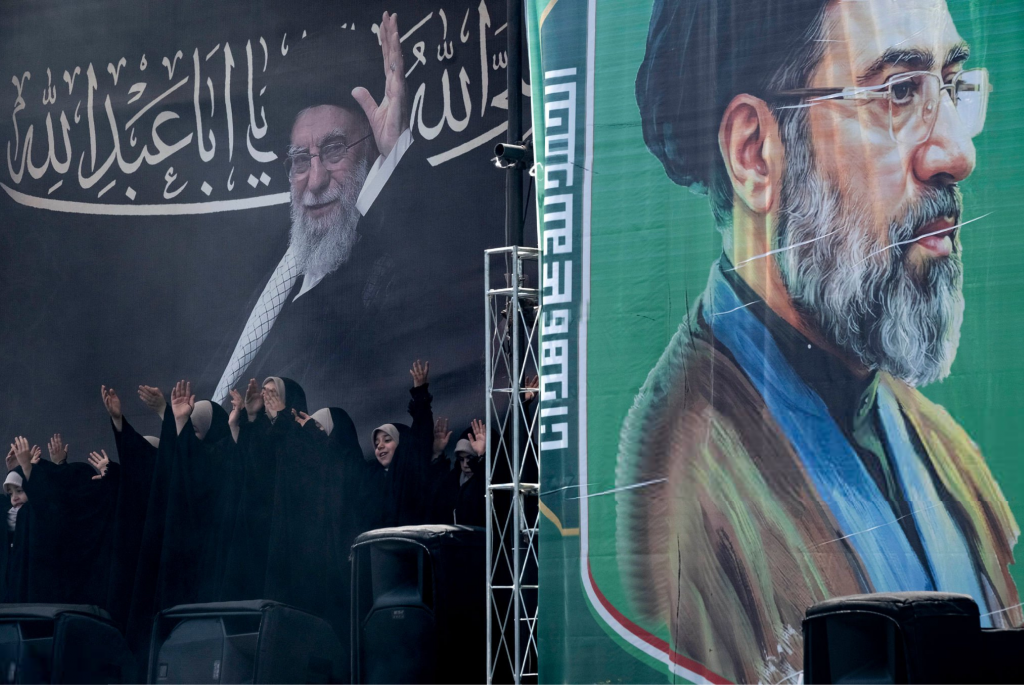
Alas, the best option for the Islamic Republic and the worst option for the West is what occurred. Scholars also debate what a post-Khamenei regime will look like. Without much knowledge of Mojtaba, it has been rumored that his ideological stances are more rigid and oppressive than his father’s. It is possible that the West now has a less-friendly negotiator, a more extremist threat, and a more militarized society than it did before the war. This has yet to be determined. Due to Mojtaba’s unprecedented lack of public appearances and communications being published through a proxy, he remains an unsettling question with no answer in sight.
The failure of the “collapse assumption” manifested in the consequences of the Iran War—the regime was more entrenched and militarized than before. The Trump administration’s choices of leadership over the Department of Defense and its subsequent decisions on personnel directly led to the failure of the war. The Secretary of Defense fired experienced, knowledgeable, and capable leadership over their refusals to employ catastrophic strategic plans. This led to the appointment of military officers that were loyal to Trump rather than loyal to the rules of engagement. Choices made by humans, such as targeted drone strikes, were replaced by AI.
Information brought to leadership about outdated intelligence was ignored, and children died as a result. This outright incompetence mixed with ignorance of the capabilities and structure of the regime led to a complete American humiliation. On the other side, Netanyahu’s hunger for war and enemy elimination blinded him to the reality that airstrikes are not sufficient to bring the regime to its knees. Both administrations failed to understand the most important factor in any authoritarian regime—never cede power.
No matter what the United States and Israel threw at the Islamic Republic, it would not have been enough. Resilience in the face of adversity has been a characteristic of Iranian culture for millennia; the regime is no exception. A successful war against the regime that results in regime change would have to attack on all fronts and be prepared for years of intense conflict. This is in part due to the nature of the regime. The Islamic Republic is an ideological state. One cannot simply airstrike an idea. The very essence of the ideology must be rooted out through support from the citizens, prosecution of the oppressors, and education to prevent it from taking root in the future.
A few states parallel the Islamic Republic throughout recent history: Cuba, North Korea, and Iraq. Despite being sanctioned by the United States and all nations having been on the receiving end of U.S. military action, extremist ideologies still pervade. Cuba is still a Communist nation under a dictatorship despite the ground invasion by the United States with the goal of regime change. All three nations prove that ideology is not so easily erased. Ideology must be accounted for in military operations and strategic goals, especially in the Middle East.
Although these regimes have proven their durability against obstacles and military intervention, that does not mean they are legitimate. Any regime that routinely violates human rights, provides no fair judiciary, rigs elections, and, in the case of the Islamic Republic, routinely funds foreign terrorist groups that target civilians is not legitimate. What is an unfortunate occurrence in the international sphere is that institutions like the United Nations give legitimacy to the regime. In recent years, the Islamic Republic was nominated to the Committee for Programme and Coordination at the U.N., which is responsible for shaping policy on women’s rights, human rights, and terrorism prevention.
How could the U.N., a peacemaking body, nominate the Islamic Republic for such a position while actively monitoring the daily human rights violations in numerous sectors across the nation, as well as having sufficient evidence to prove the regime’s financial ties to terrorist groups? The U.N. cannot continue giving legitimacy to this oppressive regime. If it does, it would not be far-fetched to call into question the purpose the U.N. has for routinely including dictatorships on human rights commissions.
The Islamic Republic’s pattern of aggression is not solely based on a desire to eradicate its enemies. The philosophy of aggression was born out of its experiences in the Iran-Iraq War. At the beginning of the war, the Islamic Republic tried to end hostilities through diplomacy. This effort was fruitless, and the war continued for eight years with thousands of casualties. Due to the failure of diplomatic efforts, the Islamic Republic came to believe that its restraint was viewed as a weakness to be exploited by its enemies.
This has directly informed its national security strategy for decades. Another aspect of its national security strategy is to remove the possibility of war reaching Iranian soil. From this, its terror proxy network was born. Through this network, the regime is able to directly attack its enemies while also avoiding responsibility. However, if an enemy were to attack directly within Iran’s territory, the regime would respond directly. This can be seen in the recent Iran War, where the regime repeatedly attacked both Israeli territory and U.S. bases located in neighboring countries.
Military action cannot erase nuclear knowledge or the incentives within a governing body to develop a nuclear weapon.
It is quite possible that the escalation of targeting neighboring sovereign nations is not an irrational tactic by the regime but a tool of survival. These attacks project strength and willingness of the regime to protect its territory as well as its assets. The escalation and ability to combat enemy attacks prove to the international community that the Islamic Republic is formidable and has the capacity to protect its interests against the military might of both the United States and Israel. Now that the international community understands the military might of the regime, their standing as a regional power has shifted to be on par with Saudi Arabia. The war not only transitioned the Islamic Republic’s standing in the region but also greatly damaged the United States’ soft and hard power. With the United States’ air strike campaign against the regime leading to absolute failure, the U.S. is now viewed as weaker and less able to achieve its military goals, while the opposite is true for the regime. Another unfortunate consequence of the Iran War is that it has given the regime battle experience.
Their capabilities and governing structure have been tested with minimal lasting damage. The war also forced the regime to become a more risk-tolerant actor. The dangers of this have been proven in the regime’s willingness to bring the entire region into hostilities rather than having a localized conflict. Now, every Gulf state must view the Islamic Republic as a possible enemy that will attack civilian infrastructure as well as any resources of the United States within the nation. The Gulf states must respond to this regional hostility brought by the Islamic Republic by forming a strong coalition with the United States against the regime. In order to prevent the region from falling into chaos and ideological extremism, the Islamic Republic must be the common enemy of the Gulf states. To reduce the enemy’s capabilities and prove their willingness to protect their sovereignty, the Gulf states should join the United States in any future campaigns against the regime.
The impetus for the Iran War was the likelihood that the Islamic Republic was at the precipice of developing a nuclear weapon. Tel Aviv convinced Washington that the regime was a few weeks to a few days away from the completion of a nuclear weapon. To remove that threat, immediate military action against the regime’s nuclear sites and weapons capabilities was necessary. However, proof of these weapons is contested. If the Islamic Republic were to develop nuclear weapons capabilities, the consequences for any enemy would be catastrophic.
With the current regime in power, the likelihood of using a nuclear warhead outweighs the possibility of the weapon not being used due to the philosophy of aggression mentioned previously. For the sake of peace and the preservation of human life, this war should lend credibility to working towards nuclear deterrence. The reality is that nuclear weapons are apocalyptic-level weapons that do not discriminate between legitimate military targets, civilians, or defenseless wildlife. As humanity evolves, a question among the global superpowers must be reasoned: should we disarm our nuclear stockpiles?
The only answer for a safer future is yes, but all countries must agree. Discussion and diplomacy are the only ways to work towards a nuclear-weapon-free future. Military action cannot erase nuclear knowledge or the incentives within a governing body to develop a nuclear weapon. Military action will only postpone weapon development, as the ruling philosophy of nuclear weapons procurement still exists. The philosophy must change for the output to change. In regard to dismantling the Islamic Republic’s nuclear program, there are two options: diplomacy and coercion.
In the past, the United States has used diplomacy to enter into an agreement that halts all nuclear development. In 2015, President Obama negotiated the JCPOA, which reduced the Islamic Republic’s stockpile of enriched uranium and removed two centrifuges that develop the uranium for military use. This gave the regime enough uranium to power energy infrastructure but not to develop weapons. It also gave the International Atomic Energy Agency (IAEA) oversight of the regime’s nuclear program to ensure compliance.
This ended when the Trump administration removed the United States from the JCPOA in 2018 in order to impose economic sanctions. Between the two administrations, the policy towards the regime’s nuclear program switched from diplomacy to coercion. Scholars debate which of the two is more effective in preventing nuclear weapon development. Based on historical events, diplomacy has been the most effective way of containing the Islamic Republic’s nuclear program. However, appeasement has also been proven to be an ineffective tool used against authoritarian leadership. In the long term, the only way to prevent the Islamic Republic from developing a nuclear weapon is for the regime to collapse and for a democratic system to take its place. A democratic system of government is more likely to enter into nuclear deterrence agreements and develop nuclear energy infrastructure to benefit its citizens.
Another alteration of the Islamic Republic due to the Iran War is the increased repression of expressions of dissent. The protest in January that prompted the regime to murder tens of thousands of its citizens has increased the terror in the hearts of the populace. However, there have been isolated protests both during and after hostilities broke out. This proves that although the flame of revolution has dwindled, it has not been extinguished. History also proves that the people, the true Iranians, will continue to revolt until they are free of their oppressors.
Despite the violence being levied against the people, their desire for freedom outweighs the regime’s need for power retention. Besides increased repression, a more hardened Iran also has repercussions for the entire region. As discussed previously, a more hardened regime is a more aggressive regime. This would lead to any Gulf state not ideologically aligned with the regime becoming a potential target. Any happenings the regime perceives to be an attack against its sovereignty or interests could cause unpredictable escalation patterns across the region.
The IRGC that emerges from this conflict will be more entrenched and more ideologically rigid.
The attacks would not come solely from inside the borders of Iran but also from its proxies. Due to the locations of Iran’s proxies throughout the region, the entire region is within striking distance. As we have seen in the Iran War, the new technology of autonomous drones is the future of warfare. These drones are cheap to produce, hard to defend against, and cause significant damage. If the regime wanted, the entire region could become a fiery battlefield based in urban areas. The security the United States promised to multiple Gulf states in return for allowing American military bases on their soil has disappeared.
Therefore, the relationship between these nations and the United States is uncertain. Any removal of American interests in the region would be an immense blow to American forward positioning and influence. It would also prove that the United States’ capabilities are not what they seem. American soft power would be decimated. The consequences of the Trump administration’s strategic overreach and decision to go to war with Iran have had devastating effects on multiple levels. Deterrence that had managed the ideologically aggressive regime has now been replaced by regional instability due to the war.
All of this begs the question, “Can modern authoritarian systems survive indefinitely through crisis management?” Crisis management can and will certainly provide longevity to an authoritarian state. However, managing external crises and internal crises are different. Internal crises show a crack in leadership and its effectiveness. In the case of the Islamic Republic, the regime cannot manage internal strife through the continuous slaughter of innocents and sanctioned executions. It is only a matter of time before the people are successful in toppling the regime and instating a democratic government.
Due to the regime’s current policy of repression of dissent and its military success against the United States, the Islamic Republic has become an example to other authoritarian states. Other authoritarian states like North Korea, Venezuela, and Afghanistan can see what is possible for their policies when tested. This is another unintended consequence of the Iran War that was entirely preventable. Other authoritarian states are going to be more emboldened to enact violent tactics against their own people and feel empowered in any future conflicts against democratic states.
The Iran War has left a lasting scar on both the American idea of war in the Middle East and the relationships the United States has cultivated. The United States has not faced an enemy like the IRGC in its long military history. Although it has faced similar adversaries, like the Taliban or Al-Qaeda, neither of those terrorist entities can compare to the IRGC. What makes the IRGC so unique is both its foresight and organization. From its inception in 1979 after the Islamic Revolution, the IRGC, and the Islamic Republic as a whole, have been preparing for war with the United States.
Due to its importance in the region, vast resources, and international terror campaigns, the Islamic Republic knew it would become a military target in the future. Based on the threat of nuclear capabilities, the Israeli government has been lobbying the United States to take military action against the Islamic Republic for more than a decade. Trump was the leader who believed the Islamic Republic posed enough of a threat to act. However, the Trump administration lacks military leadership with enough understanding of the unique power that is the IRGC and capable tacticians to accomplish its military goals.
A more competent and experienced administration may have been successful in achieving meaningful change and the destruction of uranium stockpiles, but those are not the cards we have been dealt. The Trump administration naively believed that bombing the Islamic Republic repeatedly would induce enough terror to coerce surrender. Surrender has never been an option for Iranians in their multi-millennia history. The only possibility of surrender or concession would have been through a sustained ground invasion that controlled Kharg Island, the Strait of Hormuz, and Tehran.
However, to accomplish this, tens of thousands of Americans would die, and our armaments would be depleted. This is due to the extreme entrenchment of the IRGC in Iranian society. Not only does the IRGC exist as an enforcement entity, but it also exists as the ruling power, the local law enforcement in the form of the Basij, and in Iran’s institutions. Simply, the IRGC is everywhere. The removal of top leadership does not threaten the existence of the IRGC, as there is always someone to replace them.
Consequently, succinct military pressure that does not exist on all surfaces or arm the populace will not result in regime change but the opposite. A consequence of the United States and Israel’s military campaign against the Islamic Republic proves that a war without a ground invasion or an armed populace will not liberate Iran from its oppressors but rather embolden the IRGC to strengthen its hold on Iran. The IRGC that emerges from this conflict will be more entrenched and more ideologically rigid. This war has proven that the IRGC and the regime can withstand extended external attacks and survive. Now, the regime is more militarized and will be harder to topple. It also means the influence of the regime within the region has now increased and will be more of a threat in the future.
This threat is made possible by its transformation from a state that is only confrontational through proxies to now being direct in its hostilities. The regime now understands that in order to survive, confrontation is necessary, and diplomacy gives way to weakness. The Islamic Republic has been remade through the Iran War. The United States must reevaluate its future responses to the regime and how best to support the Iranian people. The future of the region is now unstable, and the United States’ relationships are uncertain. Overall, the war with Iran has led to mass casualties, dead Americans, American assets in the Gulf being destroyed, relationships with the Gulf states coming into question, and a more hardened, militarized, and emboldened regime. Any action taken against the regime must be taken with these truths in mind.
In the State of the Union 2023, in the advent of von der Leyen’s second term, she reaffirmed her commitment to leading the EU through its ongoing challenges. She highlighted the importance of continued economic recovery, climate action, and further integration of European defence capabilities.
In the State of the Union 2023, in the advent of von der Leyen’s second term, she reaffirmed her commitment to leading the EU through its ongoing challenges. She highlighted the importance of continued economic recovery, climate action, and further integration of European defence capabilities.
How has the war with Iran affected the regime and the people suffering under it? Like other authoritarian regimes, the Islamic Republic uses external attacks as a rallying cry for support and proof that the West is truly an enemy that can never be trusted. The consequences have led to believers becoming further radicalized in their support for the regime, leading to their willingness to enact violence against dissent. Any of the regime’s members lost during the
United States’ and Israel’s bombing campaign were deemed martyrs who died defending their nation against “the Great Satans.” During the war, with increased military mobilization, the masses who were bravely protesting were forced to retreat under threat of execution. The majority of Iranians who do not support the regime and wish to live under a democratic system fervently hoped that the war would lead to regime change and Trump would be their liberator.
Alas, the Trump administration had no intention of supporting regime change or any concrete goals for the war to achieve. In the end, both the Iranian and American people were given unforgivable results that left them worse off than prior to hostilities. The Iranian regime has used this disappointing outcome as a propaganda opportunity to frame the United States as weak and the Islamic Republic as the beacon of resistance against the West. The regime has relentlessly posted across different platforms how they have humiliated the great American war machine and proven our gusto was only a bluff. The regime’s ability to negotiate their asks and receive large concessions from the United States only legitimizes their authority. This has also sealed their position as the great power of the Middle East, in direct competition with the United States’ allies, Saudi Arabia and the United Arab Emirates.
The IRGC of the revolution and the IRGC of today are two different entities. However, the plan was always to have the IRGC evolve into the repressive body whose tendrils have invaded every part of Iranian life. The IRGC’s influence over politics, security, and the economy is absolute. There is no room for dissent, for factions, for differing ideologies, or something so simple as expression of self. This has been a cornerstone of the Islamic Republic since its inception and has been enforced by the IRGC ever since. The IRGC has immense influence over the politics of the nation, as many veterans of the institution have taken positions in the parliament, cabinet, and provincial political positions. This ensures their power is never questioned and the desires of the Supreme Leader are always supported by the government. Although elections are held, the IRGC is suspected of interfering with them to fix their outcomes. On the security front, the IRGC works in conjunction with the military and must have parallel branches to it in order to operate efficiently. This includes a paramilitary force, air force, navy, and ground forces.
The IRGC also aids the military with espionage, distributing propaganda, and cybercrimes. The economy also plays a vital role in the IRGC as well as the structure of the governing bodies. The Islamic Republic is riddled with corruption that aims to deplete the wealth of the people and distribute it to the ruling class. This is most evident in the steadily decreasing value of the rial. One U.S. dollar is equal to 42,000 rials. Although the populace must suffer with their money equaling close to nothing, the Supreme Leader has a net worth estimated at around 150 billion dollars due to the strict control over Iran’s resources.
Not only is this wealth extraction endemic to the government, but the corruption also extends to the IRGC. The IRGC originally was not involved with the economy, but this changed when it was tasked with rebuilding the infrastructure damaged during the Iran-Iraq War. From there, its involvement in vital industries, such as shipping and banking, grew larger. According to the Council on Foreign Relations, companies affiliated with the IRGC are awarded business contracts from the state, which allows it to build infrastructure and oversee the oil sector.
The financial benefits the IRGC receives do not only come from official businesses but also from the black market. The black market allows sanctions to be bypassed and money to be funneled directly to the IRGC instead of the government and populace. The money incurred from all of its financial operations funds its acquisition of weaponry and the nuclear program. The pervasiveness of the IRGC only intensifies in times of hostilities and outright war. Protests and anti-government sentiment are likely to grow during these times, and people are prone to be more outspoken or act against their oppressors.
In order to maintain its hold over power, the Islamic Republic cannot allow any weakened state to inspire citizens’ hope for freedom and democracy. The best means of repression in times of hostilities are increased surveillance and censorship. Many examples of the increased surveillance exist but can most easily be understood in the growing number of morality police that line the streets looking for anyone, especially women, violating the law. The internet shutdown, which lasted for months, is another glaring example of the strength of the surveillance state.
The internet shutdown was implemented to prevent the outside world from documenting or bearing witness to the crimes against humanity committed by the regime. After the protests in January, the Basij greatly increased the number of checkpoints throughout the nation to intimidate the populace against protests or voicing dissent. The Supreme Leader and IRGC use the excuse of possible national security threats or foreign espionage during wartime to increase these surveillance tactics. Unfortunately, many Iranian civilians have been executed under the charge of “spying for Israel.” These charges likely have no merit, and the accused have no way to dispel suspicion.
Those who are executed are usually those who have participated in protests previously or have voiced dissent against the government. Wartime gives the government an outlet to rid dissidents from the population. With the recent Iran War conducted by the United States and Israel, the Islamic Republic did just this. People are more terrified of voicing their dissent due to increased surveillance and patrolling by the Basij. News of increased executions also dissuades society from revolting. The surveillance state imposed by the Islamic Republic leads to either imprisonment or execution for those seeking freedom.
During the Iran War, the United States and Israel targeted many high-ranking people within the government of Iran and the IRGC. While Israel was hoping to initiate regime change, the Trump administration had no such goals. One of the strike campaigns was targeting the Supreme Leader, Ayatollah Khamenei. As stated previously, that strike was successful, and he was assassinated. What followed was the question as to who would take his place. The conflict continued to rage as those with the constitutional authority to select a successor discussed their options.
The composition of the Islamic Republic’s government and institutions, as I have explained, has embedded itself so deeply throughout the nation that this instant loss of leadership did not lead to chaos. During the absence of a Supreme Leader, the National Security Council took on the role of leader of the regime during the war. Other leadership positions that were vacated as a result of assassinations were quickly filled with IRGC hardliners, leading to little fragmentation of government. Eventually, Khamenei’s second-eldest son—Mojtaba Khamenei—was appointed the new Supreme Leader.
He was not the only candidate, however. Before Khamenei’s demise, he chose three clerics as possible successors. Mojtaba was not nominated without concerns. These concerns included his lack of administrative experience, his theological qualifications, and the optics of a possible nepotistic leadership lineage. Although this transition was smooth and followed constitutional processes, this was not the only likely succession scenario. Scholars determined there to be three possible succession scenarios: constitutional, IRGC coup, or complete regime collapse.
Alas, the best option for the Islamic Republic and the worst option for the West is what occurred. Scholars also debate what a post-Khamenei regime will look like. Without much knowledge of Mojtaba, it has been rumored that his ideological stances are more rigid and oppressive than his father’s. It is possible that the West now has a less-friendly negotiator, a more extremist threat, and a more militarized society than it did before the war. This has yet to be determined. Due to Mojtaba’s unprecedented lack of public appearances and communications being published through a proxy, he remains an unsettling question with no answer in sight.
The failure of the “collapse assumption” manifested in the consequences of the Iran War—the regime was more entrenched and militarized than before. The Trump administration’s choices of leadership over the Department of Defense and its subsequent decisions on personnel directly led to the failure of the war. The Secretary of Defense fired experienced, knowledgeable, and capable leadership over their refusals to employ catastrophic strategic plans. This led to the appointment of military officers that were loyal to Trump rather than loyal to the rules of engagement. Choices made by humans, such as targeted drone strikes, were replaced by AI.
Information brought to leadership about outdated intelligence was ignored, and children died as a result. This outright incompetence mixed with ignorance of the capabilities and structure of the regime led to a complete American humiliation. On the other side, Netanyahu’s hunger for war and enemy elimination blinded him to the reality that airstrikes are not sufficient to bring the regime to its knees. Both administrations failed to understand the most important factor in any authoritarian regime—never cede power.
No matter what the United States and Israel threw at the Islamic Republic, it would not have been enough. Resilience in the face of adversity has been a characteristic of Iranian culture for millennia; the regime is no exception. A successful war against the regime that results in regime change would have to attack on all fronts and be prepared for years of intense conflict. This is in part due to the nature of the regime. The Islamic Republic is an ideological state. One cannot simply airstrike an idea. The very essence of the ideology must be rooted out through support from the citizens, prosecution of the oppressors, and education to prevent it from taking root in the future.
A few states parallel the Islamic Republic throughout recent history: Cuba, North Korea, and Iraq. Despite being sanctioned by the United States and all nations having been on the receiving end of U.S. military action, extremist ideologies still pervade. Cuba is still a Communist nation under a dictatorship despite the ground invasion by the United States with the goal of regime change. All three nations prove that ideology is not so easily erased. Ideology must be accounted for in military operations and strategic goals, especially in the Middle East.
Although these regimes have proven their durability against obstacles and military intervention, that does not mean they are legitimate. Any regime that routinely violates human rights, provides no fair judiciary, rigs elections, and, in the case of the Islamic Republic, routinely funds foreign terrorist groups that target civilians is not legitimate. What is an unfortunate occurrence in the international sphere is that institutions like the United Nations give legitimacy to the regime. In recent years, the Islamic Republic was nominated to the Committee for Programme and Coordination at the U.N., which is responsible for shaping policy on women’s rights, human rights, and terrorism prevention.
How could the U.N., a peacemaking body, nominate the Islamic Republic for such a position while actively monitoring the daily human rights violations in numerous sectors across the nation, as well as having sufficient evidence to prove the regime’s financial ties to terrorist groups? The U.N. cannot continue giving legitimacy to this oppressive regime. If it does, it would not be far-fetched to call into question the purpose the U.N. has for routinely including dictatorships on human rights commissions.
The Islamic Republic’s pattern of aggression is not solely based on a desire to eradicate its enemies. The philosophy of aggression was born out of its experiences in the Iran-Iraq War. At the beginning of the war, the Islamic Republic tried to end hostilities through diplomacy. This effort was fruitless, and the war continued for eight years with thousands of casualties. Due to the failure of diplomatic efforts, the Islamic Republic came to believe that its restraint was viewed as a weakness to be exploited by its enemies.
This has directly informed its national security strategy for decades. Another aspect of its national security strategy is to remove the possibility of war reaching Iranian soil. From this, its terror proxy network was born. Through this network, the regime is able to directly attack its enemies while also avoiding responsibility. However, if an enemy were to attack directly within Iran’s territory, the regime would respond directly. This can be seen in the recent Iran War, where the regime repeatedly attacked both Israeli territory and U.S. bases located in neighboring countries.
It is quite possible that the escalation of targeting neighboring sovereign nations is not an irrational tactic by the regime but a tool of survival. These attacks project strength and willingness of the regime to protect its territory as well as its assets. The escalation and ability to combat enemy attacks prove to the
international community that the Islamic Republic is formidable and has the capacity to protect its interests against the military might of both the United States and Israel. Now that the international community understands the military might of the regime, their standing as a regional power has shifted to be on par with Saudi Arabia. The war not only transitioned the Islamic Republic’s standing in the region but also greatly damaged the United States’ soft and hard power. With the United States’ air strike campaign against the regime leading to absolute failure, the U.S. is now viewed as weaker and less able to achieve its military goals, while the opposite is true for the regime. Another unfortunate consequence of the Iran War is that it has given the regime battle experience.
Their capabilities and governing structure have been tested with minimal lasting damage. The war also forced the regime to become a more risk-tolerant actor. The dangers of this have been proven in the regime’s willingness to bring the entire region into hostilities rather than having a localized conflict. Now, every Gulf state must view the Islamic Republic as a possible enemy that will attack civilian infrastructure as well as any resources of the United States within the nation. The Gulf states must respond to this regional hostility brought by the Islamic Republic by forming a strong coalition with the United States against the regime. In order to prevent the region from falling into chaos and ideological extremism, the Islamic Republic must be the common enemy of the Gulf states. To reduce the enemy’s capabilities and prove their willingness to protect their sovereignty, the Gulf states should join the United States in any future campaigns against the regime.
The impetus for the Iran War was the likelihood that the Islamic Republic was at the precipice of developing a nuclear weapon. Tel Aviv convinced Washington that the regime was a few weeks to a few days away from the completion of a nuclear weapon. To remove that threat, immediate military action against the regime’s nuclear sites and weapons capabilities was necessary. However, proof of these weapons is contested. If the Islamic Republic were to develop nuclear weapons capabilities, the consequences for any enemy would be catastrophic.
With the current regime in power, the likelihood of using a nuclear warhead outweighs the possibility of the weapon not being used due to the philosophy of aggression mentioned previously. For the sake of peace and the preservation of human life, this war should lend credibility to working towards nuclear deterrence. The reality is that nuclear weapons are apocalyptic-level weapons that do not discriminate between legitimate military targets, civilians, or defenseless wildlife. As humanity evolves, a question among the global superpowers must be reasoned: should we disarm our nuclear stockpiles?
The only answer for a safer future is yes, but all countries must agree. Discussion and diplomacy are the only ways to work towards a nuclear-weapon-free future. Military action cannot erase nuclear knowledge or the incentives within a governing body to develop a nuclear weapon. Military action will only postpone weapon development, as the ruling philosophy of nuclear weapons procurement still exists. The philosophy must change for the output to change. In regard to dismantling the Islamic Republic’s nuclear program, there are two options: diplomacy and coercion.
In the past, the United States has used diplomacy to enter into an agreement that halts all nuclear development. In 2015, President Obama negotiated the JCPOA, which reduced the Islamic Republic’s stockpile of enriched uranium and removed two centrifuges that develop the uranium for military use. This gave the regime enough uranium to power energy infrastructure but not to develop weapons. It also gave the International Atomic Energy Agency (IAEA) oversight of the regime’s nuclear program to ensure compliance.
This ended when the Trump administration removed the United States from the JCPOA in 2018 in order to impose economic sanctions. Between the two administrations, the policy towards the regime’s nuclear program switched from diplomacy to coercion. Scholars debate which of the two is more effective in preventing nuclear weapon development. Based on historical events, diplomacy has been the most effective way of containing the Islamic Republic’s nuclear program. However, appeasement has also been proven to be an ineffective tool used against authoritarian leadership. In the long term, the only way to prevent the Islamic Republic from developing a nuclear weapon is for the regime to collapse and for a democratic system to take its place. A democratic system of government is more likely to enter into nuclear deterrence agreements and develop nuclear energy infrastructure to benefit its citizens.
Another alteration of the Islamic Republic due to the Iran War is the increased repression of expressions of dissent. The protest in January that prompted the regime to murder tens of thousands of its citizens has increased the terror in the hearts of the populace. However, there have been isolated protests both during and after hostilities broke out. This proves that although the flame of revolution has dwindled, it has not been extinguished. History also proves that the people, the true Iranians, will continue to revolt until they are free of their oppressors.
Despite the violence being levied against the people, their desire for freedom outweighs the regime’s need for power retention. Besides increased repression, a more hardened Iran also has repercussions for the entire region. As discussed previously, a more hardened regime is a more aggressive regime. This would lead to any Gulf state not ideologically aligned with the regime becoming a potential target. Any happenings the regime perceives to be an attack against its sovereignty or interests could cause unpredictable escalation patterns across the region.
The attacks would not come solely from inside the borders of Iran but also from its proxies. Due to the locations of Iran’s proxies throughout the region, the entire region is within striking distance. As we have seen in the Iran War, the new technology of
autonomous drones is the future of warfare. These drones are cheap to produce, hard to defend against, and cause significant damage. If the regime wanted, the entire region could become a fiery battlefield based in urban areas. The security the United States promised to multiple Gulf states in return for allowing American military bases on their soil has disappeared.
Therefore, the relationship between these nations and the United States is uncertain. Any removal of American interests in the region would be an immense blow to American forward positioning and influence. It would also prove that the United States’ capabilities are not what they seem. American soft power would be decimated. The consequences of the Trump administration’s strategic overreach and decision to go to war with Iran have had devastating effects on multiple levels. Deterrence that had managed the ideologically aggressive regime has now been replaced by regional instability due to the war.
All of this begs the question, “Can modern authoritarian systems survive indefinitely through crisis management?” Crisis management can and will certainly provide longevity to an authoritarian state. However, managing external crises and internal crises are different. Internal crises show a crack in leadership and its effectiveness. In the case of the Islamic Republic, the regime cannot manage internal strife through the continuous slaughter of innocents and sanctioned executions. It is only a matter of time before the people are successful in toppling the regime and instating a democratic government.
Due to the regime’s current policy of repression of dissent and its military success against the United States, the Islamic Republic has become an example to other authoritarian states. Other authoritarian states like North Korea, Venezuela, and Afghanistan can see what is possible for their policies when tested. This is another unintended consequence of the Iran War that was entirely preventable. Other authoritarian states are going to be more emboldened to enact violent tactics against their own people and feel empowered in any future conflicts against democratic states.
The Iran War has left a lasting scar on both the American idea of war in the Middle East and the relationships the United States has cultivated. The United States has not faced an enemy like the IRGC in its long military history. Although it has faced similar adversaries, like the Taliban or Al-Qaeda, neither of those terrorist entities can compare to the IRGC. What makes the IRGC so unique is both its foresight and organization. From its inception in 1979 after the Islamic Revolution, the IRGC, and the Islamic Republic as a whole, have been preparing for war with the United States.
Due to its importance in the region, vast resources, and international terror campaigns, the Islamic Republic knew it would become a military target in the future. Based on the threat of nuclear capabilities, the Israeli government has been lobbying the United States to take military action against the Islamic Republic for more than a decade. Trump was the leader who believed the Islamic Republic posed enough of a threat to act. However, the Trump administration lacks military leadership with enough understanding of the unique power that is the IRGC and capable tacticians to accomplish its military goals.
A more competent and experienced administration may have been successful in achieving meaningful change and the destruction of uranium stockpiles, but those are not the cards we have been dealt. The Trump administration naively believed that bombing the Islamic Republic repeatedly would induce enough terror to coerce surrender. Surrender has never been an option for Iranians in their multi-millennia history. The only possibility of surrender or concession would have been through a sustained ground invasion that controlled Kharg Island, the Strait of Hormuz, and Tehran.
However, to accomplish this, tens of thousands of Americans would die, and our armaments would be depleted. This is due to the extreme entrenchment of the IRGC in Iranian society. Not only does the IRGC exist as an enforcement entity, but it also exists as the ruling power, the local law enforcement in the form of the Basij, and in Iran’s institutions. Simply, the IRGC is everywhere. The removal of top leadership does not threaten the existence of the IRGC, as there is always someone to replace them.
Consequently, succinct military pressure that does not exist on all surfaces or arm the populace will not result in regime change but the opposite. A consequence of the United States and Israel’s military campaign against the Islamic Republic proves that a war without a ground invasion or an armed populace will not liberate Iran from its oppressors but rather embolden the IRGC to strengthen its hold on Iran. The IRGC that emerges from this conflict will be more entrenched and more ideologically rigid. This war has proven that the IRGC and the regime can withstand extended external attacks and survive. Now, the regime is more militarized and will be harder to topple. It also means the influence of the regime within the region has now increased and will be more of a threat in the future.
This threat is made possible by its transformation from a state that is only confrontational through proxies to now being direct in its hostilities. The regime now understands that in order to survive, confrontation is necessary, and diplomacy gives way to weakness. The Islamic Republic has been remade through the Iran War. The United States must reevaluate its future responses to the regime and how best to support the Iranian people. The future of the region is now unstable, and the United States’ relationships are uncertain. Overall, the war with Iran has led to mass casualties, dead Americans, American assets in the Gulf being destroyed, relationships with the Gulf states coming into question, and a more hardened, militarized, and emboldened regime. Any action taken against the regime must be taken with these truths in mind.
Recommended
How Semiconductors Shape the New World Order
The Chinese Experience That Challenges the Universality of Liberalism
The Empire That Fights to Exist
The Exhaustion of Democracy Promotion
A Zero-Sum Strategy that Expands Jihadist Recruitment and Civilian Harm