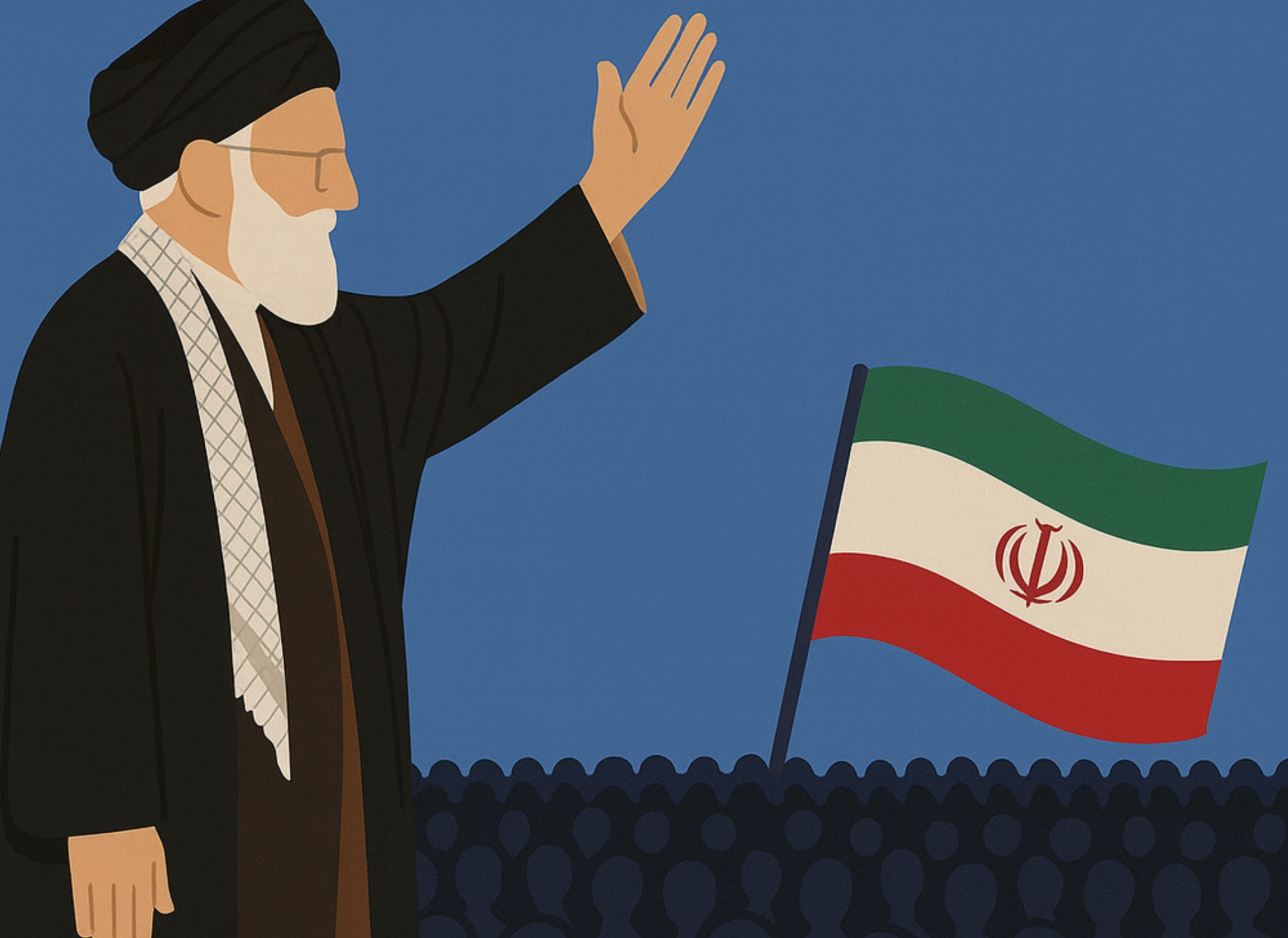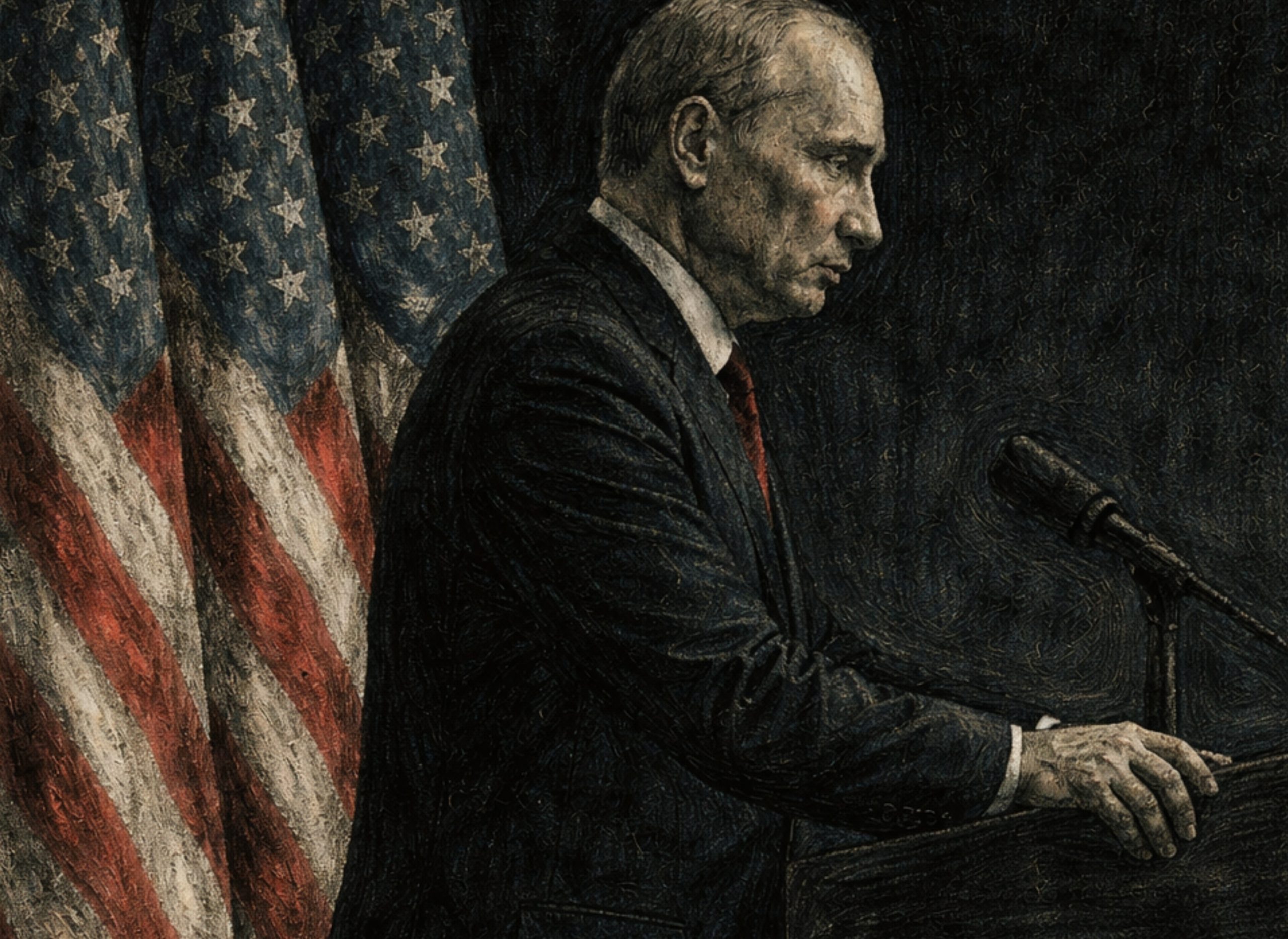


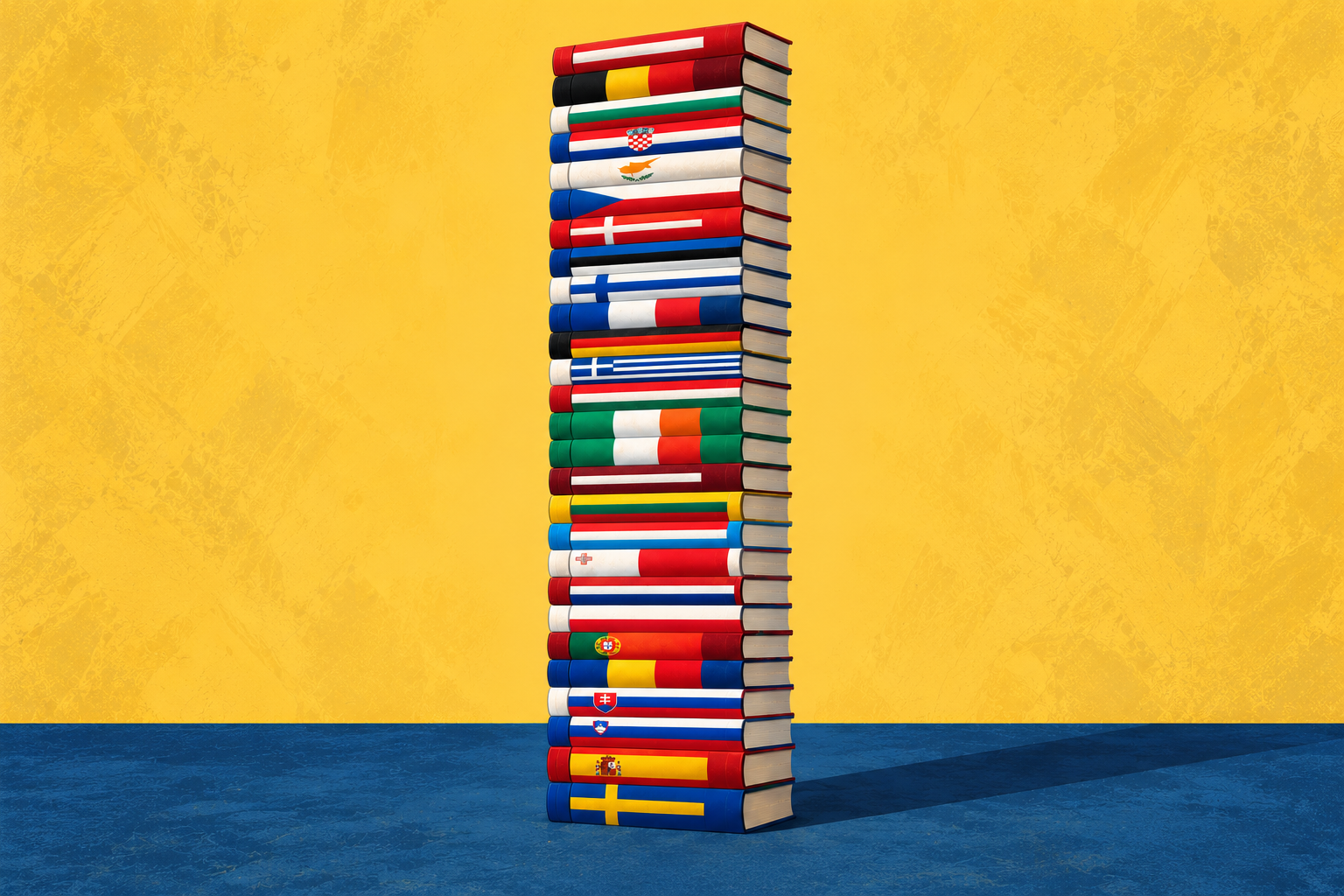
This illustration has been creadet by AI to use only in this article.
On 19 September 1946, Winston Churchill delivered a powerful speech at the University of Zurich, setting out his vision for the future of Europe, “this noble continent”, which, over the course of only a few decades, had so tragically torn itself apart. According to Churchill, the first step towards Europe’s reconstruction would be for France and Germany to set aside their historic rivalry. Together with other willing nations (though notably not the UK), they should establish a union of European states, a federation of nations, which Churchill called “the United States of Europe”. Explicitly drawing on already existing ideas about European federalism from the interwar period, such as those promoted by the Austrian count Richard von Coudenhove-Kalergi and the former French foreign minister Aristide Briand, Churchill envisaged a unified continent, confidently declaring: “If Europe were once united in the sharing of its common inheritance, there would be no limit to the happiness, to the prosperity, and to the glory which its three or four hundred million people would enjoy.”
The two great wars that had ravaged Europe between 1914 and 1945 (considered by Churchill “a second Thirty Years’ War”) had left the old continent, once the undisputed centre of the world, in ruins. In his speech, Churchill warned that without a peaceful process of reconciliation between France and Germany, Europe risked being reduced to a state of dependency under the domination of the United States and the Soviet Union. “I must give you a warning,” he cautioned. “Time may be short. At present, there is a breathing space. The cannons have ceased firing. The fighting has stopped, but the dangers have not stopped. If we are to form the United States of Europe, or whatever name it may take, we must begin now.”
Today, eighty years on, many of his recommendations have been realised. France and Germany form the core of a peaceful and prosperous political union. However, we are still far removed from achieving Churchill’s ambitious vision for Europe’s future. In its current constellation, the EU is still deeply and dangerously divided, not just across various economic sectors, but also on a wide range of policy domains. This political and economic fragmentation might not have been a serious reason for concern had it not been for the increasingly volatile geopolitical environment in which the EU needs to operate.
Most concerning of all, Europe is quickly falling behind its global competitors. Not unlike the postwar period, our autonomy is once again being threatened by powerful external actors: Russia, China, the U.S. Europe is slowly but surely sliding into geostrategic irrelevance. If we fail to overcome our internal fragmentation and reduce our dependence on foreign states for our security, we may be reduced to ‘vassal status’ once more. In its current form, the European Union is unable to respond adequately to the challenges of our time. Structural reforms have become a vital necessity. The main point here is not that more integration is always necessarily ‘better’. In many policy areas, local, regional or national decision-making might actually be preferable. However, there are still several key areas where deeper integration (that is, transferring political responsibility from the national to the ‘federal’ European level) would benefit all participating states.
As a federation of nation-states, the EU would be much better equipped to protect its strategic interests and respond to the pressure coming from Russia, China and the U.S. Closer integration would also allow us, among other things, to complete the internal market, create a single capital markets union, remove unnecessary barriers to trade and innovation, manage irregular migration, and finally enforce the common fiscal rules of the Stability and Growth Pact (SGP), which are essential for the continued stability of Europe’s economy. These measures, it seems to me, will require the EU to adopt more of the characteristics of a federal state and less of a confederal union of states. This is not to say that the nation-state has lost its validity as an organising concept, but it needs to be encapsulated within a broader federalist framework. Only within a federal framework can national autonomyand pan-European unity be reconciled.
Throughout its history, the tension between national sovereignty and European unity has been a defining feature of the European project. Indeed, European history more broadly has long been characterised by recurring conflicts between various forms of supranational governance on one side and popular demands for (proto-)national autonomy on the other. Past attempts at pan-European unification (whether Carolingian, Habsburg or Napoleonic) have systematically failed. However, despite its lack of centralised political control, Europe has always shared a common cultural heritage, and European states regularly engaged in various forms of diplomatic consultation. Despite its national differences, Europe can therefore also be said to have a long tradition of intergovernmental cooperation and supranational forms of governance. Integration and fragmentation, centralisation and decentralisation have long been part of the European experience.
studied international relations at Utrecht University and European studies at KU Leuven. He currently works as a defence and foreign policy correspondent at Euro Prospects. His research interests include the history of the European project and the nexus between national identity and European integration.
On 19 September 1946, Winston Churchill delivered a powerful speech at the University of Zurich, setting out his vision for the future of Europe, “this noble continent”, which, over the course of only a few decades, had so tragically torn itself apart. According to Churchill, the first step towards Europe’s reconstruction would be for France and Germany to set aside their historic rivalry. Together with other willing nations (though notably not the UK), they should establish a union of European states, a federation of nations, which Churchill called “the United States of Europe”. Explicitly drawing on already existing ideas about European federalism from the interwar period, such as those promoted by the Austrian count Richard von Coudenhove-Kalergi and the former French foreign minister Aristide Briand, Churchill envisaged a unified continent, confidently declaring: “If Europe were once united in the sharing of its common inheritance, there would be no limit to the happiness, to the prosperity, and to the glory which its three or four hundred million people would enjoy.”
The two great wars that had ravaged Europe between 1914 and 1945 (considered by Churchill “a second Thirty Years’ War”) had left the old continent, once the undisputed centre of the world, in ruins. In his speech, Churchill warned that without a peaceful process of reconciliation between France and Germany, Europe risked being reduced to a state of dependency under the domination of the United States and the Soviet Union. “I must give you a warning,” he cautioned. “Time may be short. At present, there is a breathing space. The cannons have ceased firing. The fighting has stopped, but the dangers have not stopped. If we are to form the United States of Europe, or whatever name it may take, we must begin now.”
Today, eighty years on, many of his recommendations have been realised. France and Germany form the core of a peaceful and prosperous political union. However, we are still far removed from achieving Churchill’s ambitious vision for Europe’s future. In its current constellation, the EU is still deeply and dangerously divided, not just across various economic sectors, but also on a wide range of policy domains. This political and economic fragmentation might not have been a serious reason for concern had it not been for the increasingly volatile geopolitical environment in which the EU needs to operate.
Most concerning of all, Europe is quickly falling behind its global competitors. Not unlike the postwar period, our autonomy is once again being threatened by powerful external actors: Russia, China, the U.S. Europe is slowly but surely sliding into geostrategic irrelevance. If we fail to overcome our internal fragmentation and reduce our dependence on foreign states for our security, we may be reduced to ‘vassal status’ once more. In its current form, the European Union is unable to respond adequately to the challenges of our time. Structural reforms have become a vital necessity. The main point here is not that more integration is always necessarily ‘better’. In many policy areas, local, regional or national decision-making might actually be preferable. However, there are still several key areas where deeper integration (that is, transferring political responsibility from the national to the ‘federal’ European level) would benefit all participating states.
As a federation of nation states, the EU would be much better equipped to protect its strategic interests and respond to the pressure coming from Russia, China and the U.S. Closer integration would also allow us, among other things, to complete the internal market, create a single capital markets union, remove unnecessary barriers to trade and innovation, manage irregular migration, and finally enforce the common fiscal rules of the Stability and Growth Pact (SGP), which are essential for the continued stability of Europe’s economy. These measures, it seems to me, will require the EU to adopt more of the characteristics of a federal state and less of a confederal union of states. This is not to say that the nation-state has lost its validity as an organising concept, but it needs to be encapsulated within a broader federalist framework. Only within a federal framework can national autonomyand pan-European unity be reconciled.
Throughout its history, the tension between national sovereignty and European unity has been a defining feature of the European project. Indeed, European history more broadly has long been characterised by recurring conflicts between various forms of supranational governance on one side and popular demands for (proto-)national autonomy on the other. Past attempts at pan-European unification (whether Carolingian, Habsburg or Napoleonic) have systematically failed. However, despite its lack of centralised political control, Europe has always shared a common cultural heritage, and European states regularly engaged in various forms of diplomatic consultation. Despite its national differences, Europe can therefore also be said to have a long tradition of intergovernmental cooperation and supranational forms of governance. Integration and fragmentation, centralisation and decentralisation have long been part of the European experience.
studied international relations at Utrecht University and European studies at KU Leuven. He currently works as a defence and foreign policy correspondent at Euro Prospects. His research interests include the history of the European project and the nexus between national identity and European integration.

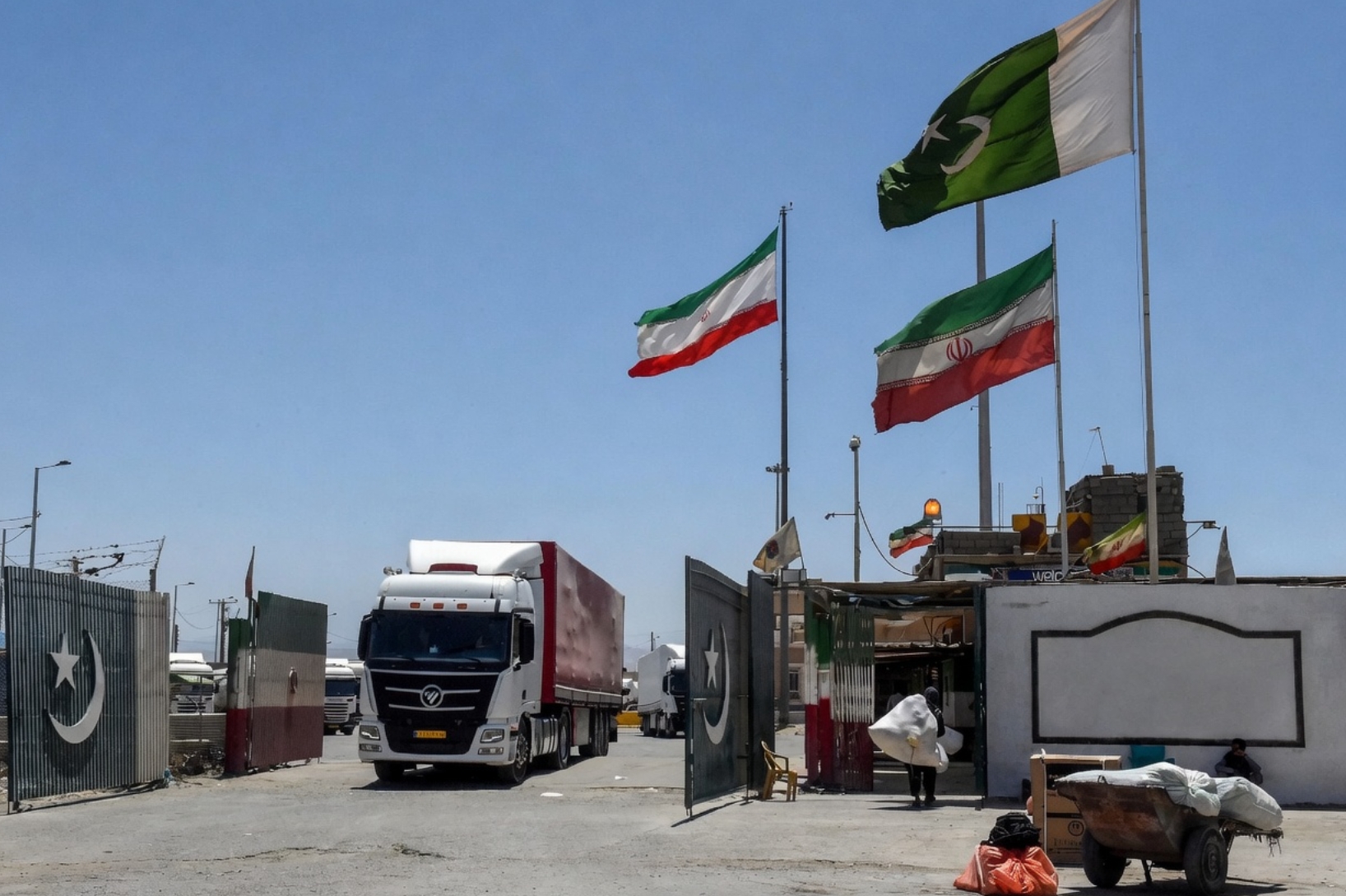
The point is not that one approach is inherently ‘better’ than the other. Europe’s political fragmentation has been a source of incredibly productive competition, as well as catastrophic destruction. National sovereignty is not the root of all evil (as some on the far left like to pretend) and European unity is not some secretive globalist conspiracy (as some on the far right would like us to believe). The historical reality is far more complex and nuanced than either the post-national left or the ultra-nationalist right are willing to acknowledge.
European integration is not about ‘abolishing’ the nation state, but about incorporating it within a larger federal structure that has the capabilities necessary to serve and sustain the interests of its members. European integration was never intended to weaken the autonomy of its member states. Rather,The European project has never been about ‘weakening’ the nations that chose to participate in it. On the contrary: its purpose has been to strengthen their collective position in an increasingly unstable and less Eurocentric world. European unity is not just a project of peace, but also an instrument of power; an exercise in ‘Realpolitik’. It is unfortunate that in our polarised political discourse, national autonomy and European unity are all too often presented as if they were mutually incompatible; as if we had to choose one over the other. European integration is about striking a balance between the need for national autonomy on the one hand and the benefits of political unity on the other. It is not an ‘either-or’ question.
The problem with political unions that lack a strong central authority (like the current-day EU) is that they eventually fall prey to their internal contradictions. Deep divisions continue to undermine the EU’s external action. Decisions made in one national capital can have ripple effects across the entire Union. Without central coordination, the actions of one country can often come at the expense of the rest. This problem is exacerbated by the fact that different capitals have very different perceptions of the challenges facing the continent and how best to address them.
These divisions are a natural consequence of the EU’s composition as a union of sovereign states with distinct historic, economic and political identities. Although such divisions are not necessarilyproblematic and may even reflect the pluralistic nature of the EU, they can becomeproblematic when they result in contradictory and mutually incompatible policies. This tension between unity and diversity is not accidental, but a defining feature of the EU’s governance structure.
One of the most infamous examples was Hungary’s opposition to EU sanctions against Russia. During the former Orbán government, Hungary repeatedly opposed EU measures in response to Russia’s aggression. Likewise, divergentapproaches to migration policy have exposed deep divisions within the EU. Countries like Germany, Sweden and Spain, for instance, have long been advocates for a very ‘open’ stance towards migration. Other states, by contrast, primarily in Central and Eastern Europe, have pursued a more cautious approach.
Another area of persistent tension is fiscal policy, where Greece’s struggle to contain its debt and deficits has frequently brought it into conflict with common EU guidelines, most notably in the wake of the 2008 global financial crisis. After all, it was the Greek government’s manipulation of its debt and deficit figures in order to adopt the common currency, the euro, which eventually caused the global financial crisis to spill over into the European sovereign debt crisis.
What each of these cases clearly illustrates is this: it is a practical impossibility to have common political responsibilities (like a common currency, a common trade policy, or a common area of free movement) without a centralised governing authority and without some sort of consensus on the ways in which these policy areas should be governed. By contrast, the Covid-pandemic was managed relatively effectively, precisely because national governments chose to procure vaccines collectively, rather than individually. This shows that in those cases where national governments manage to act together, in close coordination with the European institutions, they can actually achieve remarkable results.
The point is not that one approach is inherently ‘better’ than the other. Europe’s political fragmentation has been a source of incredibly productive competition, as well as catastrophic destruction. National sovereignty is not the root of all evil (as some on the far left like to pretend) and European unity is not some secretive globalist conspiracy (as some on the far right would like us to believe). The historical reality is far more complex and nuanced than either the post-national left or the ultra-nationalist right are willing to acknowledge.
European integration is not about ‘abolishing’ the nation state, but about incorporating it within a larger federal structure that has the capabilities necessary to serve and sustain the interests of its members. European integration was never intended to weaken the autonomy of its member states. Rather,The European project has never been about ‘weakening’ the nations that chose to participate in it. On the contrary: its purpose has been to strengthen their collective position in an increasingly unstable and less Eurocentric world. European unity is not just a project of peace, but also an instrument of power; an exercise in ‘Realpolitik’. It is unfortunate that in our polarised political discourse, national autonomy and European unity are all too often presented as if they were mutually incompatible; as if we had to choose one over the other. European integration is about striking a balance between the need for national autonomy on the one hand and the benefits of political unity on the other. It is not an ‘either-or’ question.
The problem with political unions that lack a strong central authority (like the current-day EU) is that they eventually fall prey to their internal contradictions. Deep divisions continue to undermine the EU’s external action. Decisions made in one national capital can have ripple effects across the entire Union. Without central coordination, the actions of one country can often come at the expense of the rest. This problem is exacerbated by the fact that different capitals have very different perceptions of the challenges facing the continent and how best to address them.
These divisions are a natural consequence of the EU’s composition as a union of sovereign states with distinct historic, economic and political identities. Although such divisions are not necessarily problematic and may even reflect the pluralistic nature of the EU, they can becomeproblematic when they result in contradictory and mutually incompatible policies. This tension between unity and diversity is not accidental, but a defining feature of the EU’s governance structure.
One of the most infamous examples was Hungary’s opposition to EU sanctions against Russia. During the former Orbán government, Hungary repeatedly opposed EU measures in response to Russia’s aggression. Likewise, divergentapproaches to migration policy have exposed deep divisions within the EU. Countries like Germany, Sweden and Spain, for instance, have long been advocates for a very ‘open’ stance towards migration. Other states, by contrast, primarily in Central and Eastern Europe, have pursued a more cautious approach.
Another area of persistent tension is fiscal policy, where Greece’s struggle to contain its debt and deficits has frequently brought it into conflict with common EU guidelines, most notably in the wake of the 2008 global financial crisis. After all, it was the Greek government’s manipulation of its debt and deficit figures in order to adopt the common currency, the euro, which eventually caused the global financial crisis to spill over into the European sovereign debt crisis.
What each of these cases clearly illustrates is this: it is a practical impossibility to have common political responsibilities (like a common currency, a common trade policy, or a common area of free movement) without a centralised governing authority and without some sort of consensus on the ways in which these policy areas should be governed. By contrast, the Covid-pandemic was managed relatively effectively, precisely because national governments chose to procure vaccines collectively, rather than individually. This shows that in those cases where national governments manage to act together, in close coordination with the European institutions, they can actually achieve remarkable results.
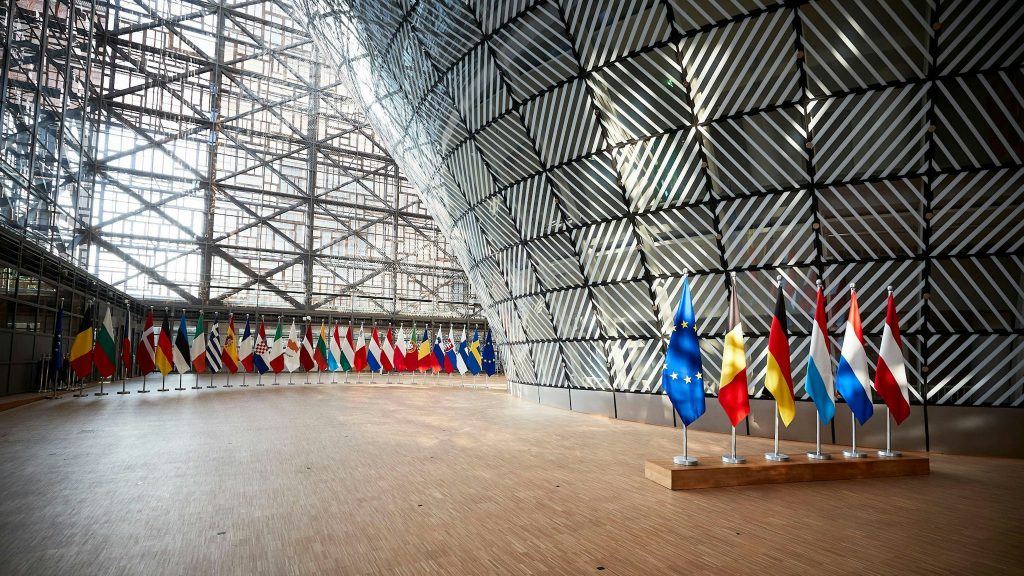
Thankfully, there arehave been numerous notable examples of successful forms of cooperation and integration among EU member states. Take, for instance, the Stability and Growth Pact (SGP) and the European Pact on Migration and Asylum (EMU). The Stability and Growth Pact, which went into force in January 1999 and received a major update following the financial crisis in 2011, aims to ensure budgetary discipline among member states by setting limits on deficits and public debt, thereby safeguarding the stability of the Economic and Monetary Union. Similarly, the European Pact on Migration and Asylum, which entered into force in June of 2026, seeks to streamline asylum procedures across the EU and facilitate orderly returns for those applicants whose request for asylum has been rejected.
Even in domains like defence and security policy, which were long considered the exclusive purview of NATO, there is now a discernible trend towards closer alignment and improved interoperability. Some illustrative examples of this development include the European Defence Agency (EDA), which encourages cooperation among member states in defence research, development, and procurement; the European Defence Fund (EDF), which provides funding for collaborative defence projects; and, last but not least, the Strategic Autonomy for Europe (SAFE) initiative, which provides no less than 150 billion euros150 billion euro in funding for the common procurement of military equipment.
Unfortunately, however, many hurdles still remain. Even joint programmes between just two or three countries can often encounter significant difficulties. For instance, Germany recently withdrew from the Future Combat Air System (FCAS) programme, which aimed to develop a new generation of fighter jets. Underlying this setback were deep internal disagreements over the way in which the new aircraft was to be designed. If integrating defence capabilities among only a few countries is already so challenging, how can the EU possibly hope to achieve military interoperability among all twenty-seven of its member states? One thing is therefore clear: this will be a long and gradual process which will take many years, if not many decades, to complete.
Europe currently finds itself in a paradoxical situation: it is too deeply integrated to untangle itself without causing irreparable damage, yet still not integrated deeply enough to presentform a united front on issues such asagainst Russian aggression, American pressurecoercion, and Chinese coercioncompetition. or even irregular migration flows. Resolving this dilemma, it seems to me, would require much closer coordination of hitherto separate policy areas within the framework of a federal union.
As Mario Draghi, the former president of the European Central Bank, recently observed in a speech he gave at KU Leuven: “Power requires Europe to move from confederation to federation. Where Europe has federated — on trade, on competition, on the single market, on monetary policy — we are respected as a power and negotiate as one. We see this today in the successful trade agreements being negotiated with India and Latin America. Where we have not federated — on defense, on industrial policy, on foreign affairs — we are treated as a loose assembly of middle-sized states, to be divided and dealt with accordingly.”
The transformation from confederation to federation will not happen overnight. Suggesting otherwise would demonstrate a lack of understanding of European politics. Another formal treaty change akin to the Lisbon Treaty of 2007 appears highly unlikely. After all, for that to happen, unanimous agreement among all twenty-seven member states would be required, which is exceedingly difficult, especially if the EU were to follow through on its plans to expand to thirty members or more. To put it simply, the EU can either deepen or expand, but doing both simultaneously will be extremely difficult. From a purely legal perspective, therefore, the EU is unlikely to change its institutional structure in the near future. Formal federalism remains a distant prospect.
The EU needs to decide whether it wants to become the ‘U.S.’ of Europe, or the ‘UN’ of Europe.
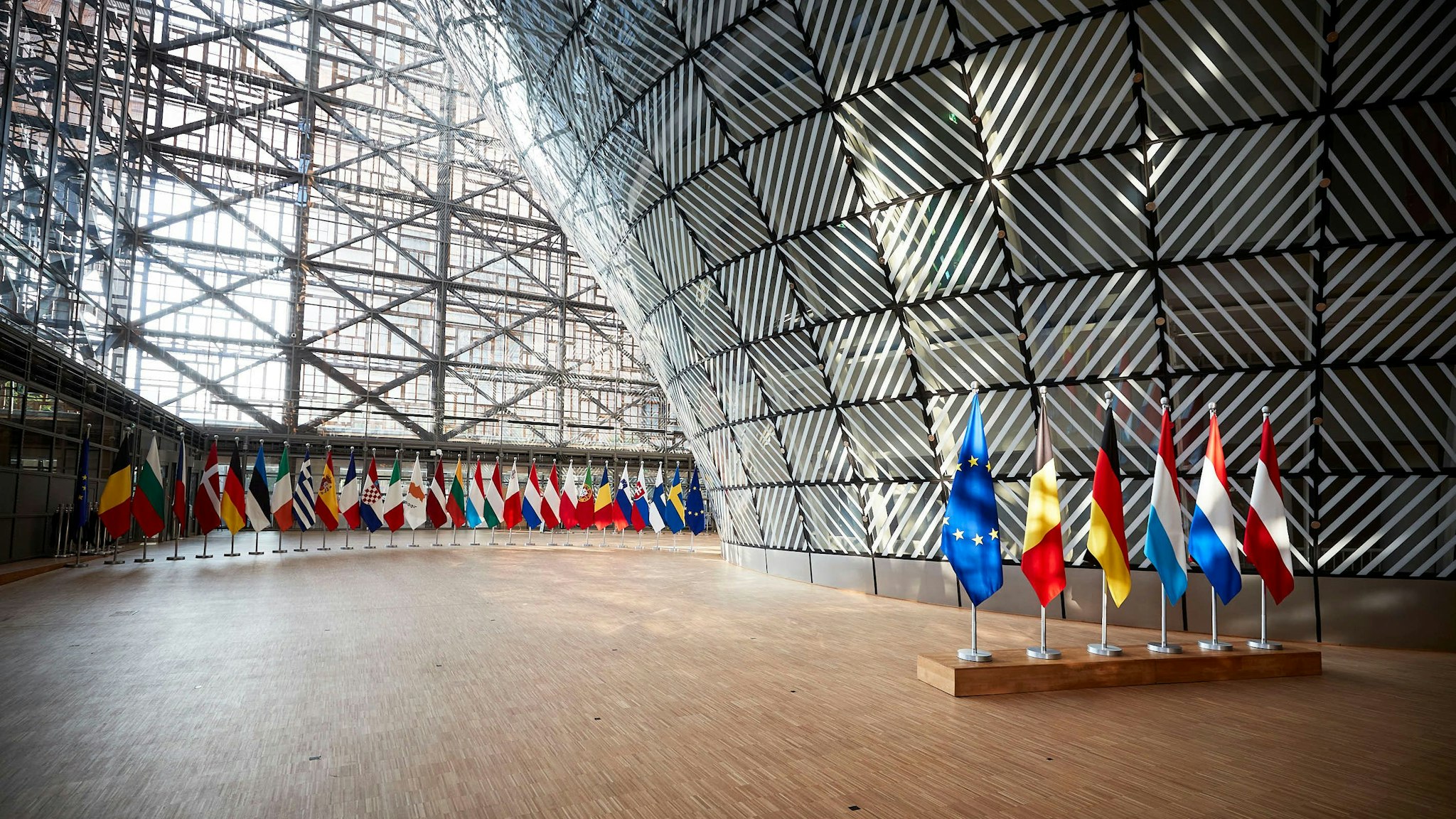
Yet federalism is a famously elastic concept; there are multiple paths that lead to Rome… Small-scale, functional integration in specific sectors may lead, over time, to a more informal kind of federalism — a ‘de facto’ federation. This ‘piecemeal’ approach, through a series of so-called ‘spillover effects’, could gradually bind previously separate states into a larger federal entity, blurring the line between federation and confederation to the point of becoming irrelevant. This theory of integration is known as neofunctionalism. As Robert Schuman famously stated on 9 May 1950: “Europe will not be made all at once, or according to a single plan. It will be built through concrete achievements which first create a de facto solidarity”.
Currently, European governments seem more likely to rely on the intergovernmental approach (that is, on ‘ad hoc’ forms of cooperation, or ‘coalitions of the willing’) rather than on ever deeper defence integration‘ever closer union’ or treaty reform. Given the current political landscape, this may be the most realistic path forward. In the long term, however, further integration of European defence industrieswill still be necessary. This is especially evident in the domain of defence. After all, what is the point of spending billions of euros to expand national defence budgets if the end result is still twenty-seven incompatible defence industries and weapon systems?
The need for deeper integration has become much more urgent in light of the growing instability of the global geopolitical landscape and the increasing competition coming from economic superpowers like China and the U.S. The assumption that the liberal international order (that is, the post-Cold War system defined by free trade, universally accepted rules, independent institutions like the IMF, WTO and OSCE, and the U.S. as a unilateral ‘global policeman’) would continue to characterise international relations for the remainder of human historyhas proven overly optimistic, if not dangerously naive.
Interdependence only functions ifas long as all parties adhere to the same set of rules and norms. However, major powers such as Russia, China and the United States have repeatedly violated the principles that underpin theon which the rules-based order used to rest. Some obvious examples include the Trump administration’s brazen imposition of tariffs on other countriesand China’s manipulation of its currency and its use of state subsidies to give its own industrial giants an unfair competitive advantage. International arbiters like the WTO have proven unable or unwilling to respond effectively. Similarly, multilateral organisations like the OSCE, tasked with maintaining security, like the OSCEhave essentially been rendered powerlessirrelevant.
If the EU wishes to avoid a similar fate to that of organisations like the OSCE, which has become largely irrelevant,it must transform itself from a largely intergovernmental institution into a truly supranational organisation capable of protecting the common interests of its members. As Verhofstadt once quipped, the EU needs to decide whether it wants to become the ‘U.S.’ of Europe, or the ‘UN’ of Europe. The idea that it can be both (or that it can simply stay somewhere in between) is an enticing but inaccurate illusion which Europe can no longer afford to entertain.
Some might argue that the recent rise of nationalist parties across Europe signals a lack of legitimacy and waning public support for the EU. In Europe’s three most powerful countries (France, Germany and the UK), populist parties have indeed made significant gains and are expected to win the next general election. Disillusionment with traditional centrist parties, which have so far failed to adequately address legitimate public concerns about uncontrolled immigration, has led to a surge in support for Eurosceptic populist parties. These parties are now expected to gain power in some of Europe’s most influential capitals. This could be a huge setback for the European project.
However, subsequent opinion polling by the European Parliament’s Eurobarometer clearly indicates that a growing majority of citizens is actually in favour of European integration. In fact, support for the EU has increased in recent years. Although this support is strongest among centrist and explicitly pro-European parties on the left, such as Volt and DiEM25, it would be wrong to assume that Europe’s current right is anti-Europeanthe European right is anti-EU across the board. Many moderate right-wing parties are strongly pro-EU, even if they do not always endorse the idea of an ‘ever closer union’.
Moreover, even among parties that are ostensibly nationalist, the appetite for a full exit from the EU has significantly waned following the fiasco of the Brexit experiment. The rise of nationalist parties appears to reflect dissatisfaction with specific government policies at both the national and European levels, rather than opposition to the EU in and of itself. Just as citizens may criticise their own government while still remaining loyal to their country, many voters drawn to the populist right may still support a stronger EU as long as it manages to address their concerns. They may want a different EU, but very few actually want to leave it entirely.
Dismantling or breaking up the EU is simply not a realistic proposition. Those who advocate such a course of action, often for short-term political gain, usually overlook the countless practical challenges that would inevitably arise. Would it really be wise, for example, to abandon the EU’s common trade policyto abandon the Common Commercial Policy, dismantleto abolish the Common Agricultural Policy, or abandon the euroor to dismantle the common currency? Any new government, even one with a radical right-wing agenda,whether on the left or the right, would soon have to recognise the impracticality of such proposals.
Furthermore, it is highly likely they would realise that addressing the issues they were elected to resolve, chief among them uncontrolled immigration, actually requires deeper integration and closer coordination with other European capitals. The 2015 migration and refugee crisis of 2015 was not the result of excessive central control from the EU. , but rQuite the opposite: it was the result of a lack of coordinated action, which led to a chaotic and contradictory array of national reactionspolicies. In reality, European integration actually serves the national interest. Fragmentation, by contrast, further endangers it.
The EU in its current configuration is still far from becoming a genuine federation. Nevertheless, the necessity of responding collectively to both internal and external challenges may, over a long period of time, gradually push it in a more federalist direction. Thus, there may still be reason for cautious optimism. Despite the electorate’s shift towards more nationalistic parties, a stronger, more federal EU is still possible. Personally, I strongly believe this would not just benefit the particular interests of some, but would truly be in the interest of Europe as a whole. Yet Churchill’s warning still resonates: time may be short. We must begin now.
Thankfully, there arehave been numerous notable examples of successful forms of cooperation and integration among EU member states. Take, for instance, the Stability and Growth Pact (SGP) and the European Pact on Migration and Asylum (EMU). The Stability and Growth Pact, which went into force in January 1999 and received a major update following the financial crisis in 2011, aims to ensure budgetary discipline among member states by setting limits on deficits and public debt, thereby safeguarding the stability of the Economic and Monetary Union. Similarly, the European Pact on Migration and Asylum, which entered into force in June of 2026, seeks to streamline asylum procedures across the EU and facilitate orderly returns for those applicants whose request for asylum has been rejected.
Even in domains like defence and security policy, which were long considered the exclusive purview of NATO, there is now a discernible trend towards closer alignment and improved interoperability. Some illustrative examples of this development include the European Defence Agency (EDA), which encourages cooperation among member states in defence research, development, and procurement; the European Defence Fund (EDF), which provides funding for collaborative defence projects; and, last but not least, the Strategic Autonomy for Europe (SAFE) initiative, which provides no less than 150 billion euros150 billion euro in funding for the common procurement of military equipment.
Unfortunately, however, many hurdles still remain. Even joint programmes between just two or three countries can often encounter significant difficulties. For instance, Germany recently withdrew from the Future Combat Air System (FCAS) programme, which aimed to develop a new generation of fighter jets. Underlying this setback were deep internal disagreements over the way in which the new aircraft was to be designed. If integrating defence capabilities among only a few countries is already so challenging, how can the EU possibly hope to achieve military interoperability among all twenty-seven of its member states? One thing is therefore clear: this will be a long and gradual process which will take many years, if not many decades, to complete.
Europe currently finds itself in a paradoxical situation: it is too deeply integrated to untangle itself without causing irreparable damage, yet still not integrated deeply enough to presentform a united front on issues such asagainst Russian aggression, American pressurecoercion, and Chinese coercioncompetition. or even irregular migration flows. Resolving this dilemma, it seems to me, would require much closer coordination of hitherto separate policy areas within the framework of a federal union.
As Mario Draghi, the former president of the European Central Bank, recently observed in a speech he gave at KU Leuven: “Power requires Europe to move from confederation to federation. Where Europe has federated — on trade, on competition, on the single market, on monetary policy — we are respected as a power and negotiate as one. We see this today in the successful trade agreements being negotiated with India and Latin America. Where we have not federated — on defense, on industrial policy, on foreign affairs — we are treated as a loose assembly of middle-sized states, to be divided and dealt with accordingly.”
The transformation from confederation to federation will not happen overnight. Suggesting otherwise would demonstrate a lack of understanding of European politics. Another formal treaty change akin to the Lisbon Treaty of 2007 appears highly unlikely. After all, for that to happen, unanimous agreement among all twenty-seven member states would be required, which is exceedingly difficult, especially if the EU were to follow through on its plans to expand to thirty members or more. To put it simply, the EU can either deepen or expand, but doing both simultaneously will be extremely difficult. From a purely legal perspective, therefore, the EU is unlikely to change its institutional structure in the near future. Formal federalism remains a distant prospect.
Yet federalism is a famously elastic concept; there are multiple paths that lead to Rome… Small-scale, functional integration in specific sectors may lead, over time, to a more informal kind of federalism — a ‘de facto’ federation. This
‘piecemeal’ approach, through a series of so-called ‘spillover effects’, could gradually bind previously separate states into a larger federal entity, blurring the line between federation and confederation to the point of becoming irrelevant. This theory of integration is known as neofunctionalism. As Robert Schuman famously stated on 9 May 1950: “Europe will not be made all at once, or according to a single plan. It will be built through concrete achievements which first create a de facto solidarity”.
Currently, European governments seem more likely to rely on the intergovernmental approach (that is, on ‘ad hoc’ forms of cooperation, or ‘coalitions of the willing’) rather than on ever deeper defence integration‘ever closer union’ or treaty reform. Given the current political landscape, this may be the most realistic path forward. In the long term, however, further integration of European defence industrieswill still be necessary. This is especially evident in the domain of defence. After all, what is the point of spending billions of euros to expand national defence budgets if the end result is still twenty-seven incompatible defence industries and weapon systems?
The need for deeper integration has become much more urgent in light of the growing instability of the global geopolitical
landscape and the increasing competition coming from economic superpowers like China and the U.S. The assumption that the liberal international order (that is, the post-Cold War system defined by free trade, universally accepted rules, independent institutions like the IMF, WTO and OSCE, and the U.S. as a unilateral ‘global policeman’) would continue to characterise international relations for the remainder of human historyhas proven overly optimistic, if not dangerously naive.
Interdependence only functions ifas long as all parties adhere to the same set of rules and norms. However, major powers such as Russia, China and the United States have repeatedly violated the principles that underpin theon which the rules-based order used to rest. Some obvious examples include the Trump administration’s brazen imposition of tariffs on other countriesand China’s manipulation of its currency and its use of state subsidies to give its own industrial giants an unfair competitive advantage. International arbiters like the WTO have proven unable or unwilling to respond effectively. Similarly, multilateral organisations like the OSCE, tasked with maintaining security, like the OSCEhave essentially been rendered powerlessirrelevant.
If the EU wishes to avoid a similar fate to that of organisations like the OSCE, which has become largely irrelevant,it must transform itself from a largely intergovernmental institution into a truly supranational organisation capable of protecting the common interests of its members. As Verhofstadt once quipped, the EU needs to decide whether it wants to become the ‘U.S.’ of Europe, or the ‘UN’ of Europe. The idea that it can be both (or that it can simply stay somewhere in between) is an enticing but inaccurate illusion which Europe can no longer afford to entertain.
Some might argue that the recent rise of nationalist parties across Europe signals a lack of legitimacy and waning public support for the EU. In Europe’s three most powerful countries (France, Germany and the UK), populist parties have indeed made significant gains and are expected to win the next general election. Disillusionment with traditional centrist parties, which have so far failed to adequately address legitimate public concerns about uncontrolled immigration, has led to a surge in support for Eurosceptic populist parties. These parties are now expected to gain power in some of Europe’s most influential capitals. This could be a huge setback for the European project.
However, subsequent opinion polling by the European Parliament’s Eurobarometer clearly indicates that a growing majority of citizens is actually in favour of European integration. In fact, support for the EU has increased in recent years. Although this support is strongest among centrist and explicitly pro-European parties on the left, such as Volt and DiEM25, it would be wrong to assume that Europe’s current right is anti-Europeanthe European right is anti-EU across the board. Many moderate right-wing parties are strongly pro-EU, even if they do not always endorse the idea of an ‘ever closer union’.
Moreover, even among parties that are ostensibly nationalist, the appetite for a full exit from the EU has significantly waned following the fiasco of the Brexit experiment. The rise of nationalist parties appears to reflect dissatisfaction with specific government policies at both the national and European levels, rather than opposition to the EU in and of itself. Just as citizens may criticise their own government while still remaining loyal to their country, many voters drawn to the populist right may still support a stronger EU as long as it manages to address their concerns. They may want a different EU, but very few actually want to leave it entirely.
Dismantling or breaking up the EU is simply not a realistic proposition. Those who advocate such a course of action, often for short-term political gain, usually overlook the countless practical challenges that would inevitably arise. Would it really be wise, for example, to abandon the EU’s common trade policyto abandon the Common Commercial Policy, dismantleto abolish the Common Agricultural Policy, or abandon the euroor to dismantle the common currency? Any new government, even one with a radical right-wing agenda,whether on the left or the right, would soon have to recognise the impracticality of such proposals.
Furthermore, it is highly likely they would realise that addressing the issues they were elected to resolve, chief among them uncontrolled immigration, actually requires deeper integration and closer coordination with other European capitals. The 2015 migration and refugee crisis of 2015 was not the result of excessive central control from the EU. , but rQuite the opposite: it was the result of a lack of coordinated action, which led to a chaotic and contradictory array of national reactionspolicies. In reality, European integration actually serves the national interest. Fragmentation, by contrast, further endangers it.
The EU in its current configuration is still far from becoming a genuine federation. Nevertheless, the necessity of responding collectively to both internal and external challenges may, over a long period of time, gradually push it in a more federalist direction. Thus, there may still be reason for cautious optimism. Despite the electorate’s shift towards more nationalistic parties, a stronger, more federal EU is still possible. Personally, I strongly believe this would not just benefit the particular interests of some, but would truly be in the interest of Europe as a whole. Yet Churchill’s warning still resonates: time may be short. We must begin now.
Recommended
Why a Weak Russia Is Still Dangerous

How Semiconductors Shape the New World Order
The Exhaustion of Democracy Promotion
How a Peninsula Conflict Could Trigger a Multi-Theater Great Power Crisis
Redefining U.S. Security in a Two-Front World