The Transformation of the Middle Eastern Security Order
The Decline of External Powers and Rise of Regional Powers

If the past twenty-five years have demonstrated anything, it is that United States (U.S.) foreign policy (USFP) decision-making can change on a dime. Undoubtedly, Donald Trump’s presidency has forced the entire USFP apparatus to revisit questions long since considered to be answered, such as the value of globalization and participation in international fora. Coupled with Trump’s distinct rhetorical style, the USFP community largely views his choices with disdain, as an unnecessary, harmful break from the steady, predictable, and coherent foreign policy of the past several decades.
However, President Joseph Biden’s attempts to undo Trump’s first term had mixed results. To be sure, Biden diligently campaigned on a familiar and effective strategy of policy rejection. Upon taking office, however, his efforts to “return to business as usual” ultimately failed. On the one hand, transatlantic partnerships were weakened under Trump 1.0, and agreements were more difficult to reach. On the other hand, Biden actually maintained some of Trump’s changes, such as the tougher economic approach to the People’s Republic of China (PRC) and his plans to withdraw troops from Afghanistan. For those in the anti-Trump camp, however, the most devastating blow of all was that Biden’s four-year term did not prevent Trump’s historic comeback in 2024.
Historically, USFP takes on the character of the people in power. In fact, there are four schools of thought named for consequential historical figures who pioneered distinct approaches to the decision-making process. This century, especially, each of the twenty-first-century presidents have demonstrated through policy and policy rejection how differently they view the U.S.’ international role. Simultaneously, USFP decision-making powers are increasingly centralized within the Executive Branch rather than coordinated with Congress. Consequently, changes in USFP feel more abrupt, more damaging, and more partisan than ever before.
The narrative of USFP coherence is enticing, but misleading and politically charged. Biden’s “return to normalcy” campaign fell short because USFP is not a doctrine that can be reinstated. Rather, it is historically, and currently remains, a dynamic apparatus which arms the U.S. with the flexibility to navigate complex short-, medium-, and long-term goals. To that end, this essay challenges the assumption that USFP was ever in a state of true “coherence” that the U.S. can somehow return to under the right political conditions. Rather, it is a complex story of contradicting values, policies, and people which materially resulted in geopolitical power. Moreover, it highlights the issue with high levels of unitary centralization and suggests that stronger decentralization will mitigate the effects of abrupt changes while still allowing the U.S. to maintain higher levels of strategic ambiguity.
Coherence Without Continuity
An ideal-typical characterization of policy coherence is conceptualized as a set of closely related values from which decision-making is derived. States utilize coordination mechanisms that span legal bodies to ensure policy on trade, national security, and diplomacy are aligned and do not undermine or conflict with one another. As a result, policy decisions are stable, potentially even static. Moreover, decisions likely embody a state’s national self-conception, generate popular support, and remain in place across leadership. Importantly, changes in policy occur gradually and as a natural reaction to shifts in the international system.
Utilizing this characterization, we cannot easily claim that USFP is coherent. Thinking through the past four election cycles, Barack Obama, Trump 1.0 and 2.0, and Biden spent a considerable amount of their terms undoing the policy decisions made by their predecessor rather than adding to or expanding upon them. Notable examples from Trump’s first term include withdrawing the U.S. from the Joint Comprehensive Plan of Action (JCPOA; Iran Nuclear Deal), the Trans-Pacific Partnership, and the Paris Climate Accords. Similarly, Biden sought to re-enter the U.S. into various internal fora, including Paris, as well as to renegotiate a nuclear deal with Iran. While the hot-and-cold nature of USFP may seem commonplace now, these actions were a complete shock to U.S. and international stakeholders alike and damaged U.S. credibility as a reliable partner.
is pursuing a Master of Arts in international relations at American University School of International Service. She works as a federal contractor, and areas of professional and academic expertise include U.S. foreign policy history as well as nonproliferation, arms control, and international trade security.
The Decline of External Powers and Rise of Regional Powers
How a Peninsula Conflict Could Trigger a Multi-Theater Great Power Crisis
How America’s Liberal Order Lost Its Domestic Foundation
American foreign policy has never been guided by a single, uncontested logic. From its earliest days, U.S. foreign policy decision-making has been shaped by competing priorities, worldviews, and underlying assumptions about power, commerce, democracy, and America’s role in the world. As Walter R. Mead famously argued in Special Providence: American Foreign Policy and How It Changed the World (2001), these tensions can be understood through four distinct traditions that continue to influence U.S. foreign policy thinking.
One of these traditions is the Hamiltonian approach, which places international commerce at the center of American power. Hamiltonians view global trade not merely as an economic activity but as a strategic instrument, emphasizing U.S. engagement with international markets and the institutions that sustain them. Accordingly, strong relationships with economically significant states are seen as essential to national strength and global influence.
In contrast, the Jeffersonian tradition reflects a deep skepticism toward expansive government authority and large institutional structures. Rooted in a strong belief in individual liberty and democracy as a domestic practice, Jeffersonians prioritize preserving the American republic from external entanglements. As a result, policies associated with this tradition often appear inward-looking, cautious of foreign commitments, and at times openly nationalist or isolationist in tone.
The Jacksonian tradition, meanwhile, draws its character from popular sovereignty and a pronounced emphasis on military strength. Jacksonians are less concerned with abstract principles or institutional norms and more focused on national honor, security, and decisive victory. This approach frequently channels populist sentiment and tends to mobilize nationalism more explicitly than the Jeffersonian worldview, particularly in moments of perceived threat.
Finally, the Wilsonian tradition emerged from the trauma of the First World War and rests on the conviction that American power carries a moral responsibility. Wilsonians champion international liberalism, multilateralism, and human rights, arguing that democracy must be defended and promoted beyond U.S. borders. Unlike Jeffersonians, they do not see democracy promotion as a risk to the republic, but rather as an obligation—one that requires active engagement to make the world, in Woodrow Wilson’s words, “safe for democracy.”
None of the four schools lay claim to USFP decision-making and, certainly, no one president engages in policies reflective of a single school. For instance, the Biden administration espoused Wilsonian values, such as by actively participating in the historic multilateral sanctions regime against Russia for its invasion of Ukraine in February 2022. However, his administration was also sensitive to public perceptions against U.S. internationalism. Policies like the CHIPS Act aimed to reshore critical manufacturing back to the U.S. and thus could be representative of a more Jeffersonian approach.
American foreign policy has never been guided by a single, uncontested logic. From its earliest days, U.S. foreign policy decision-making has been shaped by competing priorities, worldviews, and underlying assumptions about power, commerce, democracy, and America’s role in the world. As Walter R. Mead famously argued in Special Providence: American Foreign Policy and How It Changed the World (2001), these tensions can be understood through four distinct traditions that continue to influence U.S. foreign policy thinking.
One of these traditions is the Hamiltonian approach, which places international commerce at the center of American power. Hamiltonians view global trade not merely as an economic activity but as a strategic instrument, emphasizing U.S. engagement with international markets and the institutions that sustain them. Accordingly, strong relationships with economically significant states are seen as essential to national strength and global influence.
In contrast, the Jeffersonian tradition reflects a deep skepticism toward expansive government authority and large institutional structures. Rooted in a strong belief in individual liberty and democracy as a domestic practice, Jeffersonians prioritize preserving the American republic from external entanglements. As a result, policies associated with this tradition often appear inward-looking, cautious of foreign commitments, and at times openly nationalist or isolationist in tone.
The Jacksonian tradition, meanwhile, draws its character from popular sovereignty and a pronounced emphasis on military strength. Jacksonians are less concerned with abstract principles or institutional norms and more focused on national honor, security, and decisive victory. This approach frequently channels populist sentiment and tends to mobilize nationalism more explicitly than the Jeffersonian worldview, particularly in moments of perceived threat.
Finally, the Wilsonian tradition emerged from the trauma of the First World War and rests on the conviction that American power carries a moral responsibility. Wilsonians champion international liberalism, multilateralism, and human rights, arguing that democracy must be defended and promoted beyond U.S. borders. Unlike Jeffersonians, they do not see democracy promotion as a risk to the republic, but rather as an obligation—one that requires active engagement to make the world, in Woodrow Wilson’s words, “safe for democracy.”
None of the four schools lay claim to USFP decision-making and, certainly, no one president engages in policies reflective of a single school. For instance, the Biden administration espoused Wilsonian values, such as by actively participating in the historic multilateral sanctions regime against Russia for its invasion of Ukraine in February 2022. However, his administration was also sensitive to public perceptions against U.S. internationalism. Policies like the CHIPS Act aimed to reshore critical manufacturing back to the U.S. and thus could be representative of a more Jeffersonian approach.
Interestingly, three out of four of Mead’s schools of thought are named after a specific U.S. president. In a practical sense, this is because each of these men exemplified specific patterns and preferences during their time working with or presiding over the federal government, which have since been emulated by subsequent leaders. However, it also speaks to the enduring trend of power consolidation within the Executive Branch that contributes to the hyper-incoherence in USFP today. In fact, the most notable swings in USFP seem to occur when POTUS has the most say.
There are myriad historical examples of individual personalities and behaviors affecting key foreign policy decisions. For instance, take the Cuban Missile Crisis. President John F. Kennedy’s commitment to non-invasion likely saved the world from total nuclear annihilation. A common question posed to students of international relations is whether the outcome of the most fraught 13 days in nuclear history would have ended differently if another president, say Richard “Tricky Dick” Nixon, had been in charge.
Indeed, individual presidents and their voting constituencies historically impose their own values and personalities onto USFP. For instance, scholarship on the Cold War increasingly considers how President Franklin Delano Roosevelt’s personality was far more agreeable in the eyes of USSR Premier Joseph Stalin than was Harry S. Truman’s (FDR’s vice president and successor), which may have impacted the outbreak of the Cold War in 1949. Similar political arguments abound today; for instance, pundits argue that Russia would not have invaded Ukraine if Trump had won the 2020 election.
In fact, U.S. history suggests that presidential candidates can impact foreign policy before ever stepping foot in the Oval Office. For instance, American kinetic operations during the Vietnam War (1964–1973) may have ended much earlier if Nixon had not gotten involved. In late 1968, evidence surfaced that Nixon had interfered with President Lyndon B. Johnson’s ongoing peace negotiations with Hanoi, effectively prolonging the war (i.e., the Chennault Affair). To some, this failure cost his vice president, Hubert Humphrey, the 1968 election and allowed Nixon to win by one of the slimmest popular majorities in U.S. history.
More than anything, these examples underscore the importance of reputable, responsible leaders serving at the helm of USFP. Likewise, they also suggest that irresponsible, cavalier, or morally questionable leaders can have damning consequences for Americans and global actors.
Empire or Principle?
To be sure, there is a lot of variation in the way in which USFP decision-making is approached and which policies are supported or discarded. It is important to note that the inherent nature of policy making—foreign or domestic—lends itself to the preclusion of a rigid decision-making structure; as such, it is often difficult to determine which national values or institutional cultures affect policy making and how. Moreover, consistency in policy outcomes is not necessarily the same as true coherence in policymaking. Measures of consistency concern the material effects or consequences of a policy decision, whether or not that decision was made according to a standard set of values.
Ultimately, whether exceptionalism is a USFP value is moot; the jarring policy changes of this quarter century persist, suggesting that all values are in flux.
This being said, there are strong arguments in favor of coherence which rest on the values that comprise USFP. Particularly, leftist thinkers and historians, such as William Appleman Williams, Howard Zinn, Noam Chomsky, and Michael Parenti, similarly argue that the history of USFP is one of empire—values and consequences alike. To this end, leftist thinkers often argue that policy decisions are informed by a core set of assumptions about American character, which is best understood as American exceptionalism.
On its own, American exceptionalism asserts that the founding of the U.S. was, well, exceptional. To be sure, the American experiment was novel circa 1776, and its growth since is unprecedented. According to leftist and even some conservative thinkers, this belief has evolved into a conviction that these historical accomplishments differentiate the U.S.’ role in the world from all other countries, affording it impunity and, at times, messianic impetus. Common phrases meant to communicate exceptionalism include both historical anecdotes such as “the U.S. is a city upon a hill” or “the frontier shaped a distinctive American character,” as well as current policy talking points (e.g., the U.S. is a beacon of democracy; the U.S. is the leader of the free world).
Importantly, American exceptionalism is invoked by folks across the political spectrum for both benign and violent reasons. For instance, Cold Warriors active in the USFP arena, like George F. Kennan, often cited U.S. moral superiority based on its values of political and economic liberalism (e.g., freedom of the press) to condemn the violent oppression exercised by the USSR. Similarly, during the 1990s, the U.S. openly advocated for humanitarian intervention to liberate populations from violent governments or to provide aid for healthcare, education, and gender equality for comparable reasons.
However, exceptionalism has also been historically weaponized to support territorial expansion or military operations. For instance, social gospel leader Josiah Strong in 1885 published a book titled Our Country: Its Possible Future and Its Present Crisis, wherein he argued for the racial superiority of Anglo-Saxon-descended Americans, of Christianity, and of the mission Americans had to spread both to all corners of the globe. Similar sentiment was invoked by President Ronald Reagan during the 1980s, such as in his famous “Evil Empire” speech delivered to the National Association of Evangelicals in 1983 or in defense of military operations in Guatemala.
Certainly, American exceptionalism is an important theme in U.S. national mythology. Claiming it is a static value informing USFP decision-making, however, is more difficult to assert. Like all things, there are times in which ideas inform material realities; likewise, there are times in which material realities inform ideas. The dialectic process of both often occurs simultaneously, and the syntheses meld and turn into something completely new (a visual I would often provide students with was that of wax in a lava lamp). Ultimately, whether exceptionalism is a USFP value is moot; the jarring policy changes of this quarter century persist, suggesting that all values are in flux.
Foundationally, USFP decision-making is an enduring contest between the Executive Branch, Congress, and interest groups. This is important, as it is neither realistic nor strategically sound to promote a monolithic, unitary, or static approach to foreign policy. Coordinating across multiple actors and affording distinctive powers or spheres of influence for each ensures that USFP remains dynamic. However, this also introduces myriad challenges. Actors continuously vie for influence, and some feel incredibly entitled to decision-making powers at the expense of others or, on the extreme end, of the democratic process entirely.
Presidential Overreach
From the outset, USFP was never intended to be controlled by one federal branch. In 1958, political scientist and constitutional scholar Edward Corwin posited that the U.S. Constitution is an “invitation to struggle” over which entity—the president or the Congress—gets the privilege of deciding the direction of USFP. U.S. presidents are endowed with certain powers, most obviously that they are the Commander-in-Chief. Likewise, Congress is afforded a broad range of responsibilities that it alone can carry out, such as declaring war and ratifying treaties (much to Woodrow Wilson’s dismay).
The decentralization of USFP decision-making written into the Constitution is intentional. Ideally, it affords both Congress and the President individual powers and encourages collaboration. A balanced foreign policy actively coordinates and includes Congress, which results in a more durable, forward-thinking, and democratic foreign policy apparatus.
Instead, decision-making power is increasingly concentrated within not just the Executive Branch (primarily between the Department of State, the Department of Defense (War), the Department of the Treasury, and the Department of Commerce), but within the White House itself. Each of these departments spearheads different areas of the President’s foreign policy agenda—diplomacy, defense and war, and trade. As such, there is often overlap in their duties, and they sometimes engage in interagency cooperation regarding national security issues (e.g., sanctions policy and foreign aid).
However, the extent to which Presidents outsource USFP decision-making solely depends on their personal preferences. For instance, POTUS is legally required to maintain the National Security Council (NSC), but not to hold regular meetings or invite certain key individuals (e.g., State, DOD). In fact, some presidents have even appointed secretaries to oversee other executive functions. For instance, Nixon appointed his secretary of state, Henry Kissinger, to dually serve as his National Security Advisor (NSA); similarly, Secretary of State Marco Rubio is Trump’s interim NSA. The Trump Administration is particularly untrusting of outside parties, and often appoints special envoys, such as Steve Witkoff, to handle emerging issues rather than rely on career foreign service officers or ambassadors.
Frustratingly, some of this decision-making power is willingly abdicated by Congress itself. Key legislative decisions made as early as the 1930s provide the president with an immense amount of autonomy. Further, Congress often fails to enforce its own attempts to reassert some power over USFP. The 1973 War Powers Resolution, passed in response to U.S. entrance into and presidential decisions made during the Vietnam War (such as Nixon’s decision to bomb Cambodia), is rarely enforced. Indeed, there is an astonishing lack of political will on the part of members of Congress to assert their constitutionally given powers over the direction of USFP; this is especially true if the political affiliation of the majority party and the president are the same.
Interestingly, three out of four of Mead’s schools of thought are named after a specific U.S. president. In a practical sense, this is because each of these men exemplified specific patterns and preferences during their time working with or presiding over the federal government, which have since been emulated by subsequent leaders. However, it also speaks to the enduring trend of power consolidation within the Executive Branch that contributes to the hyper-incoherence in USFP today. In fact, the most notable swings in USFP seem to occur when POTUS has the most say.
There are myriad historical examples of individual personalities and behaviors affecting key foreign policy decisions. For instance, take the Cuban Missile Crisis. President John F. Kennedy’s commitment to non-invasion likely saved the world from total nuclear annihilation. A common question posed to students of international relations is whether the outcome of the most fraught 13 days in nuclear history would have ended differently if another president, say Richard “Tricky Dick” Nixon, had been in charge.
Indeed, individual presidents and their voting constituencies historically impose their own values and personalities onto USFP. For instance, scholarship on the Cold War increasingly considers how President Franklin Delano Roosevelt’s personality was far more agreeable in the eyes of USSR Premier Joseph Stalin than was Harry S. Truman’s (FDR’s vice president and successor), which may have impacted the outbreak of the Cold War in 1949. Similar political arguments abound today; for instance, pundits argue that Russia would not have invaded Ukraine if Trump had won the 2020 election.
In fact, U.S. history suggests that presidential candidates can impact foreign policy before ever stepping foot in the Oval Office. For instance, American kinetic operations during the Vietnam War (1964–1973) may have ended much earlier if Nixon had not gotten involved. In late 1968, evidence surfaced that Nixon had interfered with President Lyndon B. Johnson’s ongoing peace negotiations with Hanoi, effectively prolonging the war (i.e., the Chennault Affair). To some, this failure cost his vice president, Hubert Humphrey, the 1968 election and allowed Nixon to win by one of the slimmest popular majorities in U.S. history.
More than anything, these examples underscore the importance of reputable, responsible leaders serving at the helm of USFP. Likewise, they also suggest that irresponsible, cavalier, or morally questionable leaders can have damning consequences for Americans and global actors.
Empire or Principle?
To be sure, there is a lot of variation in the way in which USFP decision-making is approached and which policies are supported or discarded. It is important to note that the inherent nature of policy making—foreign or domestic—lends itself to the preclusion of a rigid decision-making structure; as such, it is often difficult to determine which national values or institutional cultures affect policy making and how. Moreover, consistency in policy outcomes is not necessarily the same as true coherence in policymaking. Measures of consistency concern the material effects or consequences of a policy decision, whether or not that decision was made according to a standard set of values.
Not all interest groups are created equal, however.
Still, presidents continue to push the envelope on what they can and cannot do. For instance, presidents of both parties continue to challenge Congressional war powers. Both Obama’s 2011 air strikes in Libya, in coordination with NATO against Muammar al-Gaddafi’s regime, and Trump’s most recent threats to all but declare war on Venezuela (including sinking “drug boats” in international waters) blatantly challenge the War Powers Resolution. In both cases, presidents and their legal teams have argued that the War Powers Resolution is an infringement of their own powers as Commander-in-Chief. However, these arguments are hardly needed, as bills introduced by members of Congress to rein in presidential action rarely even make it to a vote.
Lobbying Foreign Policy
In addition to both the Executive and Legislative Branches, interest groups also wield heavy influence over the direction of USFP. In short, interest groups comprise a wide, complex range of actors who each vie for specific policies from which they will benefit. These actors largely consist of non-governmental organizations (NGOs), foreign and domestic lobbyists and political groups, corporations, foreign policy research institutions and laboratories, whether or not affiliated with a university, as well as think tanks, journals, and other official outlets of public opinion.
Not all interest groups are created equal, however. Some organizations are far more powerful than others and, consequently, have more sway over USFP. This is especially true in Congress, where Members represent constituencies comprised of both voters and interested stakeholders, e.g., special interest groups, business associations, labor unions, campaign donors; the list is not exhaustive. Congressional members are locked in a constant tug-of-war between these myriad actors, wherein the strongest groups, characterized primarily in terms of size and funding, have the most direct impact on the issues members are concerned with and the legislation they write or support.
One of the more obvious examples of a strong organization is the American Israel Public Affairs Committee (AIPAC). Regardless of individual opinions on the costs and benefits of maintaining a “special relationship,” the fact remains that AIPAC and what John Mearsheimer refers to as the “Israel Lobby” wield a great deal of influence over the direction of U.S.-Israel policy. In 2024 alone, AIPAC boasts it directly supported 361 Democrats and Republicans with a cumulative US$53 million. Those dollars went into congressional campaigns, helping endorsed candidates win their primaries and garner support from other affiliated entities. This approach is not unique to AIPAC, but it is salient due to both the size of the organization and the sensitivities surrounding Israel, the ongoing hostilities in Gaza, and antisemitism more broadly.
There are also a host of private sector actors which maintain strong relationships with the federal government. Think tanks like the Council on Foreign Relations, the Cato Institute, the RAND Corporation, the American Enterprise Institute, the Heritage Foundation, and the Brookings Institution all have robust government affairs divisions and regularly interface with Members of Congress as well as Executive Branch officials. NGOs and non-profits, like Amnesty International, also lobby Congress over specific issues. Similarly, corporations and business associations dedicate an immense number of resources to government lobbying over foreign policy-related issues like trade and defense spending (particularly regarding procurement).
It is important to note, however, that the degree of influence USFP-related interest groups have largely depends on the political affiliation of the president. For example, business associations are generally pro–free trade and oppose economic tools like tariffs and sanctions. A president affiliated with the current Democratic Party is more likely to listen to free-trade lobbyists and enter into free trade agreements that promote specific industries, like high technology. Likewise, a president of the current Republican Party is more likely to support policies promoted by conservative lobbyists. The Heritage Foundation, for instance, pushes nationalist policies, like cutting foreign aid or imposing high tariffs, that the current White House is very receptive to.
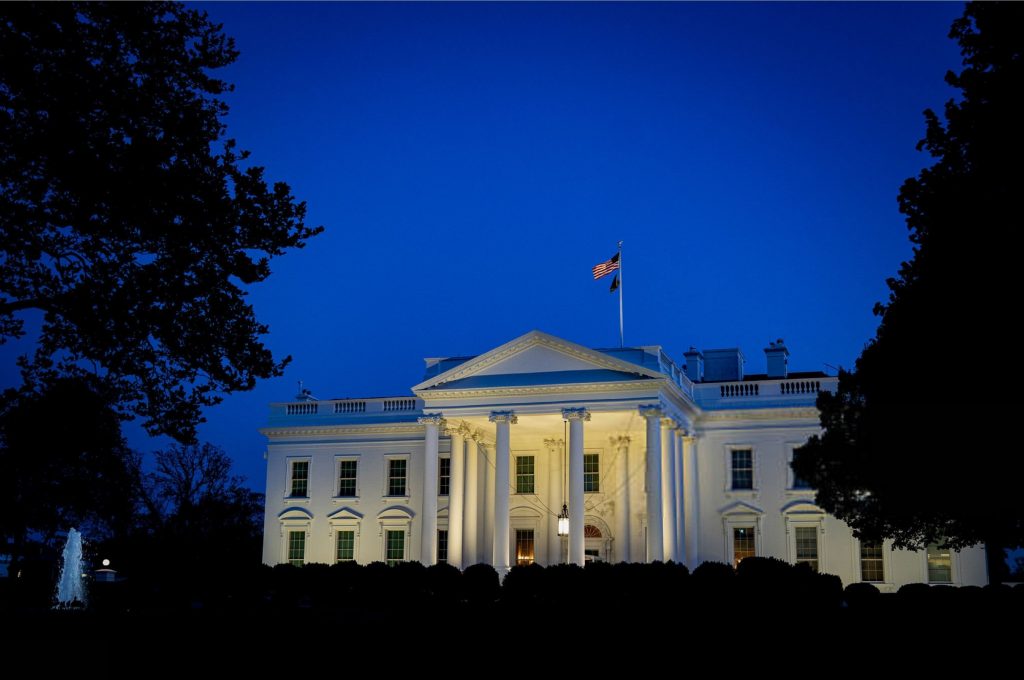
Without a doubt, both the high levels of USFP centralization and the number of competing voices put a strain on policy coherence. To make matters even more complicated, policymakers themselves assert their own understanding of national self-conception into their work. The degree to which this impacts USFP coherence, however, depends on the era and historical conditions.
Many “Isms,” One State
National self-conception is a topic that has the physical attributes of a non-Newtonian liquid. In times of immense external threats or pressures, defining what America is seems easier to accomplish (or strongarm). In times of few or intangible threats, national self-conception seems thin and watery. It is more difficult to grasp and often falls prey to partisan actors seeking to weaponize it.
For a country like the U.S., its entire inception and rapid growth create fertile ground for multiple, competing ideas of what the country stands for and who it protects. Often, answers to these questions differ according to ideological convictions, political affiliations, personal experiences, and historical conditions. Is the U.S. a global leader and a beacon for democracy? Or is it an empire that ruthlessly sought territorial expansion and capital accumulation at the expense of the nation’s and the world’s most vulnerable populations? Does exceptionalism translate into moral obligation? Is it a sign of divine favoritism? Most importantly, can multiple self-conceptions be true at once?
Overall, the goal is to avoid a post-modernist spiral. However, it is important to recognize that the U.S. has worn many “-isms” during its 250-year history. These broadly consist of isolationism, protectionism, expansionism, imperialism, and globalism. Each captures important processes that accompany or result from historical events and is often embodied by POTUS in the form of strong executive actions, like foreign policy “doctrines.”
From its founding through the 1960s, the U.S. steadily progressed through each of the “-isms.” Often, it did so reactively. Both the growth of the U.S. and changes in the international system contributed to the evolving landscape in which American values were created. As such, there was not much competition among these “-isms” for determining national character. Rather, presidents often built on the policy decisions made by their predecessors in three distinct areas: continental, hemispheric, and global affairs. For this reason, USFP prior to the late-twentieth century appears far more linear, and thus coherent. Determining whether appearance is fact, however, requires in-depth analysis and primary source research.
Even without a novel-length analysis, though, there is an observable departure from the steady evolution of USFP that emerged in the 1970s. Spurred by the unpopularity of the Vietnam War, late-twentieth-century presidents, from Nixon to Bill Clinton, all had different approaches to USFP that, at times, contradicted the decisions made by their immediate predecessor; most notably, the policy shifts spearheaded by the Carter and Reagan administrations. To make matters even more complicated, during the final decade of the twentieth century, the U.S. navigated a completely different kind of international system.
This being said, there are strong arguments in favor of coherence which rest on the values that comprise USFP. Particularly, leftist thinkers and historians, such as William Appleman Williams, Howard Zinn, Noam Chomsky, and Michael Parenti, similarly argue that the history of USFP is one of empire—values and
Consequently, each twenty-first-century president has successfully run on a platform of policy rejection that has left foreign policy in a state of hyper-incoherence.
Indeed, the 1990s mark an important, and controversial, embrace of interventionism, multilateralism, free trade, and the spread of market democracy. These broader concepts dominated the minds of both George H. W. Bush and Bill Clinton, albeit in different capacities. Guiding both nineties’ presidents, however, was an optimistic international spirit that did not readily reflect the outbreak of violent civil wars, humanitarian crises, and the rise of transnational threats like terrorism. The apparent disconnect between what foreign policy leaders wanted and the situation on the ground grew throughout the decade, introducing gaps between civilians and institutions. However, the latent fractures in U.S. self-conception did not fully surface until the early-aughts.
As the U.S. entered the twenty-first century, national tragedy, global recession, and polarization amplified the existing swings between political parties in Washington. Consequently, each twenty-first-century president has successfully run on a platform of policy rejection that has left foreign policy in a state of hyper-incoherence. Coupled with the increasing centralization of decision-making powers within the Executive Branch, USFP is at risk of being held hostage by four-year election cycles.
From Republic to Empire
Contrary to popular belief, the U.S. was not born with a natural inclination for international affairs. Quite the opposite. There are some noteworthy exceptions, such as Benjamin Franklin and Thomas Jefferson, who understood the value of courting strong relationships with other countries. However, the newly created “American public” circa 1776 detested all things “European,” which included diplomacy.
Foreign policy in terms of territorial expansion, however, evolved rapidly. Westward expansion as well as hemispheric interests soon dominated USFP. Key events include the Louisiana Purchase (1803), the Indian Removal Act of 1830, the annexation of Texas (1845) and the resulting Mexican-American War (1846), and the Alaska Purchase (1867), all of which exemplify how the U.S. promoted its territorial growth.
Notably, U.S. hemispheric appetite grew alongside its continental expansion westward. To be sure, engagement with Latin America and the Caribbean (LAC) throughout the nineteenth century was strained. For example, the U.S. refused to recognize Haiti as a sovereign state until 1862, over 50 years after it declared independence from France. However, President James Monroe’s enactment of the Monroe Doctrine (1823) plainly articulated that Latin America was off-limits to further European interference, despite tenuous relations down south.
At the core of both continental and hemispheric foreign policy through the nineteenth century lie several historical processes. Slavery (which was both a process and a 400-year-long event), pan-hemispheric idealism, and westward expansion (including the ongoing expulsion of indigenous peoples and mass industrialization) all had a significant impact in molding the nation’s raison d’être for its foreign policy. Gradually, physical growth expanded the U.S. imagination; it could be a regional power.
However, territorial expansion eventually won out, and the U.S. entered 1900 far larger than anyone had anticipated a century earlier.
The gestation of USFP was largely complete when, in 1898, it acquired several non-continental territories. Following the end of the Spanish-American War, the U.S. inherited the Philippines, Cuba, Guam, and Puerto Rico. In addition, the U.S. also acquired Hawai‘i after several years of struggle between Sanford Dole and Queen Lili‘uokalani. The current president, William F. McKinley, welcomed expansion and often invoked messianic impetus to justify U.S. involvement with the new territories.
To be sure, late-nineteenth-century presidents struggled with appeasing groups like the Anti-Imperialist League and popular isolationism. In fact, presidents themselves disagreed over acquiring non-continental territory. For instance, President Grover Cleveland, McKinley’s predecessor, strongly opposed U.S. acquisition of Hawai‘i. However, territorial expansion eventually won out, and the U.S. entered 1900 far larger than anyone had anticipated a century earlier.
Birth of Pax Americana
Continental and hemispheric engagement persisted throughout the early-to-mid twentieth century. For instance, President Theodore Roosevelt is well known for his “big stick” diplomacy, which favored showcasing American military might and enforcing hemispheric superiority. For instance, the Roosevelt Corollary (1904) armed the Monroe Doctrine with “teeth,” cementing the U.S.’s role as a regional policeman.
Other early-twentieth-century presidents pursued economic expansion. For instance, William Howard Taft famously engaged in “dollar diplomacy,” believing that the U.S. can, and should, assert its interests abroad through economic prowess. Still, capital growth often resulted in military interventions in the LAC region (e.g., Cuba and Nicaragua) when business interests were threatened. It should also be noted that the U.S. engaged non-regional actors between the mid-to-late nineteenth and early-twentieth centuries. Particularly, the U.S. was heavily invested in the Indo-Pacific and pursued economic opportunities in Japan and China. For example, the 1899 diplomatic initiative known as the Open Door Policy sought to create a favorable business environment for American capital.
However, the internationalism spurred by the two world wars and the Great Depression is wholly different than any kind of limited, bilateral engagement the U.S. had previously pursued. President Woodrow Wilson was the first to expand USFP imagination beyond the LAC. Wilson’s “fourteen points” were first introduced in a speech to Congress in January 1918, where he famously articulated the concept of national self-determination and championed both the creation of international fora and active U.S. engagement within them. To Wilson, the U.S. had a moral obligation to uphold democracy, especially in the face of threats. Ironically, the U.S. had a strong isolationist phase following the immediate aftermath of WWI. However, this was short-lived as many members of Congress blamed isolationism for the outbreak of the Great Depression.
FDR’s four terms mark the next significant shift in U.S. internationalism. As the Great Depression waned, Americans and Congress alike both grew more receptive to sustained international engagement. It is here that the first major willing abdication of USFP decision-making power occurred. In 1934, FDR signed into law the Reciprocal Trade Agreements Act (RTAA), which gave the president the ability to reduce tariffs on other countries by up to 50% without the need for congressional approval. This resulted in a substantive relinquishment of control over international commerce and benchmarks an inflection point of Executive Branch centralization.
The ‘Cold War consensus’ was, in many ways, more myth than fact.
By the mid-1930s, FDR was committed to creating a strong framework for international trade. It just so happened that U.S. entry into WWII provided the opportunity to not only create that framework, but to lead its implementation. The bombing of Pearl Harbor on December 7, 1941, resulted in a declaration of war first against Japan, then against Germany and Italy in response to their own declarations. U.S. financial and kinetic participation in WWII turned the tides of the war, and Allied leaders began preparing for postwar victory in mid-to-late 1944. FDR quickly emerged as a leading voice, particularly with regard to the Bretton Woods Conference (1944), which founded the International Monetary Fund (IMF), the World Bank, and established the U.S. dollar as the global reserve currency.
The end of WWII marks the beginning of the liberal international postwar order, sometimes referred to as Pax Americana. Through economic prowess, nuclear weapons, and military might, the U.S. emerged in 1945 as an avid global actor struggling to balance national self-interest with global policing and moral impetus. The beginning of the Cold War, marked by key events like the Berlin Blockade (1948–1949) and the Korean War (1950–1953), secured the U.S.’s ascension from regional powerhouse to global superpower. Suddenly, the U.S. was everywhere, fighting communism, policing international waters, and helping to build a rules-based, globalized international system on the principles of free-market trade and global democracy.
The Unipolar Moment
Seemingly overnight, U.S. global participation had moral consequence. At least, this was the story told to Americans at home. The “Cold War consensus” was, in many ways, more myth than fact. To be sure, there was a strong push for aesthetic, rhetorical, and ideological consensus on USSR, China, and Cuba policy. However, as the Cold War waned, positions on U.S. global engagement shifted. Politicians and constituents alike openly criticized U.S. involvement in Viêt Nam and were wary of U.S. adoption of the Middle East from the United Kingdom as a region of interest. By the late 1960s, public confidence in the government dropped significantly. The Cold War consensus, even aesthetically, no longer existed. Civil rights movements and pop culture openly criticized U.S. global involvement, and the U.S. found itself in the midst of intense polarization.
At the same time, the ideological makeup of American political culture was undergoing an intense transformation. For Democrats, the party worked to expel the Southern Democratic bloc and to embrace social progressivism. This pivot allowed the Democrats to maintain a strong hold over Washington into the 1980s. For Republicans, the old guard began reconciling with a new, more aggressive postwar conservatism that sought a home within the party. By the late 1970s, figures like William F. Buckley Jr., Barry Goldwater, and Phyllis Schlafly had become household names. Fundamentally, this new brand of conservatism was fiercely anti-establishment and welcomed the recently ostracized Southern Democrats with open arms.
As these ideo-political shifts occurred domestically, USFP began to fracture. For the most part, presidents of the 1970s and 1980s agreed on some goals, such as active U.S. leadership in the fight against global communism. Nixon, Carter, and Reagan all supported trade with China and sought ways to make regions like the Global South more “amenable” to free-market enterprise. However, the means by which they achieved those goals varied considerably. For instance, Carter’s approach to USFP was diplomacy-forward and sought to disengage American military operations as much as possible.
By contrast, Reagan’s presidency sought a wide expansion of U.S. global military presence. Under the Reagan Administration, the U.S. kinetically engaged the LAC, such as in Grenada, and attempted to support anti-communist resistance movements throughout the region as well as in Eastern Europe, the Middle East, and Africa (often referred to as the “Reagan Doctrine”). Soviet failure in Afghanistan, the fall of the Berlin Wall, and the eventual dissolution of the USSR in 1991 are often credited to Reagan’s “we win, they lose” approach to USFP.
If nothing else, coherence mythology is at best misleading and at worst disingenuous.
Undoubtedly, the 1990s mark a significant inflection point in U.S. national self-conception. President George H. W. Bush’s successful invasion of Iraq (Persian Gulf War) softened wounded morale from the Vietnam War. Coupled with the fall of the USSR, it really did feel like a new world order had emerged thanks, in large part, to U.S. influence. Under Bush Sr., the U.S. embraced a new role as a peace broker and defender against human rights abuses. After all, as Francis Fukuyama famously asserted, the international system had reached what ought to be the end of history. Seemingly drunk on victory, the U.S. and its Western partners vied to welcome Russia into the fold, to mold the PRC into a responsible global actor, and worked to promote global norms.
Building on Bush Sr.’s foreign policy approach, Clinton expanded the new multilateral mission of the U.S. to unprecedented proportions. Though the start of his presidency was rocky, such as in pulling out of Somalia and inaction in Rwanda, Clinton’s vision of western-democratic enlargement quickly came to the fore. In 1994, the U.S. entered into one of the most controversial free trade agreements in recent history, the North American Free Trade Agreement (NAFTA), advocated for the growth of NATO, and selectively intervened in humanitarian crises in Eastern Europe. These policy choices, though not an exhaustive list, exemplify a new national self-conception that was self-righteous and committed to spreading free-market democracy across the globe.
To be sure, thinkers of the realist variety rebuked the whole notion of a “selfless” foreign policy. As they predicted, the international camaraderie of the 1990s was short-lived; however, this was for reasons that hardly anyone saw coming. On September 11, 2001, the U.S. endured tragedy that shook its self-conception to the core. The resulting “Bush Doctrine” reflects an abrupt shift in USFP towards something insecure and more unilateral. The 2003 invasion of Iraq was largely unpopular within the international community and, when the 2008 financial crisis (really, 2007–2013 or so) went global, countries increasingly paid more attention to their own citizens and regional partners, the U.S. included.
In many ways, dissatisfaction with the violence of George W. Bush prompted the election of Barack Obama. Under Bush Jr., leaders started intractable conflicts in the Middle East against violent terror organizations, inadvertently catalyzing regional destabilization and globalism fatigue. In stark contrast, Obama’s approach to foreign policy emphasized reduced military presence (as drone use, he argued, is distinct from boots on the ground), multilateralism, and approaching challenges as they emerged rather than adhering to doctrine. For most, however, Obama’s legacy lies in domestic issues such as championing civil rights like gay marriage and government-subsidized healthcare.
A notable feature of the 2010s is that domestic concerns largely outweighed international ones. This is true across the political spectrum, but admittedly more polarizing since the election of Trump in 2016. In fact, the nationalist principles embodied by the America First movement are not even necessarily new. Trump’s use of protectionist economic policy during both his first and second terms to exact political concessions is uncouth in a system built on free trade (one that the U.S. forged), but not unheard of. Further, skepticism of globalism runs deep in the American public writ large, not just within conservative camps. Organic intellectuals of Gramscian proportions like Tucker Carlson, Nick Fuentes, the late Charlie Kirk, and Candace Owens recognized this a decade ago, pandered to it, and effectively pushed American voters farther right. It is for this reason that condemnation of globalism “feels” conservative even though, just ten years ago, it was more likely for Democrats to oppose free trade.
No Final Answer
Today, there is profound cognitive dissonance in U.S. politics. On the one hand, there are leaders in government committed to preserving the multilateralism of the late-twentieth century, often at the expense of the American working class. Perhaps manufacturing is not coming back, but leaving Middle America out to dry is precisely why movement conservatism remains so powerful. On the other hand, there are currently leaders in government who care only about enriching themselves and exploiting the very real immiseration of millions of Americans. They leech off their votes and redirect their pain towards immigrants and ethnic and social minorities.
When our institutions become museums, populism thrives. The very real effects of political polarization on USFP are already being felt. On the one hand, rejection politics wins votes but lacks longevity and threatens to burn important partnerships and alliances. On the other hand, a doctrinal approach to USFP is inadvisable. Flexibility allows the U.S. to practice the strategic ambiguity it needs to navigate a multipolar (or, as Amitav Acharya argues, a multiplex) international system. Instead, Americans need to reassert the delicate balance of stability with dynamism. To do so, the U.S. should prioritize decentralization of USFP decision-making and, thus, interagency and inter-branch cooperation and coordination. This likely entails Congress wrestling some USFP decision-making power away from the Executive Branch.
If nothing else, coherence mythology is at best misleading and at worst disingenuous. It is crucial that both Americans and U.S. partners and allies understand the complexities of the USFP apparatus rather than rely on comfortable, simplistic narratives; after all, coherence—real or imagined—may be a detriment in the present state of the international system. To that end, the following essays explore the four dominant schools of thought, illustrating that not one idea holds exclusive claim to USFP or American grand strategy. Moreover, these essays convey an important message: USFP is not a settled doctrine, but rather a perpetual conversation about power, purpose, and identity. Though this is not unique to the U.S., perhaps it is that je ne sais quoi that provides insight as to why this process carries so much weight internationally.
consequences alike. To this end, leftist thinkers often argue that policy decisions are informed by a core set of assumptions about American character, which is best understood as American exceptionalism.
On its own, American exceptionalism asserts that the founding of the U.S. was, well, exceptional. To be sure, the American experiment was novel circa 1776, and its growth since is unprecedented. According to leftist and even some conservative thinkers, this belief has evolved into a conviction that these historical accomplishments differentiate the U.S.’ role in the world from all other countries, affording it impunity and, at times, messianic impetus. Common phrases meant to communicate exceptionalism include both historical anecdotes such as “the U.S. is a city upon a hill” or “the frontier shaped a distinctive American character,” as well as current policy talking points (e.g., the U.S. is a beacon of democracy; the U.S. is the leader of the free world).
Importantly, American exceptionalism is invoked by folks across the political spectrum for both benign and violent reasons. For instance, Cold Warriors active in the USFP arena, like George F. Kennan, often cited U.S. moral superiority based on its values of political and economic liberalism (e.g., freedom of the press) to condemn the violent oppression exercised by the USSR. Similarly, during the 1990s, the U.S. openly advocated for humanitarian intervention to liberate populations from violent governments or to provide aid for healthcare, education, and gender equality for comparable reasons.
However, exceptionalism has also been historically weaponized to support territorial expansion or military operations. For instance, social gospel leader Josiah Strong in 1885 published a book titled Our Country: Its Possible Future and Its Present Crisis, wherein he argued for the racial superiority of Anglo-Saxon-descended Americans, of Christianity, and of the mission Americans had to spread both to all corners of the globe. Similar sentiment was invoked by President Ronald Reagan during the 1980s, such as in his famous “Evil Empire” speech delivered to the National Association of Evangelicals in 1983 or in defense of military operations in Guatemala.
Certainly, American exceptionalism is an important theme in U.S. national mythology. Claiming it is a static value informing USFP decision-making, however, is more difficult to assert. Like all things, there are times in which ideas inform material realities; likewise, there are times in which material realities inform ideas. The dialectic process of both often occurs simultaneously, and the syntheses meld and turn into something completely new (a visual I would often provide students with was that of wax in a lava lamp). Ultimately, whether exceptionalism is a USFP value is moot; the jarring policy changes of this quarter century persist, suggesting that all values are in flux.
Foundationally, USFP decision-making is an enduring contest between the Executive Branch, Congress, and interest groups. This is important, as it is neither realistic nor strategically sound to promote a monolithic, unitary, or static approach to foreign policy. Coordinating across multiple actors and affording distinctive powers or spheres of influence for each ensures that USFP remains dynamic. However, this also introduces myriad challenges. Actors continuously vie for influence, and some feel incredibly entitled to decision-making powers at the expense of others or, on the extreme end, of the democratic process entirely.
Presidential Overreach
From the outset, USFP was never intended to be controlled by one federal branch. In 1958, political scientist and constitutional scholar Edward Corwin posited that the U.S. Constitution is an “invitation to struggle” over which entity—the president or the Congress—gets the privilege of deciding the direction of USFP. U.S. presidents are endowed with certain powers, most obviously that they are the Commander-in-Chief. Likewise, Congress is afforded a broad range of responsibilities that it alone can carry out, such as declaring war and ratifying treaties (much to Woodrow Wilson’s dismay).
The decentralization of USFP decision-making written into the Constitution is intentional. Ideally, it affords both Congress and the President individual powers and encourages collaboration. A balanced foreign policy actively coordinates and includes Congress, which results in a more durable, forward-thinking, and democratic foreign policy apparatus.
Instead, decision-making power is increasingly concentrated within not just the Executive Branch (primarily between the Department of State, the Department of Defense (War), the Department of the Treasury, and the Department of Commerce), but within the White House itself. Each of these departments spearheads different areas of the President’s foreign policy agenda—diplomacy, defense and war, and trade. As such, there is often overlap in their duties, and they sometimes engage in interagency cooperation regarding national security issues (e.g., sanctions policy and foreign aid).
However, the extent to which Presidents outsource USFP decision-making solely depends on their personal preferences. For instance, POTUS is legally required to maintain the National Security Council (NSC), but not to hold regular meetings or invite certain key individuals (e.g., State, DOD). In fact, some presidents have even appointed secretaries to oversee other executive functions. For instance, Nixon appointed his secretary of state, Henry Kissinger, to dually serve as his National Security Advisor (NSA); similarly, Secretary of State Marco Rubio is Trump’s interim NSA. The Trump Administration is particularly untrusting of outside parties, and often appoints special envoys, such as Steve Witkoff, to handle emerging issues rather than rely on career foreign service officers or ambassadors.
Frustratingly, some of this decision-making power is willingly abdicated by Congress itself. Key legislative decisions made as early as the 1930s provide the president with an immense amount of autonomy. Further, Congress often fails to enforce its own attempts to reassert some power over USFP. The 1973 War Powers Resolution, passed in response to U.S. entrance into and presidential decisions made during the Vietnam War (such as Nixon’s decision to bomb Cambodia), is rarely enforced. Indeed, there is an astonishing lack of political will on the part of members of Congress to assert their constitutionally given powers over the direction of USFP; this is especially true if the political affiliation of the majority party and the president are the same.
Still, presidents continue to push the envelope on what they can and cannot do. For instance, presidents of both parties continue to challenge
Congressional war powers. Both Obama’s 2011 air strikes in Libya, in coordination with NATO against Muammar al-Gaddafi’s regime, and Trump’s most recent threats to all but declare war on Venezuela (including sinking “drug boats” in international waters) blatantly challenge the War Powers Resolution. In both cases, presidents and their legal teams have argued that the War Powers Resolution is an infringement of their own powers as Commander-in-Chief. However, these arguments are hardly needed, as bills introduced by members of Congress to rein in presidential action rarely even make it to a vote.
Lobbying Foreign Policy
In addition to both the Executive and Legislative Branches, interest groups also wield heavy influence over the direction of USFP. In short, interest groups comprise a wide, complex range of actors who each vie for specific policies from which they will benefit. These actors largely consist of non-governmental organizations (NGOs), foreign and domestic lobbyists and political groups, corporations, foreign policy research institutions and laboratories, whether or not affiliated with a university, as well as think tanks, journals, and other official outlets of public opinion.
Not all interest groups are created equal, however. Some organizations are far more powerful than others and, consequently, have more sway over USFP. This is especially true in Congress, where Members represent constituencies comprised of both voters and interested stakeholders, e.g., special interest groups, business associations, labor unions, campaign donors; the list is not exhaustive. Congressional members are locked in a constant tug-of-war between these myriad actors, wherein the strongest groups, characterized primarily in terms of size and funding, have the most direct impact on the issues members are concerned with and the legislation they write or support.
One of the more obvious examples of a strong organization is the American Israel Public Affairs Committee (AIPAC). Regardless of individual opinions on the costs and benefits of maintaining a “special relationship,” the fact remains that AIPAC and what John Mearsheimer refers to as the “Israel Lobby” wield a great deal of influence over the direction of U.S.-Israel policy. In 2024 alone, AIPAC boasts it directly supported 361 Democrats and Republicans with a cumulative US$53 million. Those dollars went into congressional campaigns, helping endorsed candidates win their primaries and garner support from other affiliated entities. This approach is not unique to AIPAC, but it is salient due to both the size of the organization and the sensitivities surrounding Israel, the ongoing hostilities in Gaza, and antisemitism more broadly.
There are also a host of private sector actors which maintain strong relationships with the federal government. Think tanks like the Council on Foreign Relations, the Cato Institute, the RAND Corporation, the American Enterprise Institute, the Heritage Foundation, and the Brookings Institution all have robust government affairs divisions and regularly interface with Members of Congress as well as Executive Branch officials. NGOs and non-profits, like Amnesty International, also lobby Congress over specific issues. Similarly, corporations and business associations dedicate an immense number of resources to government lobbying over foreign policy-related issues like trade and defense spending (particularly regarding procurement).
It is important to note, however, that the degree of influence USFP-related interest groups have largely depends on the political affiliation of the president. For example, business associations are generally pro–free trade and oppose economic tools like tariffs and sanctions. A president affiliated with the current Democratic Party is more likely to listen to free-trade lobbyists and enter into free trade agreements that promote specific industries, like high technology. Likewise, a president of the current Republican Party is more likely to support policies promoted by conservative lobbyists. The Heritage Foundation, for instance, pushes nationalist policies, like cutting foreign aid or imposing high tariffs, that the current White House is very receptive to.
Without a doubt, both the high levels of USFP centralization and the number of competing voices put a strain on policy coherence. To make matters even more complicated, policymakers themselves assert their own understanding of national self-conception into their work. The degree to which this impacts USFP coherence, however, depends on the era and historical conditions.
Many “Isms,” One State
National self-conception is a topic that has the physical attributes of a non-Newtonian liquid. In times of immense external threats or pressures, defining what America is seems easier to accomplish (or strongarm). In times of few or intangible threats, national self-conception seems thin and watery. It is more difficult to grasp and often falls prey to partisan actors seeking to weaponize it.
For a country like the U.S., its entire inception and rapid growth create fertile ground for multiple, competing ideas of what the country stands for and who it protects. Often, answers to these questions differ according to ideological convictions, political affiliations, personal experiences, and historical conditions. Is the U.S. a global leader and a beacon for democracy? Or is it an empire that ruthlessly sought territorial expansion and capital accumulation at the expense of the nation’s and the world’s most vulnerable populations? Does exceptionalism translate into moral obligation? Is it a sign of divine favoritism? Most importantly, can multiple self-conceptions be true at once?
Overall, the goal is to avoid a post-modernist spiral. However, it is important to recognize that the U.S. has worn many “-isms” during its 250-year history. These broadly consist of isolationism, protectionism, expansionism, imperialism, and globalism. Each captures important processes that accompany or result from historical events and is often embodied by POTUS in the form of strong executive actions, like foreign policy “doctrines.”
From its founding through the 1960s, the U.S. steadily progressed through each of the “-isms.” Often, it did so reactively. Both the growth of the U.S. and changes in the international system contributed to the evolving landscape in which American values were created. As such, there was not much competition among these “-isms” for determining national character. Rather, presidents often built on the policy decisions made by their predecessors in three distinct areas: continental, hemispheric, and global affairs. For this reason, USFP prior to the late-twentieth century appears far more linear, and thus coherent. Determining whether appearance is fact, however, requires in-depth analysis and primary source research.
Even without a novel-length analysis, though, there is an observable departure from the steady evolution of USFP that emerged in the 1970s. Spurred by the unpopularity of the Vietnam War, late-twentieth-century presidents, from Nixon to Bill Clinton, all had different approaches to USFP that, at times, contradicted the decisions made by their immediate predecessor; most notably, the policy shifts spearheaded by the Carter and Reagan administrations. To make matters even more complicated, during the final decade of the twentieth century, the U.S. navigated a completely different kind of international system.
Indeed, the 1990s mark an important, and controversial, embrace of interventionism, multilateralism, free trade, and the spread of market democracy. These broader concepts dominated the minds of both George H. W. Bush and Bill Clinton, albeit in different capacities. Guiding both nineties’ presidents, however, was an
optimistic international spirit that did not readily reflect the outbreak of violent civil wars, humanitarian crises, and the rise of transnational threats like terrorism. The apparent disconnect between what foreign policy leaders wanted and the situation on the ground grew throughout the decade, introducing gaps between civilians and institutions. However, the latent fractures in U.S. self-conception did not fully surface until the early-aughts.
As the U.S. entered the twenty-first century, national tragedy, global recession, and polarization amplified the existing swings between political parties in Washington. Consequently, each twenty-first-century president has successfully run on a platform of policy rejection that has left foreign policy in a state of hyper-incoherence. Coupled with the increasing centralization of decision-making powers within the Executive Branch, USFP is at risk of being held hostage by four-year election cycles.
From Republic to Empire
Contrary to popular belief, the U.S. was not born with a natural inclination for international affairs. Quite the opposite. There are some noteworthy exceptions, such as Benjamin Franklin and Thomas Jefferson, who understood the value of courting strong relationships with other countries. However, the newly created “American public” circa 1776 detested all things “European,” which included diplomacy.
Foreign policy in terms of territorial expansion, however, evolved rapidly. Westward expansion as well as hemispheric interests soon dominated USFP. Key events include the Louisiana Purchase (1803), the Indian Removal Act of 1830, the annexation of Texas (1845) and the resulting Mexican-American War (1846), and the Alaska Purchase (1867), all of which exemplify how the U.S. promoted its territorial growth.
Notably, U.S. hemispheric appetite grew alongside its continental expansion westward. To be sure, engagement with Latin America and the Caribbean (LAC) throughout the nineteenth century was strained. For example, the U.S. refused to recognize Haiti as a sovereign state until 1862, over 50 years after it declared independence from France. However, President James Monroe’s enactment of the Monroe Doctrine (1823) plainly articulated that Latin America was off-limits to further European interference, despite tenuous relations down south.
At the core of both continental and hemispheric foreign policy through the nineteenth century lie several historical processes. Slavery (which was both a process and a 400-year-long event), pan-hemispheric idealism, and westward expansion (including the ongoing expulsion of indigenous peoples and mass industrialization) all had a significant impact in molding the nation’s raison d’être for its foreign policy. Gradually, physical growth expanded the U.S. imagination; it could be a regional power.
The gestation of USFP was largely complete when, in 1898, it acquired several non-continental territories. Following the end of the Spanish-American War, the U.S. inherited the Philippines, Cuba, Guam, and Puerto Rico. In addition, the U.S. also
acquired Hawai‘i after several years of struggle between Sanford Dole and Queen Lili‘uokalani. The current president, William F. McKinley, welcomed expansion and often invoked messianic impetus to justify U.S. involvement with the new territories.
To be sure, late-nineteenth-century presidents struggled with appeasing groups like the Anti-Imperialist League and popular isolationism. In fact, presidents themselves disagreed over acquiring non-continental territory. For instance, President Grover Cleveland, McKinley’s predecessor, strongly opposed U.S. acquisition of Hawai‘i. However, territorial expansion eventually won out, and the U.S. entered 1900 far larger than anyone had anticipated a century earlier.
Birth of Pax Americana
Continental and hemispheric engagement persisted throughout the early-to-mid twentieth century. For instance, President Theodore Roosevelt is well known for his “big stick” diplomacy, which favored showcasing American military might and enforcing hemispheric superiority. For instance, the Roosevelt Corollary (1904) armed the Monroe Doctrine with “teeth,” cementing the U.S.’s role as a regional policeman.
Other early-twentieth-century presidents pursued economic expansion. For instance, William Howard Taft famously engaged in “dollar diplomacy,” believing that the U.S. can, and should, assert its interests abroad through economic prowess. Still, capital growth often resulted in military interventions in the LAC region (e.g., Cuba and Nicaragua) when business interests were threatened. It should also be noted that the U.S. engaged non-regional actors between the mid-to-late nineteenth and early-twentieth centuries. Particularly, the U.S. was heavily invested in the Indo-Pacific and pursued economic opportunities in Japan and China. For example, the 1899 diplomatic initiative known as the Open Door Policy sought to create a favorable business environment for American capital.
However, the internationalism spurred by the two world wars and the Great Depression is wholly different than any kind of limited, bilateral engagement the U.S. had previously pursued. President Woodrow Wilson was the first to expand USFP imagination beyond the LAC. Wilson’s “fourteen points” were first introduced in a speech to Congress in January 1918, where he famously articulated the concept of national self-determination and championed both the creation of international fora and active U.S. engagement within them. To Wilson, the U.S. had a moral obligation to uphold democracy, especially in the face of threats. Ironically, the U.S. had a strong isolationist phase following the immediate aftermath of WWI. However, this was short-lived as many members of Congress blamed isolationism for the outbreak of the Great Depression.
FDR’s four terms mark the next significant shift in U.S. internationalism. As the Great Depression waned, Americans and Congress alike both grew more receptive to sustained international engagement. It is here that the first major willing abdication of USFP decision-making power occurred. In 1934, FDR signed into law the Reciprocal Trade Agreements Act (RTAA), which gave the president the ability to reduce tariffs on other countries by up to 50% without the need for congressional approval. This resulted in a substantive relinquishment of control over international commerce and benchmarks an inflection point of Executive Branch centralization.
By the mid-1930s, FDR was committed to creating a strong framework for international trade. It just so happened that U.S. entry into WWII provided the opportunity to
not only create that framework, but to lead its implementation. The bombing of Pearl Harbor on December 7, 1941, resulted in a declaration of war first against Japan, then against Germany and Italy in response to their own declarations. U.S. financial and kinetic participation in WWII turned the tides of the war, and Allied leaders began preparing for postwar victory in mid-to-late 1944. FDR quickly emerged as a leading voice, particularly with regard to the Bretton Woods Conference (1944), which founded the International Monetary Fund (IMF), the World Bank, and established the U.S. dollar as the global reserve currency.
The end of WWII marks the beginning of the liberal international postwar order, sometimes referred to as Pax Americana. Through economic prowess, nuclear weapons, and military might, the U.S. emerged in 1945 as an avid global actor struggling to balance national self-interest with global policing and moral impetus. The beginning of the Cold War, marked by key events like the Berlin Blockade (1948–1949) and the Korean War (1950–1953), secured the U.S.’s ascension from regional powerhouse to global superpower. Suddenly, the U.S. was everywhere, fighting communism, policing international waters, and helping to build a rules-based, globalized international system on the principles of free-market trade and global democracy.
The Unipolar Moment
Seemingly overnight, U.S. global participation had moral consequence. At least, this was the story told to Americans at home. The “Cold War consensus” was, in many ways, more myth than fact. To be sure, there was a strong push for aesthetic, rhetorical, and ideological consensus on USSR, China, and Cuba policy. However, as the Cold War waned, positions on U.S. global engagement shifted. Politicians and constituents alike openly criticized U.S. involvement in Viêt Nam and were wary of U.S. adoption of the Middle East from the United Kingdom as a region of interest. By the late 1960s, public confidence in the government dropped significantly. The Cold War consensus, even aesthetically, no longer existed. Civil rights movements and pop culture openly criticized U.S. global involvement, and the U.S. found itself in the midst of intense polarization.
At the same time, the ideological makeup of American political culture was undergoing an intense transformation. For Democrats, the party worked to expel the Southern Democratic bloc and to embrace social progressivism. This pivot allowed the Democrats to maintain a strong hold over Washington into the 1980s. For Republicans, the old guard began reconciling with a new, more aggressive postwar conservatism that sought a home within the party. By the late 1970s, figures like William F. Buckley Jr., Barry Goldwater, and Phyllis Schlafly had become household names. Fundamentally, this new brand of conservatism was fiercely anti-establishment and welcomed the recently ostracized Southern Democrats with open arms.
As these ideo-political shifts occurred domestically, USFP began to fracture. For the most part, presidents of the 1970s and 1980s agreed on some goals, such as active U.S. leadership in the fight against global communism. Nixon, Carter, and Reagan all supported trade with China and sought ways to make regions like the Global South more “amenable” to free-market enterprise. However, the means by which they achieved those goals varied considerably. For instance, Carter’s approach to USFP was diplomacy-forward and sought to disengage American military operations as much as possible.
By contrast, Reagan’s presidency sought a wide expansion of U.S. global military presence. Under the Reagan Administration, the U.S. kinetically engaged the LAC, such as in Grenada, and attempted to support anti-communist resistance movements throughout the region as well as in Eastern Europe, the Middle East, and Africa (often referred to as the “Reagan Doctrine”). Soviet failure in Afghanistan, the fall of the Berlin Wall, and the eventual dissolution of the USSR in 1991 are often credited to Reagan’s “we win, they lose” approach to USFP.
Undoubtedly, the 1990s mark a significant inflection point in U.S. national self-conception. President George H. W. Bush’s successful invasion of Iraq (Persian Gulf War) softened wounded morale from the
Vietnam War. Coupled with the fall of the USSR, it really did feel like a new world order had emerged thanks, in large part, to U.S. influence. Under Bush Sr., the U.S. embraced a new role as a peace broker and defender against human rights abuses. After all, as Francis Fukuyama famously asserted, the international system had reached what ought to be the end of history. Seemingly drunk on victory, the U.S. and its Western partners vied to welcome Russia into the fold, to mold the PRC into a responsible global actor, and worked to promote global norms.
Building on Bush Sr.’s foreign policy approach, Clinton expanded the new multilateral mission of the U.S. to unprecedented proportions. Though the start of his presidency was rocky, such as in pulling out of Somalia and inaction in Rwanda, Clinton’s vision of western-democratic enlargement quickly came to the fore. In 1994, the U.S. entered into one of the most controversial free trade agreements in recent history, the North American Free Trade Agreement (NAFTA), advocated for the growth of NATO, and selectively intervened in humanitarian crises in Eastern Europe. These policy choices, though not an exhaustive list, exemplify a new national self-conception that was self-righteous and committed to spreading free-market democracy across the globe.
To be sure, thinkers of the realist variety rebuked the whole notion of a “selfless” foreign policy. As they predicted, the international camaraderie of the 1990s was short-lived; however, this was for reasons that hardly anyone saw coming. On September 11, 2001, the U.S. endured tragedy that shook its self-conception to the core. The resulting “Bush Doctrine” reflects an abrupt shift in USFP towards something insecure and more unilateral. The 2003 invasion of Iraq was largely unpopular within the international community and, when the 2008 financial crisis (really, 2007–2013 or so) went global, countries increasingly paid more attention to their own citizens and regional partners, the U.S. included.
In many ways, dissatisfaction with the violence of George W. Bush prompted the election of Barack Obama. Under Bush Jr., leaders started intractable conflicts in the Middle East against violent terror organizations, inadvertently catalyzing regional destabilization and globalism fatigue. In stark contrast, Obama’s approach to foreign policy emphasized reduced military presence (as drone use, he argued, is distinct from boots on the ground), multilateralism, and approaching challenges as they emerged rather than adhering to doctrine. For most, however, Obama’s legacy lies in domestic issues such as championing civil rights like gay marriage and government-subsidized healthcare.
A notable feature of the 2010s is that domestic concerns largely outweighed international ones. This is true across the political spectrum, but admittedly more polarizing since the election of Trump in 2016. In fact, the nationalist principles embodied by the America First movement are not even necessarily new. Trump’s use of protectionist economic policy during both his first and second terms to exact political concessions is uncouth in a system built on free trade (one that the U.S. forged), but not unheard of. Further, skepticism of globalism runs deep in the American public writ large, not just within conservative camps. Organic intellectuals of Gramscian proportions like Tucker Carlson, Nick Fuentes, the late Charlie Kirk, and Candace Owens recognized this a decade ago, pandered to it, and effectively pushed American voters farther right. It is for this reason that condemnation of globalism “feels” conservative even though, just ten years ago, it was more likely for Democrats to oppose free trade.
No Final Answer
Today, there is profound cognitive dissonance in U.S. politics. On the one hand, there are leaders in government committed to preserving the multilateralism of the late-twentieth century, often at the expense of the American working class. Perhaps manufacturing is not coming back, but leaving Middle America out to dry is precisely why movement conservatism remains so powerful. On the other hand, there are currently leaders in government who care only about enriching themselves and exploiting the very real immiseration of millions of Americans. They leech off their votes and redirect their pain towards immigrants and ethnic and social minorities.
When our institutions become museums, populism thrives. The very real effects of political polarization on USFP are already being felt. On the one hand, rejection politics wins votes but lacks longevity and threatens to burn important partnerships and alliances. On the other hand, a doctrinal approach to USFP is inadvisable. Flexibility allows the U.S. to practice the strategic ambiguity it needs to navigate a multipolar (or, as Amitav Acharya argues, a multiplex) international system. Instead, Americans need to reassert the delicate balance of stability with dynamism. To do so, the U.S. should prioritize decentralization of USFP decision-making and, thus, interagency and inter-branch cooperation and coordination. This likely entails Congress wrestling some USFP decision-making power away from the Executive Branch.
If nothing else, coherence mythology is at best misleading and at worst disingenuous. It is crucial that both Americans and U.S. partners and allies understand the complexities of the USFP apparatus rather than rely on comfortable, simplistic narratives; after all, coherence—real or imagined—may be a detriment in the present state of the international system. To that end, the following essays explore the four dominant schools of thought, illustrating that not one idea holds exclusive claim to USFP or American grand strategy. Moreover, these essays convey an important message: USFP is not a settled doctrine, but rather a perpetual conversation about power, purpose, and identity. Though this is not unique to the U.S., perhaps it is that je ne sais quoi that provides insight as to why this process carries so much weight internationally.
Recommended
The Wilsonian Mission Never Ends
Türkiye’s EU aspirations face hurdles: geopolitical concerns, human rights issues, and historical complexities complicate accession.

European farmers’ protests signal a continent-wide crisis, challenging EU agricultural policies and highlighting the sector’s economic struggles amid climate goals.
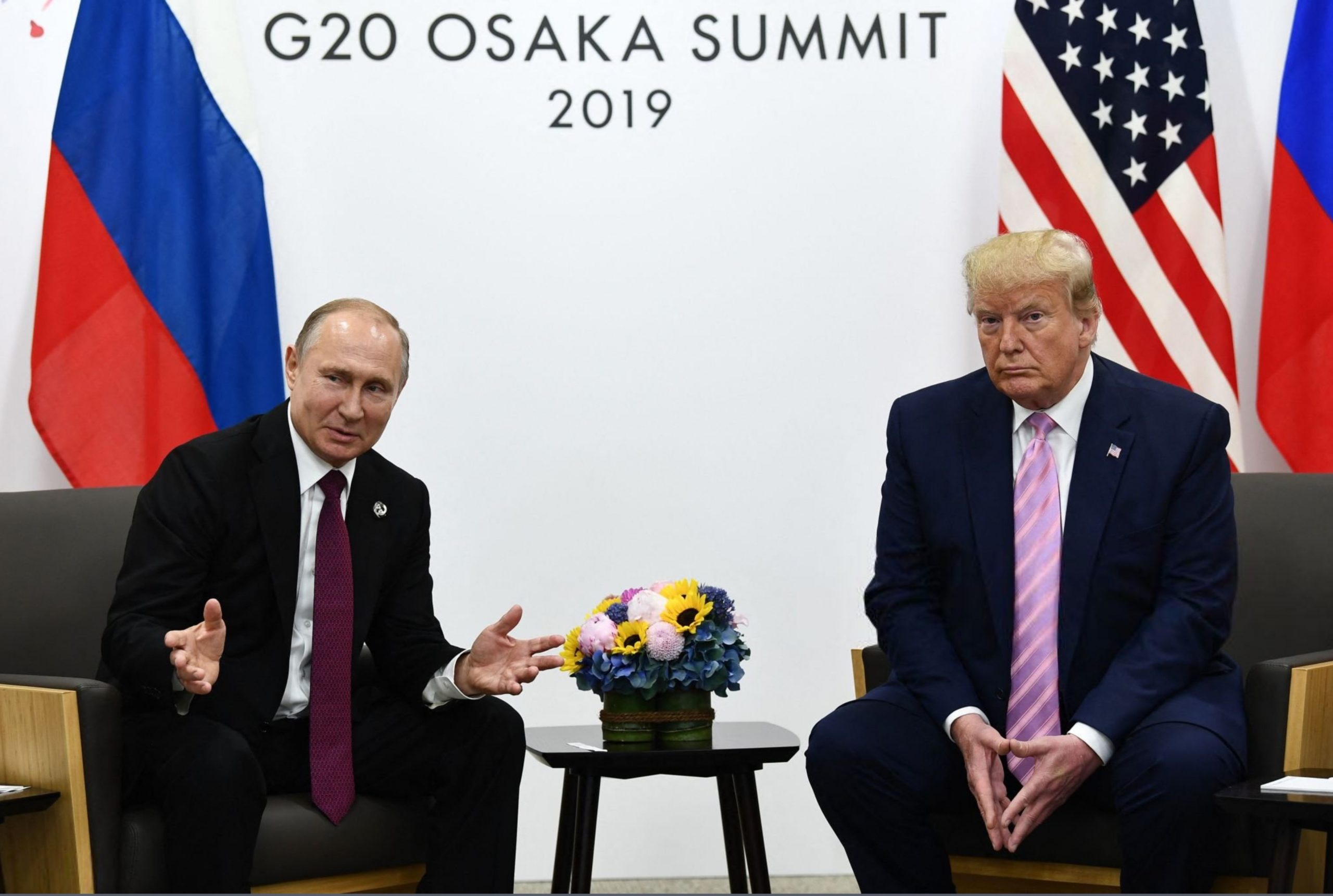
Why Trump’s Russia Strategy Won’t Work
Why War Is Reshaping—Not Removing—the Islamic Republic