

MATTHEW ORR
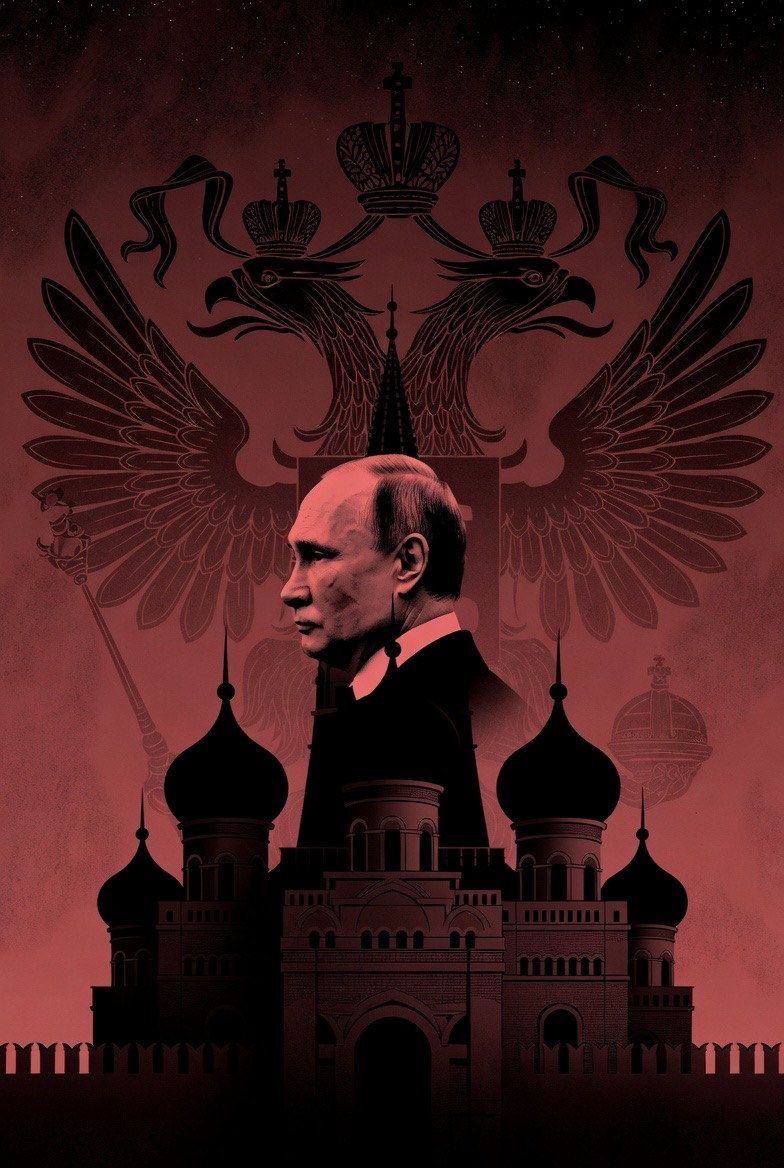
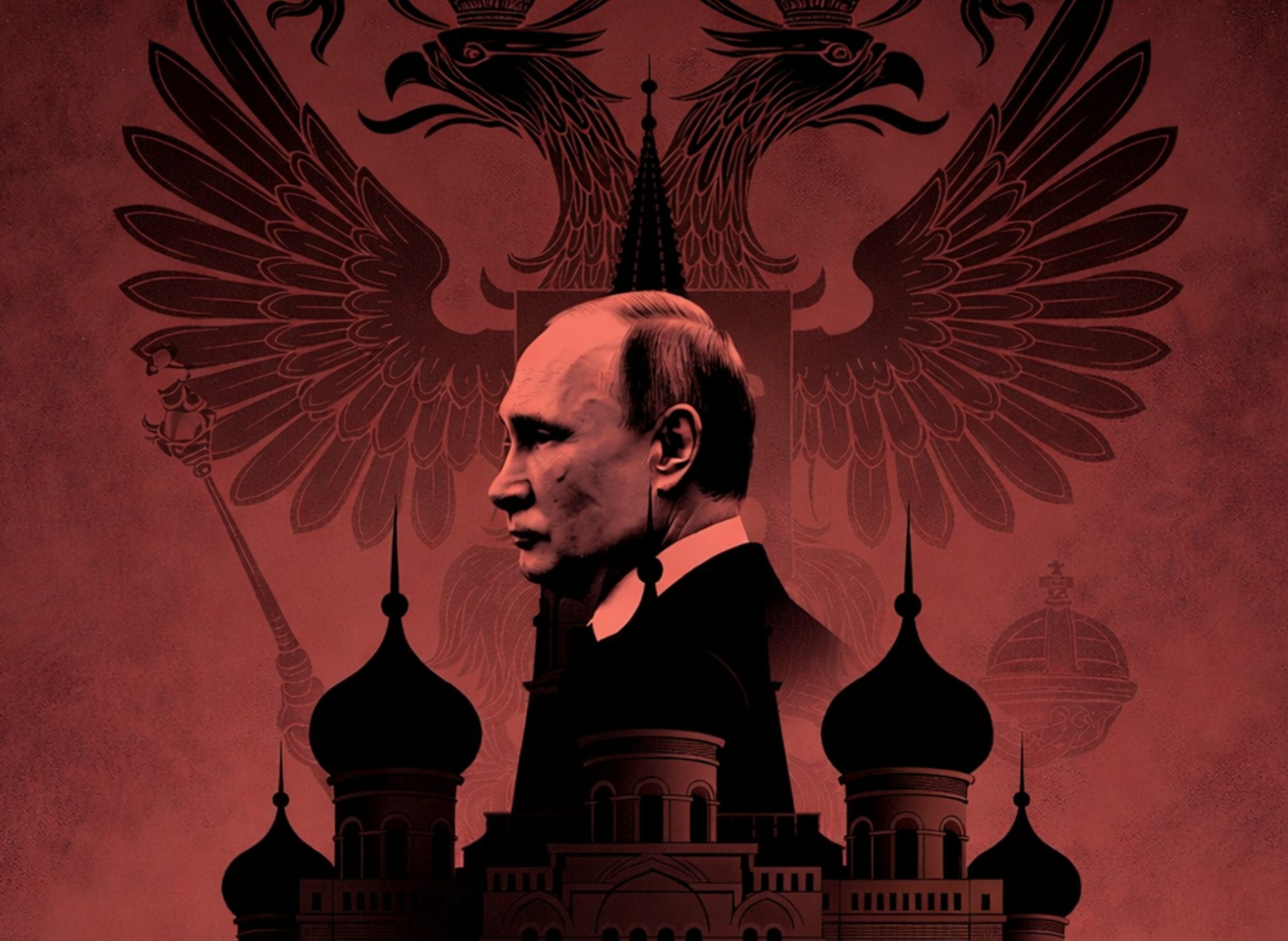
Following the collapse of the Soviet Union, many prominent geopolitical analysts, political scientists, policymakers, economists, and businesspeople insisted that Russia was on a trajectory for terminal decline as a major geopolitical power. They used demographic, economic, and political arguments to claim that Russia would never again be a global political player compared to many other rising powers—let alone the serious threat to Europe and the United States it once posed. However, the 21st century revealed the exact opposite to be the case. On the contrary, it is precisely because of Russia’s challenging geostrategic position that the Kremlin, under Vladimir Putin, became—and is likely to remain for the foreseeable future—one of the most disruptive and strategically consequential actors in global politics.
While the metrics of national strength—a shrinking population and labor force, an economy tethered to volatile global commodity prices, and aging infrastructure—pointed toward status erosion, the Kremlin’s footprint on the world stage has only grown more disruptive since Putin’s return to the presidency in 2012. This disruption began most starkly with the 2014 annexation of Crimea and start of the war against Ukraine in the Donbas, culminating in the 2022 full-scale invasion. These actions have come at immense cost for Russia, but Moscow seems to show no sign of changing, raising a basic question: Why does Russia remain so dangerous even as its material foundations degrade?
It may be logical to assume that as a state’s economic base diminishes – as Russia’s stagflating economy long has – that its foreign policy should become more constrained, cautious and inward-looking. But political malaise, economic stagnation, and demographic decline of the past decade have only sharpened, rather than softened, the Kremlin’s behavior. Driven by a “use it or lose it” mentality–and, increasingly, perceptions of sunk costs–the Kremlin views external threats as the only way to offset internal fragility and maintain its seat at the table of great powers – in particular given the consequences of its decision to invade Ukraine.
Unraveling this seeming paradox lies in accepting years of Western misunderstandings about Russia and remembering the tendency for geopolitical decline to fuel revanchism. By understanding the Kremlin’s perceived geopolitical imperatives, we can see that a state in decline, like Russia, can be just as—if not more—consequential than one on the rise.
Russia’s Structural Weaknesses
Russia’s primary structural weaknesses are longstanding: the first being demography and state capacity, and the second being its economic and technological stagnation. The Kremlin’s decision to invade Ukraine has only solidified or deepened each of these weaknesses. Russia is currently weathering a demographic “perfect storm” that predates the war against Ukraine but has been catastrophically accelerated by it. For decades, the nation has faced a shrinking population, with fertility rates hovering around 1.4 to 1.5—well below the replacement level of 2.1. The statistics are stark: in addition to the hundreds of thousands of casualties on the front lines, an estimated 500,000 to 1 million of Russia’s most educated and mobile citizens—the “brain drain” of IT specialists, engineers, and scientists—fled the country in the wake of the 2022 mobilization. The majority of them are unlikely to return.
is a geopolitical analyst specializing in political, economic and security issues in Eurasia. He was previously Eurasia Analyst at RANE from 2021 to 2025.
Combat casualties and labor market changes have resulted in a record labor shortage; in July 2025, Labor Minister Anton Kotyakov told President Putin that by 2030, when Russia’s population will shrink to around 140 million, the labor shortage is projected to near 11 million. This deficit will be only partially made up with politically unpopular immigration and guest workers from Central Asia or even farther abroad. This strain tests the very fabric of Russian state capacity. While the Kremlin projects an illusion of resilience through heavy-handed social engineering and propaganda (such as maternal capital programs and social benefits for war veterans and their families), the reality is one of institutional cannibalization. The state can “absorb” high casualty rates due to a vast, if crumbling, Soviet-era mobilization apparatus, but it cannot easily replace the technical and administrative talent required to govern a modern state, while the need to elevate and privilege war veterans will increase internal frictions. This creates a brittle system where the appearance of strength only makes the country less competitive in the long run.
Economically, Russia has entered a period of regressive transition. The long-term consequences of Western sanctions since 2014 have forced a “primitive” industrial shift. By severing ties with Europe, Russia has effectively traded its previous dependence on the West for a deepening asymmetric dependence on China. In 2025, China accounted for nearly 57% of Russia’s imports, increasingly transforming the ruble into a satellite currency of the yuan. This shift has created a massive innovation deficit. Deprived of Western semiconductors, precision machinery, and software, Russian industry has been forced to “de-modernize,” relying on older, less efficient technologies or sanctioned dual-use goods smuggled through third parties. But, crucially, this economic decay has failed to constrain the Kremlin’s ambition. Because the Kremlin is primarily focused on political survival and geopolitical status rather than GDP growth, the leadership is willing to sacrifice long-term prosperity for immediate tactical survival.
Russia’s decline is also seen in its foreign relations. The fall of Bashar al-Assad in 2024, the loss of the European market for its natural gas, and, most recently, J.D. Vance’s visit to Armenia and Azerbaijan, which saw strategic partnership agreements with those states that will likely impinge upon Russia’s influence in the region, are all signs of Russia sacrificing its influence over other key geographies in service of the war.
Decline as a Driver of Aggression
Putin’s decision to invade Ukraine fits into a pattern seen before in history. Putin felt that time was working against his system and the legacy of his rule and that he needed to take bold action to shake up the entire landscape of international politics. This logic is not merely a matter of personal ego; it is rooted in a calculated strategy for regime survival and the cultivation of internal and external legitimacy. At the heart of this strategy is a Russian variation of the “stab in the back myth,” strikingly similar to the narrative that plagued Weimar Germany. Putin has long cultivated the belief that the Soviet Union did not lose the Cold War on its merits but was instead betrayed by a decadent, liberal elite—men like Gorbachev and Yeltsin who, in the Kremlin’s telling, sold out the Motherland for Western approval. For Putin, the regime’s raison d’être is to act as the antithesis of that perceived betrayal. His legitimacy depends on him doing exactly what his liberal detractors would never do: asserting Russian power through force and kinetic action abroad, regardless of the global outcry.
This behavior is well documented in the literature of political science. In his seminal work War and Punishment, Hein Goemans argues that for leaders in semi-repressive or autocratic systems, the cost of admitting defeat is existential. If a leader believes that losing a war will lead not just to political removal but to imprisonment or death, they are incentivized to “gamble for resurrection.” By escalating the conflict in Ukraine, Putin is not just fighting for territory; he is fighting for the survival of his system.
Combat casualties and labor market changes have resulted in a record labor shortage; in July 2025, Labor Minister Anton Kotyakov told President Putin that by 2030, when Russia’s population will shrink to around 140 million, the labor shortage is projected to near 11 million. This deficit will be only partially made up with politically unpopular immigration and guest workers from Central Asia or even farther abroad. This strain tests the very fabric of Russian state capacity. While the Kremlin projects an illusion of resilience through heavy-handed social engineering and propaganda (such as maternal capital programs and social benefits for war veterans and their families), the reality is one of institutional cannibalization. The state can “absorb” high casualty rates due to a vast, if crumbling, Soviet-era mobilization apparatus, but it cannot easily replace the technical and administrative talent required to govern a modern state, while the need to elevate and privilege war veterans will increase internal frictions. This creates a brittle system where the appearance of strength only makes the country less competitive in the long run.
Economically, Russia has entered a period of regressive transition. The long-term consequences of Western sanctions since 2014 have forced a “primitive” industrial shift. By severing ties with Europe, Russia has effectively traded its previous dependence on the West for a deepening asymmetric dependence on China. In 2025, China accounted for nearly 57% of Russia’s imports, increasingly transforming the ruble into a satellite currency of the yuan. This shift has created a massive innovation deficit. Deprived of Western semiconductors, precision machinery, and software, Russian industry has been forced to “de-modernize,” relying on older, less efficient technologies or sanctioned dual-use goods smuggled through third parties. But, crucially, this economic decay has failed to constrain the Kremlin’s ambition. Because the Kremlin is primarily focused on political survival and geopolitical status rather than GDP growth, the leadership is willing to sacrifice long-term prosperity for immediate tactical survival.
Russia’s decline is also seen in its foreign relations. The fall of Bashar al-Assad in 2024, the loss of the European market for its natural gas, and, most recently, J.D. Vance’s visit to Armenia and Azerbaijan, which saw strategic partnership agreements with those states that will likely impinge upon Russia’s influence in the region, are all signs of Russia sacrificing its influence over other key geographies in service of the war.
Decline as a Driver of Aggression
Putin’s decision to invade Ukraine fits into a pattern seen before in history. Putin felt that time was working against his system and the legacy of his rule and that he needed to take bold action to shake up the entire landscape of international politics. This logic is not merely a matter of personal ego; it is rooted in a calculated strategy for regime survival and the cultivation of internal and external legitimacy. At the heart of this strategy is a Russian variation of the “stab in the back myth,” strikingly similar to the narrative that plagued Weimar Germany. Putin has long cultivated the belief that the Soviet Union did not lose the Cold War on its merits but was instead betrayed by a decadent, liberal elite—men like Gorbachev and Yeltsin who, in the Kremlin’s telling, sold out the Motherland for Western approval. For Putin, the regime’s raison d’être is to act as the antithesis of that perceived betrayal. His legitimacy depends on him doing exactly what his liberal detractors would never do: asserting Russian power through force and kinetic action abroad, regardless of the global outcry.
This behavior is well documented in the literature of political science. In his seminal work War and Punishment, Hein Goemans argues that for leaders in semi-repressive or autocratic systems, the cost of admitting defeat is existential. If a leader believes that losing a war will lead not just to political removal but to imprisonment or death, they are incentivized to “gamble for resurrection.” By escalating the conflict in Ukraine, Putin is not just fighting for territory; he is fighting for the survival of his system.
Recent scholarly work, such as the 2022 analysis on the “Rational Origins of Revisionist War,” suggests that throughout history, states often launch aggressive wars when they perceive a closing window of opportunity. Putin’s fear that Ukraine was slipping permanently into the Western orbit created a “use it or lose it” pressure on his regional influence. This risk-taking is further lubricated by resource wealth. Research by Maria Snegovaya has found a direct correlation between rising oil revenues and the aggressiveness of Russian foreign-policy rhetoric. High energy prices provided the Kremlin with a “geopolitical war chest” that increased risk tolerance and reduced accountability to domestic constituencies.
It is the continued existence of Russia’s national wealth fund, built up over many years through oil and gas sales and the liquid portion of which Russia claimed as 4.2 trillion rubles ($55.8 billion), that allows Russia to continue funding the war against Ukraine while maintaining economic normalcy. The fund is now being burned at a record pace and could be exhausted within 1 or 2 years if current oil prices persist, analysts at Gazprombank estimated in January. The fund’s near exhaustion—after being built up over years using the savings of Russia’s mineral sales—is perhaps the rawest, most material indicator of Moscow’s willingness to accept decline and burn its resources in exchange for the perceived benefits of the war.
Overthrowing the Chessboard
Putin chose to overthrow the chessboard because playing the game of “liberal democracy” was never one the Kremlin felt it could win at—quite the opposite, appearing to be a normal actor in the system would only draw attention to the Kremlin’s failure to secure greater economic improvements and political freedoms. In other words, Russia’s leadership never believed they could “win” at the game that policymakers in the U.S. and other parts of the world believed would decide the 21st century, namely economics and ideas. Ultimately, the invasion is an attempt to secure a better position vis-à-vis the West before the Kremlin’s perception of Russia’s decline made such an undertaking impossible. In the Kremlin’s view, Putin’s revanchist Russia is preferable to a stable, liberalizing one dependent on the West—this is what Putin has referred to in his speeches as the West seeking to “enslave” Russia and allegedly treating it “like a colony.”
One of the reasons that Russia’s invasion of Ukraine surprised the world is that many observers still appeared to believe that Russia was a troubled democracy that had merely gone somewhat astray under Putin’s personalist rule. But Russia under Putin had never been seriously playing this game all along. In the words of Timothy Snyder, Russia was an alternative to democracy that pretended to be a democracy and used its foreign policy to undermine and destroy the democracies around it that were more real than it was. Much of the rest of Russia’s political system was merely a perfunctory imitation to secure Western economic investment.
Those listening closely had understood this much earlier. Prominent Russian pro-democracy parliamentarian Galina Starovoytova had been warning as early as 1997 that the conditions in Russia were similar to those that led to Hitler’s rise in Germany in the 1930s and that a revanchist leader would likely assume power. She was assassinated in November 1998. When Putin assumed power in 2000, within a year, in 2001, the Kremlin launched a campaign to turn the independent NTV channel into a loyal pro-regime propaganda channel, which many saw as the clear sign that serious political speech and challenges to the Kremlin would not be tolerated in the years ahead.
A state in decline is not a state that retreats but one that lashes out.
For decades, Western observers viewed the 1990s and early 2000s through a teleological lens, assuming that market reforms and a weakened state were merely growing pains on the path to liberalization. The vast majority of Western political science literature on Russia assumed there had been a “change of elite” in Russia in the 1990s. But in reality, as Maria Snegovaya and other scholars have now shown, the post-Soviet democratic breakthrough was an illusion. The old Soviet nomenklatura and security networks maintained their grip on power throughout the 1990s; the structural foundations for a genuine democracy were never laid because Soviet elites became the elites of the new Russia; there was no “change of the elite,” as the oligarchs never formed a true alternative political power center to the Kremlin.
Because the system’s foundations remained rooted in these authoritarian, state-centric networks, the Kremlin was never truly incentivized to seek legitimacy through economic modernization or democratic accountability. Instead, as material power erodes, the regime has doubled down on propaganda, nationalism, and the manufacturing of narratives about Russia being besieged by enemies. By framing the West as an existential predator intent on Russia’s dismemberment, the Kremlin transforms domestic failure into a heroic struggle for survival. This explains why Moscow turns outward when the system weakens at home: when a regime can no longer provide prosperity or progress, it must provide an enemy to explain why. Aggression becomes a mandatory tool for internal cohesion, proving that for the Kremlin, a state in decline is not a state that retreats but one that lashes out to justify its own existence.
Use it Lose it
To bridge the gap between its hollowed-out material base and its imperial ambitions, the Kremlin operates under the urgent logic of ispol’zuy, ili poteryayesh’ (“use it or lose it!”), or, as Russians would say more colloquially, beri, poka dayut, “take it while you still can!”. This mindset views Russia’s levers of influence and intelligence expertise, inherited from the Soviet era, as perishable assets that must be deployed aggressively before they further erode. Fundamentally, Russia invaded Ukraine because Putin believed he could get away with it, which was a lesson he learned following the extremely minimal international reaction to the 2014 annexation of Crimea, and believed the cost would only grow in the future.
Russia’s primary tool for international disruption is the modernization of Soviet-era “Active Measures.” Deeply rooted in the KGB background of the current elite, this strategy seeks to paralyze Western decision-making by supporting “friendly” or disruptive elements abroad. Rather than building its own attractive model, the Kremlin exports instability, cultivating ties with anti-establishment parties and factions in the United States, Europe, and the broader globe. By providing financial lifelines and amplifying divisive rhetoric through state-funded media, Moscow exploits existing societal fractures. This is not mere diplomacy; it is a covert intelligence operation designed to dismantle Western unity and NATO cohesion from within. These tactics reflect a security-state culture that views international politics as a zero-sum battlefield where victory is achieved through the subversion of the adversary’s domestic legitimacy.
Another key concept in Russia’s playbook is the idea of “Reflexive Control”—the idea of getting your adversary to think like you do, proceed from your viewpoint, and base their own actions on your perception of reality. This approach has made significant inroads among certain figures in the Trump administration and some European political parties, which often echo Kremlin narratives about the reasons for and ways to resolve the Russia-Ukraine war.
But when political interference and cognitive subversion fail, the Kremlin turns to military adventurism to rewrite the geopolitical map. Moscow’s military doctrine relies on rapid escalation—often involving nuclear weapons—to force the West into a fait accompli. This strategy was reportedly key in getting the Biden administration to back down on greater support to Ukraine in late 2022 and early 2023, when Russia began threatening to use tactical nuclear weapons. Because Russia cannot win a prolonged conventional war against a unified NATO, it uses nuclear signaling as a strategic equalizer. By lowering the perceived threshold for nuclear use—a concept often termed “escalate to de-escalate.” Putin leverages the West’s fear of war to compensate for Russia’s conventional shortcomings and maintain a sphere of influence through intimidation.
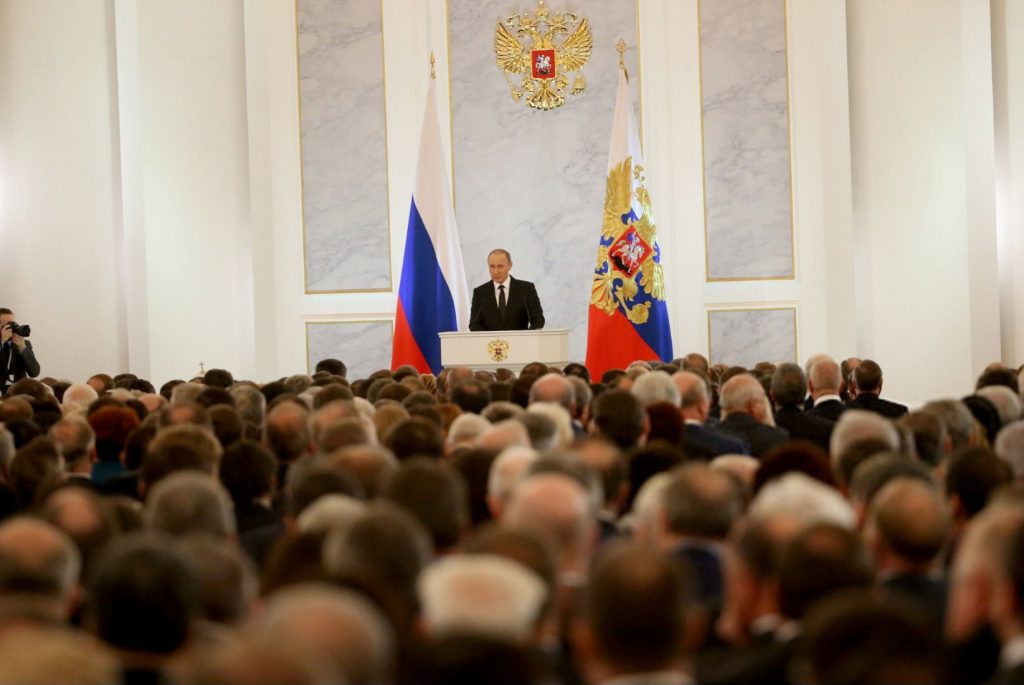
This helps explain Putin’s obsession with the “super weapons,” six of which he unveiled at his 2018 State of the Nation address: the Poseidon nuclear-powered underwater drone; Burevestnik nuclear-powered cruise missile; Avangard hypersonic glide vehicle; Sarmat heavy intercontinental ballistic missile; Kinzhal air-launched hypersonic missile; and Peresvet laser system. This has only continued in recent years, with Putin publicly highlighting the Tsirkon ship-launched hypersonic cruise missile, which was demonstrably deployed in an electronic test off the U.S. coast in June 2024, and, most recently, the Oreshnik medium-range ballistic missile. These weapons—and the Kremlin’s messaging and use of strategic communications about them—highlight Moscow’s desire to use threats toward adversarial audiences to maximum effect.
Moscow weaponizes its status as a “hydrocarbon state,” using gas and oil exports to coerce neighbors and divide the EU. These economic threats are bundled with hybrid tools—including Wagner Group mercenaries, sophisticated cyberattacks, and sabotage operations—allowing a weakened Russia to punch far above its weight by creating “gray zone” conflicts that avoid the high costs of total war. Russia’s hybrid campaign against Europe has entered a bolder and more reckless phase, pivoting to high-impact, low-cost sabotage. Leveraging disposable proxies and cyberattacks, Moscow exploits the gap in NATO’s Article 5, gambling that sub-threshold violence will paralyze Western decision-making. Ultimately, as its material power erodes, Russia views this shadow war as a key tool for geopolitical relevance, the goal of which is to impose costs and empower forces calling for de-escalation and concessions to Moscow.
Ukraine as a Case Study
Moscow views the war in Ukraine as a viable path to achieving political acceptance in the West of Russia’s status and subjugating Ukraine. The war’s continuation should not be dismissed as a sign of Russia’s weakness but as a sign of Moscow’s sincere belief that its continuation will reverse Russia’s decline by causing Ukraine and establishment governments in the West to collapse first, increasing Russia’s relative power and room for policy maneuver and expansion in its periphery, Europe, and around the globe. This strategic persistence highlights a fundamental truth about modern Russian power: tactical failures do not automatically erode strategic capabilities. While Western observers often focus on the staggering cost of minimal gains—with Russia losing an estimated 100 to 150 troops for every square kilometer seized—the Kremlin operates on a timeline that transcends quarterly data or election cycles. The war reveals a regime willing to absorb losses that would be politically fatal for almost any other contemporary power.
Western strategic blind spots often stem from a “pendulum of perception.” If the West overestimated Russia before 2022, it risks dangerously underestimating it now. The fatal flaw in the “decline thesis” is the assumption that diminishing material capacity must naturally translate into a moderated, inward-looking foreign policy. In 2026, the primary lesson is that while Russia’s capacity is undeniably eroding, its political will remains a potent, bridge-gapping force that allows it to remain a global disruptor despite its rot. Because Russia has not experienced a decisive defeat in Ukraine, Russia is likely to remain in its threatening current state in the coming years. While a successor to Putin could emerge in several years and attempt to use widespread war exhaustion to gain legitimacy, by far the most likely scenario is that Russia’s geopolitical compulsions will remain largely the same—to threaten the West with escalation until Western politicians accept a more conciliatory line toward Moscow. A true “change of elite” appears extremely remote.
Recent scholarly work, such as the 2022 analysis on the “Rational Origins of Revisionist War,” suggests that throughout history, states often launch aggressive wars when they perceive a closing window of opportunity. Putin’s fear that Ukraine was slipping permanently into the Western orbit created a “use it or lose it” pressure on his regional influence. This risk-taking is further lubricated by resource wealth. Research by Maria Snegovaya has found a direct correlation between rising oil revenues and the aggressiveness of Russian foreign-policy rhetoric. High energy prices provided the Kremlin with a “geopolitical war chest” that increased risk tolerance and reduced accountability to domestic constituencies.
It is the continued existence of Russia’s national wealth fund, built up over many years through oil and gas sales and the liquid portion of which Russia claimed as 4.2 trillion rubles ($55.8 billion), that allows Russia to continue funding the war against Ukraine while maintaining economic normalcy. The fund is now being burned at a record pace and could be exhausted within 1 or 2 years if current oil prices persist, analysts at Gazprombank estimated in January. The fund’s near exhaustion—after being built up over years using the savings of Russia’s mineral sales—is perhaps the rawest, most material indicator of Moscow’s willingness to accept decline and burn its resources in exchange for the perceived benefits of the war.
Overthrowing the Chessboard
Putin chose to overthrow the chessboard because playing the game of “liberal democracy” was never one the Kremlin felt it could win at—quite the opposite, appearing to be a normal actor in the system would only draw attention to the Kremlin’s failure to secure greater economic improvements and political freedoms. In other words, Russia’s leadership never believed they could “win” at the game that policymakers in the U.S. and other parts of the world believed would decide the 21st century, namely economics and ideas. Ultimately, the invasion is an attempt to secure a better position vis-à-vis the West before the Kremlin’s perception of Russia’s decline made such an undertaking impossible. In the Kremlin’s view, Putin’s revanchist Russia is preferable to a stable, liberalizing one dependent on the West—this is what Putin has referred to in his speeches as the West seeking to “enslave” Russia and allegedly treating it “like a colony.”
One of the reasons that Russia’s invasion of Ukraine surprised the world is that many observers still appeared to believe that Russia was a troubled democracy that had merely gone somewhat astray under Putin’s personalist rule. But Russia under Putin had never been seriously playing this game all along. In the words of Timothy Snyder, Russia was an alternative to democracy that pretended to be a democracy and used its foreign policy to undermine and destroy the democracies around it that were more real than it was. Much of the rest of Russia’s political system was merely a perfunctory imitation to secure Western economic investment.
Those listening closely had understood this much earlier. Prominent Russian pro-democracy parliamentarian Galina Starovoytova had been warning as early as 1997 that the conditions in Russia were similar to those that led to Hitler’s rise in Germany in the 1930s and that a revanchist leader would likely assume power. She was assassinated in November 1998. When Putin assumed power in 2000, within a year, in 2001, the Kremlin launched a campaign to turn the independent NTV channel into a loyal pro-regime propaganda channel, which many saw as the clear sign that serious political speech and challenges to the Kremlin would not be tolerated in the years ahead.
The goal cannot simply be to wait for a Russian collapse.
For decades, Western observers viewed the 1990s and early 2000s through a teleological lens, assuming that market reforms and a weakened state were merely growing pains on the path to
liberalization. The vast majority of Western political science literature on Russia assumed there had been a “change of elite” in Russia in the 1990s. But in reality, as Maria Snegovaya and other scholars have now shown, the post-Soviet democratic breakthrough was an illusion. The old Soviet nomenklatura and security networks maintained their grip on power throughout the 1990s; the structural foundations for a genuine democracy were never laid because Soviet elites became the elites of the new Russia; there was no “change of the elite,” as the oligarchs never formed a true alternative political power center to the Kremlin.
Because the system’s foundations remained rooted in these authoritarian, state-centric networks, the Kremlin was never truly incentivized to seek legitimacy through economic modernization or democratic accountability. Instead, as material power erodes, the regime has doubled down on propaganda, nationalism, and the manufacturing of narratives about Russia being besieged by enemies. By framing the West as an existential predator intent on Russia’s dismemberment, the Kremlin transforms domestic failure into a heroic struggle for survival. This explains why Moscow turns outward when the system weakens at home: when a regime can no longer provide prosperity or progress, it must provide an enemy to explain why. Aggression becomes a mandatory tool for internal cohesion, proving that for the Kremlin, a state in decline is not a state that retreats but one that lashes out to justify its own existence.
Use it Lose it
To bridge the gap between its hollowed-out material base and its imperial ambitions, the Kremlin operates under the urgent logic of ispol’zuy, ili poteryayesh’ (“use it or lose it!”), or, as Russians would say more colloquially, beri, poka dayut, “take it while you still can!”. This mindset views Russia’s levers of influence and intelligence expertise, inherited from the Soviet era, as perishable assets that must be deployed aggressively before they further erode. Fundamentally, Russia invaded Ukraine because Putin believed he could get away with it, which was a lesson he learned following the extremely minimal international reaction to the 2014 annexation of Crimea, and believed the cost would only grow in the future.
Russia’s primary tool for international disruption is the modernization of Soviet-era “Active Measures.” Deeply rooted in the KGB background of the current elite, this strategy seeks to paralyze Western decision-making by supporting “friendly” or disruptive elements abroad. Rather than building its own attractive model, the Kremlin exports instability, cultivating ties with anti-establishment parties and factions in the United States, Europe, and the broader globe. By providing financial lifelines and amplifying divisive rhetoric through state-funded media, Moscow exploits existing societal fractures. This is not mere diplomacy; it is a covert intelligence operation designed to dismantle Western unity and NATO cohesion from within. These tactics reflect a security-state culture that views international politics as a zero-sum battlefield where victory is achieved through the subversion of the adversary’s domestic legitimacy.
Another key concept in Russia’s playbook is the idea of “Reflexive Control”—the idea of getting your adversary to think like you do, proceed from your viewpoint, and base their own actions on your perception of reality. This approach has made significant inroads among certain figures in the Trump administration and some European political parties, which often echo Kremlin narratives about the reasons for and ways to resolve the Russia-Ukraine war.
But when political interference and cognitive subversion fail, the Kremlin turns to military adventurism to rewrite the geopolitical map. Moscow’s military doctrine relies on rapid escalation—often involving nuclear weapons—to force the West into a fait accomplih. This strategy was reportedly key in getting the Biden administration to back down on greater support to Ukraine in late 2022 and early 2023, when Russia began threatening to use tactical nuclear weapons. Because Russia cannot win a prolonged conventional war against a unified NATO, it uses nuclear signaling as a strategic equalizer. By lowering the perceived threshold for nuclear use—a concept often termed “escalate to de-escalate.” Putin leverages the West’s fear of war to compensate for Russia’s conventional shortcomings and maintain a sphere of influence through intimidation.
This helps explain Putin’s obsession with the “super weapons,” six of which he unveiled at his 2018 State of the Nation address: the Poseidon nuclear-powered underwater drone; Burevestnik nuclear-powered cruise missile; Avangard hypersonic glide vehicle; Sarmat heavy intercontinental ballistic missile; Kinzhal air-launched hypersonic missile; and Peresvet laser system. This has only continued in recent years, with Putin publicly highlighting the Tsirkon ship-launched hypersonic cruise missile, which was demonstrably deployed in an electronic test off the U.S. coast in June 2024, and, most recently, the Oreshnik medium-range ballistic missile. These weapons—and the Kremlin’s messaging and use of strategic communications about them—highlight Moscow’s desire to use threats toward adversarial audiences to maximum effect.
Moscow weaponizes its status as a “hydrocarbon state,” using gas and oil exports to coerce neighbors and divide the EU. These economic threats are bundled with hybrid tools—including Wagner Group mercenaries, sophisticated cyberattacks, and sabotage operations—allowing a weakened Russia to punch far above its weight by creating “gray zone” conflicts that avoid the high costs of total war. Russia’s hybrid campaign against Europe has entered a bolder and more reckless phase, pivoting to high-impact, low-cost sabotage. Leveraging disposable proxies and cyberattacks, Moscow exploits the gap in NATO’s Article 5, gambling that sub-threshold violence will paralyze Western decision-making. Ultimately, as its material power erodes, Russia views this shadow war as a key tool for geopolitical relevance, the goal of which is to impose costs and empower forces calling for de-escalation and concessions to Moscow.
Ukraine as a Case Study
Moscow views the war in Ukraine as a viable path to achieving political acceptance in the West of Russia’s status and subjugating Ukraine. The war’s continuation should not be dismissed as a sign of Russia’s weakness but as a sign of Moscow’s sincere belief that its continuation will reverse Russia’s decline by causing Ukraine and establishment governments in the West to collapse first, increasing Russia’s relative power and room for policy maneuver and expansion in its periphery, Europe, and around the globe. This strategic persistence highlights a fundamental truth about modern Russian power: tactical failures do not automatically erode strategic capabilities. While Western observers often focus on the staggering cost of minimal gains—with Russia losing an estimated 100 to 150 troops for every square kilometer seized—the Kremlin operates on a timeline that transcends quarterly data or election cycles. The war reveals a regime willing to absorb losses that would be politically fatal for almost any other contemporary power.
Western strategic blind spots often stem from a “pendulum of perception.” If the West overestimated Russia before 2022, it risks dangerously underestimating it now. The fatal flaw in the “decline thesis” is the assumption that diminishing material capacity must naturally translate into a moderated, inward-looking foreign policy. In 2026, the primary lesson is that while Russia’s capacity is undeniably eroding, its political will remains a potent, bridge-gapping force that allows it to remain a global disruptor despite its rot. Because Russia has not experienced a decisive defeat in Ukraine, Russia is likely to remain in its threatening current state in the coming years. While a successor to Putin could emerge in several years and attempt to use widespread war exhaustion to gain legitimacy, by far the most likely scenario is that Russia’s geopolitical compulsions will remain largely the same—to threaten the West with escalation until Western politicians accept a more conciliatory line toward Moscow. A true “change of elite” appears extremely remote.
This reality necessitates a shift from classical containment to a strategy of stabilization. Unlike the 20th-century model designed to box in a rising
Soviet giant, today’s policy must manage a state that remains nuclear-armed and hyper-sensitive to status. By March 2026, with Russian casualties likely surpassing 1 million and the economy facing a severe fiscal crunch as interest rates hover near 19%, the Kremlin’s desperation will increase its reliance on asymmetric disruption.
Long-term Western pressure must be paired with sophisticated escalation control. Deterrence is not just about stopping Russia’s territorial advances; it is about imposing costs for hybrid sabotage and ensuring Moscow does not view “limited” nuclear signaling as a viable escape from conventional stagnation. Furthermore, the West must prepare for further aggression no matter how the Ukraine war concludes. Putin or his successor might feel compelled to “gamble for resurrection” by threatening Kazakhstan, Azerbaijan, Georgia, or the Baltic states. Planning for a Russia that is more unpredictable precisely because it is weaker requires a permanently resilient NATO and a refusal to assume that Russia’s internal challenges will automatically lead to external moderation.
Not Stronger — More Reckless
The preceding analysis underscores a sobering reality for the 21st-century international order: Russia’s weakness does not diminish the threat it poses; it fundamentally reshapes it. For decades, the West operated under the comforting assumption that a state in structural decay would eventually be forced into a “strategic pause” or a pivot toward domestic reform. Instead, the Kremlin has reacted to its eroding material base by doubling down on disruption.
This brings us to the central paradox of modern Russian power: as the state’s conventional capabilities and economic foundations diminish, its willingness to use high-risk, asymmetric tools—from nuclear brinkmanship to hybrid subversion—only increases. Moscow’s aggression is not a symptom of a rising power’s confidence but the survival mechanism of a declining regime that views geopolitical relevance as an existential necessity.
Ultimately, the most pressing challenge for Western policymakers is an unresolved question: Can the West contain not Russian strength but Russian desperation? If the Kremlin perceives that time and demography are its greatest enemies, it will remain incentivized to “shake the table” of international politics at every opportunity. Moving forward, the goal cannot simply be to wait for a Russian collapse but to actively prepare for a Russia interested in continuing to exploit the West’s political and security vulnerabilities in the coming decade.
Recommended
How Semiconductors Shape the New World Order
Redefining U.S. Security in a Two-Front World
Will 2027 Be a Deadline or a Bargaining Tool?

China’s Post-Ideological Strategy of Power
U.S. Foreign Policy as a Debate Without End