

KAITLYN KING

Few nations in history have spoken so anxiously about their future while simultaneously holding so much power in the present. While the United States is the central pillar of the international system, it is also said system’s most fearful participant. The United States remains the world’s most powerful nation by nearly every material measure. It possesses the largest economy by nominal GDP, the largest and most technologically sophisticated military, global financial influence through the dollar, institutional leverage through its leadership in key international organizations, and an extensive and integrated network of alliances. By these conventional metrics of power, the United States comfortably occupies a leading position without historical precedent.
Yet, U.S. political discourse and foreign policy agendas increasingly assume decline, vulnerability, and encirclement, often framed around fears of displacement by rising competitors. Rather than projecting the confidence and consistency of a secure hegemon, U.S. strategy is often animated by reactionary urgency and defensiveness. This contradiction of enduring material strength against pervasive pessimistic narratives has become a defining feature of contemporary U.S. statecraft and shapes policy choices that often do not align with its structural position or the leadership ethos traditionally associated with unilateralism, including the exceptionalist narratives invoked by presidents who rhetorically emphasize American dominance. With the U.S. prioritizing protectionism, re-shoring, and industrial hoarding, and alliance-straining unilateralism, a pressing question emerges: Why does a country like the U.S., which remains structurally dominant by margins far exceeding those of peer competitors, behave as though it is on the brink of strategic loss?
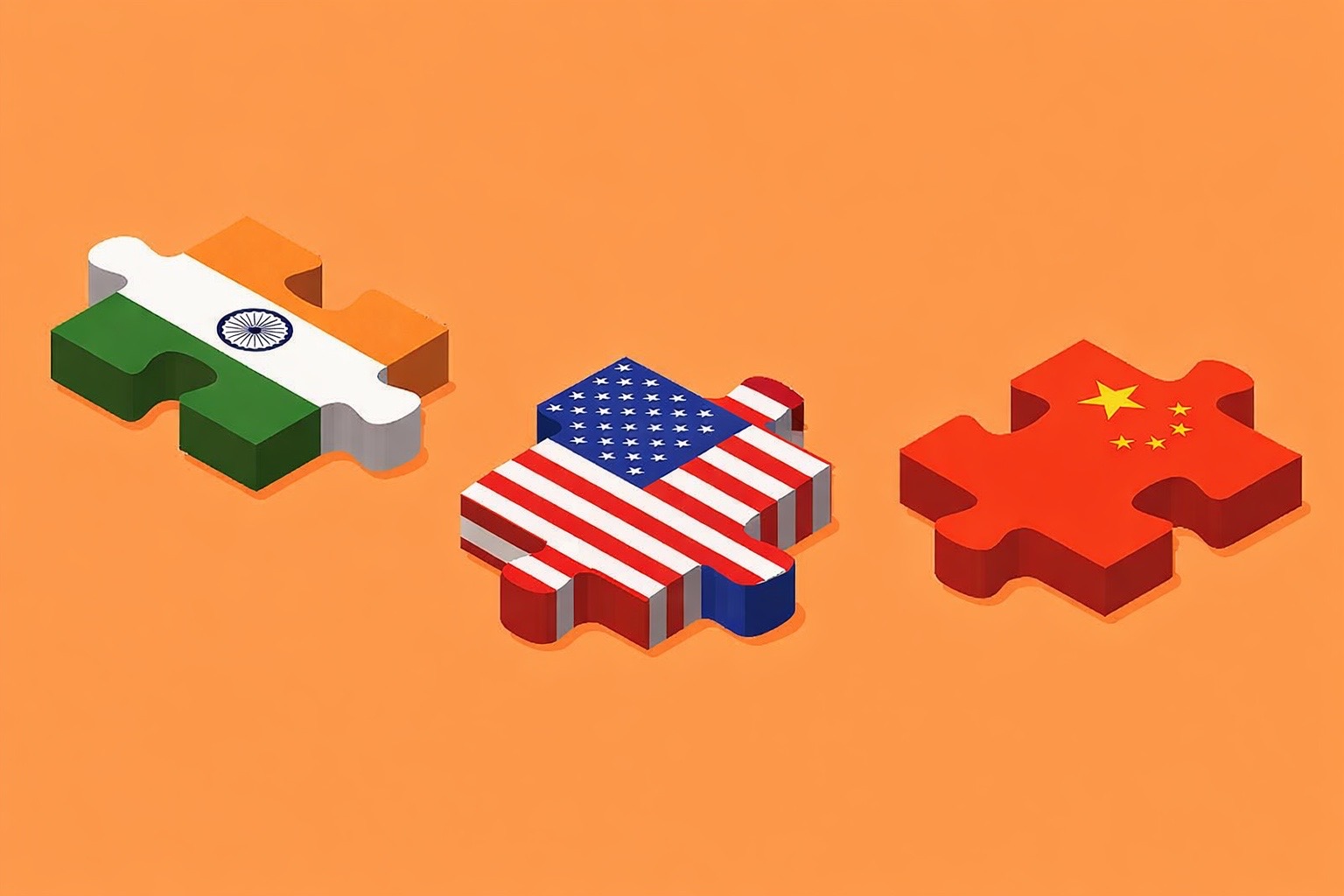
The answer lies in part in the presence of a credible number-two power across many material indicators: China. China’s rapid economic and technological advancements, industrial capacity, and growing international footprint have been both swift and notably great. Its state capacity has allowed it to position itself as a competitor with potential—at least in theory—to rival aspects of U.S. power. Reflecting this perception, U.S. National Security Strategy documents now identify China as a “pacing challenge” and primary long-term threat to the U.S. and its national interests. While Beijing’s intentions remain under debate, Washington has interpreted its rise in international presence and capability as symbolizing a potentially existential disruption to long-standing assumptions about American primacy.
The way the United States talks about China thus becomes a mirror that reflects deeper anxieties about America’s own trajectory. Narratives of decline do more than describe reality—they actively shape it. They influence state strategy and priorities, legitimize particular policy tools, and structure foreign relations, thereby also informing domestic and international perceptions. As a result, even while the U.S. retains overwhelming power and a highly favorable systemic position, its policy is increasingly driven by fear rather than confidence.
is an PhD Student in International Relations at American University. Her research interests include foreign policy, leadership dynamics, and U.S.-Asia affairs.
How the Chinese Military Could Shape China’s Next Chapter
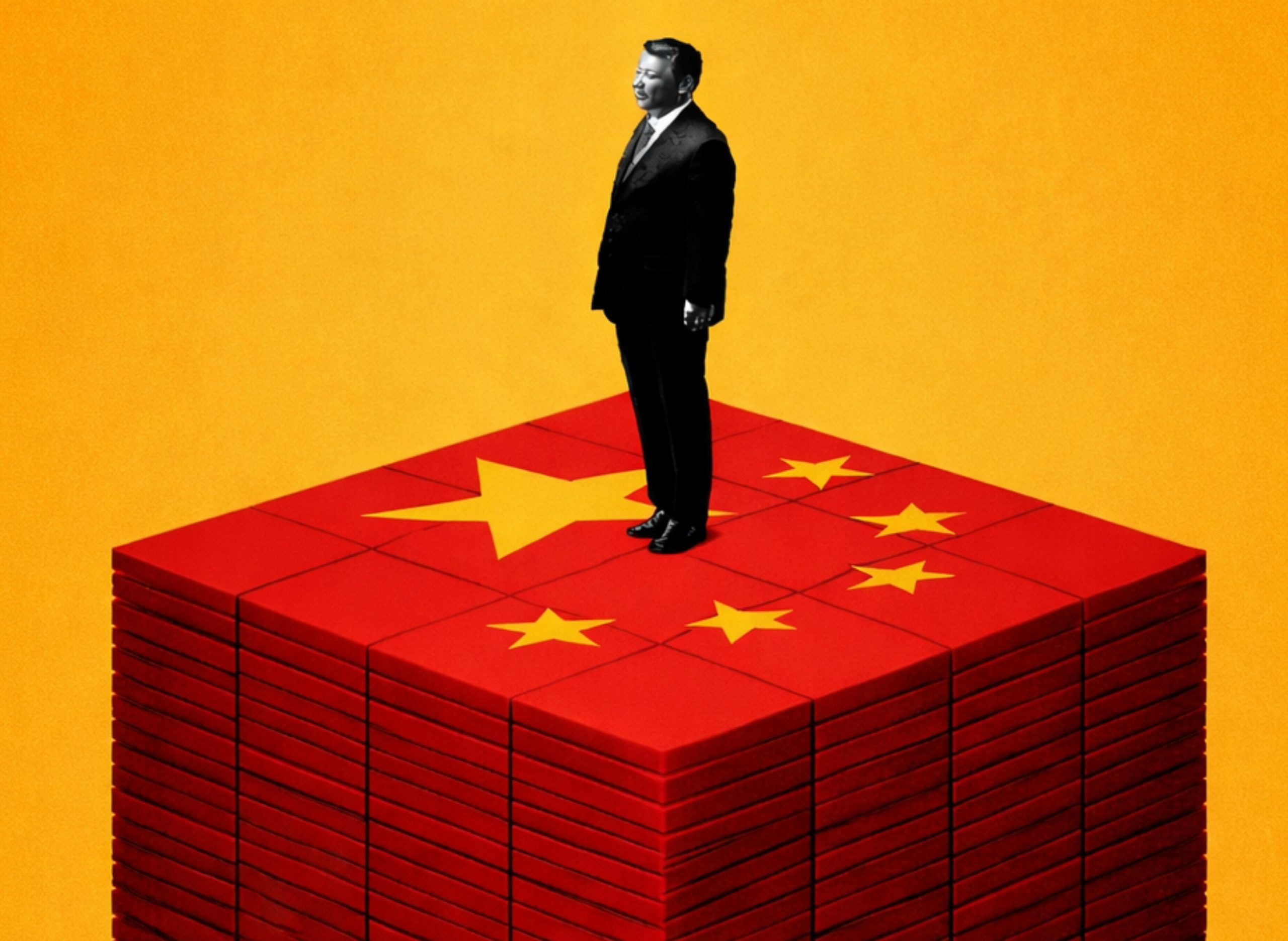
This is not an alarmist claim about imminent collapse. Rather, it highlights the subtler anxieties about erosion, competition, and missed opportunities that lead to a level of strategic incoherence. These fears lead to overcorrection in policy, misalignment with allies, and greater uncertainty—dynamics that can, paradoxically, produce the very risks the United States fears. The challenge, therefore, is not to deny competition with China or understate genuine risks, but to respond to them with confidence, cooperation, and a steady hand. Understanding the power of narratives is therefore essential to sustaining U.S. leadership in an era of competition and rapid global change.
The End of American Confidence
For much of the postwar period, U.S. presidential leadership has rested on a strategy of confidence, projecting strength, optimism, and inevitability even amid tense competition and conflict. During the early Cold War, presidents framed rivalry not as evidence of American weakness or decline, but as confirmation of U.S. centrality to international affairs. Kennedy’s “New Frontier” approach, for one, framed competition with communism as a moral and essential challenge the United States was uniquely equipped to meet.
This period was undeniably shaped by fear—the Red Scare, nuclear brinksmanship, and proxy wars fueled anxieties about the spread of communism and Soviet technological advances. Worries of encroachment and challenge characterized this era of tension with the Soviet Union as the powers raced to develop superior nuclear and spaceflight capabilities. Yet even during this period of intense competition and fear, in which policymakers were deeply worried about Soviet expansion and the nuclear threat, the dominant narrative maintained that time and structural and inherent advantages favored the United States.
This persisted into the late Cold War era, with Reagan’s rhetoric marking a renewed emphasis on national revival over irreversible decline. While acknowledging perceived stagnation and strategic drift in the 1970s, Reagan framed American power as temporarily constrained rather than fundamentally eroded. His language of renewal, embodied in his “Morning in America” campaign, reasserted faith in markets, democracy, and U.S. moral leadership. Competition with the Soviet Union was portrayed not as a desperate struggle for survival, but as a test that the United States would ultimately win through endurance, innovation, and ideological appeal. Even as the Soviet Union sparked renewed tensions through the invasion of Afghanistan and heightened nuclear brinksmanship, Reagan responded with a confident vision and military and arms control cooperation with allies. This optimism was not merely rhetorical—it reinforced alliance cohesion, sustained domestic support for international engagement, and framed U.S. leadership as forward-looking rather than defensive.
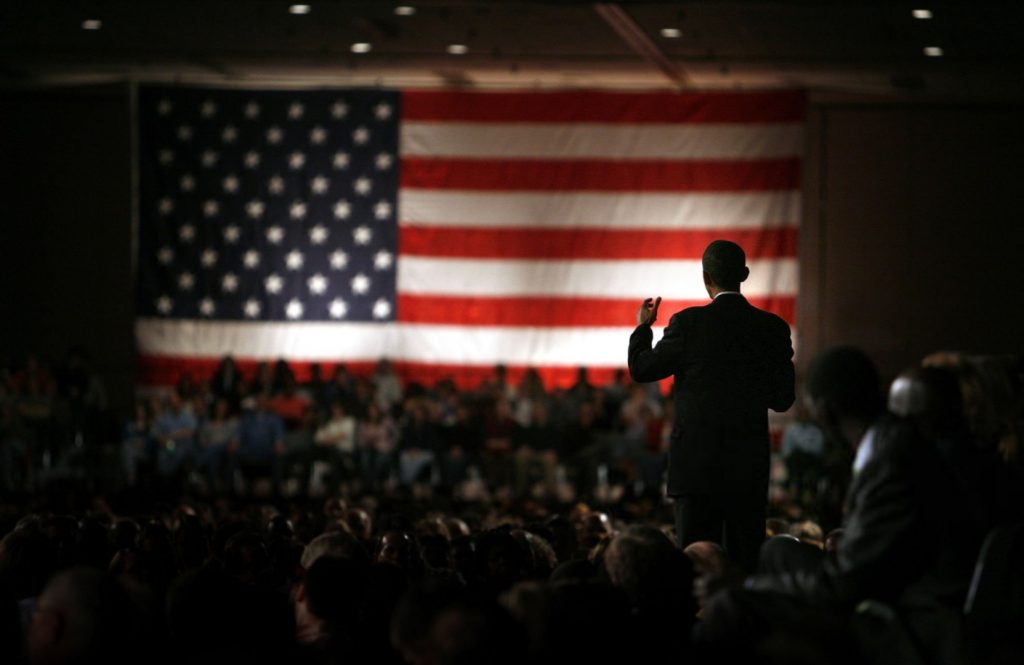
Even Obama, governing amid a financial crisis and prolonged wars, emphasized resilience, adaptability, and long-term renewal. His “politics of hope” framed American leadership as adaptive rather than exhausted. Obama acknowledged limits, warned against overextension, and emphasized multilateralism, but consistently rejected narratives of terminal decline. He consistently rejected the idea that globalization meant American decline and framed challenges such as China’s rapid development or climate change as tests of leadership, rather than insurmountable existential threats. While emphasizing strategic restraint and burden-sharing, Obama maintained that U.S. primacy remained indispensable on the international stage. Throughout these administrations, optimism functioned not only as rhetoric, but as a strategic tool to manage and sustain the international system by normalizing support for an open and rules-based international order, deterring adversaries, and reinforcing the credibility of long-term U.S. commitments. Anxieties existed, of course, but they were cyclical rather than pervasive and existential, and were balanced by a belief in eventual renewal and ultimately success.
This is not an alarmist claim about imminent collapse. Rather, it highlights the subtler anxieties about erosion, competition, and missed opportunities that lead to a level of strategic incoherence. These fears lead to overcorrection in policy, misalignment with allies, and greater uncertainty—dynamics that can, paradoxically, produce the very risks the United States fears. The challenge, therefore, is not to deny competition with China or understate genuine risks, but to respond to them with confidence, cooperation, and a steady hand. Understanding the power of narratives is therefore essential to sustaining U.S. leadership in an era of competition and rapid global change.
The End of American Confidence
For much of the postwar period, U.S. presidential leadership has rested on a strategy of confidence, projecting strength, optimism, and inevitability even amid tense competition and conflict. During the early Cold War, presidents framed rivalry not as evidence of American weakness or decline, but as confirmation of U.S. centrality to international affairs. Kennedy’s “New Frontier” approach, for one, framed competition with communism as a moral and essential challenge the United States was uniquely equipped to meet.
This period was undeniably shaped by fear—the Red Scare, nuclear brinksmanship, and proxy wars fueled anxieties about the spread of communism and Soviet technological advances. Worries of encroachment and challenge characterized this era of tension with the Soviet Union as the powers raced to develop superior nuclear and spaceflight capabilities. Yet even during this period of intense competition and fear, in which policymakers were deeply worried about Soviet expansion and the nuclear threat, the dominant narrative maintained that time and structural and inherent advantages favored the United States.
This persisted into the late Cold War era, with Reagan’s rhetoric marking a renewed emphasis on national revival over irreversible decline. While acknowledging perceived stagnation and strategic drift in the 1970s, Reagan framed American power as temporarily constrained rather than fundamentally eroded. His language of renewal, embodied in his “Morning in America” campaign, reasserted faith in markets, democracy, and U.S. moral leadership. Competition with the Soviet Union was portrayed not as a desperate struggle for survival, but as a test that the United States would ultimately win through endurance, innovation, and ideological appeal. Even as the Soviet Union sparked renewed tensions through the invasion of Afghanistan and heightened nuclear brinksmanship, Reagan responded with a confident vision and military and arms control cooperation with allies. This optimism was not merely rhetorical—it reinforced alliance cohesion, sustained domestic support for international engagement, and framed U.S. leadership as forward-looking rather than defensive.
Even Obama, governing amid a financial crisis and prolonged wars, emphasized resilience, adaptability, and long-term renewal. His “politics of hope” framed American leadership as adaptive rather than exhausted. Obama acknowledged limits, warned against overextension, and emphasized multilateralism, but consistently rejected narratives of terminal decline. He consistently rejected the idea that globalization meant American decline and framed challenges such as China’s rapid development or climate change as tests of leadership, rather than insurmountable existential threats. While emphasizing strategic restraint and burden-sharing, Obama maintained that U.S. primacy remained indispensable on the international stage. Throughout these administrations, optimism functioned not only as rhetoric, but as a strategic tool to manage and sustain the international system by normalizing support for an open and rules-based international order, deterring adversaries, and reinforcing the credibility of long-term U.S. commitments. Anxieties existed, of course, but they were cyclical rather than pervasive and existential, and were balanced by a belief in eventual renewal and ultimately success.
The year 2016 marked a decisive break from this optimism. Trump’s rhetoric, characterized by fearmongering, misinformation, and an incoherent policy agenda, fundamentally altered both domestic and international narratives. His inaugural address, invoking “American carnage,” normalized decline as a central political message. The United States was portrayed as hollowed out by globalization, exploited by allies, undermined by elites, and losing to foreign competitors. This shift replaced optimism and cooperation with anger, suspicion, and rejection. Domestically, it reinforced alarmist beliefs about immigrants, trade, and international institutions, deepened distrust of government, and fostered hostility toward allies long central to U.S. prosperity and security. International engagement was reframed as a liability rather than an asset, with allies and adversaries alike depicted as burdens or threats rather than partners. China, in particular, was cast as an existential enemy responsible for domestic economic dislocation and an aggressive challenger to U.S. production, growth, and dominance.
These narratives legitimized and intensified anxiety, pushing a turn toward overcorrection. The “America First” rhetoric—revived from early twentieth-century isolationist and nativist movements—reframed international engagement as a liability rather than an asset, arguing that U.S. allies were burdens that were not carrying their weight and undercutting mutual trust and cooperation. Amid these shifts, U.S. leadership increasingly depicted China as an existential threat responsible for domestic economic dislocation and an active, aggressive challenge to U.S. economic growth and dominance. This was amplified by growing economic inequality, cultural and political polarization, and widespread misinformation that were further inflamed by the COVID-19 pandemic. During this time, racialized rhetoric—such as references to the “China virus”—fueled antagonism and blurred public health concerns with geopolitical blame that embedded anti-China sentiment domestically and in conjunction with fear-based narratives of national decline.
While the Biden administration campaigned on themes of restoration, competence, and renewal, its governing agenda often leaned on urgency and existential competition. In practice, this has translated into repeatedly framing China as an adversary that must be contained and countered at almost every turn—from trade and technology to security partnerships and legislative priorities—amplifying the sense of urgency. China is presented simultaneously as both a rival and systemic threat requiring joint action, rallying domestic support and allied cooperation to contain China and limit its reach. The result is a paradox of optimism in tone with pessimism in the overarching framing.
All of this has culminated in a two-decade collapse in national confidence, with shifts in public sentiment aligning with these declinist narratives. A 2025 Pew Research poll shows a steady erosion of confidence and optimism, with 62% of respondents reporting dissatisfaction with the way democracy is working in the United States, citing economic conditions as a key factor. Concern is present across generations, but younger generations appear particularly pessimistic about America’s future, as a 2026 Gallup report revealed that 32% of respondents ages 18–34 named economic issues as the top national concern. Views on China have also hardened across partisan and demographic lines, while faith in the government and institutions has fallen. Only 17% of Americans say they trust their government to do what is right, marking the lowest level of trust in decades.
Unlike earlier moments of doubt—such as the Vietnam War or periods of economic recession—today’s pessimism is widely presented as structural and irreversible. Whereas past crises were often framed as temporary setbacks within an overarching narrative of eventual American resurgence, today’s discourse frequently asserts that U.S. influence has peaked and that global conditions no longer favor American leadership. Furthered by widespread anxiety over climate change, economic instability, and global political unrest, younger generations in particular worry it is already “too late” to prevent catastrophic outcomes, feeding a sense of irreversible decline. Republicans emphasize cultural decay and industrial decline, while Democrats warn of democratic fragility and global authoritarian advance. Despite ideological differences, both sides converge on a baseline emotion of fear and anxiety. This political climate both reflects and reinforces declinist and antagonistic narratives that work to erode confidence in U.S. leadership.
The Cost of Fear
Declinism has tangible policy consequences, with one of the most visible being the resurgence of economic protectionism. Tariffs now stand at levels not seen since the 1930s, justified less by economic logic and more by national security claims. The United States has imposed significant tariffs on Chinese goods, burdening U.S. consumers and prompting retaliatory tariffs. Trade has been reframed from a source of mutual gain into a zero-sum competition for survival. This narrows U.S. policy approaches and limits cooperative solutions, encouraging isolationist reflexes that weaken allied trust and coordination through uncertainty.
The deeper danger lies in mistaking perceived weakness for actual vulnerability.
Industrial policy has followed suit, similarly shifting from a corrective—and temporary—tool to a default approach. Subsidies, reshoring incentives, and “Buy American” provisions are increasingly becoming permanent, systemic features of U.S. economic policy. The 2022 CHIPS and Science Act and Inflation Reduction Act exemplify this shift, as while both aimed to secure supply chains and strengthen U.S. production, they also indirectly impacted Japanese and South Korean industries through their restrictive requirements. While these policies aim to enhance resilience, they are often compounded by domestic narratives that cast foreign involvement—even by allies—as risky and wholly unnecessary.
High-profile incidents, such as disruptions to allied investment projects or the termination of cooperative supply chain arrangements, illustrate the ways in which fear-based politics can undermine economic and political goals. For instance, the 2025 ICE raid of Hyundai’s EV investment project in Georgia kicked off an extended investigation and disruption, interrupting what was supposed to be a boon that would create thousands of local jobs. Suspicion toward foreigners and foreign firms, even from close allies, can significantly undermine economic goals. Additionally, tightening technology-sharing efforts, coupled with the retreat from joint production frameworks in favor of exclusive domestic reshoring, have weakened and disrupted previously integrated supply chains.
This logic increasingly overrides efficiency and alliance coordination. As allies face discriminatory rules, fragmented supply chains, and conflicting signals from the U.S., they grow increasingly alienated and mistrustful. Technology controls and industrial subsidies designed to constrain China frequently also penalize European, Canadian, and Asian allies, driving wedges even among long-standing partners. Foreign policy driven by fear and anxiety risks treating friends as rivals, weakening collective capacity and communication. The deeper danger lies in mistaking perceived weakness for actual vulnerability. Defensive, short-sighted behaviors can undermine innovation and economic growth, fuel alienation from global partners, and reduce U.S. leverage; in this way, the United States may inadvertently hasten the very erosion that it fears.
Stronger Than It Thinks
Despite pervasive declinist narratives, the United States retains significant economic, security, and technological primacy. U.S. income levels and growth rates continue to outperform most other advanced economies, and the economy has demonstrated strong resilience to systemic shocks in the long run. Nine of the ten most valuable global companies are American, reflecting deep advantages in scale, corporate and business leadership, and innovation. The U.S. leads in artificial intelligence, biotechnology, and frontier research, supported by great R&D investment and entrepreneurial capacity.
The energy sector provides a key example of U.S. leadership. The United States is the world’s largest oil and gas producer, granting significant leverage in the race to ensure energy security and export capacity. Alongside fossil fuel dominance, the U.S. is also a leading investor in renewable energy development and clean technology innovation. Advanced nuclear capabilities and regulatory leadership further position the U.S. to play a central role in decarbonization efforts, allied energy security cooperation, and global climate mitigation. Demographically, the United States enjoys human capital advantages relative to other aging powers, benefiting from a large working-age population and leading industries that attract talent worldwide. Immigration also remains a hidden strength, bolstering the workforce and economy and sustaining development and innovation—an advantage at risk if xenophobic and fear-based narratives continue to dominate domestic policy.
Financial power is another sphere where U.S. dominance is apparent—the dollar remains unrivaled as the world’s reserve currency, facilitating global trade and investment, and granting immense international leverage. U.S. leadership within financial institutions such as the World Bank and International Monetary Fund continues to inform global rules, norms, and the setting of priorities and conditions. Structurally, the United States benefits from its established role in shaping and maintaining the international order. Given this, withdrawal or disengagement from these institutions both unsettles the system and, importantly, weakens American influence within it. With favorable geography and no peer competitor in the Western Hemisphere, coupled with a deep and extensive alliance network that spans regions, the U.S. holds a structural advantage. The problem, then, is not a lack of power, but a crisis of perception.
Transactional America
Declinism carries strategic costs, notably in alienating allies and empowering adversaries. In the face of antagonistic and inconsistent shifts in policy, allies increasingly question U.S. reliability when partnership rhetoric clashes with protectionist practices. Despite observing moments of deepening security and short-term cooperation among select allies—like within the trilateral U.S.-ROK-Japan framework—sustained efforts fray under the pressures of mistrust and uncertainty.
Fear-driven overcorrection has strained alliance cohesion by imposing unilateral costs without reciprocation or consultation, weakening trust in U.S. reliability and judgment. Semiconductor and EV restrictions aimed at constraining China have imposed significant costs on Japanese and South Korean firms, contributing to supply-chain delays, reduced competitiveness, and political resentment. This has been particularly true in the case of China-aimed export controls on advanced semiconductors, the application of which also disadvantaged allied Dutch, Japanese, and South Korean firms. These measures erode trust and weaken institutionalized cooperation, exacerbating alienation and distrust among key allies.
Normative inconsistency—championing a “rules-based order” and a free and open Indo-Pacific while violating the spirit of openness and collaboration—erodes U.S. credibility and fuels uncertainty. These contradictions empower rivals such as China and Russia to exploit U.S. hypocrisy and decline in credibility to advance alternative narratives. They portray liberal democracy as exhausted and American leadership as self-interested, which provides a window of opportunity and narrative ammunition for the creation of a new international order. China’s promotion of a “Beijing Consensus,” along with Russian and North Korean revisionist propaganda, exploits perceived inconsistencies to rally other sidelined nations toward overturning the current U.S.-led order. Domestic pessimism compounds this by further weakening the ideological appeal of U.S. leadership abroad, reducing incentives at home to sustain global engagement. Without a confident vision, U.S. leadership risks becoming purely transactional. Fear-driven policy reduces America to “just another power,” rather than a rule-setter, prompting allies to pursue hedging strategies over alignment and deeper cooperation. Status and influence are eroded not just through material loss or decline, but through diminished trust and unreliable perceptions.
Confidence as Grand Strategy
A confidence-based strategy begins with recognizing enduring structural advantages rather than obsessing over perceived decline. Competition, especially with China, should be treated as serious but manageable—leaving behind existential and zero-sum narratives. Policy must align with the sources of U.S. strength, namely its capacity, scale, and alliances. This requires treating allies as force multipliers, not constraints, and pursuing continued leadership and reform from within the system to effectively shape outcomes in an ever-changing and competitive world.
The year 2016 marked a decisive break from this optimism. Trump’s rhetoric, characterized by fearmongering, misinformation, and an incoherent policy agenda, fundamentally altered both domestic and international narratives. His inaugural address, invoking “American carnage,” normalized decline as a central political message. The United States was portrayed as hollowed out by globalization, exploited by allies, undermined by elites, and losing to foreign competitors. This shift replaced optimism and cooperation with anger, suspicion, and rejection. Domestically, it reinforced alarmist beliefs about immigrants, trade, and international institutions, deepened distrust of government, and fostered hostility toward allies long central to U.S. prosperity and security. International engagement was reframed as a liability rather than an asset, with allies and adversaries alike depicted as burdens or threats rather than partners. China, in particular, was cast as an existential enemy responsible for domestic economic dislocation and an aggressive challenger to U.S. production, growth, and dominance.
These narratives legitimized and intensified anxiety, pushing a turn toward overcorrection. The “America First” rhetoric—revived from early twentieth-century isolationist and nativist movements—reframed international engagement as a liability rather than an asset, arguing that U.S. allies were burdens that were not carrying their weight and undercutting mutual trust and cooperation. Amid these shifts, U.S. leadership increasingly depicted China as an existential threat responsible for domestic economic dislocation and an active, aggressive challenge to U.S. economic growth and dominance. This was amplified by growing economic inequality, cultural and political polarization, and widespread misinformation that were further inflamed by the COVID-19 pandemic. During this time, racialized rhetoric—such as references to the “China virus”—fueled antagonism and blurred public health concerns with geopolitical blame that embedded anti-China sentiment domestically and in conjunction with fear-based narratives of national decline.
While the Biden administration campaigned on themes of restoration, competence, and renewal, its governing agenda often leaned on urgency and existential competition. In practice, this has translated into repeatedly framing China as an adversary that must be contained and countered at almost every turn—from trade and technology to security partnerships and legislative priorities—amplifying the sense of urgency. China is presented simultaneously as both a rival and systemic threat requiring joint action, rallying domestic support and allied cooperation to contain China and limit its reach. The result is a paradox of optimism in tone with pessimism in the overarching framing.
All of this has culminated in a two-decade collapse in national confidence, with shifts in public sentiment aligning with these declinist narratives. A 2025 Pew Research poll shows a steady erosion of confidence and optimism, with 62% of respondents reporting dissatisfaction with the way democracy is working in the United States, citing economic conditions as a key factor. Concern is present across generations, but younger generations appear particularly pessimistic about America’s future, as a 2026 Gallup report revealed that 32% of respondents ages 18–34 named economic issues as the top national concern. Views on China have also hardened across partisan and demographic lines, while faith in the government and institutions has fallen. Only 17% of Americans say they trust their government to do what is right, marking the lowest level of trust in decades.
Unlike earlier moments of doubt—such as the Vietnam War or periods of economic recession—today’s pessimism is widely presented as structural and irreversible. Whereas past crises were often framed as temporary setbacks within an overarching narrative of eventual American resurgence, today’s discourse frequently asserts that U.S. influence has peaked and that global conditions no longer favor American leadership. Furthered by widespread anxiety over climate change, economic instability, and global political unrest, younger generations in particular worry it is already “too late” to prevent catastrophic outcomes, feeding a sense of irreversible decline. Republicans emphasize cultural decay and industrial decline, while Democrats warn of democratic fragility and global authoritarian advance. Despite ideological differences, both sides converge on a baseline emotion of fear and anxiety. This political climate both reflects and reinforces declinist and antagonistic narratives that work to erode confidence in U.S. leadership.
The Cost of Fear
Declinism has tangible policy consequences, with one of the most visible being the resurgence of economic protectionism. Tariffs now stand at levels not seen since the 1930s, justified less by economic logic and more by national security claims. The United States has imposed significant tariffs on Chinese goods, burdening U.S. consumers and prompting retaliatory tariffs. Trade has been reframed from a source of mutual gain into a zero-sum competition for survival. This narrows U.S. policy approaches and limits cooperative solutions, encouraging isolationist reflexes that weaken allied trust and coordination through uncertainty.
The greatest danger for America is not losing strength, but losing faith in itself.
Correcting overcorrection is an essential piece of this. Measures aimed at constraining China should not unnecessarily harm allies or fragment shared industrial bases. As discussed above, recent semiconductor and EV restrictions targeted toward China have disproportionately burdened allied industries, fragmenting production networks, increasing long-term costs, and reducing strategic flexibility. Instead, a confidence-based approach should embrace interconnectivity and invest in strengthening joint competitiveness toward shared goals.
Such a confidence-based strategy must distinguish between managing China and empowering allies, rather than conflating the two. This should acknowledge the difficult realities of our geopolitical situation, while still allowing for selective cooperation with China, particularly on mutual challenges such as climate and energy. For example, areas such as emissions reduction, global green energy initiatives, and climate finance offer concrete opportunities for cooperation without sacrificing a strategic edge. Treating China neither lightly nor apocalyptically—but as it actually is—is vital for avoiding escalation spirals and creates space for pragmatic engagement. China undoubtedly seeks greater advancement, influence, and leverage, but evidence suggests it aims more to secure a position for itself through reshaping the margins of the existing order, rather than seeking to imminently undercut or replace the U.S. The distinction between reality and our imposed perceptions is an important one to make, and we must be sure not to assign intention simply where we want to see it.
Finally, leadership by example requires closing the gap between values and actions. Predictability and consistency are strategic assets that should be emphasized to reduce miscalculation, strengthen allied confidence, and signal U.S. decisiveness. Alliances should be treated as the valuable assets they are, not as dependencies or liabilities. Competing on outcomes, rather than fear, and centering shared production, innovation, and security allows the United States an opportunity to reassert its confidence and leadership without fanning the flames of the anxieties that undermine it. Along these lines, the United States must articulate and commit to a positive, forward-looking agenda that replaces panic with confidence and purposeful leadership.
Fear of Decline Is the Real Decline
The United States does not face imminent collapse, but it does face a crisis of confidence. This narrative of decline and anxiety distorts national strategy, alienates partners, and undermines American leadership. Reclaiming confidence—grounded in reality rather than nostalgia or denial—is therefore not naïve optimism, but strategic necessity. The greatest danger for America is not losing strength, but losing faith in itself.
Industrial policy has followed suit, similarly shifting from a corrective—and temporary—tool to a default approach. Subsidies, reshoring incentives, and “Buy American” provisions are increasingly becoming
permanent, systemic features of U.S. economic policy. The 2022 CHIPS and Science Act and Inflation Reduction Act exemplify this shift, as while both aimed to secure supply chains and strengthen U.S. production, they also indirectly impacted Japanese and South Korean industries through their restrictive requirements. While these policies aim to enhance resilience, they are often compounded by domestic narratives that cast foreign involvement—even by allies—as risky and wholly unnecessary.
High-profile incidents, such as disruptions to allied investment projects or the termination of cooperative supply chain arrangements, illustrate the ways in which fear-based politics can undermine economic and political goals. For instance, the 2025 ICE raid of Hyundai’s EV investment project in Georgia kicked off an extended investigation and disruption, interrupting what was supposed to be a boon that would create thousands of local jobs. Suspicion toward foreigners and foreign firms, even from close allies, can significantly undermine economic goals. Additionally, tightening technology-sharing efforts, coupled with the retreat from joint production frameworks in favor of exclusive domestic reshoring, have weakened and disrupted previously integrated supply chains.
This logic increasingly overrides efficiency and alliance coordination. As allies face discriminatory rules, fragmented supply chains, and conflicting signals from the U.S., they grow increasingly alienated and mistrustful. Technology controls and industrial subsidies designed to constrain China frequently also penalize European, Canadian, and Asian allies, driving wedges even among long-standing partners. Foreign policy driven by fear and anxiety risks treating friends as rivals, weakening collective capacity and communication. The deeper danger lies in mistaking perceived weakness for actual vulnerability. Defensive, short-sighted behaviors can undermine innovation and economic growth, fuel alienation from global partners, and reduce U.S. leverage; in this way, the United States may inadvertently hasten the very erosion that it fears.
Stronger Than It Thinks
Despite pervasive declinist narratives, the United States retains significant economic, security, and technological primacy. U.S. income levels and growth rates continue to outperform most other advanced economies, and the economy has demonstrated strong resilience to systemic shocks in the long run. Nine of the ten most valuable global companies are American, reflecting deep advantages in scale, corporate and business leadership, and innovation. The U.S. leads in artificial intelligence, biotechnology, and frontier research, supported by great R&D investment and entrepreneurial capacity.
The energy sector provides a key example of U.S. leadership. The United States is the world’s largest oil and gas producer, granting significant leverage in the race to ensure energy security and export capacity. Alongside fossil fuel dominance, the U.S. is also a leading investor in renewable energy development and clean technology innovation. Advanced nuclear capabilities and regulatory leadership further position the U.S. to play a central role in decarbonization efforts, allied energy security cooperation, and global climate mitigation. Demographically, the United States enjoys human capital advantages relative to other aging powers, benefiting from a large working-age population and leading industries that attract talent worldwide. Immigration also remains a hidden strength, bolstering the workforce and economy and sustaining development and innovation—an advantage at risk if xenophobic and fear-based narratives continue to dominate domestic policy.
Financial power is another sphere where U.S. dominance is apparent—the dollar remains unrivaled as the world’s reserve currency, facilitating global trade and investment, and granting immense international leverage. U.S. leadership within financial institutions such as the World Bank and International Monetary Fund continues to inform global rules, norms, and the setting of priorities and conditions. Structurally, the United States benefits from its established role in shaping and maintaining the international order. Given this, withdrawal or disengagement from these institutions both unsettles the system and, importantly, weakens American influence within it. With favorable geography and no peer competitor in the Western Hemisphere, coupled with a deep and extensive alliance network that spans regions, the U.S. holds a structural advantage. The problem, then, is not a lack of power, but a crisis of perception.
Transactional America
Declinism carries strategic costs, notably in alienating allies and empowering adversaries. In the face of antagonistic and inconsistent shifts in policy, allies increasingly question U.S. reliability when partnership rhetoric clashes with protectionist practices. Despite observing moments of deepening security and short-term cooperation among select allies—like within the trilateral U.S.-ROK-Japan framework—sustained efforts fray under the pressures of mistrust and uncertainty.
Fear-driven overcorrection has strained alliance cohesion by imposing unilateral costs without reciprocation or consultation, weakening trust in U.S. reliability and judgment. Semiconductor and EV restrictions aimed at constraining China have imposed significant costs on Japanese and South Korean firms, contributing to supply-chain delays, reduced competitiveness, and political resentment. This has been particularly true in the case of China-aimed export controls on advanced semiconductors, the application of which also disadvantaged allied Dutch, Japanese, and South Korean firms. These measures erode trust and weaken institutionalized cooperation, exacerbating alienation and distrust among key allies.
Normative inconsistency—championing a “rules-based order” and a free and open Indo-Pacific while violating the spirit of openness and collaboration—erodes U.S. credibility and fuels uncertainty. These contradictions empower rivals such as China and Russia to exploit U.S. hypocrisy and decline in credibility to advance alternative narratives. They portray liberal democracy as exhausted and American leadership as self-interested, which provides a window of opportunity and narrative ammunition for the creation of a new international order. China’s promotion of a “Beijing Consensus,” along with Russian and North Korean revisionist propaganda, exploits perceived inconsistencies to rally other sidelined nations toward overturning the current U.S.-led order. Domestic pessimism compounds this by further weakening the ideological appeal of U.S. leadership abroad, reducing incentives at home to sustain global engagement. Without a confident vision, U.S. leadership risks becoming purely transactional. Fear-driven policy reduces America to “just another power,” rather than a rule-setter, prompting allies to pursue hedging strategies over alignment and deeper cooperation. Status and influence are eroded not just through material loss or decline, but through diminished trust and unreliable perceptions.
Confidence as Grand Strategy
A confidence-based strategy begins with recognizing enduring structural advantages rather than obsessing over perceived decline. Competition, especially with China, should be treated as serious but manageable—leaving behind existential and zero-sum narratives. Policy must align with the sources of U.S. strength, namely its capacity, scale, and alliances. This requires treating allies as force multipliers, not constraints, and pursuing continued leadership and reform from within the system to effectively shape outcomes in an ever-changing and competitive world.
Correcting overcorrection is an essential piece of this. Measures aimed at constraining China should not unnecessarily harm allies or fragment shared industrial bases. As discussed
above, recent semiconductor and EV restrictions targeted toward China have disproportionately burdened allied industries, fragmenting production networks, increasing long-term costs, and reducing strategic flexibility. Instead, a confidence-based approach should embrace interconnectivity and invest in strengthening joint competitiveness toward shared goals.
Such a confidence-based strategy must distinguish between managing China and empowering allies, rather than conflating the two. This should acknowledge the difficult realities of our geopolitical situation, while still allowing for selective cooperation with China, particularly on mutual challenges such as climate and energy. For example, areas such as emissions reduction, global green energy initiatives, and climate finance offer concrete opportunities for cooperation without sacrificing a strategic edge. Treating China neither lightly nor apocalyptically—but as it actually is—is vital for avoiding escalation spirals and creates space for pragmatic engagement. China undoubtedly seeks greater advancement, influence, and leverage, but evidence suggests it aims more to secure a position for itself through reshaping the margins of the existing order, rather than seeking to imminently undercut or replace the U.S. The distinction between reality and our imposed perceptions is an important one to make, and we must be sure not to assign intention simply where we want to see it.
Finally, leadership by example requires closing the gap between values and actions. Predictability and consistency are strategic assets that should be emphasized to reduce miscalculation, strengthen allied confidence, and signal U.S. decisiveness. Alliances should be treated as the valuable assets they are, not as dependencies or liabilities. Competing on outcomes, rather than fear, and centering shared production, innovation, and security allows the United States an opportunity to reassert its confidence and leadership without fanning the flames of the anxieties that undermine it. Along these lines, the United States must articulate and commit to a positive, forward-looking agenda that replaces panic with confidence and purposeful leadership.
Fear of Decline Is the Real Decline
The United States does not face imminent collapse, but it does face a crisis of confidence. This narrative of decline and anxiety distorts national strategy, alienates partners, and undermines American leadership. Reclaiming confidence—grounded in reality rather than nostalgia or denial—is therefore not naïve optimism, but strategic necessity. The greatest danger for America is not losing strength, but losing faith in itself.
Recommended
The Strategic Cost of America’s Confidence Crisis

The Chinese Experience That Challenges the Universality of Liberalism
No More Free Rides in a Transactional World
Xi’s China Beneath the Surface

The Machinery of Wealth and Obedience