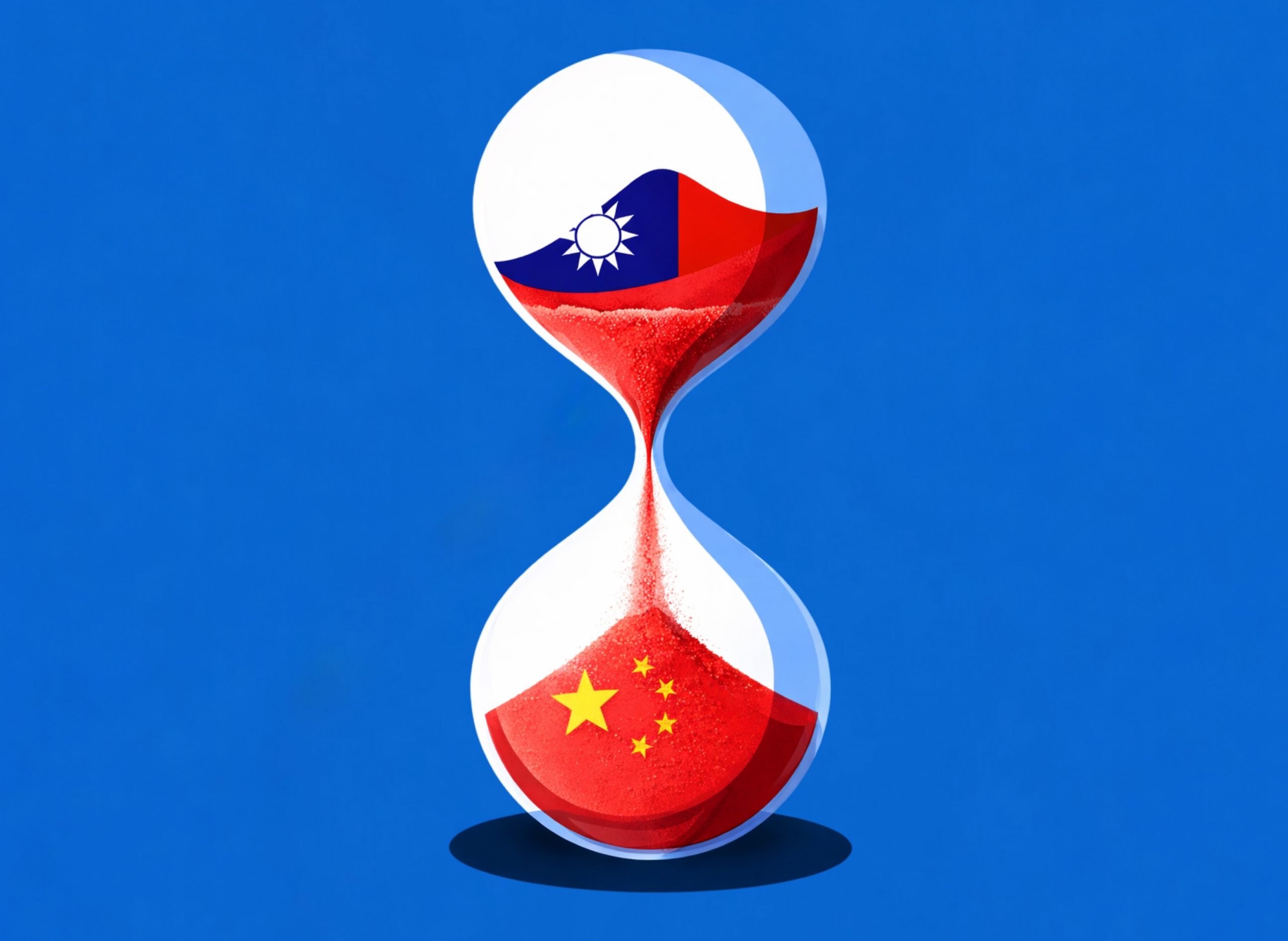


This illustration has been created by AI to use only in this article.
During the 2026 Davos Forum, Prime Minister Mark Carney of Canada sent a reverberating message to the world leaders about “the end of a pleasant fiction and the beginning of a brutal reality where the geopolitics of the great powers is not subject to any constraint.” Within this new reality, perhaps the major catalyst for such a statement was Vladimir Putin’s “no constraint” full-scale invasion of Ukraine, or perhaps it was the increasing strategic independence and emboldened national security policies of Canada’s southern neighbor, affecting European allies and the established order of the Atlantic security architecture. Regardless, Mr. Carney concluded his speech with a succinct yet assertive prognosis: “Great powers can afford now to go it alone.”
Evidently, Mr. Carney alluded to such a future, stating that “the middle powers must act together because if you are not at the table, we are on the menu.” Unquestionably, such statements coming from a PM of a NATO member state raise concerns over the foundations of the architecture of the existing Atlantic security order, evermore emphasizing how individualistic intentions of great powers and great power competition are dominating the global trends. Indeed, the last four years have shown a dramatic increase in great power competition and the overspill of this competition on the security landscape. With war in Ukraine becoming a catalyst of accelerated collusion between Beijing and Moscow, the role of traditional deterrence-focused alliances such as NATO has also been under scrutiny. On the other hand, Beijing’s multi-contoured resource security networks, Moscow’s sanctions evasion networks, as well as an extensive military alliance with Pyongyang have shown prowess in adaptation, resilience, and asymmetrical approaches in alliance-building of the authoritarian powers.
The common pattern across these developments is that great powers constantly balance self-sufficiency and national interests with reliance on allies in an increasingly fragmented world. However, while the China-Russia cooperation is largely pragmatic, it appears that Washington’s vision of the future security landscape is rather different. In reaction to the emerging Beijing-Moscow axis and the dilemma of the two-front order, with the necessity to simultaneously balance both China and Russia, Washington’s new independent national security course appears to be an adaptation to both the changing scope and changing geography of global alliances.
Geographically, Washington’s pivot towards the Pacific is grounded in a functional separation of security responsibilities between the United States and its European NATO partners in Europe. Re-prioritization and changing scope are further supported by the emergence of targeted, mission-specific pillars such as AUKUS and QUAD, allowing for sustaining U.S. leadership and balancing in the region. Undoubtedly, as Washington deepens its pivot to the Pacific, the center of gravity of global security is shifting accordingly. Yet this transition is neither abrupt nor disconnected from the past. Rather, NATO’s Atlantic legacy and lessons learned in Ukraine will continue to reverberate through the emerging Indo-Pacific security network, shaping its structures, practices, and strategic logic. Understanding this transition and the underlying mechanisms that prompted this transition to materialize is essential to assessing the future architecture of collective defense and the evolving foundations of U.S. leadership in the international system.
NATO and the Atlantic Security Order
The roots of the emerging transition from the Atlantic to the Pacific security order could be traced to several moving and interconnected catalysts, including the evolving role of the Organization in relation to Russia, the role of Ukraine in the European security order, and the realignment of the U.S.-NATO relationship under the current administration. Historically, born as a response of post-World War II Western Europe and the United States to the rising threat of Soviet political and military expansion, NATO became the embodiment of collective defense during the Cold War. Bound by mutual defense clauses, such as Article 5, the Organization guaranteed protection and provided ironclad security guarantees to its member states. Geographically, however, the alliance remained limited to the Atlantic, forming what is known today as the Atlantic security order.
is a 2024 Sylff Fellow at the Tokyo Foundation for Policy Research and an international security researcher specializing in China–Russia–DPRK relations, asymmetric warfare, and East Asian security. He holds an M.A. in Regional Studies: East Asia from Columbia University.
During the 2026 Davos Forum, Prime Minister Mark Carney of Canada sent a reverberating message to the world leaders about “the end of a pleasant fiction and the beginning of a brutal reality where the geopolitics of the great powers is not subject to any constraint.” Within this new reality, perhaps the major catalyst for such a statement was Vladimir Putin’s “no constraint” full-scale invasion of Ukraine, or perhaps it was the increasing strategic independence and emboldened national security policies of Canada’s southern neighbor, affecting European allies and the established order of the Atlantic security architecture. Regardless, Mr. Carney concluded his speech with a succinct yet assertive prognosis: “Great powers can afford now to go it alone.”
Evidently, Mr. Carney alluded to such a future, stating that “the middle powers must act together because if you are not at the table, we are on the menu.” Unquestionably, such statements coming from a PM of a NATO member state raise concerns over the foundations of the architecture of the existing Atlantic security order, evermore emphasizing how individualistic intentions of great powers and great power competition are dominating the global trends. Indeed, the last four years have shown a dramatic increase in great power competition and the overspill of this competition on the security landscape. With war in Ukraine becoming a catalyst of accelerated collusion between Beijing and Moscow, the role of traditional deterrence-focused alliances such as NATO has also been under scrutiny. On the other hand, Beijing’s multi-contoured resource security networks, Moscow’s sanctions evasion networks, as well as an extensive military alliance with Pyongyang have shown prowess in adaptation, resilience, and asymmetrical approaches in alliance-building of the authoritarian powers.
The common pattern across these developments is that great powers constantly balance self-sufficiency and national interests with reliance on allies in an increasingly fragmented world. However, while the China-Russia cooperation is largely pragmatic, it appears that Washington’s vision of the future security landscape is rather different. In reaction to the emerging Beijing-Moscow axis and the dilemma of the two-front order, with the necessity to simultaneously balance both China and Russia, Washington’s new independent national security course appears to be an adaptation to both the changing scope and changing geography of global alliances.
Geographically, Washington’s pivot towards the Pacific is grounded in a functional separation of security responsibilities between the United States and its European NATO partners in Europe. Re-prioritization and changing scope are further supported by the emergence of targeted, mission-specific pillars such as AUKUS and QUAD, allowing for sustaining U.S. leadership and balancing in the region. Undoubtedly, as Washington deepens its pivot to the Pacific, the center of gravity of global security is shifting accordingly. Yet this transition is neither abrupt nor disconnected from the past. Rather, NATO’s Atlantic legacy and lessons learned in Ukraine will continue to reverberate through the emerging Indo-Pacific security network, shaping its structures, practices, and strategic logic. Understanding this transition and the underlying mechanisms that prompted this transition to materialize is essential to assessing the future architecture of collective defense and the evolving foundations of U.S. leadership in the international system.
NATO and the Atlantic Security Order
The roots of the emerging transition from the Atlantic to the Pacific security order could be traced to several moving and interconnected catalysts, including the evolving role of the Organization in relation to Russia, the role of Ukraine in the European security order, and the realignment of the U.S.-NATO relationship under the current administration. Historically, born as a response of post-World War II Western Europe and the United States to the rising threat of Soviet political and military expansion, NATO became the embodiment of collective defense during the Cold War. Bound by mutual defense clauses, such as Article 5, the Organization guaranteed protection and provided ironclad security guarantees to its member states. Geographically, however, the alliance remained limited to the Atlantic, forming what is known today as the Atlantic security order.
is a 2024 Sylff Fellow at the Tokyo Foundation for Policy Research and an international security researcher specializing in China–Russia–DPRK relations, asymmetric warfare, and East Asian security. He holds an M.A. in Regional Studies: East Asia from Columbia University.
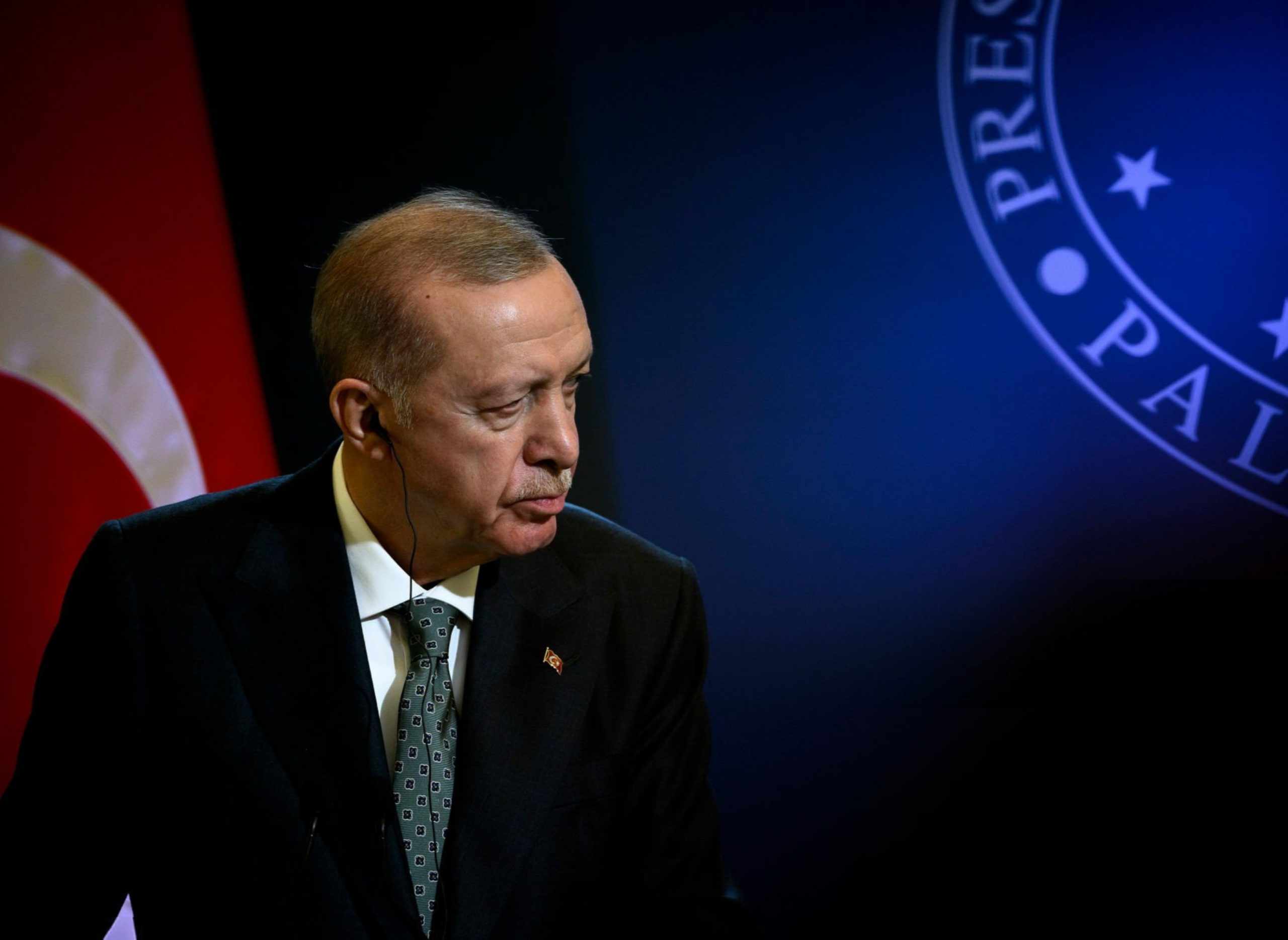

Built upon a shared identity and collective approach to deterrence and defense, the Organization offered an integrated command structure, resource allocation, intelligence sharing, and contingency planning. Collectivity also implied that each member state within the organization was responsible for the success of the alliance and the stability of the continent. Throughout the 20th century, NATO’s collective structure, therefore, had a proven track record of success, showing sustained growth via enlargement. Despite the economic and political divergences of its member states, NATO’s streamlined command structure also allowed the organization not only to expand but also to successfully outlast the Soviet Union. After the collapse of the Soviet Union, however, NATO’s political and ideological role in deterring Moscow also changed. In the eyes of European leaders, the Russian threat ceased to exist, and a weakened Russian Federation was no longer a danger to the strategic stability of the continent. The dissolution of the Warsaw Pact also opened up the possibilities for the first post-Soviet enlargement without triggering any responses from a weakened Russia.
The turn of the century, nonetheless, presented new challenges such as 9/11 and the consequent war on terrorism. Crucially, these events were the only time when NATO’s Article 5 was invoked. Simultaneously, throughout the mid- to late 2000s, the Kremlin’s tone and stance on NATO also started to alter. The change was rooted in a two-fold issue of domestic and regional balancing and power projection. Domestically, Putin was concentrating on establishing a strongman leadership via consolidation of power and suppression of domestic opposition. Regionally, Russia’s foreign policies began to resemble those of a traditional regional power, emphasizing the restoration of political influence in its so-called sphere of influence through efforts to shape elections and regimes in neighboring countries.
Albeit with some success in interfering in the politics of Ukraine, Belarus, and Georgia, the people of these countries chose an alternative course. Democratization and independent foreign and security policies in formerly Soviet Ukraine and Georgia, thus, combined with rising demands for domestic democratization in Russia itself, instilled fear in the Kremlin. In the perception of Russian elites, regime democratization was irrevocably tied to the rising influence of the West. Fearing both the threat of the overspill of Western-induced “color revolutions” to Russia and support of such revolutions by the domestic opposition, Moscow’s stance on NATO changed, directly linking democratization to NATO expansion. Following the 2008 Bucharest Summit, which brought the possibility of future Ukrainian NATO membership, and the suppression of the corresponding rise of democratic movements within Russia, the political course towards future confrontation with the “outside enemy” became the cornerstone of the Kremlin’s actions and policies.
Justified by the need to shield the country from Western regime change and, yet predictably, NATO expansion, Moscow’s foreign policy started to explicitly shift towards military intervention and suppression. The annexation of Crimea and the following intervention into Ukraine’s Donbas were explicit warnings to Europe. The EU and U.S. both condemned these events and showed “unanimity” in political rhetoric; however, they failed to translate that consensus into coordinated strategic and military pressure. Nonetheless, since the full-scale invasion of Ukraine, NATO has once again gone into a transitional period of revival in response to direct threats to European stability. The alliance needed a push. Alongside increased spending, arms supplies to Kyiv, and integrated intelligence-sharing networks, the alliance reinvigorated its collective determination to stand up to the aggression from which it was originally designed to defend the continent.
Despite NATO’s more rigid stance, the Russian invasion has revealed a plethora of substantial rifts within the alliance’s collective defense structures. The majority of all arms and military supplies sent to Ukraine since 2022 have come from the U.S., highlighting the scale of the alliance’s dependence on its largest member. The flaws in the collective approach to defense were further exacerbated when the Trump administration demanded NATO member states raise their defense spending to five percent of GDP, putting pressure on the economies of the member states to commit to burden-sharing and burden-shifting. The alliance itself also remains highly dependent on U.S. weapon systems, technologies, and security guarantees en large.
Built upon a shared identity and collective approach to deterrence and defense, the Organization offered an integrated command structure, resource allocation, intelligence sharing, and contingency planning. Collectivity also implied that each member state within the organization was responsible for the success of the alliance and the stability of the continent. Throughout the 20th century, NATO’s collective structure, therefore, had a proven track record of success, showing sustained growth via enlargement. Despite the economic and political divergences of its member states, NATO’s streamlined command structure also allowed the organization not only to expand but also to successfully outlast the Soviet Union. After the collapse of the Soviet Union, however, NATO’s political and ideological role in deterring Moscow also changed. In the eyes of European leaders, the Russian threat ceased to exist, and a weakened Russian Federation was no longer a danger to the strategic stability of the continent. The dissolution of the Warsaw Pact also opened up the possibilities for the first post-Soviet enlargement without triggering any responses from a weakened Russia.
The turn of the century, nonetheless, presented new challenges such as 9/11 and the consequent war on terrorism. Crucially, these events were the only time when NATO’s Article 5 was invoked. Simultaneously, throughout the mid- to late 2000s, the Kremlin’s tone and stance on NATO also started to alter. The change was rooted in a two-fold issue of domestic and regional balancing and power projection. Domestically, Putin was concentrating on establishing a strongman leadership via consolidation of power and suppression of domestic opposition. Regionally, Russia’s foreign policies began to resemble those of a traditional regional power, emphasizing the restoration of political influence in its so-called sphere of influence through efforts to shape elections and regimes in neighboring countries.
Albeit with some success in interfering in the politics of Ukraine, Belarus, and Georgia, the people of these countries chose an alternative course. Democratization and independent foreign and security policies in formerly Soviet Ukraine and Georgia, thus, combined with rising demands for domestic democratization in Russia itself, instilled fear in the Kremlin. In the perception of Russian elites, regime democratization was irrevocably tied to the rising influence of the West. Fearing both the threat of the overspill of Western-induced “color revolutions” to Russia and support of such revolutions by the domestic opposition, Moscow’s stance on NATO changed, directly linking democratization to NATO expansion. Following the 2008 Bucharest Summit, which brought the possibility of future Ukrainian NATO membership, and the suppression of the corresponding rise of democratic movements within Russia, the political course towards future confrontation with the “outside enemy” became the cornerstone of the Kremlin’s actions and policies.
Justified by the need to shield the country from Western regime change and, yet predictably, NATO expansion, Moscow’s foreign policy started to explicitly shift towards military intervention and suppression. The annexation of Crimea and the following intervention into Ukraine’s Donbas were explicit warnings to Europe. The EU and U.S. both condemned these events and showed “unanimity” in political rhetoric; however, they failed to translate that consensus into coordinated strategic and military pressure. Nonetheless, since the full-scale invasion of Ukraine, NATO has once again gone into a transitional period of revival in response to direct threats to European stability. The alliance needed a push. Alongside increased spending, arms supplies to Kyiv, and integrated intelligence-sharing networks, the alliance reinvigorated its collective determination to stand up to the aggression from which it was originally designed to defend the continent.
Despite NATO’s more rigid stance, the Russian invasion has revealed a plethora of substantial rifts within the alliance’s collective defense structures. The majority of all arms and military supplies sent to Ukraine since 2022 have come from the U.S., highlighting the scale of the alliance’s dependence on its largest member. The flaws in the collective approach to defense were further exacerbated when the Trump administration demanded NATO member states raise their defense spending to five percent of GDP, putting pressure on the economies of the member states to commit to burden-sharing and burden-shifting. The alliance itself also remains highly dependent on U.S. weapon systems, technologies, and security guarantees en large.
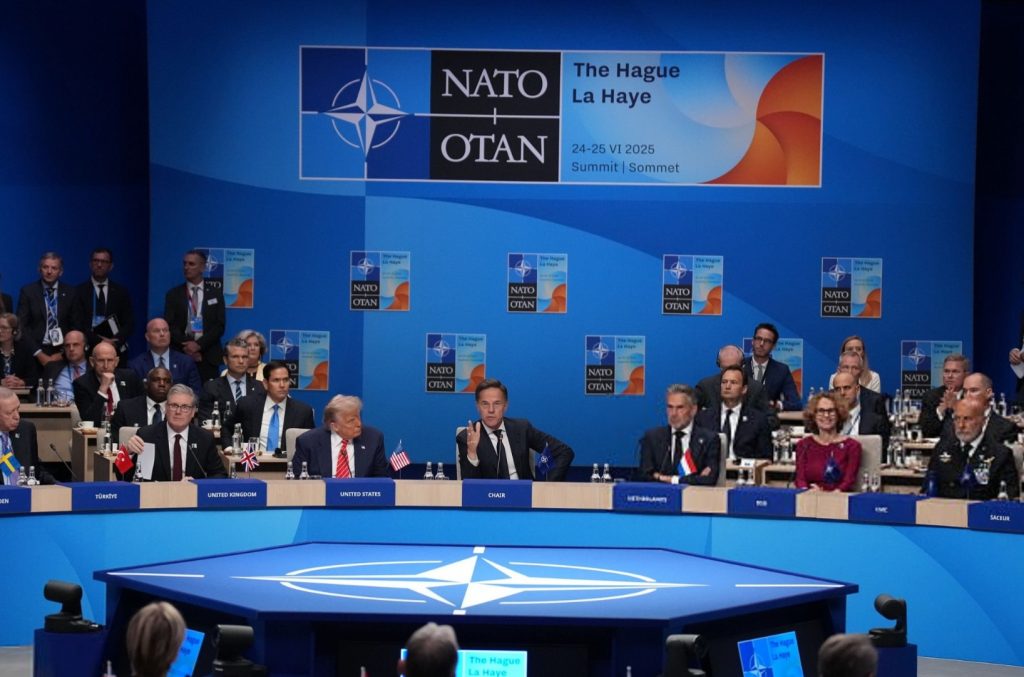
However, when viewed through the calculus of dual-front balancing, alongside the new National Security Strategy and expedited U.S.-Russia negotiations over peace in Ukraine, decoupling or strategic independence implies a more autonomous and European-centric NATO. It also supports the thesis of Washington’s reprioritization of its geographical areas of interest. Within this new landscape of interdependency and decoupling, NATO will remain a functional security organization, emphasizing collective defense and enduring as the centerpiece of the continent’s deterrence architecture. However, the alliance’s role in containing Russia will depend on how effectively European leaders respond to the widening U.S.-NATO decoupling and work on strengthening the alliance’s self-reliance. Furthermore, its role will remain largely confined to the continent, with a diminishing global presence beyond the Atlantic.
The future of security appears increasingly oriented toward alternative, tailored, and mission-specific partnership formats. Situational and more fragmented, alliances such as AUKUS and QUAD are quite different from NATO’s collective security frameworks. Thus, by situating these pillars within a single analytical lens, alongside broader geopolitical dynamics, structural connections between European and Asian security can illustrate how interlinked yet increasingly independent theaters may redefine the balance of power in the twenty-first century.
The Indo-Pacific Turn: AUKUS and QUAD
The second point of contention within the dual-front order, therefore, is in the Asia-Pacific. On the surface level, throughout the last 20 years, the region has seen an unprecedented change due to Beijing’s economic, political, and military rise. Kissinger mainly alludes to this rise as a consequence of the post-Cold War unipolarity that allowed for a peaceful rise of the region. And while politically, unipolarity was not the most desirable outcome for Beijing, which “did not accept the interpretation of the end of the Cold War as ushering in a period of America as a hyperpower,” economically, it allowed for a very fruitful relationship with the U.S. and the West.
Jiang Zemin’s low-profile foreign policy mirrored this sentiment—China remained non-confrontational, while successful economic reforms and participation in the globalized economy further integrated the country into the global value chains. Post-Cold War China became the largest trade partner of the U.S., the EU, and ASEAN nations, concurrently incorporating dependency on China and its markets into the economies of the West. With a better economic footing, Beijing’s leaders have leveraged this unprecedented integration and interdependence with the rest of the world. With Xi Jinping’s “great rejuvenation” of the Chinese nation, assertiveness and nationalism in foreign policy are no longer just talk. Since 2010, China has increasingly sought to reshape global governance institutions in ways that reflect Beijing’s priorities and values, positioning itself as an alternative model to the West.
Washington’s understanding of these challenges is consequently reflected in the new National Security Strategy and in domestic “America First” policies, ranging from tariffs to regional security alliances. Shifting away from the Biden-era threat-based framing, these policies treat China as a near-peer strategic competitor with comparable economic and technological weight, reflecting a preference for containment via competition rather than via direct suppression.
AUKUS becomes a mechanism for the creation of controlled deterrence via escalation.
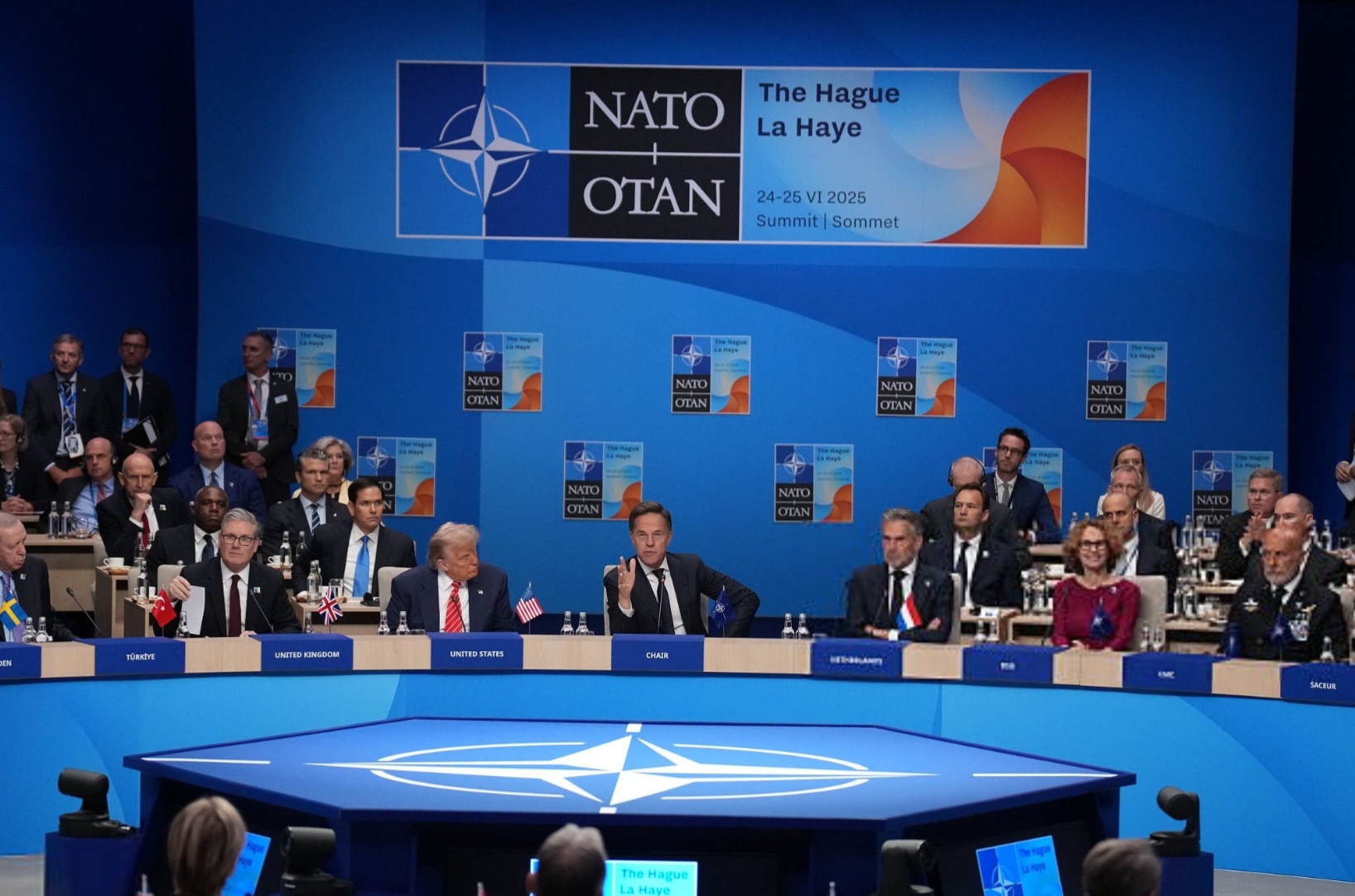
Therefore, in terms of security in the region, several steps have been taken towards more pragmatic and tailored approaches to the security question. Unlike the NATO containment of Russia, rooted primarily in ideological rivalry and the threat of a collective response under Article 5, the U.S.-China strategic competition requires asymmetry in alliances. The new NSS explicitly alludes to such asymmetry, underlining deterrence and containment without formal encirclement. In addition to the traditional U.S.-Japan-Korea trilateral partnership, the most promising structures within the Indo-Pacific that offer asymmetry and flexibility are AUKUS and QUAD.
Split between two pillars, AUKUS is a technological and strategic pact between Australia, the UK, and the U.S. The alliance, first and foremost, acts as a strategic tool aimed at shifting the regional balance of power through enhanced deterrence. With the nuclear submarine deal (Pillar I) and advanced defense cooperation (Pillar II) acting as the symbols of trust between its members, AUKUS becomes a mechanism for the creation of controlled deterrence via escalation. Advanced intelligence-sharing and technology-sharing between its members also bring this formation closer to NATO’s standardized approach to command and control. Therefore, with the reinforcement of military integration and reinvigoration under the new U.S. administration, AUKUS has very viable potential to become one of the key asymmetric tools in Washington’s Indo-Pacific arsenal.
QUAD, on the other hand, encompasses loose coordination among the U.S., Japan, India, and Australia, aimed at China-induced threats to maritime security and supply chain resilience. With limited institutional depth, QUAD offers working-group frameworks ranging from cybersecurity to infrastructural projects, lacking in-depth security engagement. Although some observers expected the Trump administration to expand the Quad’s security role, it has remained a loose dialogue among the region’s largest democracies. Furthermore, India’s independent foreign policy, the complexities of China-India and Russia-India relations, as well as the individual security partnerships of its members, such as the U.S.-Japan Security Treaty, further weigh down on the possibility of the formation of a fully fledged alliance.
Both AUKUS and QUAD signal sustained American engagement in the region and reflect the pattern in which this engagement is likely to be structured in the future. Given the growing presence of authoritarian powers in the Asia-Pacific, these arrangements, however, could benefit from greater interconnectivity with regional security alliances such as U.S.–Japan–Korea cooperation, as well as deeper institutional linkages with NATO and, potentially, even Ukraine.
Europe Meets Asia
The theoretical as well as practical bridging of the existing Atlantic security structure with emerging Indo-Pacific demands has long been at the forefront of security studies. Whether through structural adaptation, innovation, or complete deviation from the current legacy-based networks, success in the Pacific is directly linked to responses to adversary alliance networks such as the Russia-China and North Korea-Russia partnerships. As the war in Ukraine has shown, these flexible, pragmatic, and ideologically charged alliances have far-reaching implications not only for Europe but for Asia as well.
For instance, Russia’s “limitless partnership” with China has exposed shortcomings of the sanctions on the energy resource and banking sectors, which were used as one of the key pillars of the initial response to the invasion. In response to sanctions, Beijing and Moscow have established pragmatic cooperation that covers key demands on both sides in a direct bilateral exchange of goods, critical technologies such as drones, trade in national currencies, and is supported by parallel import schemes. As a result, four years after the beginning of the invasion, Russian drone and missile factories still have access to Chinese-supplied critical components used in attacks on Ukraine’s critical infrastructure. Beijing, meanwhile, has solidified and expanded its discounted energy resource procurement from Russia.
Security threats embedded in the China-Russia partnership became deeper than bilateral trade and sanctions evasion. In terms of preparing for future conflicts, Beijing has been actively involved in extracting critical lessons from both the invasion and, potentially, from the captured U.S.- and NATO-supplied military equipment in Ukraine. Moscow, on the other hand, has been keen to participate in show-of-force military exercises in the Pacific, joining Beijing in naval and air patrols near Japan and Taiwan. Examples of such practical cooperation clearly demonstrate cross-theater learning.
On the ground, the unprecedented level of technological cooperation between Moscow, Pyongyang, and Beijing that now covers ICBM technologies, long-range drones, and nuclear propulsion technology further exacerbates the negative externalities of such alliances on stability in the region. In these dual-route relationships, North Korean troops have emerged near European borders; Moscow has received millions of artillery shells, hundreds of KN-23 ballistic missiles, and Chinese components for its drones. Meanwhile, Pyongyang continues to advance its long-range strike capabilities and all three components of its nuclear triad, and Beijing has retained a force multiplier in the region.
Finally, keeping in mind an additional layer of complexities in maintaining commitments in both theaters requires the incorporation of American Asia-Pacific allies into the emerging strategy of responses to the authoritarian alliances. Seeing volatile North Korean and Chinese actions in the region, allies such as Japan and South Korea, for once, have responded with pledges and concrete steps toward rearmament. However, with allied strategic calculations hinging on balancing the probability of abandonment versus entrapment, this rearmament is rather enforced by a mixture of security concerns and over-reliance on the United States. The strategic interdependence between Europe and Asia and the need to adapt to emerging threats are, therefore, as important as ever. In this frame of reference, the U.S.-NATO decoupling explains the rationality behind the current administration’s security foresight, as it creates more room for American resources to be poured into the Asia-Pacific region and into the resuscitation of regional security alliances.
Toward a Pacific-Centered Security Order?
Supported by economic and trade data, all these developments point toward the emergence of a unique Pacific-centered security order, as the world’s economic and military power is increasingly concentrated in the region. Structural trends also make the Pacific a testbed for new forms of alliance politics. For instance, 21st-century authoritarian alliances in the region have already shown the success and resilience of mission-specific alliance politics. China, for instance, remains Russia’s largest buyer of natural gas and oil, despite threats of tariffs and sanctions from the Trump administration. North Korean troops remain on rotation in Russia’s Kursk region, allowing Moscow to use reinforcements at will, as well as providing Pyongyang with a fresh source of 21st-century combat experience.
However, when viewed through the calculus of dual-front balancing, alongside the new National Security Strategy and expedited U.S.-Russia negotiations over peace in Ukraine, decoupling or strategic independence implies a more autonomous and European-centric NATO. It also supports the thesis of Washington’s reprioritization of its geographical areas of interest. Within this new landscape of interdependency and decoupling, NATO will remain a functional security organization, emphasizing collective defense and enduring as the centerpiece of the continent’s deterrence architecture. However, the alliance’s role in containing Russia will depend on how effectively European leaders respond to the widening U.S.-NATO decoupling and work on strengthening the alliance’s self-reliance. Furthermore, its role will remain largely confined to the continent, with a diminishing global presence beyond the Atlantic.
The future of security appears increasingly oriented toward alternative, tailored, and mission-specific partnership formats. Situational and more fragmented, alliances such as AUKUS and QUAD are quite different from NATO’s collective security frameworks. Thus, by situating these pillars within a single analytical lens, alongside broader geopolitical dynamics, structural connections between European and Asian security can illustrate how interlinked yet increasingly independent theaters may redefine the balance of power in the twenty-first century.
The Indo-Pacific Turn: AUKUS and QUAD
The second point of contention within the dual-front order, therefore, is in the Asia-Pacific. On the surface level, throughout the last 20 years, the region has seen an unprecedented change due to Beijing’s economic, political, and military rise. Kissinger mainly alludes to this rise as a consequence of the post-Cold War unipolarity that allowed for a peaceful rise of the region. And while politically, unipolarity was not the most desirable outcome for Beijing, which “did not accept the interpretation of the end of the Cold War as ushering in a period of America as a hyperpower,” economically, it allowed for a very fruitful relationship with the U.S. and the West.
Jiang Zemin’s low-profile foreign policy mirrored this sentiment—China remained non-confrontational, while successful economic reforms and participation in the globalized economy further integrated the country into the global value chains. Post-Cold War China became the largest trade partner of the U.S., the EU, and ASEAN nations, concurrently incorporating dependency on China and its markets into the economies of the West. With a better economic footing, Beijing’s leaders have leveraged this unprecedented integration and interdependence with the rest of the world. With Xi Jinping’s “great rejuvenation” of the Chinese nation, assertiveness and nationalism in foreign policy are no longer just talk. Since 2010, China has increasingly sought to reshape global governance institutions in ways that reflect Beijing’s priorities and values, positioning itself as an alternative model to the West.
Washington’s understanding of these challenges is consequently reflected in the new National Security Strategy and in domestic “America First” policies, ranging from tariffs to regional security alliances. Shifting away from the Biden-era threat-based framing, these policies treat China as a near-peer strategic competitor with comparable economic and technological weight, reflecting a preference for containment via competition rather than via direct suppression.
Therefore, in terms of security in the region, several steps have been taken towards more pragmatic and tailored approaches to the security question. Unlike the NATO containment of Russia, rooted primarily in ideological rivalry and
the threat of a collective response under Article 5, the U.S.-China strategic competition requires asymmetry in alliances. The new NSS explicitly alludes to such asymmetry, underlining deterrence and containment without formal encirclement. In addition to the traditional U.S.-Japan-Korea trilateral partnership, the most promising structures within the Indo-Pacific that offer asymmetry and flexibility are AUKUS and QUAD.
Split between two pillars, AUKUS is a technological and strategic pact between Australia, the UK, and the U.S. The alliance, first and foremost, acts as a strategic tool aimed at shifting the regional balance of power through enhanced deterrence. With the nuclear submarine deal (Pillar I) and advanced defense cooperation (Pillar II) acting as the symbols of trust between its members, AUKUS becomes a mechanism for the creation of controlled deterrence via escalation. Advanced intelligence-sharing and technology-sharing between its members also bring this formation closer to NATO’s standardized approach to command and control. Therefore, with the reinforcement of military integration and reinvigoration under the new U.S. administration, AUKUS has very viable potential to become one of the key asymmetric tools in Washington’s Indo-Pacific arsenal.
QUAD, on the other hand, encompasses loose coordination among the U.S., Japan, India, and Australia, aimed at China-induced threats to maritime security and supply chain resilience. With limited institutional depth, QUAD offers working-group frameworks ranging from cybersecurity to infrastructural projects, lacking in-depth security engagement. Although some observers expected the Trump administration to expand the Quad’s security role, it has remained a loose dialogue among the region’s largest democracies. Furthermore, India’s independent foreign policy, the complexities of China-India and Russia-India relations, as well as the individual security partnerships of its members, such as the U.S.-Japan Security Treaty, further weigh down on the possibility of the formation of a fully fledged alliance.
Both AUKUS and QUAD signal sustained American engagement in the region and reflect the pattern in which this engagement is likely to be structured in the future. Given the growing presence of authoritarian powers in the Asia-Pacific, these arrangements, however, could benefit from greater interconnectivity with regional security alliances such as U.S.–Japan–Korea cooperation, as well as deeper institutional linkages with NATO and, potentially, even Ukraine.
Europe Meets Asia
The theoretical as well as practical bridging of the existing Atlantic security structure with emerging Indo-Pacific demands has long been at the forefront of security studies. Whether through structural adaptation, innovation, or complete deviation from the current legacy-based networks, success in the Pacific is directly linked to responses to adversary alliance networks such as the Russia-China and North Korea-Russia partnerships. As the war in Ukraine has shown, these flexible, pragmatic, and ideologically charged alliances have far-reaching implications not only for Europe but for Asia as well.
For instance, Russia’s “limitless partnership” with China has exposed shortcomings of the sanctions on the energy resource and banking sectors, which were used as one of the key pillars of the initial response to the invasion. In response to sanctions, Beijing and Moscow have established pragmatic cooperation that covers key demands on both sides in a direct bilateral exchange of goods, critical technologies such as drones, trade in national currencies, and is supported by parallel import schemes. As a result, four years after the beginning of the invasion, Russian drone and missile factories still have access to Chinese-supplied critical components used in attacks on Ukraine’s critical infrastructure. Beijing, meanwhile, has solidified and expanded its discounted energy resource procurement from Russia.
Security threats embedded in the China-Russia partnership became deeper than bilateral trade and sanctions evasion. In terms of preparing for future conflicts, Beijing has been actively involved in extracting critical lessons from both the invasion and, potentially, from the captured U.S.- and NATO-supplied military equipment in Ukraine. Moscow, on the other hand, has been keen to participate in show-of-force military exercises in the Pacific, joining Beijing in naval and air patrols near Japan and Taiwan. Examples of such practical cooperation clearly demonstrate cross-theater learning.
On the ground, the unprecedented level of technological cooperation between Moscow, Pyongyang, and Beijing that now covers ICBM technologies, long-range drones, and nuclear propulsion technology further exacerbates the negative externalities of such alliances on stability in the region. In these dual-route relationships, North Korean troops have emerged near European borders; Moscow has received millions of artillery shells, hundreds of KN-23 ballistic missiles, and Chinese components for its drones. Meanwhile, Pyongyang continues to advance its long-range strike capabilities and all three components of its nuclear triad, and Beijing has retained a force multiplier in the region.
Finally, keeping in mind an additional layer of complexities in maintaining commitments in both theaters requires the incorporation of American Asia-Pacific allies into the emerging strategy of responses to the authoritarian alliances. Seeing volatile North Korean and Chinese actions in the region, allies such as Japan and South Korea, for once, have responded with pledges and concrete steps toward rearmament. However, with allied strategic calculations hinging on balancing the probability of abandonment versus entrapment, this rearmament is rather enforced by a mixture of security concerns and over-reliance on the United States. The strategic interdependence between Europe and Asia and the need to adapt to emerging threats are, therefore, as important as ever. In this frame of reference, the U.S.-NATO decoupling explains the rationality behind the current administration’s security foresight, as it creates more room for American resources to be poured into the Asia-Pacific region and into the resuscitation of regional security alliances.
Toward a Pacific-Centered Security Order?
Supported by economic and trade data, all these developments point toward the emergence of a unique Pacific-centered security order, as the world’s economic and military power is increasingly concentrated in the region. Structural trends also make the Pacific a testbed for new forms of alliance politics. For instance, 21st-century authoritarian alliances in the region have already shown the success and resilience of mission-specific alliance politics. China, for instance, remains Russia’s largest buyer of natural gas and oil, despite threats of tariffs and sanctions from the Trump administration. North Korean troops remain on rotation in Russia’s Kursk region, allowing Moscow to use reinforcements at will, as well as providing Pyongyang with a fresh source of 21st-century combat experience.
On the other hand, U.S.-centered security structures that will maintain order in the region still lack strategic depth and integration. AUKUS and QUAD, despite their promising mission-specific and asymmetric nature, lack NATO’s systematic approach to deterrence and security guarantees. A more
traditional U.S.-Japan-Korea trilateral partnership, while providing boots on the ground, is contingent upon allied solutions to the dilemma of the aforementioned abandonment versus entrapment in their relationship with the U.S. Crucially, in parallel with a thaw in U.S.–Russia relations against the background of deepening North Korea–Russia and China–Russia partnerships, negotiations with the aggressor weigh on allies’ confidence in American security commitments. For these middle powers of the region, a peace deal secured at the cost of territorial concessions in Ukraine would call into question both the depth of U.S. leadership and the reliability of allied support.
Considering rising tensions over Taiwan, in the South China Sea, and on the Korean Peninsula, the less ironclad U.S. security commitments are, the more volatile and fragmented the security environment will become. In the long run, pragmatism may affect the endurance of U.S. leadership; however, this may not produce the expected outcome. On the contrary, without concrete steps toward sustained commitment and the reassurance of allies in that commitment, so-called cost-optimization may not necessarily translate into long-term security or leadership.
Writing the Future of Security in the Pacific
As the world continues to fragment, the endurance of U.S. leadership, therefore, depends on balancing continuity in the Atlantic with innovation in the Pacific. To some, however, the Atlantic and NATO symbolize the past, while AUKUS and QUAD embody the future. Yet the question of which is superior remains open. Despite growing tensions within its cooperation with the U.S., NATO remains an alliance with ironclad security guarantees. From the perspective of the European member states, NATO’s collective interdependence and selective decoupling also prompt the alliance to become more self-reliant and streamlined. Self-sustainability, in return, fosters much-needed innovation that could be applied to the Pacific.
The European theater, thus, should not be treated as a secondary one but rather play an independent yet connected role. Maintaining U.S. primacy would imply maintaining at least neutral relationships with the EU and NATO. The Asia-Pacific region, by contrast, aligns more closely with the emerging security politics of the United States. However, without stronger commitments to Japan and Korea, enhanced support for AUKUS and QUAD, and long-term interconnectivity with NATO, Washington risks failing to maintain effective deterrence in either region. Decoupling from NATO, while a pragmatic response to dual-front risks, should not come at the expense of abandoning the established Atlantic security order. Doing so would increase the risks of a potential credibility gap and undermine the sustainability of U.S. primacy.
Any innovation in the Pacific, therefore, requires a careful assessment of NATO’s lessons and structures. The most effective path for the future of security in the Pacific is to adapt AUKUS and QUAD alongside NATO as complementary pillars of a U.S.-centric global order, tailored to address direct, mission-specific threats such as the China-Russia and Russia-North Korea partnerships. Ensuring that lessons from the European theater inform strategic actions across both fronts would reinforce credibility, deterrence, and long-term U.S. primacy, ultimately shaping the balance of power in the twenty-first century.
The endurance of U.S. leadership depends on balancing continuity in the Atlantic with innovation in the Pacific.
On the other hand, U.S.-centered security structures that will maintain order in the region still lack strategic depth and integration. AUKUS and QUAD, despite their promising mission-specific and asymmetric nature, lack NATO’s systematic approach to deterrence and security guarantees. A more traditional U.S.-Japan-Korea trilateral partnership, while providing boots on the ground, is contingent upon allied solutions to the dilemma of the aforementioned abandonment versus entrapment in their relationship with the U.S. Crucially, in parallel with a thaw in U.S.–Russia relations against the background of deepening North Korea–Russia and China–Russia partnerships, negotiations with the aggressor weigh on allies’ confidence in American security commitments. For these middle powers of the region, a peace deal secured at the cost of territorial concessions in Ukraine would call into question both the depth of U.S. leadership and the reliability of allied support.
Considering rising tensions over Taiwan, in the South China Sea, and on the Korean Peninsula, the less ironclad U.S. security commitments are, the more volatile and fragmented the security environment will become. In the long run, pragmatism may affect the endurance of U.S. leadership; however, this may not produce the expected outcome. On the contrary, without concrete steps toward sustained commitment and the reassurance of allies in that commitment, so-called cost-optimization may not necessarily translate into long-term security or leadership.
Writing the Future of Security in the Pacific
As the world continues to fragment, the endurance of U.S. leadership, therefore, depends on balancing continuity in the Atlantic with innovation in the Pacific. To some, however, the Atlantic and NATO symbolize the past, while AUKUS and QUAD embody the future. Yet the question of which is superior remains open. Despite growing tensions within its cooperation with the U.S., NATO remains an alliance with ironclad security guarantees. From the perspective of the European member states, NATO’s collective interdependence and selective decoupling also prompt the alliance to become more self-reliant and streamlined. Self-sustainability, in return, fosters much-needed innovation that could be applied to the Pacific.
The European theater, thus, should not be treated as a secondary one but rather play an independent yet connected role. Maintaining U.S. primacy would imply maintaining at least neutral relationships with the EU and NATO. The Asia-Pacific region, by contrast, aligns more closely with the emerging security politics of the United States. However, without stronger commitments to Japan and Korea, enhanced support for AUKUS and QUAD, and long-term interconnectivity with NATO, Washington risks failing to maintain effective deterrence in either region. Decoupling from NATO, while a pragmatic response to dual-front risks, should not come at the expense of abandoning the established Atlantic security order. Doing so would increase the risks of a potential credibility gap and undermine the sustainability of U.S. primacy.
Any innovation in the Pacific, therefore, requires a careful assessment of NATO’s lessons and structures. The most effective path for the future of security in the Pacific is to adapt AUKUS and QUAD alongside NATO as complementary pillars of a U.S.-centric global order, tailored to address direct, mission-specific threats such as the China-Russia and Russia-North Korea partnerships. Ensuring that lessons from the European theater inform strategic actions across both fronts would reinforce credibility, deterrence, and long-term U.S. primacy, ultimately shaping the balance of power in the twenty-first century.
Recommended

How Iran and Gaza Operations Undermine the NSS of the U.S.
Why the Return of Many Powers Does Not Mean the Birth of a New Order

The Wilsonian Mission Never Ends

How Semiconductors Shape the New World Order

No More Free Rides in a Transactional World