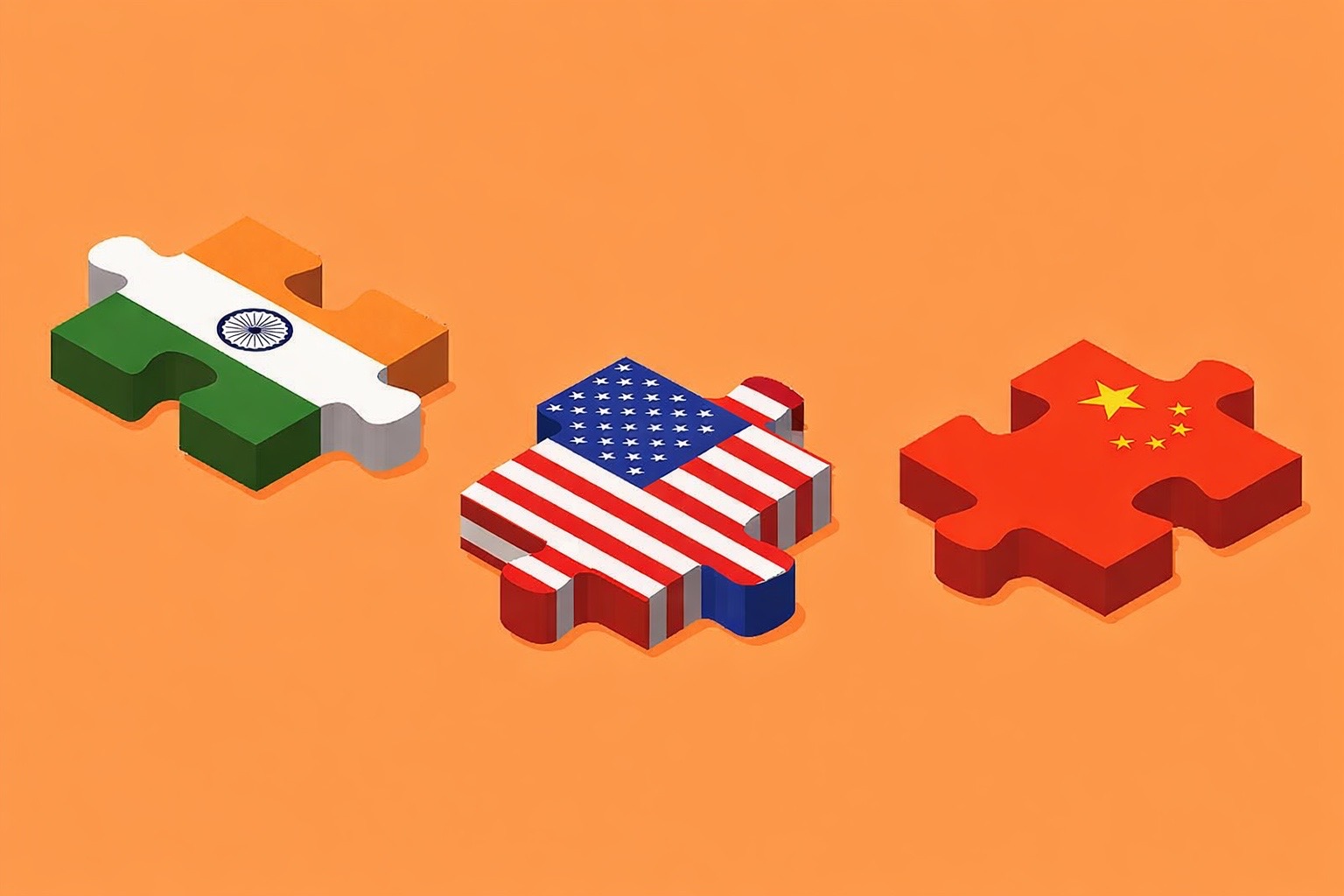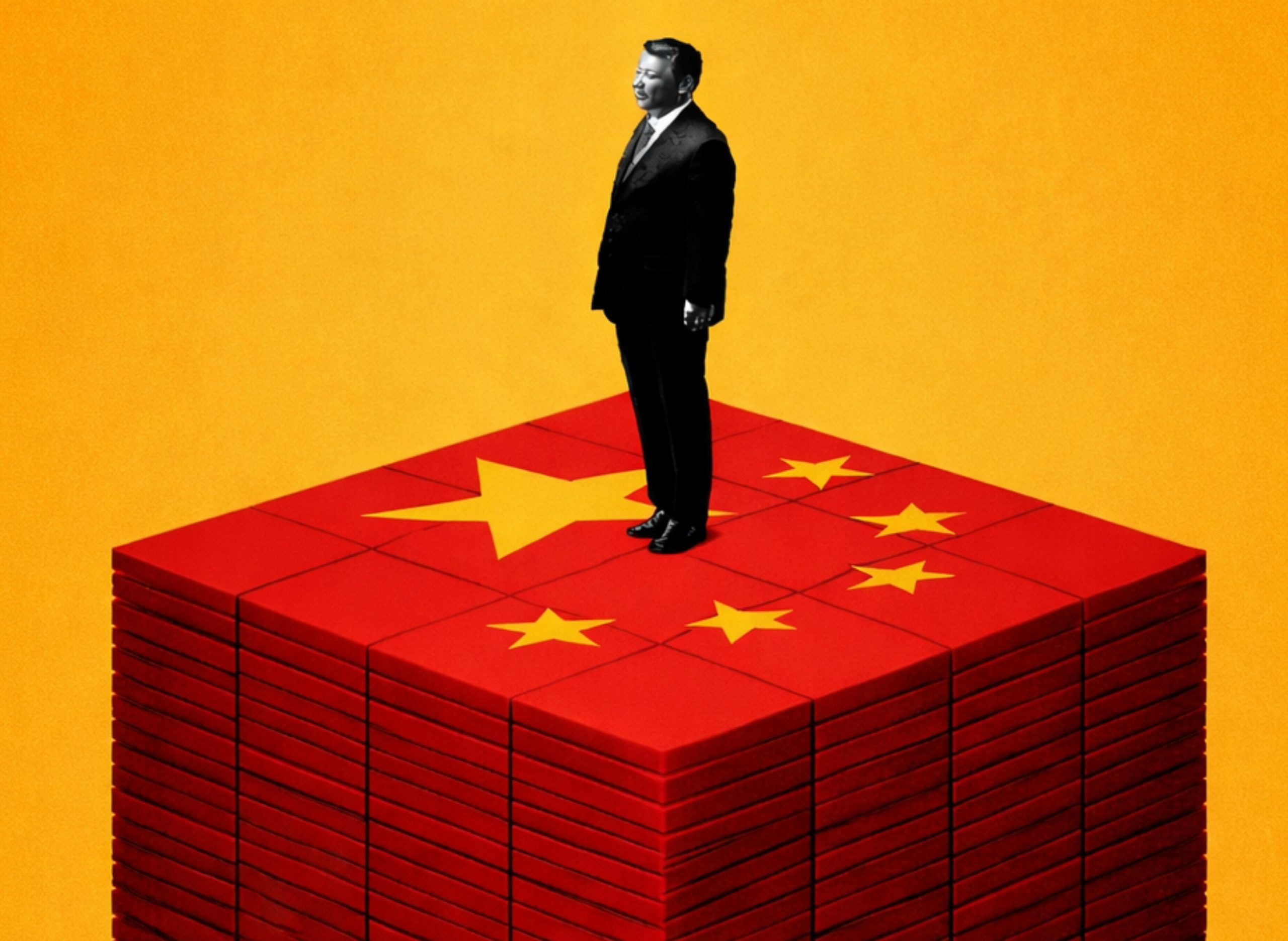


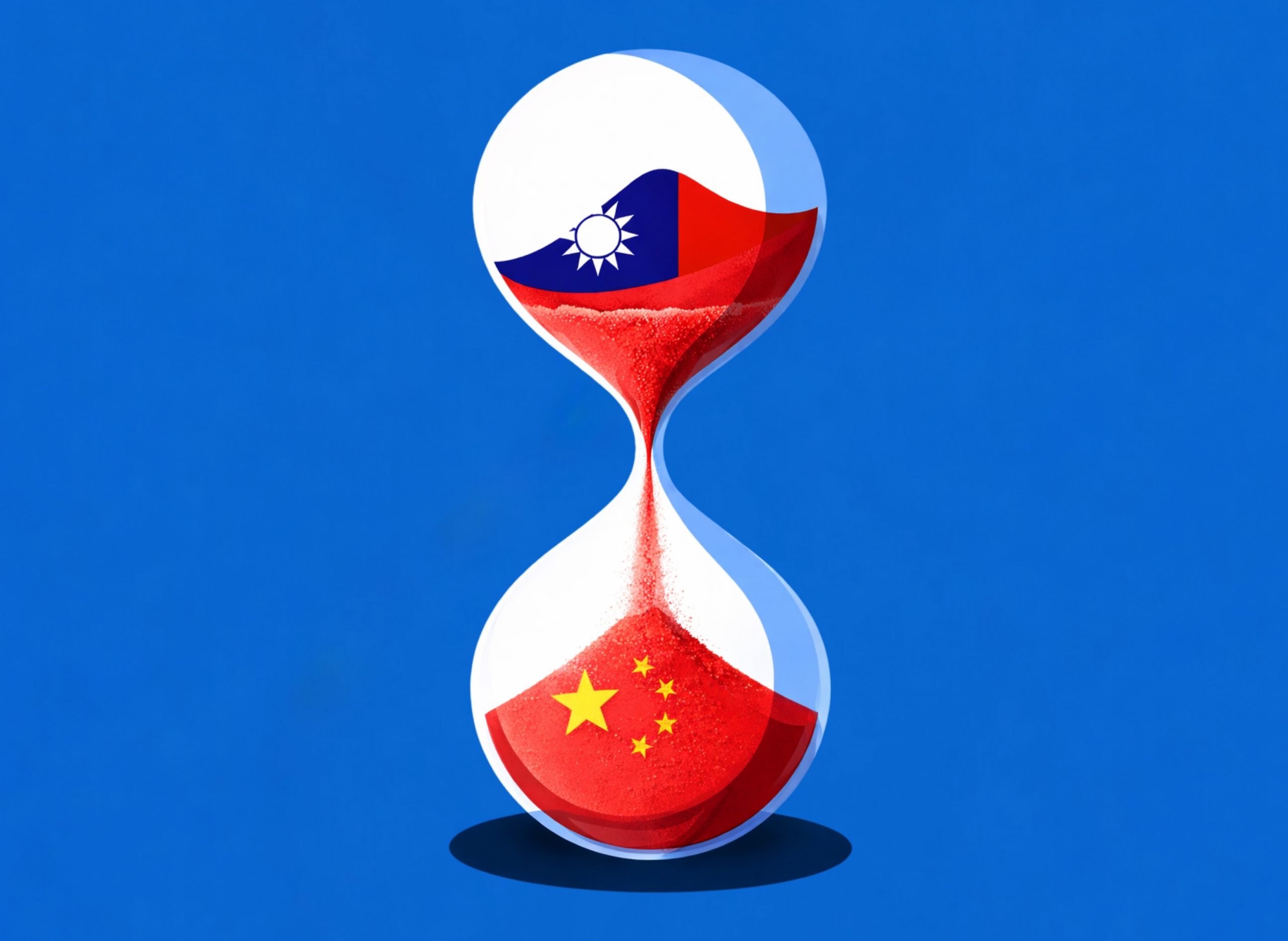
This illustration has been created by AI to use only in this article.
In 1972, Mao Zedong once assessed the relationship with the United States in a distinctly realist tone: he preferred dealing with America’s “right wing.” Half a century later, that remark has found a new echo in the Taiwan Strait debate. On January 20, 2025, Donald Trump was inaugurated as President of the United States. This unconventional American leader has been viewed by some observers in Beijing as the “American right wing” in today’s context. However, this does not automatically mean that China and the United States will strike a deal on the Taiwan issue, nor does it imply that the risk of conflict will decline. It does, however, introduce a variable into Beijing’s established rhythm: contacts, probing, and bargaining space between the two sides on Taiwan may emerge more frequently than before.
Regarding Taiwan policy “after Xi,” there are at least three possible paths. The first is that the top leader continues in office and handles the Taiwan issue personally, keeping the ultimate decision over Taiwan Strait policy firmly in his hands during his tenure. The second is that the top Party and state positions are transferred, and the Taiwan issue is decided and handled autonomously by the successor. The third is a limited arrangement of power transfer: for example, retaining the chairmanship of the Central Military Commission, or continuing for the incumbent leader to serve as Party Chairman by restoring the Party Chairman system. Under such a limited transfer arrangement, even if Party and government posts are adjusted, the final decision-making authority may still remain with the incumbent leader.
Therefore, the key is not to presuppose which path will inevitably occur, but to understand how leadership transition and foreign policy affect each other: could Taiwan policy be used to validate authority, manage risks, or shape bargaining leverage? Under a backdrop of limited leadership transition, whether a successor’s decisions on Taiwan might be linked to the “2027 combat readiness” timetable also needs to be discussed cautiously and in layers, rather than asserted in advance.
The 2027 Clock
The “2027 combat readiness order” itself is a hardline policy declaration, but it does not necessarily amount to abandoning peaceful unification, nor does it mean abandoning “Peaceful Unification by Coercive Strategy.” Preparing for combat can both serve genuine capability building and function as coercive leverage: by making military buildup and risk creation visible, it raises an opponent’s expectations of future costs, thereby generating pressure at the negotiating level. The danger is that once a timetable is politicized and normalized, it may produce a “hardening effect.” First, organizational hardening.
A readiness milestone can be translated by the military and the security system into constraints on resource allocation and performance assessment; training and exercises then roll forward around the milestone, and the timetable shifts from a political order into a security reality. Second, narrative hardening. Because the Taiwan issue carries high symbolic significance, public opinion may bind “toughness” to “effective governance,” making any de-escalation harder to explain and making strategic flexibility easier to compress. As the milestone draws nearer, outsiders are more likely to interpret each exercise and each statement as irreversible escalation, even if the true intent remains “pressure to compel talks.”
received an M.A. from the University of Chicago’s Committee on International Relations, an M.A. in Asian Studies from the George Washington University. His research focuses on contemporary Chinese politics and governance, Taiwan strait issue, and U.S. foreign policy.
In 1972, Mao Zedong once assessed the relationship with the United States in a distinctly realist tone: he preferred dealing with America’s “right wing.” Half a century later, that remark has found a new echo in the Taiwan Strait debate. On January 20, 2025, Donald Trump was inaugurated as President of the United States. This unconventional American leader has been viewed by some observers in Beijing as the “American right wing” in today’s context. However, this does not automatically mean that China and the United States will strike a deal on the Taiwan issue, nor does it imply that the risk of conflict will decline. It does, however, introduce a variable into Beijing’s established rhythm: contacts, probing, and bargaining space between the two sides on Taiwan may emerge more frequently than before.
Regarding Taiwan policy “after Xi,” there are at least three possible paths. The first is that the top leader continues in office and handles the Taiwan issue personally, keeping the ultimate decision over Taiwan Strait policy firmly in his hands during his tenure. The second is that the top Party and state positions are transferred, and the Taiwan issue is decided and handled autonomously by the successor. The third is a limited arrangement of power transfer: for example, retaining the chairmanship of the Central Military Commission, or continuing for the incumbent leader to serve as Party Chairman by restoring the Party Chairman system. Under such a limited transfer arrangement, even if Party and government posts are adjusted, the final decision-making authority may still remain with the incumbent leader.
Therefore, the key is not to presuppose which path will inevitably occur, but to understand how leadership transition and foreign policy affect each other: could Taiwan policy be used to validate authority, manage risks, or shape bargaining leverage? Under a backdrop of limited leadership transition, whether a successor’s decisions on Taiwan might be linked to the “2027 combat readiness” timetable also needs to be discussed cautiously and in layers, rather than asserted in advance.
The 2027 Clock
The “2027 combat readiness order” itself is a hardline policy declaration, but it does not necessarily amount to abandoning peaceful unification, nor does it mean abandoning “Peaceful Unification by Coercive Strategy.” Preparing for combat can both serve genuine capability building and function as coercive leverage: by making military buildup and risk creation visible, it raises an opponent’s expectations of future costs, thereby generating pressure at the negotiating level. The danger is that once a timetable is politicized and normalized, it may produce a “hardening effect.” First, organizational hardening.
A readiness milestone can be translated by the military and the security system into constraints on resource allocation and performance assessment; training and exercises then roll forward around the milestone, and the timetable shifts from a political order into a security reality. Second, narrative hardening. Because the Taiwan issue carries high symbolic significance, public opinion may bind “toughness” to “effective governance,” making any de-escalation harder to explain and making strategic flexibility easier to compress. As the milestone draws nearer, outsiders are more likely to interpret each exercise and each statement as irreversible escalation, even if the true intent remains “pressure to compel talks.”
received an M.A. from the University of Chicago’s Committee on International Relations, an M.A. in Asian Studies from the George Washington University. His research focuses on contemporary Chinese politics and governance, Taiwan strait issue, and U.S. foreign policy.
Against this backdrop, two external and internal factors may affect Beijing’s reassessment of the timetable, but the extent of their impact does not follow automatically; it depends on whether they change Beijing’s judgments about risks and benefits and about the space for tradable bargains.
Who Inherits Taiwan?
The reason succession questions can magnify Taiwan Strait risks lies first in the non-institutionalized nature of the succession mechanism and the room for flexibility. Aside from the relatively smooth “intergenerational designation” during the eras of Deng Xiaoping and Jiang Zemin, the CCP has not historically had a stable, fixed “designated successor position.” Jiang Zemin rose from Shanghai Party Secretary to the top post; Hua Guofeng and Zhao Ziyang also moved from serving as Premier of the State Council to becoming General Secretary, showing that the pathway is not singular.
After the CCP’s 18th National Congress, this flexibility has further expanded: unconventional leaps in the style of He Weidong and Qin Gang, together with over-age continuations in office by figures such as Zhang Youxia and Wang Yi, indicate an adjustable “flexible gap” in age and credential rules. Yet the CCP’s 20th Congress chronicle still invoked the long-ambiguous political concept of “comrades who meet the age requirements,” suggesting that conventions have not been fully abandoned but remain in a state of being “interpretable and adjustable.”
In relatively smooth transitions, potential successors are often “seen” through high-intensity foreign affairs activity, and their international influence and roles are long taken seriously. For example, Hu Jintao and Xi Jinping both carried out relatively frequent foreign affairs activities while serving as Vice President. If one follows this clue and analyzes the current leadership roster item by item, the “identifiable” candidates can be concentrated among a small number of figures: Li Qiang, the Premier of the State Council, and Chen Jining, the Shanghai Party Secretary.
A comparison between the two should proceed along three dimensions: age structure, the height of their positions, and their political connections with the incumbent leader; on that basis, one should then examine the political significance represented by the intensity of external activities. Beyond his age advantage, the current Shanghai Party Secretary’s strengths lie in positional pathway and city location: Shanghai is an international window, and during his tenure it has hosted dense visits by foreign guests; moreover, the Shanghai Party Secretary post has long been regarded as a popular stepping stone into the Politburo Standing Committee—apart from Chen Liangyu, multiple Shanghai Party Secretaries ultimately entered the Standing Committee—so the post carries high institutional weight.
Against this backdrop, two external and internal factors may affect Beijing’s reassessment of the timetable, but the extent of their impact does not follow automatically; it depends on whether they change Beijing’s judgments about risks and benefits and about the space for tradable bargains.
Who Inherits Taiwan?
The reason succession questions can magnify Taiwan Strait risks lies first in the non-institutionalized nature of the succession mechanism and the room for flexibility. Aside from the relatively smooth “intergenerational designation” during the eras of Deng Xiaoping and Jiang Zemin, the CCP has not historically had a stable, fixed “designated successor position.” Jiang Zemin rose from Shanghai Party Secretary to the top post; Hua Guofeng and Zhao Ziyang also moved from serving as Premier of the State Council to becoming General Secretary, showing that the pathway is not singular.
After the CCP’s 18th National Congress, this flexibility has further expanded: unconventional leaps in the style of He Weidong and Qin Gang, together with over-age continuations in office by figures such as Zhang Youxia and Wang Yi, indicate an adjustable “flexible gap” in age and credential rules. Yet the CCP’s 20th Congress chronicle still invoked the long-ambiguous political concept of “comrades who meet the age requirements,” suggesting that conventions have not been fully abandoned but remain in a state of being “interpretable and adjustable.”
In relatively smooth transitions, potential successors are often “seen” through high-intensity foreign affairs activity, and their international influence and roles are long taken seriously. For example, Hu Jintao and Xi Jinping both carried out relatively frequent foreign affairs activities while serving as Vice President. If one follows this clue and analyzes the current leadership roster item by item, the “identifiable” candidates can be concentrated among a small number of figures: Li Qiang, the Premier of the State Council, and Chen Jining, the Shanghai Party Secretary.
A comparison between the two should proceed along three dimensions: age structure, the height of their positions, and their political connections with the incumbent leader; on that basis, one should then examine the political significance represented by the intensity of external activities. Beyond his age advantage, the current Shanghai Party Secretary’s strengths lie in positional pathway and city location: Shanghai is an international window, and during his tenure it has hosted dense visits by foreign guests; moreover, the Shanghai Party Secretary post has long been regarded as a popular stepping stone into the Politburo Standing Committee—apart from Chen Liangyu, multiple Shanghai Party Secretaries ultimately entered the Standing Committee—so the post carries high institutional weight.
Taiwan will not simply be ‘handed to the successor.
In recent years, however, his external visibility has been more of a “passive reception” window; proactive overseas travel has been relatively limited, and external perceptions of his national-level role often need to wait for stronger signals. Premier Li Qiang’s advantages are more concentrated: his political association with Xi Jinping in Zhejiang is more direct, and the premiership naturally sits at a higher level and bears responsibility for coordinating the economic agenda; more importantly, his frequent overseas travel and external economic communication have led some scholars to describe him as Xi Jinping’s “economic envoy.”
This label does not necessarily equate to a succession arrangement, but it means that in diplomatic activity, Li Qiang is more readily endowed with representative status and visible political weight. Considering the four factors—age, positional height, political connection, and intensity of external activity—the successor option is still difficult to determine as a single path. But if 2027 is taken as a possible time point for a transfer of power or a limited transfer of power, current political signals indicate that Premier Li Qiang is relatively in the lead.
This brings the analysis back to the core issue: will the Taiwan issue be “left to the successor”? This depends not primarily on whether the top Party and state positions change hands, but on whether military authority is transferred simultaneously. Given that the current leader still wields great influence, and that the chairmanship of the Central Military Commission has no clear term limit, amid a continuing rise in emphasis on military anti-corruption and “political military-building,” and in circumstances where shocks such as the “Zhang Youxia case” are regarded as requiring stronger control, the stability of the military is more likely to be treated as the ballast stone of overall stability.
This yields a key judgment: even if Party and government posts change around 2027, the ultimate decision-making authority on the Taiwan issue remains highly concentrated in the hands of the incumbent core; the successor is more likely to take on roles in implementation and external communication rather than rewriting the decision logic. The two possible paths are thus reordered: either Xi does not retire and handles the Taiwan Strait personally; or even if there is a party-and-government-level handover, an asynchronous transfer of military authority will keep Taiwan Strait decisions under the incumbent core, and Taiwan will not simply be “handed to the successor.”
The Transaction Trap
Assessments of the external environment likewise reveal two structural contradictions. First, the United States is not a unitary actor; the executive branch and Congress often differ in tempo and intensity on Taiwan-related issues. For Beijing, long-term efforts to “persuade the United States to support peaceful unification” are widely judged to have a low probability of success, yet there have still been probing attempts. For example, during the 2023 San Francisco meeting, Xi Jinping expressed to Joe Biden the hope that the U.S. side would oppose Taiwan independence and support China’s peaceful unification, but no clear response was obtained. After Nancy Pelosi visited Taiwan, Beijing continued to intensify military pressure on Taiwan, and in the direction Beijing hoped for, Biden’s statements largely remained at “not supporting Taiwan independence,” without rising to an explicit commitment to “opposing Taiwan independence.”
This gap has encouraged Beijing to believe that if political persuasion is unlikely to work, the weight of coercive measures will rise. Second, in a context where a transaction-oriented government comes to power, Beijing may believe there is some feasibility in negotiating with U.S. government departments or exchanging interests on Taiwan-related matters. Signs of compromise in the rare earth–trade war and signals that sales of Nvidia chips to China have resumed are easily read as examples that “things can be talked about and also traded.” Accordingly, if the 1972 remark about preferring to deal with America’s “right wing” is brought back to the present, Trump may be precisely the “American right wing” in this context: his policy style emphasizes deals and prices, thereby opening space for contact and probing.
But the risk comes precisely from the U.S. internal structure: Congress may remain persistently hawkish, pushing more related legislation to send signals and attempting to incorporate Taiwan commitments into a legal framework. Such behavior highlights divisions among different actors in Washington and makes deals harder to implement. For Beijing, a political structure in which the executive branch can negotiate while Congress stays hawkish increases the uncertainty that “a window exists but can close at any time,” which in turn can more easily induce stronger pressure to test red lines and extract commitments. Thus, within a foreseeable time horizon, Beijing may both attempt negotiation and interest exchanges with the United States and simultaneously intensify military pressure on Taiwan in order to obtain greater leverage in negotiations.
The Threshold Question
Under a structure of “2027 milestone hardening + opaque succession + fractured U.S. signals,” Taiwan policy can broadly fall into three scenarios and is more likely to appear in combination. The first is an escalation path. If Beijing judges that bargaining space with the United States is being squeezed by Congress’s legal codification of commitments, and if internally there is a need to prove resolve and governance capacity through a tough posture, the probability of military risk-taking will rise. Escalation may not mean immediate war; it is more likely to manifest as higher-intensity, higher-frequency gray-zone actions aimed at changing the opponent’s expectations and negotiating position. But escalation boundaries are the hardest to control: if external actors interpret pressure as a prelude to war, countermeasures may be triggered in advance, and the risk of misperception will surge.
The second is a restraint path. If Beijing judges that a window still exists for negotiation or exchange with U.S. government departments, and if domestic stability and economic repair are higher priorities, a strategy of “strong rhetoric, steady action” may take shape: maintaining a tough narrative while avoiding crossing irreversible thresholds in action in order to preserve strategic room for maneuver and long-term competitive space. The political difficulty of restraint lies in explaining “no immediate action” without being seen as weak, especially as a moment long discussed by public opinion keeps drawing nearer.
The third is an ambiguity path. If Beijing believes the optimal approach is to sustain uncertainty over the long term, keep Taipei and Washington under continuing pressure, and at the same time avoid bearing the costs of war, it will lean more toward mixed signals: readiness continues, pressure is adjustable, and decisions remain unclear. Ambiguity can buy flexibility, but it also accumulates structural risk—it demands extremely high crisis-management capacity, and leadership transition and fractured signals from the United States will precisely undermine that capacity.
In recent years, however, his external visibility has been more of a “passive reception” window; proactive overseas travel has been
relatively limited, and external perceptions of his national-level role often need to wait for stronger signals. Premier Li Qiang’s advantages are more concentrated: his political association with Xi Jinping in Zhejiang is more direct, and the premiership naturally sits at a higher level and bears responsibility for coordinating the economic agenda; more importantly, his frequent overseas travel and external economic communication have led some scholars to describe him as Xi Jinping’s “economic envoy.”
This label does not necessarily equate to a succession arrangement, but it means that in diplomatic activity, Li Qiang is more readily endowed with representative status and visible political weight. Considering the four factors—age, positional height, political connection, and intensity of external activity—the successor option is still difficult to determine as a single path. But if 2027 is taken as a possible time point for a transfer of power or a limited transfer of power, current political signals indicate that Premier Li Qiang is relatively in the lead.
This brings the analysis back to the core issue: will the Taiwan issue be “left to the successor”? This depends not primarily on whether the top Party and state positions change hands, but on whether military authority is transferred simultaneously. Given that the current leader still wields great influence, and that the chairmanship of the Central Military Commission has no clear term limit, amid a continuing rise in emphasis on military anti-corruption and “political military-building,” and in circumstances where shocks such as the “Zhang Youxia case” are regarded as requiring stronger control, the stability of the military is more likely to be treated as the ballast stone of overall stability.
This yields a key judgment: even if Party and government posts change around 2027, the ultimate decision-making authority on the Taiwan issue remains highly concentrated in the hands of the incumbent core; the successor is more likely to take on roles in implementation and external communication rather than rewriting the decision logic. The two possible paths are thus reordered: either Xi does not retire and handles the Taiwan Strait personally; or even if there is a party-and-government-level handover, an asynchronous transfer of military authority will keep Taiwan Strait decisions under the incumbent core, and Taiwan will not simply be “handed to the successor.”
The Transaction Trap
Assessments of the external environment likewise reveal two structural contradictions. First, the United States is not a unitary actor; the executive branch and Congress often differ in tempo and intensity on Taiwan-related issues. For Beijing, long-term efforts to “persuade the United States to support peaceful unification” are widely judged to have a low probability of success, yet there have still been probing attempts. For example, during the 2023 San Francisco meeting, Xi Jinping expressed to Joe Biden the hope that the U.S. side would oppose Taiwan independence and support China’s peaceful unification, but no clear response was obtained. After Nancy Pelosi visited Taiwan, Beijing continued to intensify military pressure on Taiwan, and in the direction Beijing hoped for, Biden’s statements largely remained at “not supporting Taiwan independence,” without rising to an explicit commitment to “opposing Taiwan independence.”
This gap has encouraged Beijing to believe that if political persuasion is unlikely to work, the weight of coercive measures will rise. Second, in a context where a transaction-oriented government comes to power, Beijing may believe there is some feasibility in negotiating with U.S. government departments or exchanging interests on Taiwan-related matters. Signs of compromise in the rare earth–trade war and signals that sales of Nvidia chips to China have resumed are easily read as examples that “things can be talked about and also traded.” Accordingly, if the 1972 remark about preferring to deal with America’s “right wing” is brought back to the present, Trump may be precisely the “American right wing” in this context: his policy style emphasizes deals and prices, thereby opening space for contact and probing.
But the risk comes precisely from the U.S. internal structure: Congress may remain persistently hawkish, pushing more related legislation to send signals and attempting to incorporate Taiwan commitments into a legal framework. Such behavior highlights divisions among different actors in Washington and makes deals harder to implement. For Beijing, a political structure in which the executive branch can negotiate while Congress stays hawkish increases the uncertainty that “a window exists but can close at any time,” which in turn can more easily induce stronger pressure to test red lines and extract commitments. Thus, within a foreseeable time horizon, Beijing may both attempt negotiation and interest exchanges with the United States and simultaneously intensify military pressure on Taiwan in order to obtain greater leverage in negotiations.
The Threshold Question
Under a structure of “2027 milestone hardening + opaque succession + fractured U.S. signals,” Taiwan policy can broadly fall into three scenarios and is more likely to appear in combination. The first is an escalation path. If Beijing judges that bargaining space with the United States is being squeezed by Congress’s legal codification of commitments, and if internally there is a need to prove resolve and governance capacity through a tough posture, the probability of military risk-taking will rise. Escalation may not mean immediate war; it is more likely to manifest as higher-intensity, higher-frequency gray-zone actions aimed at changing the opponent’s expectations and negotiating position. But escalation boundaries are the hardest to control: if external actors interpret pressure as a prelude to war, countermeasures may be triggered in advance, and the risk of misperception will surge.
The second is a restraint path. If Beijing judges that a window still exists for negotiation or exchange with U.S. government departments, and if domestic stability and economic repair are higher priorities, a strategy of “strong rhetoric, steady action” may take shape: maintaining a tough narrative while avoiding crossing irreversible thresholds in action in order to preserve strategic room for maneuver and long-term competitive space. The political difficulty of restraint lies in explaining “no immediate action” without being seen as weak, especially as a moment long discussed by public opinion keeps drawing nearer.
The third is an ambiguity path. If Beijing believes the optimal approach is to sustain uncertainty over the long term, keep Taipei and Washington under continuing pressure, and at the same time avoid bearing the costs of war, it will lean more toward mixed signals: readiness continues, pressure is adjustable, and decisions remain unclear. Ambiguity can buy flexibility, but it also accumulates structural risk—it demands extremely high crisis-management capacity, and leadership transition and fractured signals from the United States will precisely undermine that capacity.
No matter how these three scenarios shift, one bottom-line constraint remains unavoidable: if military authority is not transferred, changes at the Party-and-government level do not automatically alter the ultimate
decision logic in the Taiwan Strait. Even if a successor more frequently undertakes foreign affairs activities, the role may still be more about execution, communication, and external presentation rather than truly deciding whether to cross the threshold.
The Narrowing Corridor
Placing Taiwan within the “post–Xi Jinping” framework is not primarily about judging an individual’s choices, but about identifying structural constraints. The 2027 combat readiness order is not equivalent to abandoning peace; it can run in parallel with the logic of coercive peaceful unification. But politicizing the timetable will harden policy imagination and compress future flexibility. For Beijing, if a transaction-oriented government is truly seen as a window, it will bundle pressure on Taiwan with negotiation with the United States to raise leverage amid uncertainty; but the uncontrollable variable of a hawkish Congress may constrain deal implementation and induce stronger probing and higher misperception risks.
For the United States, the room for choice is not wide: Elbridge Colby’s emphasis that Taiwan is not a core U.S. interest points to a more fundamental question—what cost is the United States willing to bear for peace in the Taiwan Strait, or is it more inclined to avoid being drawn into conflict over China’s core interests, thereby reaching a limited deal? Under Washington’s political atmosphere and the strong lobbying structure of the Democratic Progressive Party, the space for deals seems likely to be constrained; but if a more realist line is pursued, deal-oriented thinking may still be pushed to the forefront of Taiwan Strait policy.
A clearer path ahead will depend on whether high-level China–U.S. interactions can form reliable boundaries between deterrence and de-escalation, and on whether Beijing will treat Taiwan as a priority issue. The real danger is not the timetable itself, but the way the timetable and international public opinion lock into each other, forcing all parties to make decisions in an ever-narrowing corridor.
Politicizing the timetable will harden policy imagination and compress future flexibility.
No matter how these three scenarios shift, one bottom-line constraint remains unavoidable: if military authority is not transferred, changes at the Party-and-government level do not automatically alter the ultimate decision logic in the Taiwan Strait. Even if a successor more frequently undertakes foreign affairs activities, the role may still be more about execution, communication, and external presentation rather than truly deciding whether to cross the threshold.
The Narrowing Corridor
Placing Taiwan within the “post–Xi Jinping” framework is not primarily about judging an individual’s choices, but about identifying structural constraints. The 2027 combat readiness order is not equivalent to abandoning peace; it can run in parallel with the logic of coercive peaceful unification. But politicizing the timetable will harden policy imagination and compress future flexibility. For Beijing, if a transaction-oriented government is truly seen as a window, it will bundle pressure on Taiwan with negotiation with the United States to raise leverage amid uncertainty; but the uncontrollable variable of a hawkish Congress may constrain deal implementation and induce stronger probing and higher misperception risks.
For the United States, the room for choice is not wide: Elbridge Colby’s emphasis that Taiwan is not a core U.S. interest points to a more fundamental question—what cost is the United States willing to bear for peace in the Taiwan Strait, or is it more inclined to avoid being drawn into conflict over China’s core interests, thereby reaching a limited deal? Under Washington’s political atmosphere and the strong lobbying structure of the Democratic Progressive Party, the space for deals seems likely to be constrained; but if a more realist line is pursued, deal-oriented thinking may still be pushed to the forefront of Taiwan Strait policy.
A clearer path ahead will depend on whether high-level China–U.S. interactions can form reliable boundaries between deterrence and de-escalation, and on whether Beijing will treat Taiwan as a priority issue. The real danger is not the timetable itself, but the way the timetable and international public opinion lock into each other, forcing all parties to make decisions in an ever-narrowing corridor.
Recommended

Failure Through Weakness
Why the Return of Many Powers Does Not Mean the Birth of a New Order
The Machinery of Wealth and Obedience
How Progressive America Redefined Its Stance on Israel?
Is a Common European Identity Still Possible?