

TERESA HABIB MERIGGI
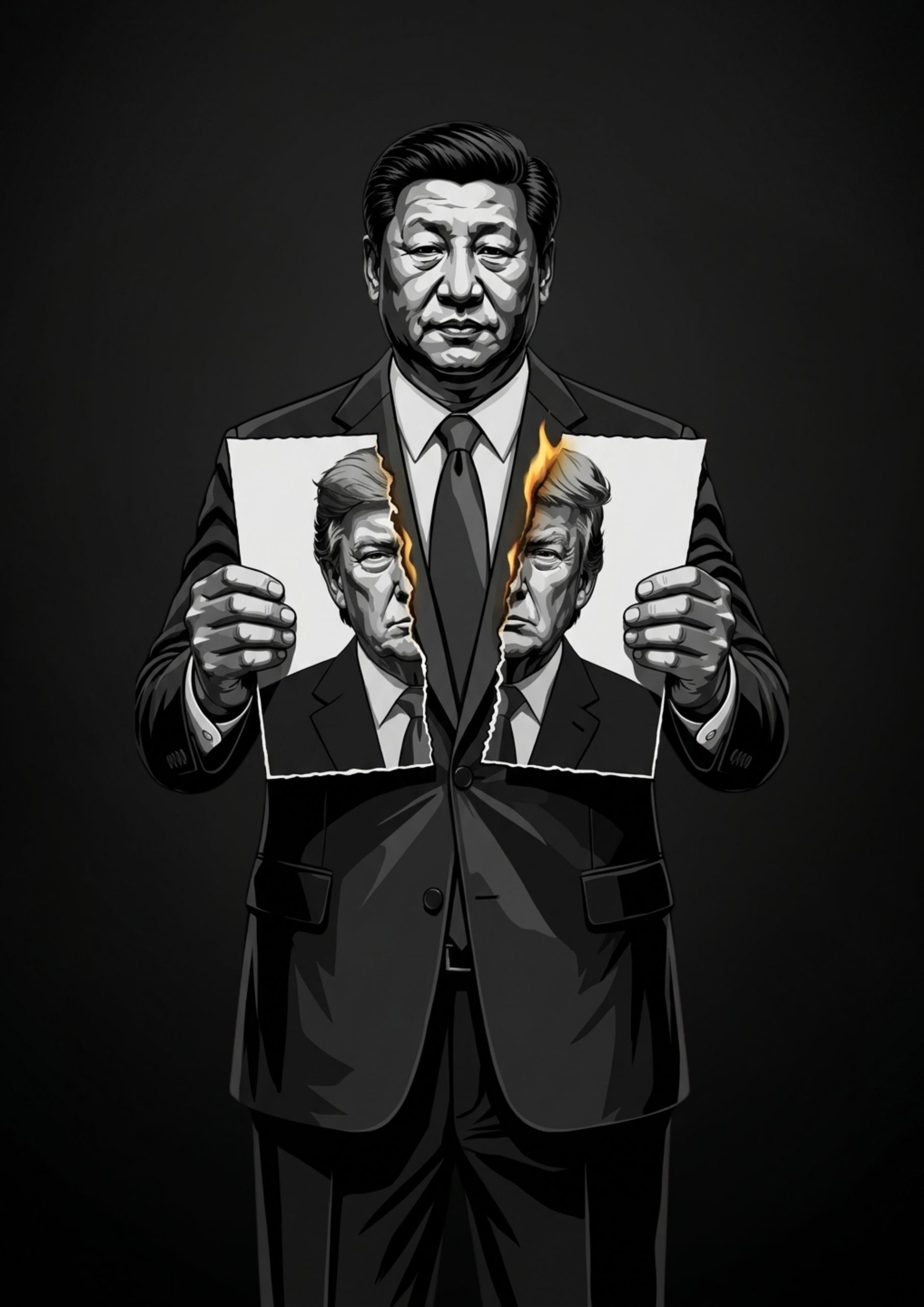
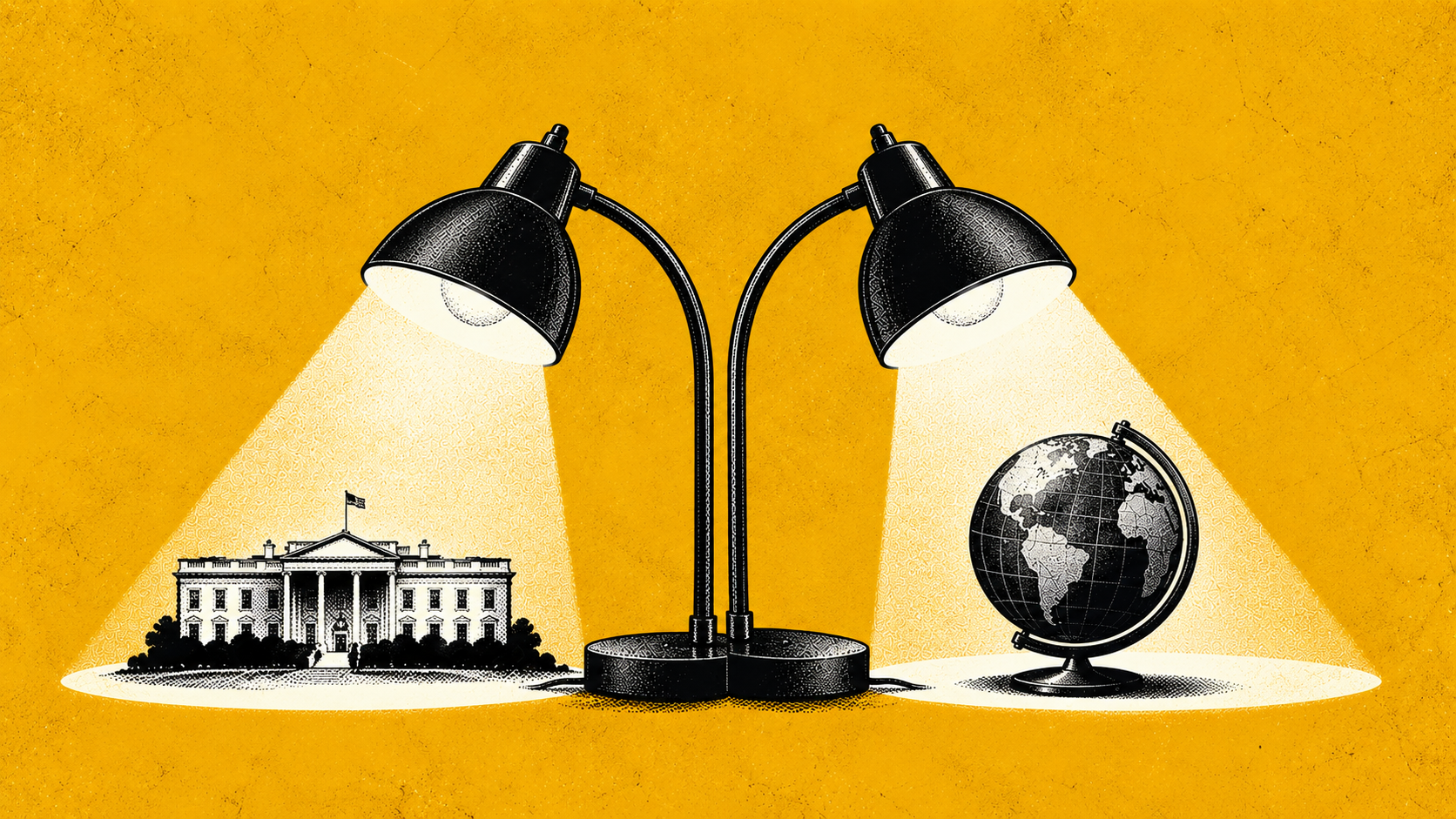
It has become difficult to deny that the age of supreme American hegemony is coming to an end. A second Trump era has continued to break apart the international rules-based order, and has plunged the world into fretted uncertainty as to what comes next. As part of this transition to the unknown, a multipolar order has emerged from the fragments left behind by the U.S., dominated by the power struggle between the U.S. and China. Despite Washington’s attempt to contain Beijing’s accumulation of power, it is simultaneously weakening the very international order that has sustained its own hegemony for so long. How can we reconcile these two goals coming out of Washington: to maintain dominance over China and withdraw from the international order?
The U.S.-led international order has long been considered Washington’s greatest strategic advantage. Through military and economic prowess, it was able to construct a global system based on liberal values with itself at the centre. Now, gone are the golden days of cooperation and globalisation, as Trump continues to withdraw the U.S. deeper into a bed of isolationism. Trump’s behaviour has weakened the institutional, diplomatic, and ideological foundations of American global leadership. While U.S. consistency and leadership appear increasingly fragile, Beijing, on the other hand, is constructing an image of itself as stable, pragmatic, and globally engaged. The weakening of international institutions and rules that once governed the globe has given China space to produce its own rival structures and strategic partnerships, and increase its global influence. Beijing has been ‘hiding strength, biding time’ (韬光养晦), developing its economic and political networks to rise through the ranks. Now that Washington and the Western nexus of power have begun to dissolve, Chinese power has been given a clear vacuum to grow into.
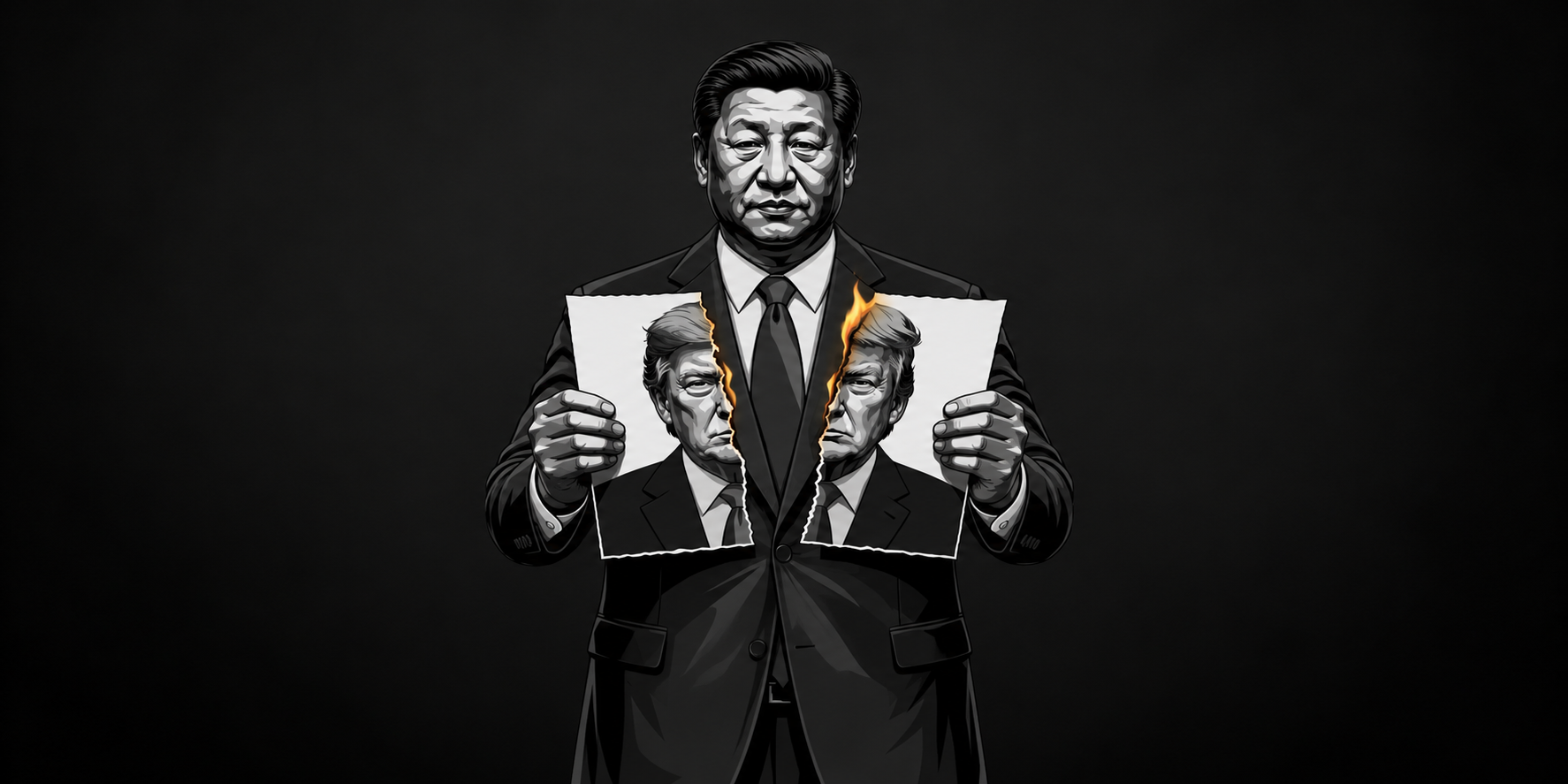
Trump has therefore given Xi China’s greatest strategic opportunity through the purposeful erosion of the U.S.-led international order. This erosion and fragmentation have been interpreted not merely as a temporary political crisis, as some may argue the Trump era to be, but as evidence of a deeper structural transformation that is about to take place. Critics of U.S. hegemony have argued that cracks caused by Trump’s leadership have allowed inherent structural issues within the American-led order to bubble to the surface, and while developing nations have long since felt the brunt of American hegemony, now even those in the privileged West are having to come to grips with it. The struggle between the great powers of China and the United States now centres not around military and economic competition, but over the ability to shape, organise, and legitimise the international order of the future.
In 1992, Francis Fukuyama argued that we had reached the “End of History”; that international liberal democracy, led by the U.S., was the zenith of civilization. This system portrayed liberal values as both human nature and the end goal of human development. It relied on trust and predictability, often called the rules-based international order, and functioned under the assumption that everyone would continue to follow these rules.
This liberal international order has been the foundation of U.S. primacy, and thus its greatest advantage. The order was built not only on military and economic dominance, but also on legitimacy derived from its liberal democratic values, alliances, and institutional leadership. The UN Security Council, the International Monetary Fund, and the World Trade Organisation all centre around U.S. interests and necessitate the subordination of other less powerful nations, typically from the Global South, to the will of the United States. Liberal internationalism, as a set of values to be exported around the globe through these multilateral institutions, functioned as a force multiplier for U.S. power in the sense that it justified the expansion of U.S. interests; these values were used to push the narrative of American leadership through consent rather than empire through coercion.
holds an MPhil in Modern Chinese Studies from the University of Oxford and is currently furthering her study of Mandarin at National Taiwan University. Her research interests include Chinese diplomacy and environmental policy.
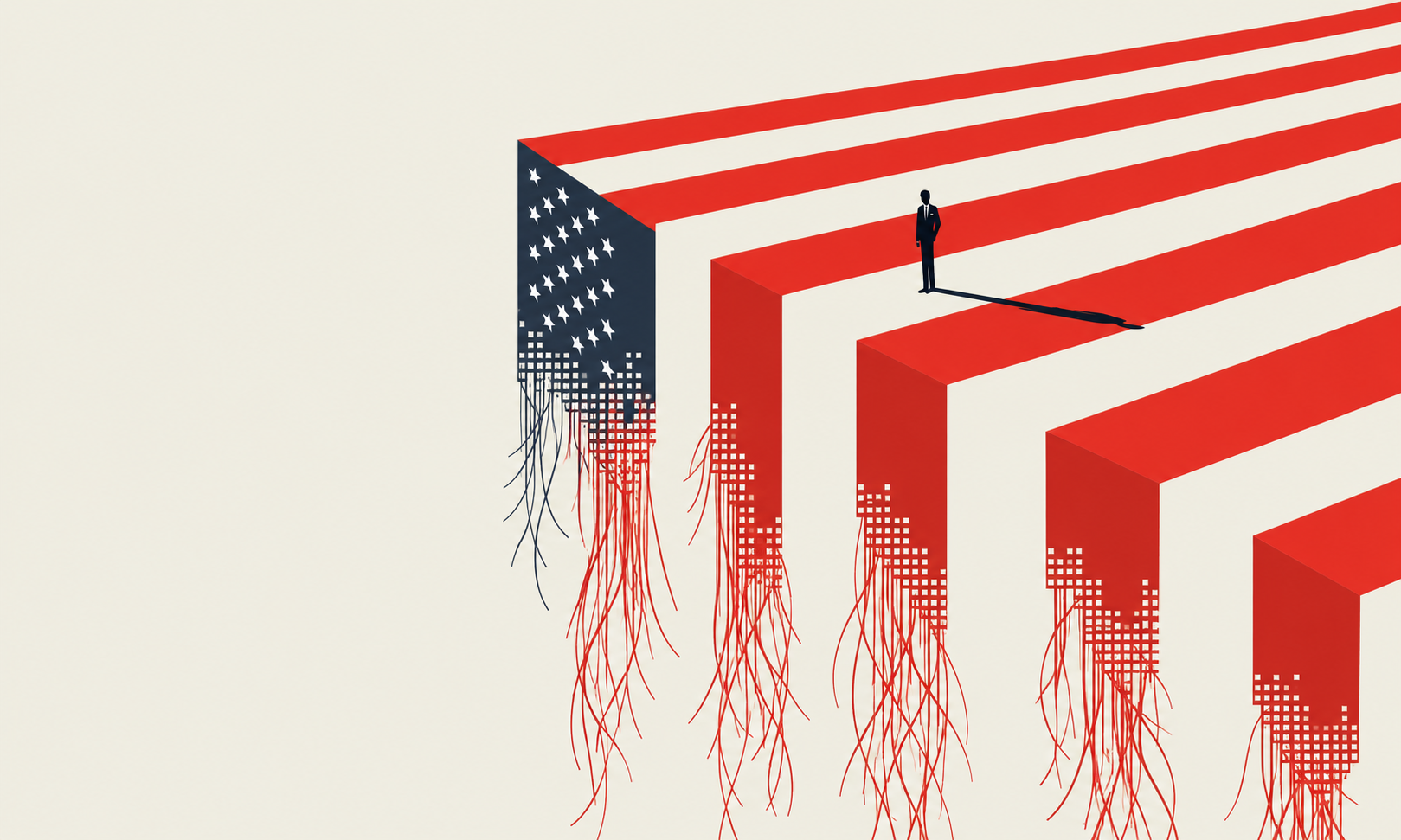
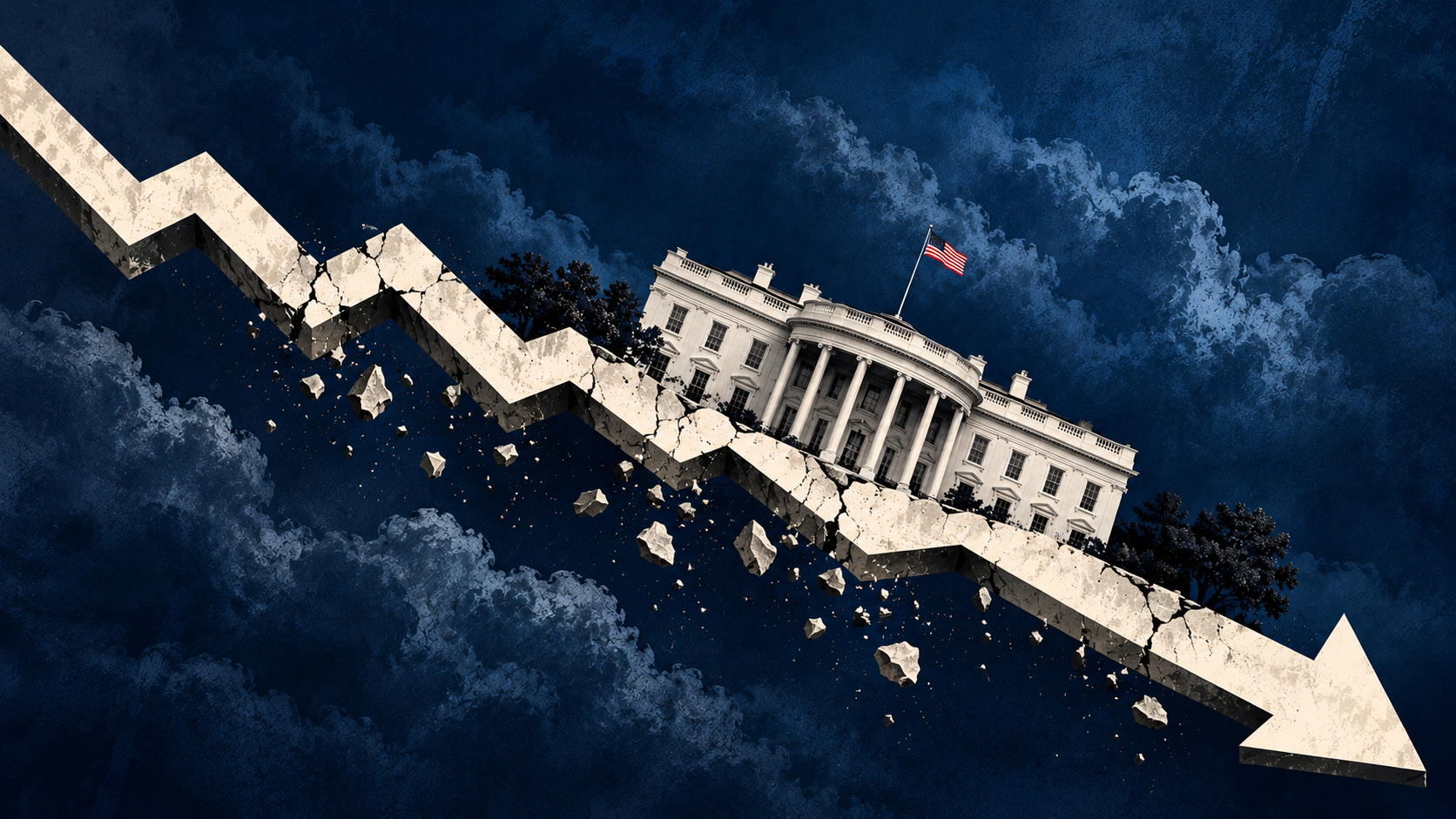
How America’s Liberal Order Lost Its Domestic Foundation
Crucial in supporting these foundations of the system were alliances. The strategic importance of allied confidence in U.S. leadership cannot be understated; not only did they facilitate U.S. military domination, but they also provided soft power platforms that situated the U.S. at the top of aesthetic and cultural hierarchies. The support of Europe, Japan, South Korea, and other allies was necessary in order to recognise the U.S. as the “leader of the free world” by being the “free world” for it to lead. These allies supported U.S. military domination by providing land for military bases, collaborating on training exercises and drills, and buying weapons from large U.S. manufacturers. In this sense, alliances created mutual strengthening by supporting the American military-industrial complex, and in return they received U.S. military support. Mutually beneficial economic networks meant that both sides supported the other. Soft power also functioned as a critical geopolitical asset, as by espousing values that everyone around the world was taught to look up to, America was seen as the pinnacle of democratic legitimacy.
As a result, the international institutions it founded were perceived as credible. This extended beyond political institutions and permeated the psyche of the average person: “I want the American dream, just like in the movies; I want justice and liberal democracy, just like in America.” These ideals purposefully juxtaposed the destruction and exploitation the American empire imposed, and continues to impose, in Southeast and West Asia under the guise of global stability and security guarantees. As the leader of this international order, the U.S. was able to use these tools to continuously reproduce a hierarchy of nations: the U.S. as hegemon, followed by its allies, and trailed behind by aspiring developing nations. These developing nations, exploited to the point that they depended on the hegemon economically and militarily, had no choice but to comply. Any deviation from the system by these smaller, less powerful nations was dealt with by the all-powerful bloc of the U.S. and its allies. Privileged under the international system, this bloc monopolised economic and military power and shared the same liberal values. We now know that this system only functions when its hegemon follows the rules too.
Deng Xiaoping is regarded by many as the man who changed the fate of the Chinese economy, and thus the world. The “Reform and Opening” period, during which Deng and the CCP opened Chinese markets up to the rest of the world, allowed China to tap into the phenomenon of globalisation and use it as an engine of economic growth. Following its accession to the World Trade Organisation in 2001, China’s cheap labour, natural resources, and vertical integration of supply chains have pushed down prices and led to a de facto monopolisation of manufacturing markets: the world has become addicted to China and Chinese goods. Aside from the obvious examples of cheap clothing and the like, China’s domination of rare earth and renewable energy product manufacturing clearly shows the world’s dependency on China. China dominates almost the entire supply chain—from mining and processing to manufacturing.
It is therefore true that China has benefited from its inclusion in the liberal international order. Trade with other nations under the WTO has allowed it to accumulate economic power and leverage; however, it must be acknowledged that the West was all too happy to make China its factory in order to keep supplying it with cheaper goods. This is what resulted in reliance on the Chinese economy. Despite being such a key beneficiary of the liberal international order, Beijing has simultaneously continued to challenge it. It has refused to recognise human rights, which form part of the key norms of the order, developed its own parallel institutions such as the Asian Infrastructure Investment Bank, BRICS, and the Shanghai Cooperation Organisation, and formed close strategic partnerships with other opponents of the West and its allies. China is therefore both a product and a challenger to the existing international system.
Trump’s transactional approach to American alliances has left global security networks irreparably fragmented. From claims of annexing Greenland, to withdrawing support from Ukraine, and scolding NATO members for not supporting his war in Iran, Trump has been at the centre of tensions building across the Atlantic. Most notably, NATO burden-sharing disputes and spats with European allies over whether or not the U.S. could use their airbases to fire missiles into Iran have meant that the once powerful alliance is scrambling to secure itself without U.S. military guarantees. Coercive tactics continue to contribute to the growing mistrust of the U.S., as tariffs and threats of trade wars towards allies and non-allies alike wreak havoc on international trade. Trump’s attempts to make others bend to his will have done nothing but erode trust in long-term U.S. strategic commitments. What does it mean for global security within the liberal international order if not even its leader can be depended on to defend it?
Crucial in supporting these foundations of the system were alliances. The strategic importance of allied confidence in U.S. leadership cannot be understated; not only did they facilitate U.S. military domination, but they also provided soft power platforms that situated the U.S. at the top of aesthetic and cultural hierarchies. The support of Europe, Japan, South Korea, and other allies was necessary in order to recognise the U.S. as the “leader of the free world” by being the “free world” for it to lead. These allies supported U.S. military domination by providing land for military bases, collaborating on training exercises and drills, and buying weapons from large U.S. manufacturers. In this sense, alliances created mutual strengthening by supporting the American military-industrial complex, and in return they received U.S. military support. Mutually beneficial economic networks meant that both sides supported the other. Soft power also functioned as a critical geopolitical asset, as by espousing values that everyone around the world was taught to look up to, America was seen as the pinnacle of democratic legitimacy.
As a result, the international institutions it founded were perceived as credible. This extended beyond political institutions and permeated the psyche of the average person: “I want the American dream, just like in the movies; I want justice and liberal democracy, just like in America.” These ideals purposefully juxtaposed the destruction and exploitation the American empire imposed, and continues to impose, in Southeast and West Asia under the guise of global stability and security guarantees. As the leader of this international order, the U.S. was able to use these tools to continuously reproduce a hierarchy of nations: the U.S. as hegemon, followed by its allies, and trailed behind by aspiring developing nations. These developing nations, exploited to the point that they depended on the hegemon economically and militarily, had no choice but to comply. Any deviation from the system by these smaller, less powerful nations was dealt with by the all-powerful bloc of the U.S. and its allies. Privileged under the international system, this bloc monopolised economic and military power and shared the same liberal values. We now know that this system only functions when its hegemon follows the rules too.
Deng Xiaoping is regarded by many as the man who changed the fate of the Chinese economy, and thus the world. The “Reform and Opening” period, during which Deng and the CCP opened Chinese markets up to the rest of the world, allowed China to tap into the phenomenon of globalisation and use it as an engine of economic growth. Following its accession to the World Trade Organisation in 2001, China’s cheap labour, natural resources, and vertical integration of supply chains have pushed down prices and led to a de facto monopolisation of manufacturing markets: the world has become addicted to China and Chinese goods. Aside from the obvious examples of cheap clothing and the like, China’s domination of rare earth and renewable energy product manufacturing clearly shows the world’s dependency on China. China dominates almost the entire supply chain—from mining and processing to manufacturing.
It is therefore true that China has benefited from its inclusion in the liberal international order. Trade with other nations under the WTO has allowed it to accumulate economic power and leverage; however, it must be acknowledged that the West was all too happy to make China its factory in order to keep supplying it with cheaper goods. This is what resulted in reliance on the Chinese economy. Despite being such a key beneficiary of the liberal international order, Beijing has simultaneously continued to challenge it. It has refused to recognise human rights, which form part of the key norms of the order, developed its own parallel institutions such as the Asian Infrastructure Investment Bank, BRICS, and the Shanghai Cooperation Organisation, and formed close strategic partnerships with other opponents of the West and its allies. China is therefore both a product and a challenger to the existing international system.
Trump’s transactional approach to American alliances has left global security networks irreparably fragmented. From claims of annexing Greenland, to withdrawing support from Ukraine, and scolding NATO members for not supporting his war in Iran, Trump has been at the centre of tensions building across the Atlantic. Most notably, NATO burden-sharing disputes and spats with European allies over whether or not the U.S. could use their airbases to fire missiles into Iran have meant that the once powerful alliance is scrambling to secure itself without U.S. military guarantees. Coercive tactics continue to contribute to the growing mistrust of the U.S., as tariffs and threats of trade wars towards allies and non-allies alike wreak havoc on international trade. Trump’s attempts to make others bend to his will have done nothing but erode trust in long-term U.S. strategic commitments. What does it mean for global security within the liberal international order if not even its leader can be depended on to defend it?
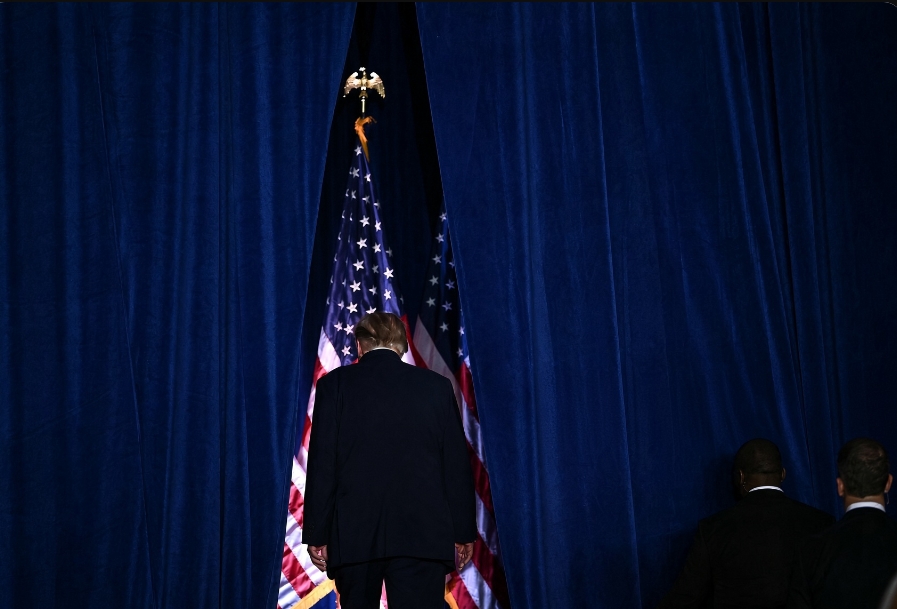
This is part of a broader retreat from liberal internationalism and diplomacy. Trump’s initial withdrawal from the Paris climate agreement in 2017 left a gaping hole in global cooperation and dumbfounded the international community. This utter disappointment has continued to repeat itself, with Trump’s withdrawal from the Iran nuclear deal and from the World Health Organisation. With billions of dollars cut from funding for life-saving USAID programmes, the idea that the U.S. is still interested in international cooperation is laughable. The United States has become rife with scepticism towards free trade, globalisation, and international cooperation—the very values that form the basis of the international order it created. Through drawing the nation into a deeper pit of protectionism and isolationism, it is clear that Trump wants nothing to do with the founding values of the order over which it exercises hegemony. No longer is American interventionism justified through democratic rhetoric; now the U.S. does whatever it wants, shirking moralistic arguments in its foreign policy discourse and ignoring the international framework of diplomacy. There is not even an attempt to pretend that the U.S. acts for the greater good under Trump’s leadership. Hard power with a lack of moral architecture has become enshrined as a defining feature of the Trump era, as underpinning values disappear.
Exacerbating the malignant manifestations of retreat are diplomatic inconsistency and foreign policy volatility. The global uncertainty surrounding commitments from the U.S., and what the lines are that should or should not be crossed, has put the U.S. in a contradictory position. It can no longer claim to be the “leader of the free world” as its President is no longer regarded as someone capable of leading anything. Trump has weakened America’s image as a stable guarantor of order, and instead pushed allies to prepare for a world devoid of American reliability.
Beijing has little choice but to see this situation as a strategic opportunity; Western domination is waning, and the rules-based order itself is fragmenting and withering away. The polarization and tension amongst Western allies is seen as a symptom of systemic decline, and now China is finally able to escape the legacy of its “century of humiliation”. No longer subordinated by the Western powers, once desperate to carve out its territory and exploit its people and land, China sees this reconfiguration of the balance of power within the international system as justice.
Xi has juxtaposed China with increasing American volatility, and used the narrative of Chinese stability in order to portray China as a defender of globalisation and the international economy. The contrast between Chinese continuity and American unpredictability allows China to be seen as a more favourable and reliable ally, leading the way particularly in terms of AI and climate governance. These are two pressing global issues that Trump’s America has been explicitly silent on. Xi has leveraged Trump’s behaviour, and has presented China as a responsible global actor, and thus has expanded its reach through diplomacy, trade, and investment in infrastructure, as opposed to direct confrontation so characteristic of Trump.
Weakening American leadership has thus created space for Chinese influence. As the U.S. retreat left an institutional vacuum, China has had little reason not to fill the space left behind. This has manifested in several ways: China’s role in conflict mediation in West Asia as it seeks to play a larger part in international governance, and expanding Chinese presence in the Global South, as evident by tensions in the South China Sea recently on show at the BRICS summit. Moreover, China continues to build on influence over infrastructure through the Belt and Road Initiative as both economic and geopolitical infrastructure. Despite reports of recent slowdowns in the project, it has nevertheless shown nations in the Global South that an alternative to the unreliable, unpredictable, and highly transactional nature of U.S. alliance exists.
China has continued to undermine the liberal international order in such a way that it has not expressed a desire to fully destroy the current system, but rather spread questions on the legitimacy of U.S. and Western hegemony. While it continues to benefit from the system, it has little reason to completely overturn the structures in place, as much of the American narrative seems to suggest it wants to do. China has not expressed a will to replace what the U.S. has abandoned, such as huge funding commitments for international organisations like the World Health Organisation or programmes like USAID. Xi has elected not to take the military interventionist approach rife in U.S. history despite attacks on strategic partners such as Iran. China therefore continues to benefit and function from the existing liberal international order. Notwithstanding, its subversion is clear.
It seems increasingly unlikely that, even after Trump’s second term, the U.S. will return to its former hegemonic position in the global order. It cannot seriously continue to compete with China while weakening the very systems that crowned it hegemon. The U.S. continues to lose institutional legitimacy, whereas China continues to develop its role in global AI, climate, and diplomatic governance, as well as building networks of partnerships, institutions and global trust. If Trump wants to retain a modicum of legitimacy in the international community, he cannot continue to ignore the contradictory aspects of his foreign policy.
Trump has continuously reduced leadership to pure coercive capability and adopted a highly transactional form of governance: he has threatened (and taken) military action, implemented economically damaging tariffs, and pulled funding. This approach comes with a cost. U.S. lives have been lost, billions of taxpayer dollars spent, and the cost of living for average Americans has risen as a result of increasing oil prices due to the conflict in the Strait of Hormuz. The U.S. voter, as evidenced by Trump’s approval ratings, is not happy. Moreover, middle powers have taken to hedging behaviours, walking along a tightrope between China and the U.S. — balancing predictability and unpredictability. Strategic autonomy in Europe, Türkiye, India, and the Gulf continues to develop as the U.S. withdraws. While involvement in the past made these nations reliant on American funding and military power, as strategic autonomy develops, they will no longer need U.S. allyship. When the U.S. is no longer needed, it loses its leverage.
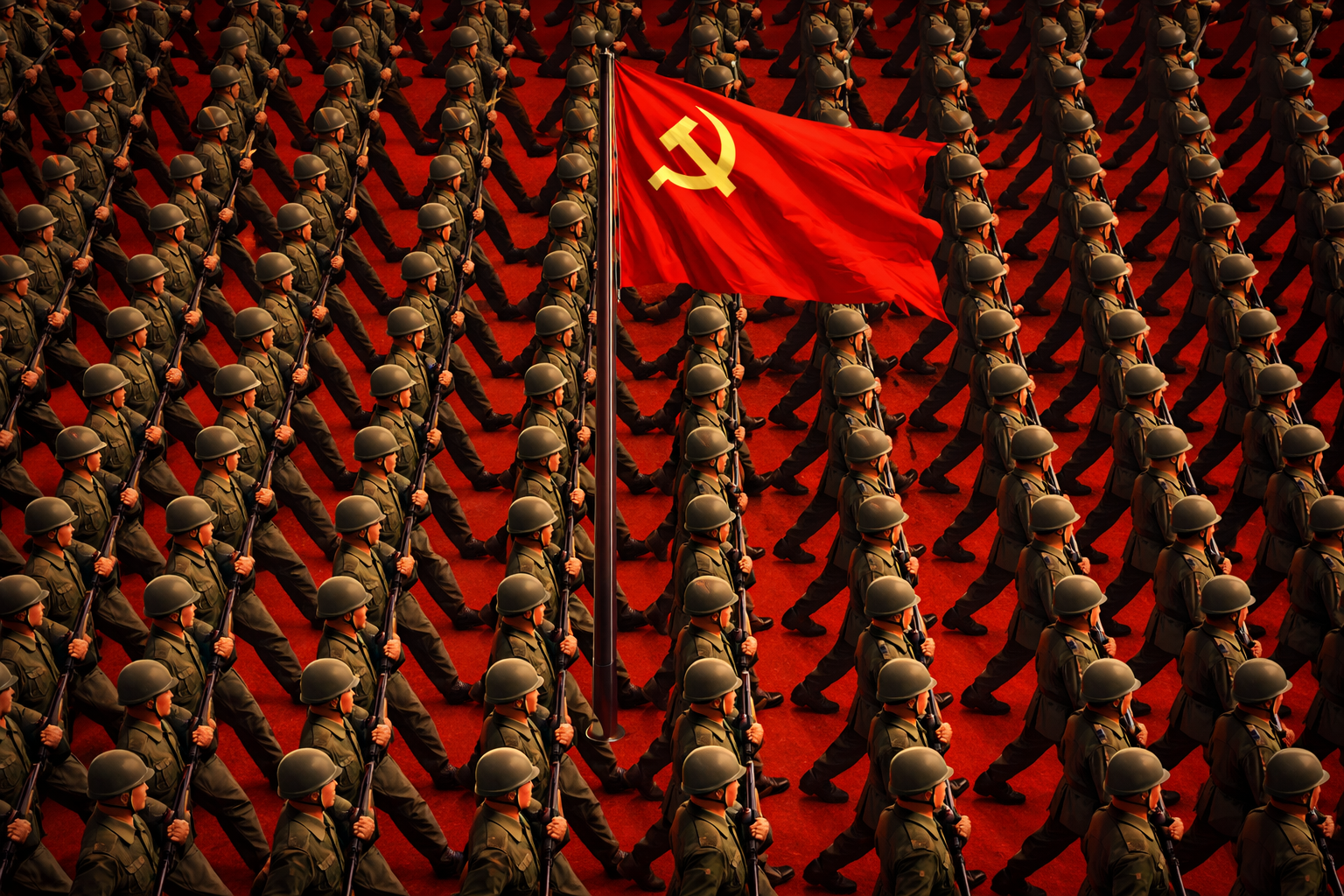
This is notwithstanding the fact that U.S. military supremacy is no longer a guarantee. China’s military capabilities have continued to grow, with a focus on the Asia-Pacific region — the Taiwan Strait and the South China Sea being the main points of contention. Even within the next decade, the world’s security institutions and infrastructure could look very different. The question facing the international community today is not whether China will match American military power, but what this means for global security infrastructure.
It is crucial to remember, however, that despite American floundering, its weakening does not guarantee Chinese supremacy. China’s rise up to this point has been due to its own policies in conjunction with wider international factors, and this continues to be the case for the future. It must continue to cultivate strength internally to remain a superpower, and therefore must address its own structural constraints. Its demographic decline and debt burdens are issues that it must tackle if it wants to continue to be the world’s manufacturing hub and economic powerhouse, although AI may already be making headway on these challenges. Moreover, international trust is likely to continue to be a barrier on the wider global stage. Many point to the Hong Kong National Security Law as an example of China letting nothing get in its way when it has the capabilities to achieve its objectives. In this sense, if China wants to be in a position where it can create strategic partnerships with other nations beyond its existing network, it must show itself as a trustworthy partner. If Xi wants to fill in the space left by U.S. retreat, to whatever extent, China must actively partake in what is left of the international order. Only in this way can Xi shape what is to come.
The greatest geopolitical advantage China now has is the fragmentation of the American-led order. Although its economic growth as well as the resulting accumulation of military power have, of course, been part of its rise, American withdrawal has left space for China to grow into on the international stage. In this sense, Trump did not “create” China’s rise, but has accelerated the processes that allow China to amass power by eroding the system that maintains the U.S. as the hegemon.
The international system incorporated China as it opened its markets up for trade with the rest of the world, and China made the world dependent on it. Over time, it strategically accumulated military and economic strength. Now, it continues to pick up pieces left behind by the fragmentation of the international order caused by the U.S. To progress, diplomacy and alliances, or as it calls them, strategic partnerships, remain a crucial aspect of its journey to power. The future of global leadership and whatever system replaces the international liberal order depends not only on material power, but on the ability to sustain legitimacy, alliances, and institutional trust.
At the turn of the 21st century, the focus of China watchers was on whether China could lift its population out of poverty. In the 2010s, the question was how far China’s economic rise would go and if it could compete with other leading economies. Now, the question we must ask ourselves is: post-U.S. hegemony, what will an international order shaped by China look like?
This is part of a broader retreat from liberal internationalism and diplomacy. Trump’s initial withdrawal from the Paris climate agreement in 2017 left a gaping hole in global cooperation and dumbfounded the international community. This utter disappointment has continued to repeat itself, with Trump’s withdrawal from the Iran nuclear deal and from the World Health Organisation. With billions of dollars cut from funding for life-saving USAID programmes, the idea that the U.S. is still interested in international cooperation is laughable. The United States has become rife with scepticism towards free trade, globalisation, and international cooperation—the very values that form the basis of the international order it created. Through drawing the nation into a deeper pit of protectionism and isolationism, it is clear that Trump wants nothing to do with the founding values of the order over which it exercises hegemony. No longer is American interventionism justified through democratic rhetoric; now the U.S. does whatever it wants, shirking moralistic arguments in its foreign policy discourse and ignoring the international framework of diplomacy. There is not even an attempt to pretend that the U.S. acts for the greater good under Trump’s leadership. Hard power with a lack of moral architecture has become enshrined as a defining feature of the Trump era, as underpinning values disappear.
Exacerbating the malignant manifestations of retreat are diplomatic inconsistency and foreign policy volatility. The global uncertainty surrounding commitments from the U.S., and what the lines are that should or should not be crossed, has put the U.S. in a contradictory position. It can no longer claim to be the “leader of the free world” as its President is no longer regarded as someone capable of leading anything. Trump has weakened America’s image as a stable guarantor of order, and instead pushed allies to prepare for a world devoid of American reliability.
Beijing has little choice but to see this situation as a strategic opportunity; Western domination is waning, and the rules-based order itself is fragmenting and withering away. The polarization and tension amongst Western allies is seen as a symptom of systemic decline, and now China is finally able to escape the legacy of its “century of humiliation”. No longer subordinated by the Western powers, once desperate to carve out its territory and exploit its people and land, China sees this reconfiguration of the balance of power within the international system as justice.
Xi has juxtaposed China with increasing American volatility, and used the narrative of Chinese stability in order to portray China as a defender of globalisation and the international economy. The contrast between Chinese continuity and American unpredictability allows China to be seen as a more favourable and reliable ally, leading the way particularly in terms of AI and climate governance. These are two pressing global issues that Trump’s America has been explicitly silent on. Xi has leveraged Trump’s behaviour, and has presented China as a responsible global actor, and thus has expanded its reach through diplomacy, trade, and investment in infrastructure, as opposed to direct confrontation so characteristic of Trump.
Weakening American leadership has thus created space for Chinese influence. As the U.S. retreat left an institutional vacuum, China has had little reason not to fill the space left behind. This has manifested in several ways: China’s role in conflict mediation in West Asia as it seeks to play a larger part in international governance, and expanding Chinese presence in the Global South, as evident by tensions in the South China Sea recently on show at the BRICS summit. Moreover, China continues to build on influence over infrastructure through the Belt and Road Initiative as both economic and geopolitical infrastructure. Despite reports of recent slowdowns in the project, it has nevertheless shown nations in the Global South that an alternative to the unreliable, unpredictable, and highly transactional nature of U.S. alliance exists.
China has continued to undermine the liberal international order in such a way that it has not expressed a desire to fully destroy the current system, but rather spread questions on the legitimacy of U.S. and Western hegemony. While it continues to benefit from the system, it has little reason to completely overturn the structures in place, as much of the American narrative seems to suggest it wants to do. China has not expressed a will to replace what the U.S. has abandoned, such as huge funding commitments for international organisations like the World Health Organisation or programmes like USAID. Xi has elected not to take the military interventionist approach rife in U.S. history despite attacks on strategic partners such as Iran. China therefore continues to benefit and function from the existing liberal international order. Notwithstanding, its subversion is clear.
It seems increasingly unlikely that, even after Trump’s second term, the U.S. will return to its former hegemonic position in the global order. It cannot seriously continue to compete with China while weakening the very systems that crowned it hegemon. The U.S. continues to lose institutional legitimacy, whereas China continues to develop its role in global AI, climate, and diplomatic governance, as well as building networks of partnerships, institutions and global trust. If Trump wants to retain a modicum of legitimacy in the international community, he cannot continue to ignore the contradictory aspects of his foreign policy.
Trump has continuously reduced leadership to pure coercive capability and adopted a highly transactional form of governance: he has threatened (and taken) military action, implemented economically damaging tariffs, and pulled funding. This approach comes with a cost. U.S. lives have been lost, billions of taxpayer dollars spent, and the cost of living for average Americans has risen as a result of increasing oil prices due to the conflict in the Strait of Hormuz. The U.S. voter, as evidenced by Trump’s approval ratings, is not happy. Moreover, middle powers have taken to hedging behaviours, walking along a tightrope between China and the U.S. — balancing predictability and unpredictability. Strategic autonomy in Europe, Türkiye, India, and the Gulf continues to develop as the U.S. withdraws. While involvement in the past made these nations reliant on American funding and military power, as strategic autonomy develops, they will no longer need U.S. allyship. When the U.S. is no longer needed, it loses its leverage.
This is notwithstanding the fact that U.S. military supremacy is no longer a guarantee. China’s military capabilities have continued to grow, with a focus on the Asia-Pacific region — the Taiwan Strait and the South China Sea being the main points of contention. Even within the next decade, the world’s security institutions and infrastructure could look very different. The question facing the international community today is not whether China will match American military power, but what this means for global security infrastructure.
It is crucial to remember, however, that despite American floundering, its weakening does not guarantee Chinese supremacy. China’s rise up to this point has been due to its own policies in conjunction with wider international factors, and this continues to be the case for the future. It must continue to cultivate strength internally to remain a superpower, and therefore must address its own structural constraints. Its demographic decline and debt burdens are issues that it must tackle if it wants to continue to be the world’s manufacturing hub and economic powerhouse, although AI may already be making headway on these challenges. Moreover, international trust is likely to continue to be a barrier on the wider global stage. Many point to the Hong Kong National Security Law as an example of China letting nothing get in its way when it has the capabilities to achieve its objectives. In this sense, if China wants to be in a position where it can create strategic partnerships with other nations beyond its existing network, it must show itself as a trustworthy partner. If Xi wants to fill in the space left by U.S. retreat, to whatever extent, China must actively partake in what is left of the international order. Only in this way can Xi shape what is to come.
The greatest geopolitical advantage China now has is the fragmentation of the American-led order. Although its economic growth as well as the resulting accumulation of military power have, of course, been part of its rise, American withdrawal has left space for China to grow into on the international stage. In this sense, Trump did not “create” China’s rise, but has accelerated the processes that allow China to amass power by eroding the system that maintains the U.S. as the hegemon.
The international system incorporated China as it opened its markets up for trade with the rest of the world, and China made the world dependent on it. Over time, it strategically accumulated military and economic strength. Now, it continues to pick up pieces left behind by the fragmentation of the international order caused by the U.S. To progress, diplomacy and alliances, or as it calls them, strategic partnerships, remain a crucial aspect of its journey to power. The future of global leadership and whatever system replaces the international liberal order depends not only on material power, but on the ability to sustain legitimacy, alliances, and institutional trust.
At the turn of the 21st century, the focus of China watchers was on whether China could lift its population out of poverty. In the 2010s, the question was how far China’s economic rise would go and if it could compete with other leading economies. Now, the question we must ask ourselves is: post-U.S. hegemony, what will an international order shaped by China look like?
Recommended
The Last Ayatollah
U.S. Foreign Policy as a Debate Without End
Why Internal Fragmentation Now Shapes Global Politics
How Europe Balances Russia, China, and Itself
The Empire That Fights to Exist