

Beyond the Strait of Hormuz
How War Is Redrawing Trade Routes—and Elevating Pakistan
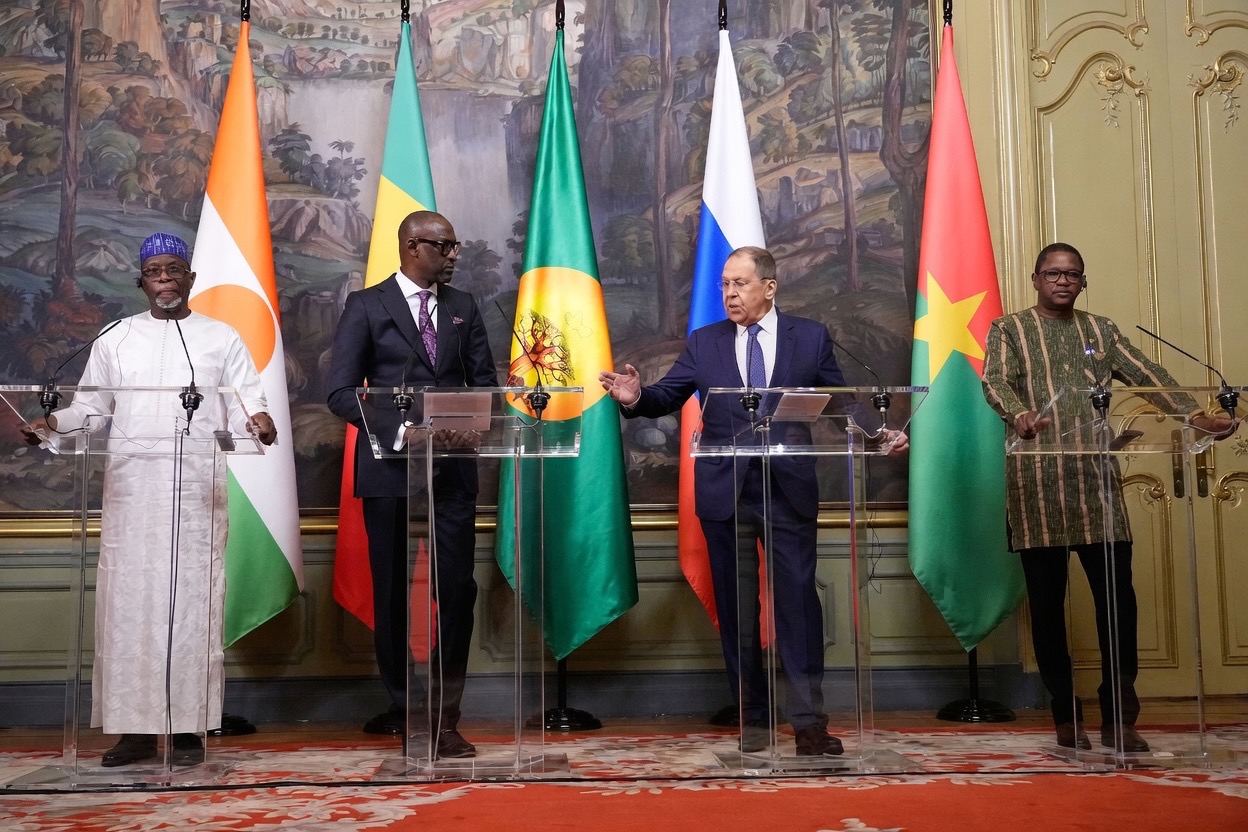
Niger Foreign Minister Bakary Yaou Sangare, Mali's Foreign Minister Abdoulaye Diop, Russian Foreign Minister Sergei Lavrov and Burkina Faso Foreign Minister Karamoko Jean Marie Traore attend a joint press conference following a meeting of Russian foreign minister with foreign ministers of the Confederation of Sahel States in Moscow on April 3, 2025. (Photo by Pavel Bednyakov / POOL / AFP) (Photo by PAVEL BEDNYAKOV/POOL/AFP via Getty Images)
When Mali’s military junta expelled French forces and invited Russia’s Wagner Group in 2021, it framed the decision as a sovereign correction. Western counterterrorism, officials argued, had failed. Moscow would restore security without lectures about democracy. The same narrative soon echoed in Burkina Faso and Niger: anti-colonial rhetoric, denunciations of the Economic Community of West African States (ECOWAS) sanctions, and promises of decisive action against jihadists linked to al-Qaeda and the Islamic State.
Four years later, the results are stark.
According to the Africa Center for Strategic Studies, Mali was on pace for more than 1,000 violent events in 2023, nearly triple the level at the time of the 2020 coup. Violence targeting civilians became nearly five times more frequent than the year before the junta seized power. Militant Islamist activity expanded geographically, sweeping across thousands of additional square kilometers and edging closer to Bamako.
Burkina Faso has followed a similarly troubling trajectory. Since the 2022 coups, deaths linked to militant Islamist violence have nearly tripled. The junta reorganized the security sector and recruited tens of thousands of Volunteers for the Defense of the Homeland, yet violence involving civilians has intensified rather than receded. Reports document executions, forced disappearances, and intercommunal targeting that have deepened displacement and sharpened ethnic fault lines, particularly affecting Fulani communities. The country now faces one of the world’s fastest-growing displacement crises, with millions uprooted as jihadist groups expand into previously contested regions.
In Niger, the 2023 coup was accompanied by a surge of anti-Western messaging and immediate Russian signaling. While Moscow did not appear to engineer the takeover directly, it had long cultivated anti-French and anti-American narratives through disinformation channels across West Africa. Following the coup and the withdrawal of U.S. forces from Agadez, extremist attacks continued, including high-profile strikes claimed by Islamic State affiliates. Russian instructors and air defense systems arrived, but militant networks adapted quickly, exploiting border regions and weak state presence in rural zones. This is not stabilization. It is strategic substitution without security gain.
Russia’s intervention in the Sahel operates on a zero-sum logic. Its model does not seek joint development or institutional reform. Instead, it replaces Western security partnerships with regime-protection contracts, disinformation campaigns, and extractive arrangements tied to gold and other resources. Reporting in Foreign Policy notes that Wagner’s Mali playbook relied heavily on inflaming anti-French and anti-UN sentiment to create political space for military consolidation. Its footprint has been tied less to counterterrorism capacity building than to regime survival and access to mineral concessions. Mali’s agreement with Wagner is estimated at around $10 million monthly, complemented by gold mining access that ties Russian revenue streams to the durability of the regime.
The human cost has been severe. Mass executions in Moura in 2022 involving Malian forces and Wagner personnel were documented by UN-linked reporting, alongside subsequent reporting of systematic sexual violence. Displaced communities have recounted massacres, village burnings, and rape during joint operations, with refugees fleeing not jihadist control but state-aligned violence. According to ACLED data, at least 925 civilians were killed in attacks involving Wagner last year, more than double the roughly 400 civilians killed by Islamist militants during the same period.
Meanwhile, jihadist actors have adapted across all three states.
Jama’at Nusrat al-Islam wal-Muslimin, or JNIM, al-Qaeda’s principal Sahel affiliate formed from a 2017 merger of militant factions, has expanded its operational geography and diversified tactics. Africa Center reporting documents how JNIM opened a western and southern front in Mali, using coordinated attacks, economic blockades, and transport disruption to isolate Bamako. In July 2025 alone, seven simultaneous attacks struck border towns near Senegal and Mauritania. Nearly 20 percent of JNIM’s violent activity in Mali over the past year occurred in this west-south corridor, with fatalities in that zone doubling to more than 450. The group has sought to choke fuel and transport lifelines, exploiting Mali’s heavy reliance on imports from Senegal and Côte d’Ivoire.
In Burkina Faso, jihadist factions have expanded control over rural territory and intensified pressure toward the capital. Mobilization of self-defense militias has often fueled cycles of reprisal violence, creating precisely the kind of grievance environment that extremist groups exploit. In Niger, extremist violence has continued to surge despite the post-coup realignment, with Islamic State affiliates and JNIM-linked networks remaining active in western and border regions.
Even Wagner’s aura of battlefield invincibility has cracked. A major defeat in northern Mali in mid-2024, reconstructed using verified satellite imagery and battlefield footage, exposed operational limits in remote desert terrain against Tuareg separatists later joined by al-Qaeda-linked militants.
What had been marketed as a decisive security pivot began to resemble overstretch across an immense and unforgiving battlespace. Wagner’s rebranding into Africa Corps has reduced deniability and formalized Russian control, but it has not reversed the trajectory of violence. Russia’s defenders argue that it did not cause Sahelian insecurity. The region’s crises predate its arrival. That is true. But the central question is whether Moscow’s model has reduced violence or instead intensified the structural conditions that sustain insurgency. The evidence increasingly points to the latter. Heavy-handed sweeps, militia mobilization, ethnic profiling, and documented abuses have blurred the line between combatant and civilian.
When counterinsurgency becomes indiscriminate, neutrality erodes. In such environments, insurgent recruitment can expand not because ideology triumphs, but because risk is redistributed. If civilians perceive that state-aligned forces and their foreign partners pose as much danger as jihadist actors, particularly where sexual violence and collective punishment are alleged, the barrier to cooperation with insurgents shrinks. Russia’s Sahel strategy is not a development partnership. It is a coercive hedge against Western influence that prioritizes regime insulation over institutional reform. Its security gains, where they exist, have been narrow and fragile.
Its political messaging amplifies anti-colonial grievance while substituting one external patron for another. In Mali, Burkina Faso, and Niger, the promise was sovereignty through strength. The reality has been expanding jihadist adaptation, rising civilian harm, and a security trajectory that continues to deteriorate. The question is no longer whether Russia displaced France. It is whether the model it brought has deepened the very insurgencies it claimed it could defeat.
A useful way to understand why Sahel security pivots keep failing is to focus less on ideology and more on the survival logic civilians face in irregular war. In civil conflict research, the central problem is often not why people join armed groups, but why they cannot safely remain neutral. When armed actors cannot reliably distinguish militants from noncombatants, they resort to rough profiles and collective suspicion. In that environment, nonparticipation is not a safe option. It can be deadlier than alignment, because insurgents often have tighter warning networks, safe houses, and protection capacity, while civilians lack both. The result is a perverse incentive: as violence becomes less selective, neutrality becomes riskier, and “free riding,” meaning remaining uninvolved while others bear the risks of conflict, collapses.
People gravitate toward whichever actor can credibly offer protection, even if that actor is a militant group.
This logic helps explain why coercion-heavy counterinsurgency often produces insurgent resilience rather than defeat, including in Afghanistan and Iraq, where sweeping operations, profiling, and weak legitimacy consistently widened recruitment pools. It also clarifies the strategic cost of civilian abuse in the Sahel. If communities believe they can be punished regardless of what they do, then the protective calculus changes. Cooperation becomes less about ideological persuasion and more about fear, predictability, and survival. In these conditions, armed groups can recruit by presenting themselves not as righteous, but as safer than the alternative.
Afrobarometer data helps explain why the Russian pivot initially resonated across the Sahel. In Mali in particular, surveys show Russia viewed positively by large majorities, while France and ECOWAS are seen overwhelmingly negatively. This reflects not only frustration with Western security partnerships, but also the expectation that a new external partner might offer a different path. Similar dynamics appeared elsewhere in Africa in the early 2000s when many welcomed Chinese investments as a preferable alternative to former colonial powers. In both cases, public support often reflected hope for change rather than a clear understanding of how these partnerships would actually operate. Across Africa, early optimism toward Chinese investment later gave way to frustration as concerns emerged over labor practices, environmental standards, and unequal economic benefits. A similar pattern now appears to be emerging in the Sahel as communities increasingly confront the harsh realities of Russia’s security intervention.
is a research analyst focused on African security, Middle East politics, foreign policy, and democratization & autocratization. He holds a Master’s degree in Global Governance, Politics, and Security from American University.
When Mali’s military junta expelled French forces and invited Russia’s Wagner Group in 2021, it framed the decision as a sovereign correction. Western counterterrorism, officials argued, had failed. Moscow would restore security without lectures about democracy. The same narrative soon echoed in Burkina Faso and Niger: anti-colonial rhetoric, denunciations of the Economic Community of West African States (ECOWAS) sanctions, and promises of decisive action against jihadists linked to al-Qaeda and the Islamic State.
Four years later, the results are stark.
According to the Africa Center for Strategic Studies, Mali was on pace for more than 1,000 violent events in 2023, nearly triple the level at the time of the 2020 coup. Violence targeting civilians became nearly five times more frequent than the year before the junta seized power. Militant Islamist activity expanded geographically, sweeping across thousands of additional square kilometers and edging closer to Bamako.
Burkina Faso has followed a similarly troubling trajectory. Since the 2022 coups, deaths linked to militant Islamist violence have nearly tripled. The junta reorganized the security sector and recruited tens of thousands of Volunteers for the Defense of the Homeland, yet violence involving civilians has intensified rather than receded. Reports document executions, forced disappearances, and intercommunal targeting that have deepened displacement and sharpened ethnic fault lines, particularly affecting Fulani communities. The country now faces one of the world’s fastest-growing displacement crises, with millions uprooted as jihadist groups expand into previously contested regions.
In Niger, the 2023 coup was accompanied by a surge of anti-Western messaging and immediate Russian signaling. While Moscow did not appear to engineer the takeover directly, it had long cultivated anti-French and anti-American narratives through disinformation channels across West Africa. Following the coup and the withdrawal of U.S. forces from Agadez, extremist attacks continued, including high-profile strikes claimed by Islamic State affiliates. Russian instructors and air defense systems arrived, but militant networks adapted quickly, exploiting border regions and weak state presence in rural zones. This is not stabilization. It is strategic substitution without security gain.
Russia’s intervention in the Sahel operates on a zero-sum logic. Its model does not seek joint development or institutional reform. Instead, it replaces Western security partnerships with regime-protection contracts, disinformation campaigns, and extractive arrangements tied to gold and other resources. Reporting in Foreign Policy notes that Wagner’s Mali playbook relied heavily on inflaming anti-French and anti-UN sentiment to create political space for military consolidation. Its footprint has been tied less to counterterrorism capacity building than to regime survival and access to mineral concessions. Mali’s agreement with Wagner is estimated at around $10 million monthly, complemented by gold mining access that ties Russian revenue streams to the durability of the regime.
The human cost has been severe. Mass executions in Moura in 2022 involving Malian forces and Wagner personnel were documented by UN-linked reporting, alongside subsequent reporting of systematic sexual violence. Displaced communities have recounted massacres, village burnings, and rape during joint operations, with refugees fleeing not jihadist control but state-aligned violence. According to ACLED data, at least 925 civilians were killed in attacks involving Wagner last year, more than double the roughly 400 civilians killed by Islamist militants during the same period. Meanwhile, jihadist actors have adapted across all three states.
Jama’at Nusrat al-Islam wal-Muslimin, or JNIM, al-Qaeda’s principal Sahel affiliate formed from a 2017 merger of militant factions, has expanded its operational geography and diversified tactics. Africa Center reporting documents how JNIM opened a western and southern front in Mali, using coordinated attacks, economic blockades, and transport disruption to isolate Bamako. In July 2025 alone, seven simultaneous attacks struck border towns near Senegal and Mauritania. Nearly 20 percent of JNIM’s violent activity in Mali over the past year occurred in this west-south corridor, with fatalities in that zone doubling to more than 450. The group has sought to choke fuel and transport lifelines, exploiting Mali’s heavy reliance on imports from Senegal and Côte d’Ivoire.
In Burkina Faso, jihadist factions have expanded control over rural territory and intensified pressure toward the capital. Mobilization of self-defense militias has often fueled cycles of reprisal violence, creating precisely the kind of grievance environment that extremist groups exploit. In Niger, extremist violence has continued to surge despite the post-coup realignment, with Islamic State affiliates and JNIM-linked networks remaining active in western and border regions.
Even Wagner’s aura of battlefield invincibility has cracked. A major defeat in northern Mali in mid-2024, reconstructed using verified satellite imagery and battlefield footage, exposed operational limits in remote desert terrain against Tuareg separatists later joined by al-Qaeda-linked militants.
What had been marketed as a decisive security pivot began to resemble overstretch across an immense and unforgiving battlespace. Wagner’s rebranding into Africa Corps has reduced deniability and formalized Russian control, but it has not reversed the trajectory of violence. Russia’s defenders argue that it did not cause Sahelian insecurity. The region’s crises predate its arrival. That is true. But the central question is whether Moscow’s model has reduced violence or instead intensified the structural conditions that sustain insurgency. The evidence increasingly points to the latter. Heavy-handed sweeps, militia mobilization, ethnic profiling, and documented abuses have blurred the line between combatant and civilian.
When counterinsurgency becomes indiscriminate, neutrality erodes. In such environments, insurgent recruitment can expand not because ideology triumphs, but because risk is redistributed. If civilians perceive that state-aligned forces and their foreign partners pose as much danger as jihadist actors, particularly where sexual violence and collective punishment are alleged, the barrier to cooperation with insurgents shrinks. Russia’s Sahel strategy is not a development partnership. It is a coercive hedge against Western influence that prioritizes regime insulation over institutional reform. Its security gains, where they exist, have been narrow and fragile.
Its political messaging amplifies anti-colonial grievance while substituting one external patron for another. In Mali, Burkina Faso, and Niger, the promise was sovereignty through strength. The reality has been expanding jihadist adaptation, rising civilian harm, and a security trajectory that continues to deteriorate. The question is no longer whether Russia displaced France. It is whether the model it brought has deepened the very insurgencies it claimed it could defeat.
A useful way to understand why Sahel security pivots keep failing is to focus less on ideology and more on the survival logic civilians face in irregular war. In civil conflict research, the central problem is often not why people join armed groups, but why they cannot safely remain neutral. When armed actors cannot reliably distinguish militants from noncombatants, they resort to rough profiles and collective suspicion. In that environment, nonparticipation is not a safe option. It can be deadlier than alignment, because insurgents often have tighter warning networks, safe houses, and protection capacity, while civilians lack both. The result is a perverse incentive: as violence becomes less selective, neutrality becomes riskier, and “free riding,” meaning remaining uninvolved while others bear the risks of conflict, collapses.
People gravitate toward whichever actor can credibly offer protection, even if that actor is a militant group. This logic helps explain why coercion-heavy counterinsurgency often produces insurgent resilience rather than defeat, including in Afghanistan and Iraq, where sweeping operations, profiling, and weak legitimacy consistently widened recruitment pools. It also clarifies the strategic cost of civilian abuse in the Sahel. If communities believe they can be punished regardless of what they do, then the protective calculus changes. Cooperation becomes less about ideological persuasion and more about fear, predictability, and survival. In these conditions, armed groups can recruit by presenting themselves not as righteous, but as safer than the alternative.
Afrobarometer data helps explain why the Russian pivot initially resonated across the Sahel. In Mali in particular, surveys show Russia viewed positively by large majorities, while France and ECOWAS are seen overwhelmingly negatively. This reflects not only frustration with Western security partnerships, but also the expectation that a new external partner might offer a different path. Similar dynamics appeared elsewhere in Africa in the early 2000s when many welcomed Chinese investments as a preferable alternative to former colonial powers. In both cases, public support often reflected hope for change rather than a clear understanding of how these partnerships would actually operate. Across Africa, early optimism toward Chinese investment later gave way to frustration as concerns emerged over labor practices, environmental standards, and unequal economic benefits. A similar pattern now appears to be emerging in the Sahel as communities increasingly confront the harsh realities of Russia’s security intervention.
is a research analyst focused on African security, Middle East politics, foreign policy, and democratization & autocratization. He holds a Master’s degree in Global Governance, Politics, and Security from American University.
Another strand is the civilian harm mechanism, and it is central to the argument about recruitment. In irregular wars, humiliation and abuse are not side effects. They reshape the social terrain. A key insight from the Sahel reporting is that coercion is not only physical. It is also psychological and communal. The New York Times verified footage from northern Mali shows Wagner-linked forces threatening a civilian woman, including a threat to strip her naked to compel information. In honor-based societies, sexual coercion is not just an individual trauma. It becomes a communal grievance that spreads through families and networks, deepening fear and hardening perceptions of the state and its partners as predatory. That is exactly the kind of environment insurgent groups exploit. If the evidence shows that coercion without legitimacy fuels recruitment, then the answer is not another substitution of partners, but a shift in method.
First, sovereignty must mean capability, not replacement. Replacing French forces with Wagner or Africa Corps may satisfy a political narrative, but it does not automatically produce stronger institutions. Real autonomy is measured by whether national forces can secure territory, protect civilians, and sustain operations without relying on opaque external contracts. Security partnerships should build domestic command capacity, not parallel chains of authority.
Second, strengthening the military must center civilian protection. Counterinsurgency succeeds when citizens believe the military is there to protect them, not threaten them. When communities trust that security forces are on their side, they are far more likely to share information and resist insurgent pressure. This logic has long been central to the “hearts and minds” approach in counterinsurgency strategy. When sweeps become indiscriminate, ethnic profiling spreads, or abuses go unpunished, that trust collapses and insurgent recruitment becomes easier. Training that emphasizes discipline, rules of engagement, and protection of civilians is therefore not a Western preference. It is operational necessity.
Third, militia mobilization must be professionalized. Volunteer forces expand manpower quickly, but without supervision they risk deepening cycles of reprisal violence. In Burkina Faso in particular, auxiliary forces must operate under clear command structures and enforceable codes of conduct. Otherwise, the grievances they generate can outlast the immediate tactical gains they produce.
Fourth, the door should remain open for discreet engagement where it can reduce violence and support broader stability. Backchannel negotiations have been used in multiple conflict zones to fragment insurgent coalitions, open humanitarian corridors, and peel away local actors from hardened ideological cores. In fragile environments like the Sahel, such engagement can create space for stabilization and economic recovery in areas where prolonged fighting has disrupted livelihoods.
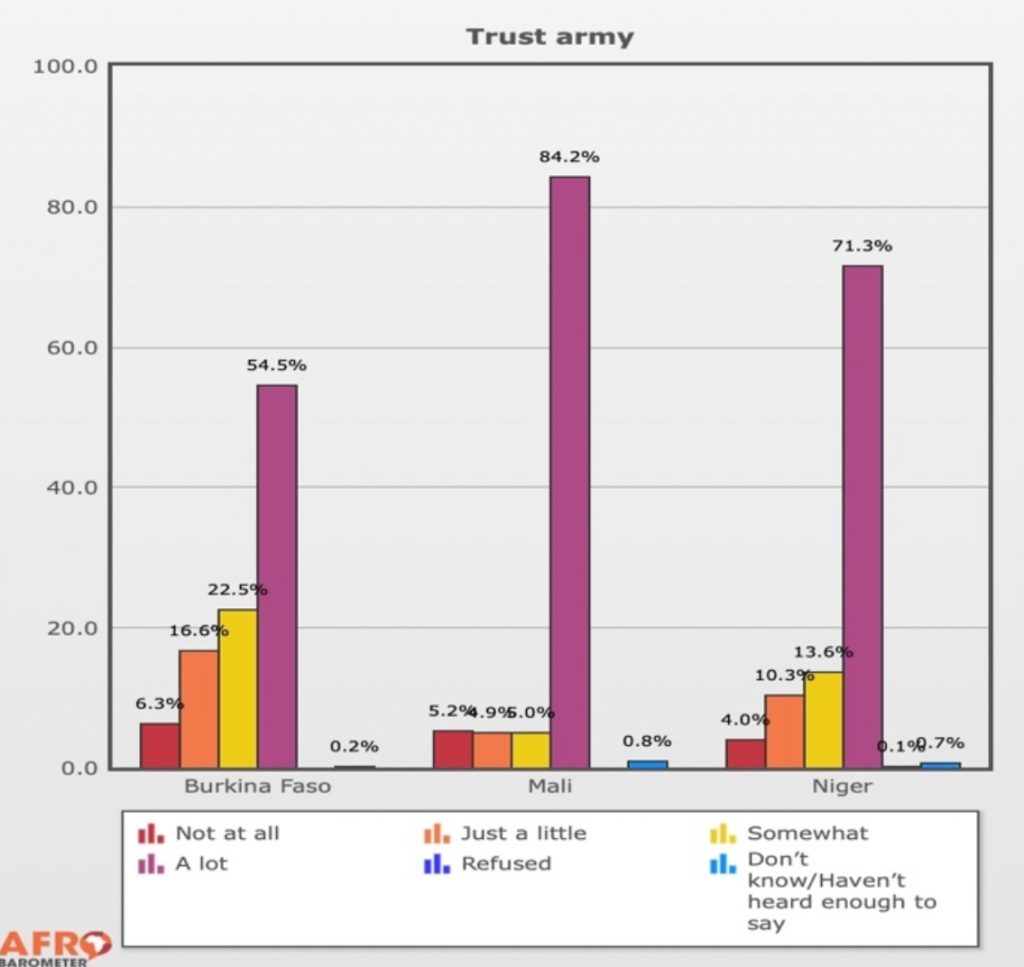
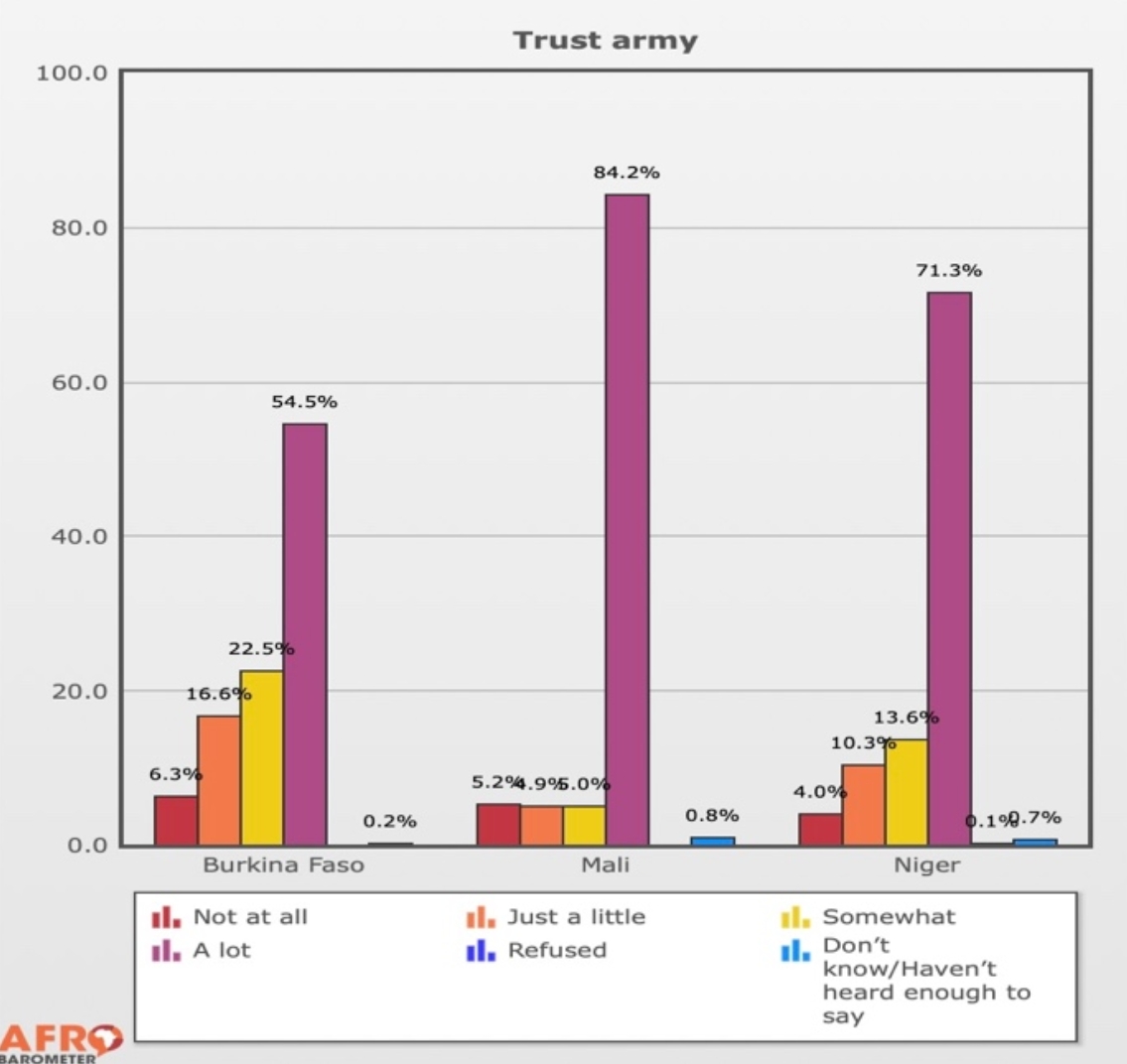
Finally, public trust in the military remains high in parts of the Sahel. That gives governments room to act without immediately losing support. The real question is how that space is used. It can be used to improve discipline, protect civilians, and strengthen national forces. Or it can be used to justify tactics that may end up pushing more people toward armed groups.
Another strand is the civilian harm mechanism, and it is central to the argument about recruitment. In irregular wars, humiliation and abuse are not side effects. They reshape the social terrain. A key insight from the Sahel reporting is that coercion is not only physical. It is also psychological and communal. The New York Times verified footage from northern Mali shows Wagner-linked forces threatening a civilian woman, including a threat to strip her naked to compel information. In honor-based societies, sexual coercion is not just an individual trauma. It becomes a communal grievance that spreads through families and networks, deepening fear and hardening perceptions of the state and its partners as predatory. That is exactly the kind of environment insurgent groups exploit. If the evidence shows that coercion without legitimacy fuels recruitment, then the answer is not another substitution of partners, but a shift in method.
First, sovereignty must mean capability, not replacement. Replacing French forces with Wagner or Africa Corps may satisfy a political narrative, but it does not automatically produce stronger institutions. Real autonomy is measured by whether national forces can secure territory, protect civilians, and sustain operations without relying on opaque external contracts. Security partnerships should build domestic command capacity, not parallel chains of authority.
Second, strengthening the military must center civilian protection. Counterinsurgency succeeds when citizens believe the military is there to protect them, not threaten them. When communities trust that security forces are on their side, they are far more likely to share information and resist insurgent pressure. This logic has long been central to the “hearts and minds” approach in counterinsurgency strategy. When sweeps become indiscriminate, ethnic profiling spreads, or abuses go unpunished, that trust collapses and insurgent recruitment becomes easier. Training that emphasizes discipline, rules of engagement, and protection of civilians is therefore not a Western preference. It is operational necessity.
Third, militia mobilization must be professionalized. Volunteer forces expand manpower quickly, but without supervision they risk deepening cycles of reprisal violence. In Burkina Faso in particular, auxiliary forces must operate under clear command structures and enforceable codes of conduct. Otherwise, the grievances they generate can outlast the immediate tactical gains they produce.
Fourth, the door should remain open for discreet engagement where it can reduce violence and support broader stability. Backchannel negotiations have been used in multiple conflict zones to fragment insurgent coalitions, open humanitarian corridors, and peel away local actors from hardened ideological cores. In fragile environments like the Sahel, such engagement can create space for stabilization and economic recovery in areas where prolonged fighting has disrupted livelihoods.
Finally, public trust in the military remains high in parts of the Sahel. That gives governments room to act without immediately losing support. The real question is how that space is used. It can be used to improve discipline, protect civilians, and strengthen national forces. Or it can be used to justify tactics that may end up pushing more people toward armed groups.
Recommended
How War Is Redrawing Trade Routes—and Elevating Pakistan
Between Global Overreach and Strategic Retreat
The Chinese Experience That Challenges the Universality of Liberalism
Failure Through Weakness
India’s Autonomy in a Coercive Era