The Multipolar World Is Nothing New
Why the Return of Many Powers Does Not Mean the Birth of a New Order
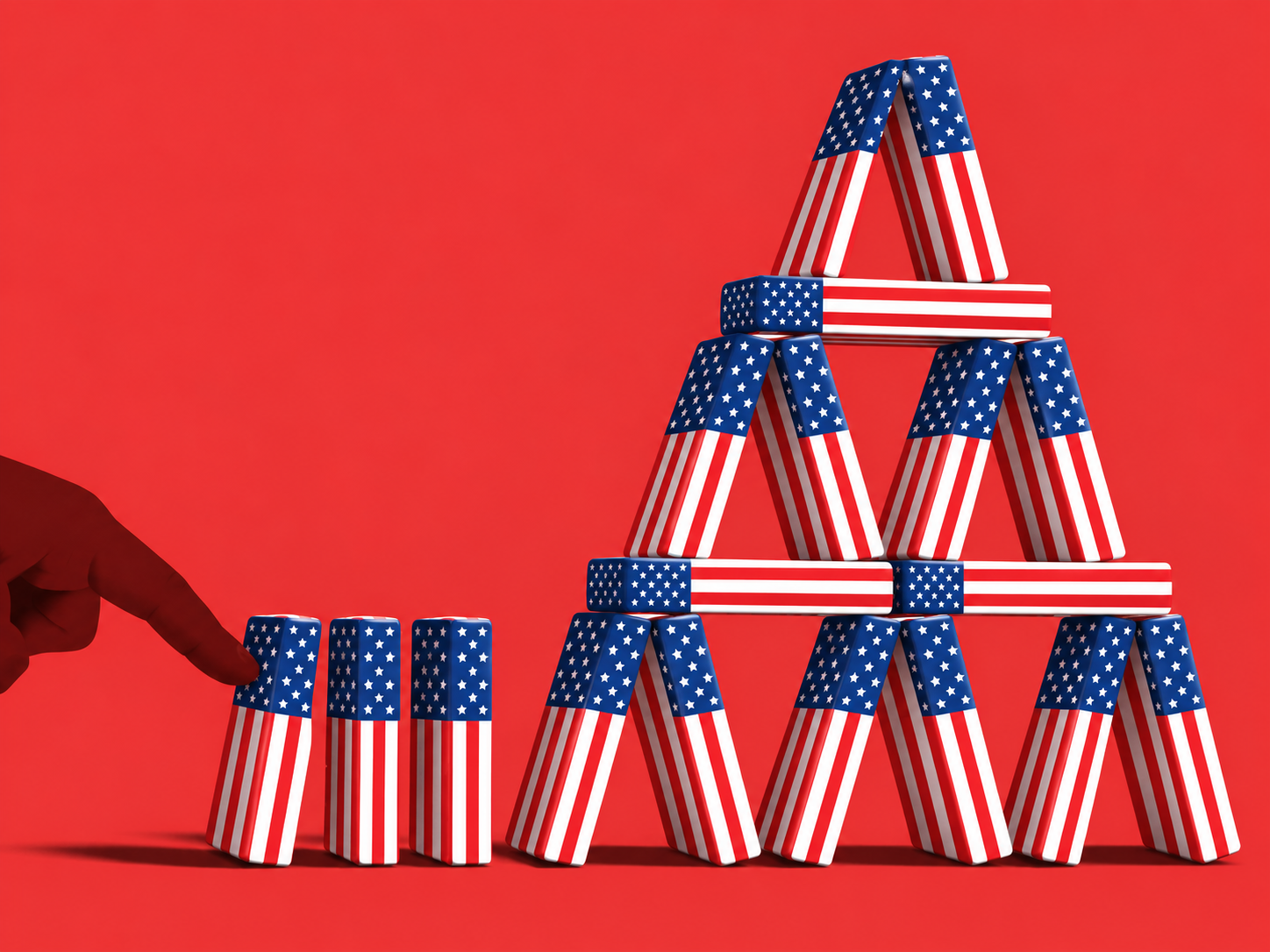
This illustration has been created by AI to use only in this article.
The end of the Cold War was one of those rare moments in history when the future seemed to open all at once. In 1989, the Berlin Wall fell, and in 1991 the Soviet Union collapsed. For many people in the West, this looked like the end of an age of danger and the beginning of a more rational world. The great ideological contest of the 20th century had been settled, or so it appeared, and the democratic capitalist model of the United States and its allies seemed to have won by default. It was tempting to believe that the old struggles between empire and revolution, East and West, dictatorship and democracy, had finally been resolved in favor of the progressive West.
That belief was understandable, but it was too neat for the world as it turned out to be. The Cold War had been a rigid order, and its rigidity had given politics form. Once it ended, the hoped-for progress turned out to be messier than expected. The old bipolar system had threatened catastrophe, but it also imposed limits on behavior. Once it was gone, those limits weakened, resulting in not a single new order, but in rising uncertainty and conflict. In the decades following the dissolution of the USSR, world events were dominated by the expansion of NATO, the economic rise of China, events in the Middle East, trends in technology and globalization, and arguably a slow rise in anarchy. Because of its relative decrease in power, the United States no longer dominated, but continued to shape events. In practice, this meant that American power was still central, but no longer easy to convert into decisive outcomes. The gap between military strength and political success became more visible over time. As commitments widened, the costs of leadership also became harder to ignore. This helped prepare the ground for later skepticism about intervention and global responsibility.
The great illusion of the 1990s was the apparent dominance of the United States and the West in contrast with rising trends mentioned above. Chinese economic expansion and the disruptions to the Western vision of progress resulted in a very different world than many leaders had expected in 1989 versus how events played out just a few decades after the demise of the Soviet Union. The Gulf War of 1991 showed how impressive American military power had become. The later wars in Iraq and Afghanistan showed how limited it still was when it came to political reconstruction. The United States could still project force around the world and pressure governments, but could not determine the internal character of other societies or guarantee that its victories would lead to stable political outcomes. The United States could remove a regime, but it could not easily manufacture legitimacy.
The collapse of the Soviet Union also left a vacuum in Russia itself, and from that vacuum came one of the central figures of the new era, Vladimir Putin. Russia in the 1990s was a wounded great power. It had lost empire, prestige and confidence. The post-Soviet years were marked by economic collapse, political disorder and a humiliating sense that the country had been cast down from the rank it believed was naturally its own. Like many Russians, Putin felt deep concern for Russia’s losses and felt NATO’s expansion to the east made a mockery of Western leaders’ protestations of good intent. His actions showed that he believed Russia had to draw a line somewhere, and Russian support for his rule repeated an old tendency to turn to a strong leader in such times. He restored central authority, revived Russian nationalism and presented himself as the man who would end chaos and recover lost standing. Russia no longer exported communism, but Putin was trying to regain status. That made it, in some ways, a more flexible and therefore more dangerous actor.
The nuclear balance changed too. In the years immediately after 1989, the U.S. and Russia both saw the sense in a massive reduction and consolidation of nuclear arsenals, resulting in a decrease of 50% in the total number of nuclear weapons in the world. In contrast, Iran has slowly raised tensions as it appeared to seek a nuclear enrichment capability. The American and Western response to this has been debated and criticized, but there’s no question that the threat posed by a nuclear-armed Iran could well greatly destabilize the Middle East and even lead to the use of nuclear weapons in conflict. The vision of a world free of nuclear weapons has receded in the face of the new geopolitical stress and conflict in the Middle East and Ukraine, as well as concerns that Russia may give in to the temptation to use tactical nukes in Ukraine. For the United States, this meant that victory in the Cold War had not ended insecurity. The U.S. was still the dominant military power and in many ways still leading the world economy, but it was also more exposed to asymmetric threats, irregular war and the political burdens of a global leadership that verged on imperial overstretch.
is a master’s candidate in International Relations at the Johns Hopkins School of Advanced International Studies. She currently works as a public policy intern for Amazon and has previously interned at NASA and the American Foreign Policy Council. Her research focuses on U.S.-East Asia relations, bilateral space cooperation and military strategy.
The end of the Cold War was one of those rare moments in history when the future seemed to open all at once. In 1989, the Berlin Wall fell, and in 1991 the Soviet Union collapsed. For many people in the West, this looked like the end of an age of danger and the beginning of a more rational world. The great ideological contest of the 20th century had been settled, or so it appeared, and the democratic capitalist model of the United States and its allies seemed to have won by default. It was tempting to believe that the old struggles between empire and revolution, East and West, dictatorship and democracy, had finally been resolved in favor of the progressive West.
That belief was understandable, but it was too neat for the world as it turned out to be. The Cold War had been a rigid order, and its rigidity had given politics form. Once it ended, the hoped-for progress turned out to be messier than expected. The old bipolar system had threatened catastrophe, but it also imposed limits on behavior. Once it was gone, those limits weakened, resulting in not a single new order, but in rising uncertainty and conflict. In the decades following the dissolution of the USSR, world events were dominated by the expansion of NATO, the economic rise of China, events in the Middle East, trends in technology and globalization, and arguably a slow rise in anarchy. Because of its relative decrease in power, the United States no longer dominated, but continued to shape events. In practice, this meant that American power was still central, but no longer easy to convert into decisive outcomes. The gap between military strength and political success became more visible over time. As commitments widened, the costs of leadership also became harder to ignore. This helped prepare the ground for later skepticism about intervention and global responsibility.
The great illusion of the 1990s was the apparent dominance of the United States and the West in contrast with rising trends mentioned above. Chinese economic expansion and the disruptions to the Western vision of progress resulted in a very different world than many leaders had expected in 1989 versus how events played out just a few decades after the demise of the Soviet Union. The Gulf War of 1991 showed how impressive American military power had become. The later wars in Iraq and Afghanistan showed how limited it still was when it came to political reconstruction. The United States could still project force around the world and pressure governments, but could not determine the internal character of other societies or guarantee that its victories would lead to stable political outcomes. The United States could remove a regime, but it could not easily manufacture legitimacy.
The collapse of the Soviet Union also left a vacuum in Russia itself, and from that vacuum came one of the central figures of the new era, Vladimir Putin. Russia in the 1990s was a wounded great power. It had lost empire, prestige and confidence. The post-Soviet years were marked by economic collapse, political disorder and a humiliating sense that the country had been cast down from the rank it believed was naturally its own. Like many Russians, Putin felt deep concern for Russia’s losses and felt NATO’s expansion to the east made a mockery of Western leaders’ protestations of good intent. His actions showed that he believed Russia had to draw a line somewhere, and Russian support for his rule repeated an old tendency to turn to a strong leader in such times. He restored central authority, revived Russian nationalism and presented himself as the man who would end chaos and recover lost standing. Russia no longer exported communism, but Putin was trying to regain status. That made it, in some ways, a more flexible and therefore more dangerous actor.
The nuclear balance changed too. In the years immediately after 1989, the U.S. and Russia both saw the sense in a massive reduction and consolidation of nuclear arsenals, resulting in a decrease of 50% in the total number of nuclear weapons in the world. In contrast, Iran has slowly raised tensions as it appeared to seek a nuclear enrichment capability. The American and Western response to this has been debated and criticized, but there’s no question that the threat posed by a nuclear-armed Iran could well greatly destabilize the Middle East and even lead to the use of nuclear weapons in conflict. The vision of a world free of nuclear weapons has receded in the face of the new geopolitical stress and conflict in the Middle East and Ukraine, as well as concerns that Russia may give in to the temptation to use tactical nukes in Ukraine. For the United States, this meant that victory in the Cold War had not ended insecurity. The U.S. was still the dominant military power and in many ways still leading the world economy, but it was also more exposed to asymmetric threats, irregular war and the political burdens of a global leadership that verged on imperial overstretch.
is a Ukrainian journalist, CEO of The Public Interest Journalism Lab, and Co-Founder of The Reckoning Project. She is the author of The Lost Iidand: Dispatches From Occupied Crimea.
Why the Return of Many Powers Does Not Mean the Birth of a New Order
The attacks of September 11, 2001, underlined that the bipolar struggle of the USSR was being eclipsed in some ways by a new war labeled by some a war on terror, others a conflict of faiths and others a simple battle for homeland security. This new struggle in some ways reflected the Cold War (bipolar West versus Islam), but was heavily influenced by the Arab-Israeli conflict and affected by the relative decrease in U.S. power vis-à-vis the rest of the world. A key factor then and now was the internal struggle facing Islam. Essentially, Islam has struggled with the challenge of the West for centuries, beginning with the Ottoman defeat at Vienna in 1683, and accelerating in the 19th and early 20th centuries as Europeans carved up many Muslim lands as they built colonial empires. Though Muslims have largely reclaimed most of the land they lost, major challenges remained in 2000: Israel remained a key concern; sectarian and national divisions were not overcome; Western ideas and the Western challenge in the form of economic and military strength remained threats.
September 11 also altered the way Americans saw their country. They had not suffered a direct attack on that scale in living memory. The event had a psychological force far beyond its immediate physical damage. The complacency of the 1990s came to an end; there was a new sense of vulnerability and a closer engagement with the Middle East, where Israel remained at the center of chronic and occasionally intense conflict. The broader region, already under stress from dictatorship, poverty and weak institutions, became more unstable still after the American determination to take the fight from New York to the Middle East, and American invasions of Afghanistan and Iraq. The Arab Spring of 2011 reflected widespread discontent in the area. The rise of China was a key structural change of the period. In the years after 1989, China moved from the margin of the world economy toward its center.
It did so quietly, deliberately and patiently. Western leaders often believed that economic integration would gradually make China look more like the West. Instead, the opposite occurred in important respects. China used trade, investment and access to global markets to strengthen its own power while preserving the political control of the Communist Party. It did not liberalize in the way many had hoped. It modernized under tight political discipline. The rise of Xi Jinping reflected a continued and even increased focus on the centralized one-party state of the Chinese Communist Party. The Taiwan problem remained contentious and continues to be one of the greatest global hotspots of concern.
The rise of China showed that globalization did not necessarily mean convergence. Goods, capital, information and supply chains crossed borders more freely than before, but political systems did not necessarily become more alike. China became rich without becoming democratic. That fact changed assumptions across the world. The change in economic balance has had a deep geopolitical impact. Manufacturing shifted eastward. American and European industrial regions weakened. Consumers benefited from cheap imports and efficient supply chains, but many workers experienced the process as loss, not gain. Globalization enriched the system as a whole, but it resulted in a very different balance of economic power that began to have political effects as well. However, the economic trends unfolded roughly as many did expect.
Technology accelerated the change, but did so in a less predictable way. The impact of the internet, social media and communications has been profound for societies around the world. The new connectivity allowed news to move more quickly, but also stimulated a significant rise in disinformation and rumor. The old gatekeepers of information lost much of their authority. Governments, academic institutions and the legacy media could no longer shape public understanding as firmly as before. News stories, public discussion and politics went into more immediate and more emotional cycles. The consequences were both good and bad, and public life became less stable. People no longer received one common account of events. They received a flood of competing evidence and rumors. Stories became reinforced and confused within and between communities. Information overload and struggles for public attention became more prominent.
The attacks of September 11, 2001, underlined that the bipolar struggle of the USSR was being eclipsed in some ways by a new war labeled by some a war on terror, others a conflict of faiths and others a simple battle for homeland security. This new struggle in some ways reflected the Cold War (bipolar West versus Islam), but was heavily influenced by the Arab-Israeli conflict and affected by the relative decrease in U.S. power vis-à-vis the rest of the world. A key factor then and now was the internal struggle facing Islam. Essentially, Islam has struggled with the challenge of the West for centuries, beginning with the Ottoman defeat at Vienna in 1683, and accelerating in the 19th and early 20th centuries as Europeans carved up many Muslim lands as they built colonial empires. Though Muslims have largely reclaimed most of the land they lost, major challenges remained in 2000: Israel remained a key concern; sectarian and national divisions were not overcome; Western ideas and the Western challenge in the form of economic and military strength remained threats.
September 11 also altered the way Americans saw their country. They had not suffered a direct attack on that scale in living memory. The event had a psychological force far beyond its immediate physical damage. The complacency of the 1990s came to an end; there was a new sense of vulnerability and a closer engagement with the Middle East, where Israel remained at the center of chronic and occasionally intense conflict. The broader region, already under stress from dictatorship, poverty and weak institutions, became more unstable still after the American determination to take the fight from New York to the Middle East, and American invasions of Afghanistan and Iraq. The Arab Spring of 2011 reflected widespread discontent in the area. The rise of China was a key structural change of the period. In the years after 1989, China moved from the margin of the world economy toward its center.
It did so quietly, deliberately and patiently. Western leaders often believed that economic integration would gradually make China look more like the West. Instead, the opposite occurred in important respects. China used trade, investment and access to global markets to strengthen its own power while preserving the political control of the Communist Party. It did not liberalize in the way many had hoped. It modernized under tight political discipline. The rise of Xi Jinping reflected a continued and even increased focus on the centralized one-party state of the Chinese Communist Party. The Taiwan problem remained contentious and continues to be one of the greatest global hotspots of concern.
The rise of China showed that globalization did not necessarily mean convergence. Goods, capital, information and supply chains crossed borders more freely than before, but political systems did not necessarily become more alike. China became rich without becoming democratic. That fact changed assumptions across the world. The change in economic balance has had a deep geopolitical impact. Manufacturing shifted eastward. American and European industrial regions weakened. Consumers benefited from cheap imports and efficient supply chains, but many workers experienced the process as loss, not gain. Globalization enriched the system as a whole, but it resulted in a very different balance of economic power that began to have political effects as well. However, the economic trends unfolded roughly as many did expect.
Technology accelerated the change, but did so in a less predictable way. The impact of the internet, social media and communications has been profound for societies around the world. The new connectivity allowed news to move more quickly, but also stimulated a significant rise in disinformation and rumor. The old gatekeepers of information lost much of their authority. Governments, academic institutions and the legacy media could no longer shape public understanding as firmly as before. News stories, public discussion and politics went into more immediate and more emotional cycles. The consequences were both good and bad, and public life became less stable. People no longer received one common account of events. They received a flood of competing evidence and rumors. Stories became reinforced and confused within and between communities. Information overload and struggles for public attention became more prominent.
World events did not unfold along the smooth lines of progress many expected in the early 1990s. American decision makers contended with the new Russia and China, but the contests were different from what was expected. Economic and technological trends changed the world, but not as predictably as expected. The U.S. lost relative power, but not as much and as fast as some had expected. Capitalism was the dominant force as expected, but democracy and Western-style governance did not progress as much as expected. The 2008 financial crisis came in 2008 and hurt public confidence that had already been under pressure. Fatigue over the extended wars in Iraq and Afghanistan combined with this to create a demand for change. Barack Obama’s election in 2008 signaled a desire for change. For many, his election was a hopeful expression. Dissatisfaction with progress combined with continued belief that major change was necessary led to a move in a very different direction—the election of Donald Trump in 2016. A gentle attitude was replaced with polarization and relative harshness. The position of the U.S. in the post-Cold War order fundamentally changed beginning in 2008.
Trump’s election in 2016 was in some ways the flip side of Obama’s in 2008. The U.S. electorate was dissatisfied both with some of the results and with the lack of results of the Obama years. Reaction came in the form of Trump’s 2016 election. Trump’s outspoken directness appealed to many who continued to believe some form of change was a necessity, but were dissatisfied with the outcome of Obama’s approach. Many voters felt marginalized during the Obama years; Trump’s direct messaging resonated with their reaction. In some sense, the election of Obama, then Trump, represented a continued desire for a new direction and solutions to near-intractable problems (relative economic decline, public cynicism, war fatigue and some sentiment for the past). Despite Trump’s radical stance on many issues, in many ways he’s a traditionalist with similar values to those of Obama, e.g., strongly held beliefs, the importance of economic priorities and a deep patriotism.
A review of the common challenges faced by both Obama and Trump and their respective approaches is helpful. Both believe in strong government, though not necessarily on how large the government should be. Obama felt that the U.S. could and should complete the work of progressive administrations going back to the 1930s. His pursuit of universal healthcare was a hallmark of his administration. Trump approached the same problem by attacking the perceived inefficiency of Obama’s program and focusing on the indirect benefits of strengthening the business community. Obama embraced inclusiveness by, for instance, leading in the legalization of gay marriage, and continued to support government involvement in addressing systemic inequality in the nation. Trump’s focus, while also inclusive in a sense, focused on communities who felt marginalized by the actions and priorities of Obama and previous progressive administrations. Initiatives and programs intended to mitigate white privilege were increasingly seen as anachronisms in a society many felt had taken DEI actions and programs too far.
The position of illegal immigrants was notably targeted under Trump. Government priorities under Obama tended towards an attitude of professional management; conversely, Trump saw government intrusion in the private sector as both a political target and a problem to be tackled in the form of reduction of government agencies. Obama’s vision was inclusive and forward-looking; Trump’s vision is confrontational, sentimental, reductionist, but arguably also focused on unity. Obama’s diplomatic focus was on harmony and continuation of American commitments; Trump’s focus has been on novel approaches, shaking up existing structures and reducing American financial commitments and deployments abroad. Again, despite the very different approaches, few truly question the patriotism of Obama or Trump or the desire of both to find effective solutions to problems facing the nation; rather, the two men represent very different attitudes facing the same problems. Trump and Obama are two expressions of the same historical moment. The difference lay in their approach to that change. Both rose from dissatisfaction with the established order. Both drew energy from the feeling that American life had become detached from ordinary citizens. Both promised change. The difference lay in what kind of change the country wanted.
Trump’s MAGA brand has almost come to be a parody because of the criticism Trump’s direct, confrontational style has brought on. MAGA has become a focus of hatred towards Trump to the point where it’s lost most of its utility as a political movement. Still, Trump never lost the core of his support and as events unfolded, he still continued to be able to command a great deal of popular support long after MAGA was sidelined as a brand. The Trump phenomenon has become, over time, more and more focused on Trump himself. The old bipartisan language of unity was rejected, and Trump has tackled the problems of the day in a much more direct style many see as abrasive and divisive, and many others see as more honest and effective. The unity Obama sought has been replaced with relatively extreme polarization, perhaps seen by Trump as a temporary and necessary evil. Trump’s brash, mercurial style, no doubt, may well have been his intention to keep his opponents guessing.
Trump turned public disillusionment with the liberal order into enduring political power.
Trump’s strength is a combination of his strong personality, independent political style and exceptional experience with people in situations that involve negotiation and compromise. His weaknesses are perhaps narcissism and an intolerance for public compromise. He understood that a large part of the American public no longer believed in the moral authority of the institutions that claimed to speak for the nation. He understood that expertise had become vulnerable to distrust. He understood, too, that conflict itself could be presented as honesty. In a media age where everything was filtered through performance, he made performance the point. That was crude at times and self-defeating at others, but it was effective because it matched the mood of the country.
Trump’s first term largely centered around his determination to make changes in the way government, business and public life were conducted in America. Much of his focus was on tearing down existing structures and efforts, e.g., Obamacare and DEI institutions domestically. Internationally, Trump ended the JCPOA with Iran and worked to undermine the existing NATO funding agreements, which he felt were unfair and unsustainable for the U.S. Trump maintained a consistent hostility towards the legacy press. This, in combination with the pressure of the internet and the increasingly impossible economics of print media, accelerated the trend towards the fragmentation of journalism and the media in general. At the same time, rumors, conspiracies and poorly sorted evidence increasingly flooded the internet. The result was a general degradation of journalistic professionalism, which Trump used to his advantage.
The COVID-19 pandemic (2019–2023) caused economic shock and intensified general frustration. Expansion of government controls related to the pandemic was resented by many. This event dampened economic and political activity in general, and no doubt slowed some of the progress Trump hoped to make towards his goals. The 2016 election and the broader backlash it represented was not an aberration. It was both a dissatisfaction with the Obama years and a response to a longer period of perceived elite failure, social strain and geopolitical disappointment. The old liberal order had promised prosperity, stability and global leadership. What many Americans felt instead was dislocation at home and uncertainty abroad; Trump turned that feeling and a desire for a different approach than Obama’s into political power.
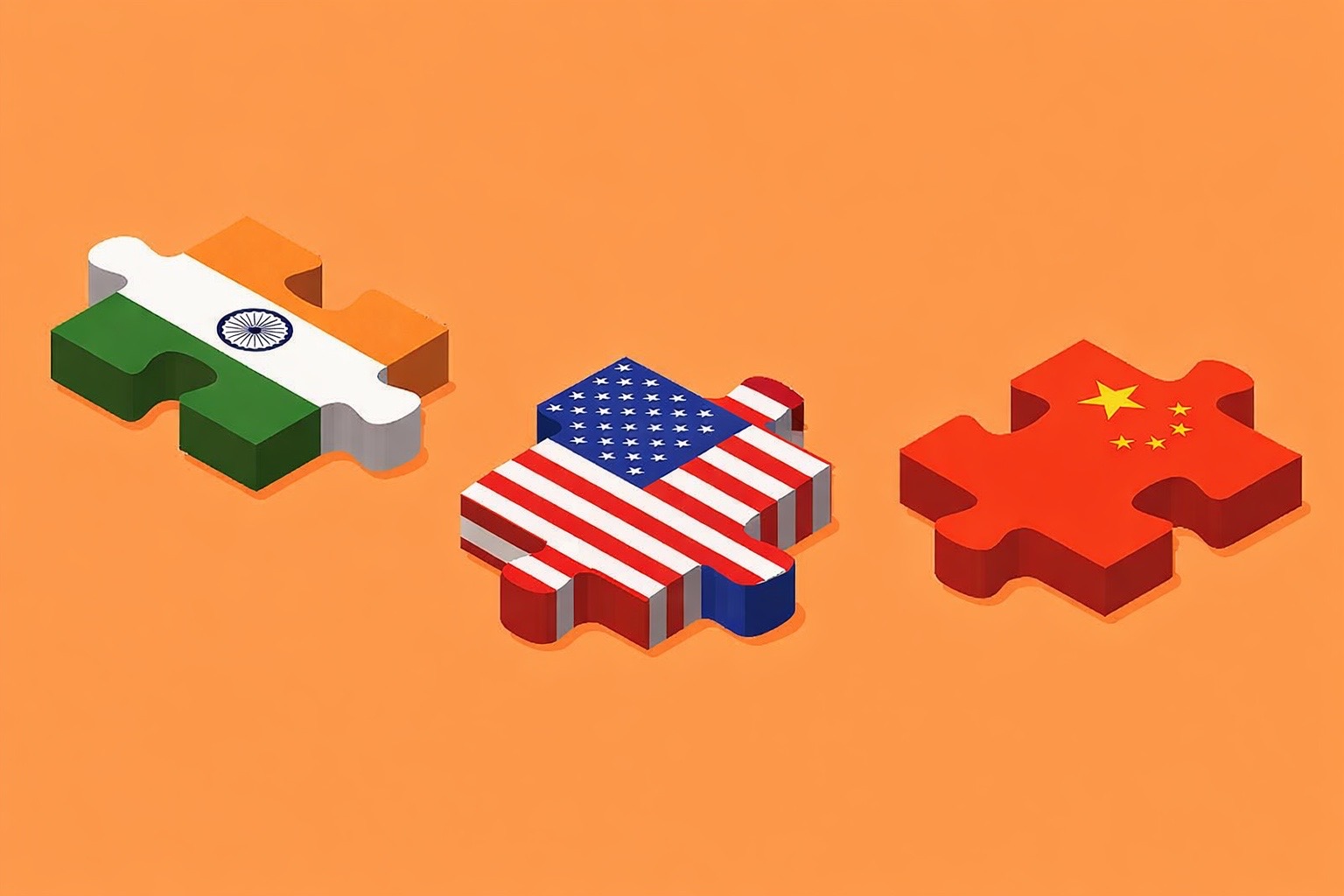
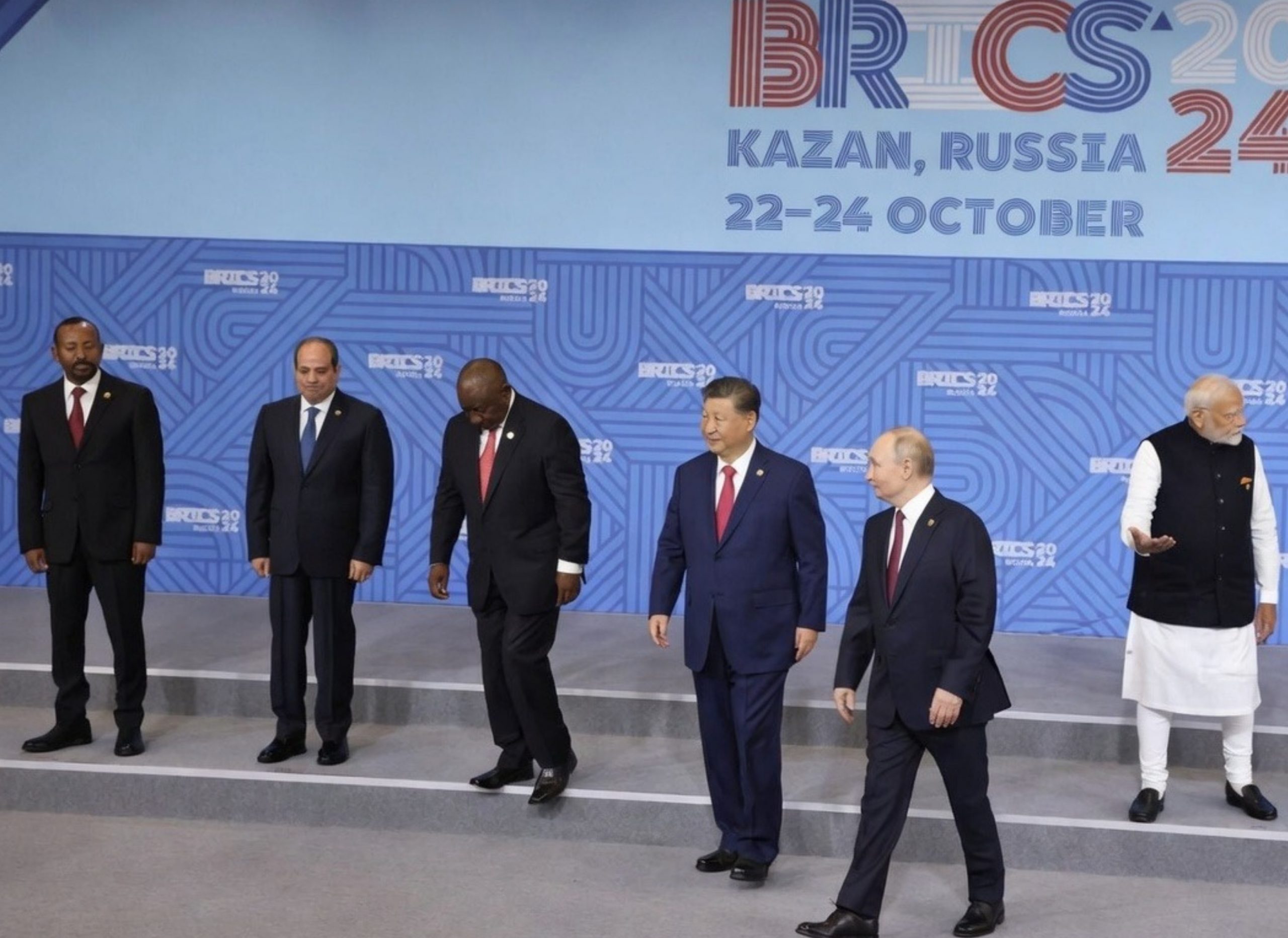
Upon reelection in 2024, Trump is essentially the same man in his second term as he was in his first, but the circumstances of 2024 are very different from those of 2016. Despite rumors, few seriously doubt he intends to leave office at the end of this term. Concerns about reelection are no longer a focus. His vision is clearly relatively more constructive and legacy-focused in this term relative to the shake-up and tearing down of institutions in his first term. Economic priority setting continues to center around 1) maximizing the U.S. position, as we see in Venezuela and negotiations with China, and 2) minimizing commitments, as we see in negotiations with NATO, Ukraine and Russia. Events in the Middle East have somewhat dictated his focus on Israel and Iran, but clearly nuclear proliferation and the Abraham Accords were major priorities for Trump even before October 7, 2023. Looking forward, the continued economic rise of China and India presages a new geopolitical world landscape. Many smaller powers and nations seem more interested in economic prosperity along capitalist lines than ideology. The world is becoming more capitalist in a sense, as expected, but more crowded and conditional.
Alliances have weakened in many cases (NATO, for instance), shifted, and in some cases strengthened (U.S.-Israel). But many are more transactional than during the Cold War and the early post-Cold War years. Domestic politics now shapes foreign policy much more directly than it did during the Cold War or even during much of the 1990s. Governments must answer audiences that are angrier, more skeptical, less patient, more vocal and more fragmented. The old vision of leaders quietly managing world affairs from above has diminished. Yet turning away from global burdens has rarely produced the clean slate its champions anticipated. Instead, abrupt disengagement has often operated as an overcorrection, alarming traditional allies while inviting opportunistic moves from adversaries eager to step into the resulting vacuums.
One of the strongest features of the new era is the return of faith-based conflict, especially around Israel and the Middle East. The region has long been an arena of religious connection and conflict, but in recent years faith and ideology have become more central to life and politics. The Arab-Israeli conflict remains stubbornly problematic, with new extremes unseen in 1989. The Gulf War (1990–1991) was the largest American conflict since Vietnam. U.S. bases in the Persian Gulf, the failure of Israeli-Palestinian peace by 2000, 9-11, invasions of Afghanistan and Iraq, and finally October 7 and the Iran Conflict have resulted in a volatile situation quite unforeseen in 1989 as the USSR began to crumble. Faith has also been a significant part of some of the disputes over immigration. In some sense, the old Cold War has been replaced by a new struggle involving faith. This development, too, was not a major focus of Western prediction in 1989–1991.
The technology of war continues to interplay with its conduct. The American struggles in Iraq and Afghanistan showed the limits of high technology. Conversely, missile, anti-missile and drone technological developments have changed the nature of war, particularly in the last two decades. Stealth technology and the capabilities and vulnerabilities of aircraft carriers are evolving quickly – even as are the economic strengths of the powers that fund wars. The world of 2026 seems much less certain than the first years after 1991. Diplomacy has been changed by several factors, including public pressure and the Internet, new priorities of immigration, faith, general nationalism and economic nationalism. Obama’s and Trump’s very different personal styles, and the left-right polarization seen more broadly in Latin America and Europe, have also affected the old diplomatic international stability. As of 2026, the United States remains a central actor in the world due to its economic, military and in part cultural strengths. But change is clearly coming in the world and is clearly necessary in the U.S. as it adapts.
The old post-Cold War world was built on the belief that history had reached a kind of verdict. It had not. In 1991, when the USSR dissolved, many Western observers and leaders felt vindicated and confident the decades ahead would see more or less smooth progress towards the Western vision of capitalism, democracy and human rights as put forth in the UN Charter. By 2024 it had become clear such a vision was at the very least on hold for some years to come. Russia, China and much of the Islamic world had yet to show signs of adopting key elements of the Western vision – in particular democracy and freedom. In the West, internal stresses raised questions also. The happiness expected simply had not materialized even decades later, as some in the West had expected in 1991. Still, economic stability and growth remain robust in many key world economies, especially including the U.S.
Technology continues to transform life, with the internet, artificial intelligence, electric and autonomous vehicles and nuclear power changing markets and economies at a rapid pace. Genetics, robotics and aerospace seem close to major breakthroughs. Digital surveillance, cyber-security and cyber-war become more prominent yearly. Stresses, near anarchy and even outright war have risen to surprising levels. Uncontrolled or poorly controlled migration continues to be a major problem in many areas. Instability seems the order of the day, yet some trends seem quite likely to continue looking ahead. Economic levelling and globalization seem unstoppable. Healthcare priorities have rapidly changed to reflect the new world connectivity. Diseases arise and spread faster and the demands of an aging population constantly increase. Though the U.S. and the world are dealing with many modern stresses, no great or even middle power seems on the verge of collapse as the Soviet Union appeared in the years prior to 1991.
The Cold War confrontations have been replaced not by hoped-for peace, but by much more tension and war in the Middle East; by nationalistic struggles few expected, such as the Russia-Ukraine war; and by continued uncertainty over nuclear weapons and proliferation. The UN appears almost moribund in the face of current conflicts. Yet the world still gets smaller every day, and freedom of action decreases every day. It’s not unreasonable to see a new wave of nuclear weapons reductions soon for the simple reason that it’s in the interest of no major power to continue along the current uncertain path for long. Should the UN fail completely, the need for such an organization remains the same, or increases. Again, there is cause for optimism simply because there are few viable options except cooperation.
Ideologically, Western-style governance has made less progress than many expected over the last three decades. But no serious alternative has arisen either. Dictatorship as seen in Russia and China is not likely to appeal much outside those nations, or even inside forever. Islamic nations have shown signs of populism (the 2011 Arab Spring), but their progress has been hampered by other events that, again, seem unlikely to change the overall course of globalization and increase over time in human rights. Progress is simply slower than expected. Germany in 1933 and Gaza in 2006 remain cautionary tales. Hitler and Hamas received enough votes and popular support to result in great destruction in each society. Freedom to choose and democracy have been shown to be no absolute guarantee of good decisions. Events can trump an ideological vision.
The Roman Empire arose from the ruins of the Republic, after decades of failure to solve Rome’s pressing problems despite Rome’s love and reverence for its failed Republic. A durable order was built that lasted for centuries. It was not free, and it was not ideal, but it was effective. Today there is some cause for optimism, but not the complacency many felt in 1991. The new world order from the vantage point of 2026 may be bright, but the vision will be shaped by shifting economic power, loosening and changing alliances, faith-based conflict, technological change, new forms of war, continuing ideological debate, a gradually peaking and aging world population and a decreasing human diversity worldwide. The United States will likely remain central to this process for some years, but as 1991 showed, change can come crashing down. From the U.S. perspective, the key issue now is how the nation will settle after years of rapid change and polarization. In a few years, the key issue is likely to be how the nation will settle into a very different world.
World events did not unfold along the smooth lines of progress many expected in the early 1990s. American decision makers contended with the new Russia and China, but the contests were different from what was expected. Economic and technological trends changed the world, but not as predictably as expected. The U.S. lost relative power, but not as much and as fast as some had expected. Capitalism was the dominant force as expected, but democracy and Western-style governance did not progress as much as expected. The 2008 financial crisis came in 2008 and hurt public confidence that had already been under pressure. Fatigue over the extended wars in Iraq and Afghanistan combined with this to create a demand for change. Barack Obama’s election in 2008 signaled a desire for change. For many, his election was a hopeful expression. Dissatisfaction with progress combined with continued belief that major change was necessary led to a move in a very different direction—the election of Donald Trump in 2016. A gentle attitude was replaced with polarization and relative harshness. The position of the U.S. in the post-Cold War order fundamentally changed beginning in 2008.
Trump’s election in 2016 was in some ways the flip side of Obama’s in 2008. The U.S. electorate was dissatisfied both with some of the results and with the lack of results of the Obama years. Reaction came in the form of Trump’s 2016 election. Trump’s outspoken directness appealed to many who continued to believe some form of change was a necessity, but were dissatisfied with the outcome of Obama’s approach. Many voters felt marginalized during the Obama years; Trump’s direct messaging resonated with their reaction. In some sense, the election of Obama, then Trump, represented a continued desire for a new direction and solutions to near-intractable problems (relative economic decline, public cynicism, war fatigue and some sentiment for the past). Despite Trump’s radical stance on many issues, in many ways he’s a traditionalist with similar values to those of Obama, e.g., strongly held beliefs, the importance of economic priorities and a deep patriotism.
A review of the common challenges faced by both Obama and Trump and their respective approaches is helpful. Both believe in strong government, though not necessarily on how large the government should be. Obama felt that the U.S. could and should complete the work of progressive administrations going back to the 1930s. His pursuit of universal healthcare was a hallmark of his administration. Trump approached the same problem by attacking the perceived inefficiency of Obama’s program and focusing on the indirect benefits of strengthening the business community. Obama embraced inclusiveness by, for instance, leading in the legalization of gay marriage, and continued to support government involvement in addressing systemic inequality in the nation. Trump’s focus, while also inclusive in a sense, focused on communities who felt marginalized by the actions and priorities of Obama and previous progressive administrations. Initiatives and programs intended to mitigate white privilege were increasingly seen as anachronisms in a society many felt had taken DEI actions and programs too far.
The position of illegal immigrants was notably targeted under Trump. Government priorities under Obama tended towards an attitude of professional management; conversely, Trump saw government intrusion in the private sector as both a political target and a problem to be tackled in the form of reduction of government agencies. Obama’s vision was inclusive and forward-looking; Trump’s vision is confrontational, sentimental, reductionist, but arguably also focused on unity. Obama’s diplomatic focus was on harmony and continuation of American commitments; Trump’s focus has been on novel approaches, shaking up existing structures and reducing American financial commitments and deployments abroad. Again, despite the very different approaches, few truly question the patriotism of Obama or Trump or the desire of both to find effective solutions to problems facing the nation; rather, the two men represent very different attitudes facing the same problems. Trump and Obama are two expressions of the same historical moment. The difference lay in their approach to that change. Both rose from dissatisfaction with the established order. Both drew energy from the feeling that American life had become detached from ordinary citizens. Both promised change. The difference lay in what kind of change the country wanted.
Trump’s MAGA brand has almost come to be a parody because of the criticism Trump’s direct, confrontational style has brought on. MAGA has become a focus of hatred towards Trump to the point where it’s lost most of its utility as a political movement. Still, Trump never lost the core of his support and as events unfolded, he still continued to be able to command a great deal of popular support long after MAGA was sidelined as a brand. The Trump phenomenon has become, over time, more and more focused on Trump himself. The old bipartisan language of unity was rejected, and Trump has tackled the problems of the day in a much more direct style many see as abrasive and divisive, and many others see as more honest and effective. The unity Obama sought has been replaced with relatively extreme polarization, perhaps seen by Trump as a temporary and necessary evil. Trump’s brash, mercurial style, no doubt, may well have been his intention to keep his opponents guessing.
Trump’s strength is a combination of his strong personality, independent political style and exceptional experience with people in situations that involve negotiation and compromise. His weaknesses are perhaps narcissism and an intolerance for public
compromise. He understood that a large part of the American public no longer believed in the moral authority of the institutions that claimed to speak for the nation. He understood that expertise had become vulnerable to distrust. He understood, too, that conflict itself could be presented as honesty. In a media age where everything was filtered through performance, he made performance the point. That was crude at times and self-defeating at others, but it was effective because it matched the mood of the country.
Trump’s first term largely centered around his determination to make changes in the way government, business and public life were conducted in America. Much of his focus was on tearing down existing structures and efforts, e.g., Obamacare and DEI institutions domestically. Internationally, Trump ended the JCPOA with Iran and worked to undermine the existing NATO funding agreements, which he felt were unfair and unsustainable for the U.S. Trump maintained a consistent hostility towards the legacy press. This, in combination with the pressure of the internet and the increasingly impossible economics of print media, accelerated the trend towards the fragmentation of journalism and the media in general. At the same time, rumors, conspiracies and poorly sorted evidence increasingly flooded the internet. The result was a general degradation of journalistic professionalism, which Trump used to his advantage.
The COVID-19 pandemic (2019–2023) caused economic shock and intensified general frustration. Expansion of government controls related to the pandemic was resented by many. This event dampened economic and political activity in general, and no doubt slowed some of the progress Trump hoped to make towards his goals. The 2016 election and the broader backlash it represented was not an aberration. It was both a dissatisfaction with the Obama years and a response to a longer period of perceived elite failure, social strain and geopolitical disappointment. The old liberal order had promised prosperity, stability and global leadership. What many Americans felt instead was dislocation at home and uncertainty abroad; Trump turned that feeling and a desire for a different approach than Obama’s into political power.
Upon reelection in 2024, Trump is essentially the same man in his second term as he was in his first, but the circumstances of 2024 are very different from those of 2016. Despite rumors, few seriously doubt he intends to leave office at the end of this term. Concerns about reelection are no longer a focus. His vision is clearly relatively more constructive and legacy-focused in this term relative to the shake-up and tearing down of institutions in his first term. Economic priority setting continues to center around 1) maximizing the U.S. position, as we see in Venezuela and negotiations with China, and 2) minimizing commitments, as we see in negotiations with NATO, Ukraine and Russia. Events in the Middle East have somewhat dictated his focus on Israel and Iran, but clearly nuclear proliferation and the Abraham Accords were major priorities for Trump even before October 7, 2023. Looking forward, the continued economic rise of China and India presages a new geopolitical world landscape. Many smaller powers and nations seem more interested in economic prosperity along capitalist lines than ideology. The world is becoming more capitalist in a sense, as expected, but more crowded and conditional.
Alliances have weakened in many cases (NATO, for instance), shifted, and in some cases strengthened (U.S.-Israel). But many are more transactional than during the Cold War and the early post-Cold War years. Domestic politics now shapes foreign policy much more directly than it did during the Cold War or even during much of the 1990s. Governments must answer audiences that are angrier, more skeptical, less patient, more vocal and more fragmented. The old vision of leaders quietly managing world affairs from above has diminished. Yet turning away from global burdens has rarely produced the clean slate its champions anticipated. Instead, abrupt disengagement has often operated as an overcorrection, alarming traditional allies while inviting opportunistic moves from adversaries eager to step into the resulting vacuums.
One of the strongest features of the new era is the return of faith-based conflict, especially around Israel and the Middle East. The region has long been an arena of religious connection and conflict, but in recent years faith and ideology have become more central to life and politics. The Arab-Israeli conflict remains stubbornly problematic, with new extremes unseen in 1989. The Gulf War (1990–1991) was the largest American conflict since Vietnam. U.S. bases in the Persian Gulf, the failure of Israeli-Palestinian peace by 2000, 9-11, invasions of Afghanistan and Iraq, and finally October 7 and the Iran Conflict have resulted in a volatile situation quite unforeseen in 1989 as the USSR began to crumble. Faith has also been a significant part of some of the disputes over immigration. In some sense, the old Cold War has been replaced by a new struggle involving faith. This development, too, was not a major focus of Western prediction in 1989–1991.
The technology of war continues to interplay with its conduct. The American struggles in Iraq and Afghanistan showed the limits of high technology. Conversely, missile, anti-missile and drone technological developments have changed the nature of war, particularly in the last two decades. Stealth technology and the capabilities and vulnerabilities of aircraft carriers are evolving quickly – even as are the economic strengths of the powers that fund wars. The world of 2026 seems much less certain than the first years after 1991. Diplomacy has been changed by several factors, including public pressure and the Internet, new priorities of immigration, faith, general nationalism and economic nationalism. Obama’s and Trump’s very different personal styles, and the left-right polarization seen more broadly in Latin America and Europe, have also affected the old diplomatic international stability. As of 2026, the United States remains a central actor in the world due to its economic, military and in part cultural strengths. But change is clearly coming in the world and is clearly necessary in the U.S. as it adapts.
The old post-Cold War world was built on the belief that history had reached a kind of verdict. It had not. In 1991, when the USSR dissolved, many Western observers and leaders felt vindicated and confident the decades ahead would see more or less smooth progress towards the Western vision of capitalism, democracy and human rights as put forth in the UN Charter. By 2024 it had become clear such a vision was at the very least on hold for some years to come. Russia, China and much of the Islamic world had yet to show signs of adopting key elements of the Western vision – in particular democracy and freedom. In the West, internal stresses raised questions also. The happiness expected simply had not materialized even decades later, as some in the West had expected in 1991. Still, economic stability and growth remain robust in many key world economies, especially including the U.S.
Technology continues to transform life, with the internet, artificial intelligence, electric and autonomous vehicles and nuclear power changing markets and economies at a rapid pace. Genetics, robotics and aerospace seem close to major breakthroughs. Digital surveillance, cyber-security and cyber-war become more prominent yearly. Stresses, near anarchy and even outright war have risen to surprising levels. Uncontrolled or poorly controlled migration continues to be a major problem in many areas. Instability seems the order of the day, yet some trends seem quite likely to continue looking ahead. Economic levelling and globalization seem unstoppable. Healthcare priorities have rapidly changed to reflect the new world connectivity. Diseases arise and spread faster and the demands of an aging population constantly increase. Though the U.S. and the world are dealing with many modern stresses, no great or even middle power seems on the verge of collapse as the Soviet Union appeared in the years prior to 1991.
The Cold War confrontations have been replaced not by hoped-for peace, but by much more tension and war in the Middle East; by nationalistic struggles few expected, such as the Russia-Ukraine war; and by continued uncertainty over nuclear weapons and proliferation. The UN appears almost moribund in the face of current conflicts. Yet the world still gets smaller every day, and freedom of action decreases every day. It’s not unreasonable to see a new wave of nuclear weapons reductions soon for the simple reason that it’s in the interest of no major power to continue along the current uncertain path for long. Should the UN fail completely, the need for such an organization remains the same, or increases. Again, there is cause for optimism simply because there are few viable options except cooperation.
Ideologically, Western-style governance has made less progress than many expected over the last three decades. But no serious alternative has arisen either. Dictatorship as seen in Russia and China is not likely to appeal much outside those nations, or even inside forever. Islamic nations have shown signs of populism (the 2011 Arab Spring), but their progress has been hampered by other events that, again, seem unlikely to change the overall course of globalization and increase over time in human rights. Progress is simply slower than expected. Germany in 1933 and Gaza in 2006 remain cautionary tales. Hitler and Hamas received enough votes and popular support to result in great destruction in each society. Freedom to choose and democracy have been shown to be no absolute guarantee of good decisions. Events can trump an ideological vision.
The Roman Empire arose from the ruins of the Republic, after decades of failure to solve Rome’s pressing problems despite Rome’s love and reverence for its failed Republic. A durable order was built that lasted for centuries. It was not free, and it was not ideal, but it was effective. Today there is some cause for optimism, but not the complacency many felt in 1991. The new world order from the vantage point of 2026 may be bright, but the vision will be shaped by shifting economic power, loosening and changing alliances, faith-based conflict, technological change, new forms of war, continuing ideological debate, a gradually peaking and aging world population and a decreasing human diversity worldwide. The United States will likely remain central to this process for some years, but as 1991 showed, change can come crashing down. From the U.S. perspective, the key issue now is how the nation will settle after years of rapid change and polarization. In a few years, the key issue is likely to be how the nation will settle into a very different world.
Recommended
Between Global Overreach and Strategic Retreat
Why War Is Reshaping—Not Removing—the Islamic Republic
Between Global Overreach and Strategic Retreat
The Chinese Experience That Challenges the Universality of Liberalism
Why the Return of Many Powers Does Not Mean the Birth of a New Order