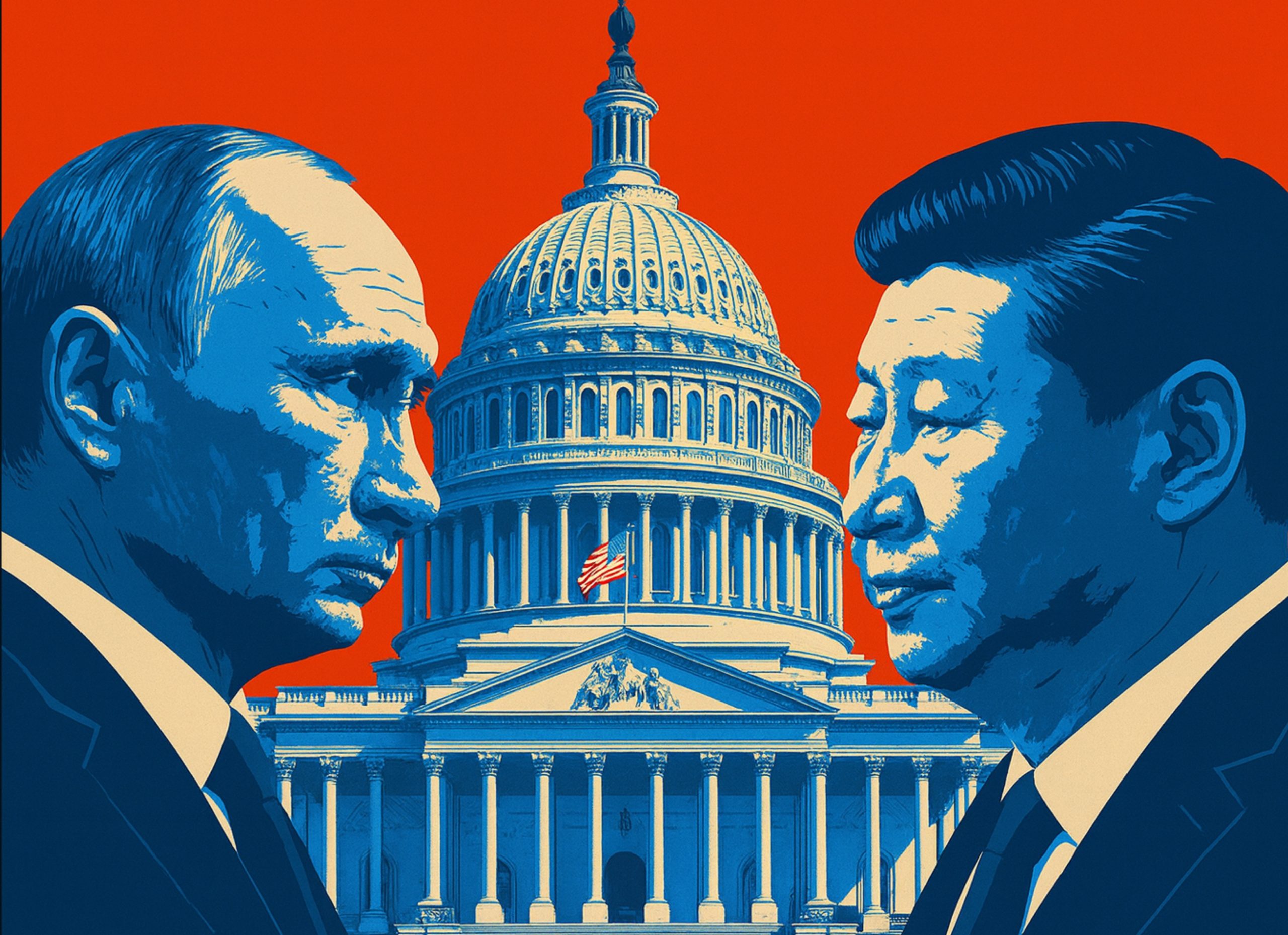


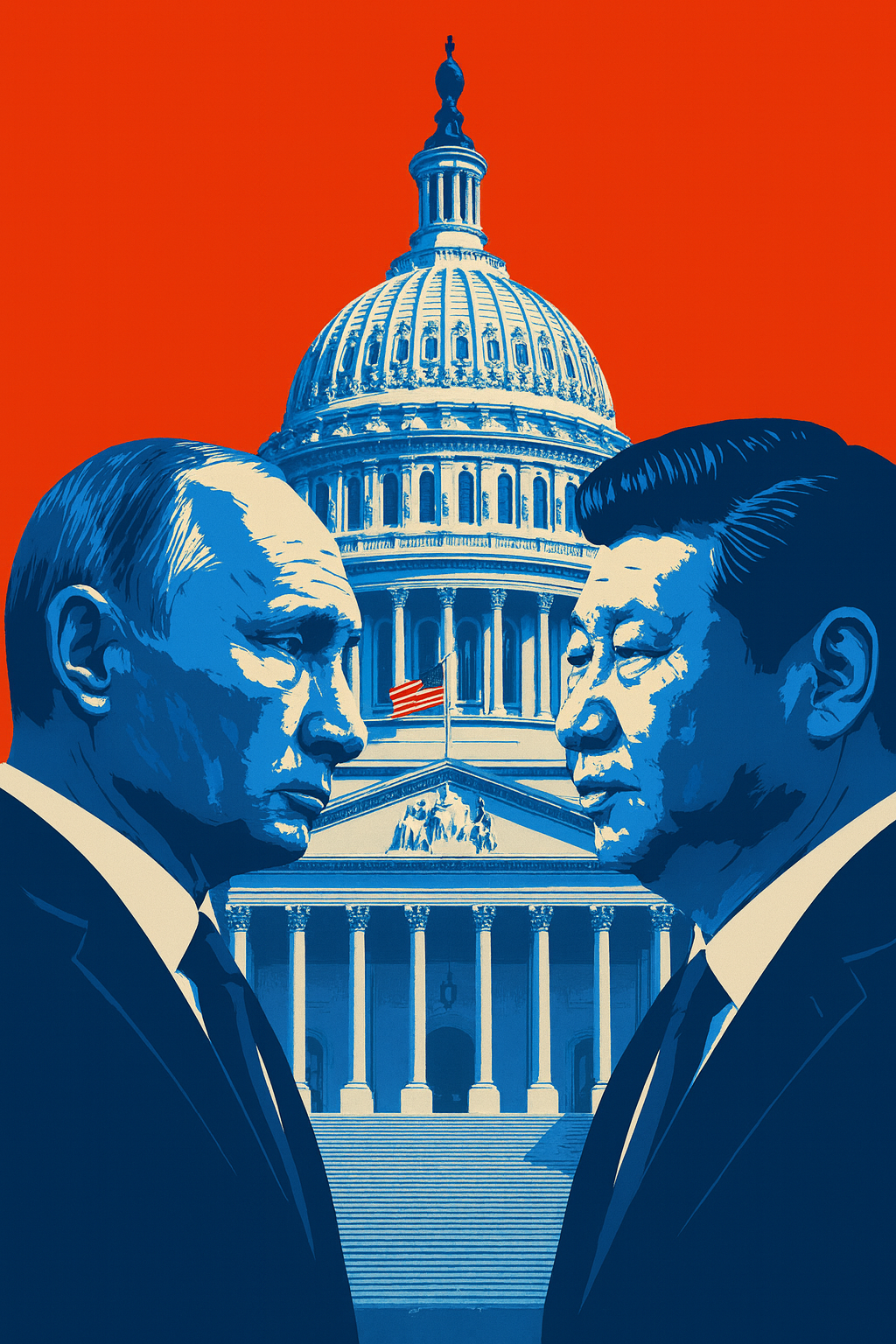
On the sidelines of the 2022 Winter Olympics in Beijing, Russian President Vladimir Putin and his Chinese counterpart Xi Jinping proudly announced a “no limits” partnership, stating in part that the “friendship between the two States has no limits, [and] there are no ‘forbidden’ areas of cooperation.” A few weeks later, Russia would launch its massive attack on Ukraine, almost immediately testing the foundations of that “no limits” partnership.
How different this sentiment from 1969 when then Chinese leader Mao Zedong had to answer a difficult question regarding China’s fundamental security: was China’s major enemy the United States or the Soviet Union? That year Chinese and Soviet forces had fought bloody encounters on their 7,500 km border, and more Soviet troops were aligned against China than Western Europe. Mao decided then, that despite the two Communist giants’ common stated ideology and hostility towards the West, the Soviets were the greater enemy. This led to Nixon’s dramatic 1971 visit and 1979 normalization between China and the U.S., followed by a period of positive mutual engagement until the mid-2010s.
As for Russia, a great Winston Churchill quote offers true insight: “I cannot forecast to you the action of Russia. It is a riddle wrapped in a mystery inside an enigma: but perhaps there is a key. That key is Russian national interests.” And how Russia’s leaders, from the earliest Tsars to today’s Putin, have defined “national interest” has been most consistent and disruptive to global peace and stability. Since Ivan the Terrible declared the “Tsardom of Russia” in 1547, its rulers have pursued three major goals to safeguard the nation and advance its interests: territorial expansion; seeking after warm water ports; and keeping its population under strict control. Russia’s historic symbol is the two headed eagle – one looking West to Europe and the other East toward Asia. And while the majority of its people live on the European side, its rulers have always favored the autocratic practices of the East.
Today, we continue to see these historic trends play out in Russia’s xenophobic policies. Armed with the world’s largest nuclear arsenal, and blessed with unbounded natural resources, Putin’s Russia nevertheless still lacks the self-confidence to be comfortable in its own skin. Its two plus year aggression against Ukraine is just the most recent example. What a difference it could have made if, after President Yeltsin opened the door to closer ties with the West, Putin had taken the nation through it, instead of slamming it shut, afraid that neighbors were coming to break in. Beyond saving hundreds of thousands of lives in Ukraine and Russia and preventing billions of dollars of damaged infrastructure, there would be no frozen conflicts in Georgia and Moldova, and the Baltic nations would not be fearing that they are the next victims of Russia’s insatiable territorial appetite.
most recently served as acting Under Secretary of State for Management in the second President Donald Trump administration. He also served as Assistant Secretary of State for Africa in the first Trump administration after serving as Texas Tech’s Vice Provost for International Affairs following a 30-year career as a U.S. Diplomat.
How the Chinese Military Could Shape China’s Next Chapter
China’s road to its present geopolitical ambitions is quite different from Russia’s. In 1800, it is estimated that China had the world’s largest economy, with about 33% of global GDP. This quickly diminished during China’s “Century of Humiliation” (1839-1949), when it was exploited and invaded by Western powers and Japan. From the 1949 Communist takeover to its gradual opening to the world in the 1970s, China was insular, politically isolated and an economic disaster. Its chaotic policies like the “great leap forward” and cultural revolution induced famine, poverty, and social chaos, and its per capita GDP (1971) was a low $115.
How that has changed! With its spectacular industrialization, China now accounts for about 30% of global manufacturing – more than the next four nations combined – and is the largest trading partner for at least 120 nations. Rapid economic growth has also raised per capita GDP to almost $14,000 (2025 estimate). Military power has grown in parallel to its economic might, with China expanding its navy and nuclear arsenal, and developing advanced capabilities in missiles, cyberwarfare, and space technology. Through careful planning and implementing, China has gained unparalleled control of strategic minerals vital for today’s technology and dominates today’s green economy through global leadership in producing solar cells, batteries, and electric vehicles. It has spent about $2.2 trillion on its global Belt and Road (BRI) in over 150 countries, tying ports, airports, and other infrastructure to Beijing. Overall, China now closely rivals the U.S. in its economic and military power and global influence.
While China’s strategic objectives are quite different from Russia’s, both are following the same approach: replacing the current post-World War II U.S.-built rules based global order with one which gives large and medium powers the freedom to exert their will in proportion to their capabilities. China’s end goal is quite straightforward: to replace the U.S. as the world’s ’hegemon’ (a word China frequently uses) by dominating every global organization, global trade and finance, becoming the premiere military, space, and technology power, using its own currency as the world’s reserve, and exercising its will however it wants. But, equally important for China is to preserve the power of the Communist Party; and by achieving global dominance, Xi believes the Party is secure.
Russia’s end goal, meanwhile, is more limited in scope. Putin believes the dissolution of the Soviet Union was one of the 20th Century’s greatest tragedies, and his intent is to return Russia to its rightful geostrategic role of dominating its periphery and having unhindered freedom of action in Europe. China and Russia also share a deep sense of historical grievances. China’s goes back to the Century of Humiliation, while Russia blames the United States for the collapse of the Soviet Union and bringing NATO forces to Russia’s doorstep. And both see the U.S. as standing in the way of achieving their goals.
China’s road to its present geopolitical ambitions is quite different from Russia’s. In 1800, it is estimated that China had the world’s largest economy, with about 33% of global GDP. This quickly diminished during China’s “Century of Humiliation” (1839-1949), when it was exploited and invaded by Western powers and Japan. From the 1949 Communist takeover to its gradual opening to the world in the 1970s, China was insular, politically isolated and an economic disaster. Its chaotic policies like the “great leap forward” and cultural revolution induced famine, poverty, and social chaos, and its per capita GDP (1971) was a low $115.
How that has changed! With its spectacular industrialization, China now accounts for about 30% of global manufacturing – more than the next four nations combined – and is the largest trading partner for at least 120 nations. Rapid economic growth has also raised per capita GDP to almost $14,000 (2025 estimate). Military power has grown in parallel to its economic might, with China expanding its navy and nuclear arsenal, and developing advanced capabilities in missiles, cyberwarfare, and space technology. Through careful planning and implementing, China has gained unparalleled control of strategic minerals vital for today’s technology and dominates today’s green economy through global leadership in producing solar cells, batteries, and electric vehicles. It has spent about $2.2 trillion on its global Belt and Road (BRI) in over 150 countries, tying ports, airports, and other infrastructure to Beijing. Overall, China now closely rivals the U.S. in its economic and military power and global influence.
While China’s strategic objectives are quite different from Russia’s, both are following the same approach: replacing the current post-World War II U.S.-built rules based global order with one which gives large and medium powers the freedom to exert their will in proportion to their capabilities. China’s end goal is quite straightforward: to replace the U.S. as the world’s ’hegemon’ (a word China frequently uses) by dominating every global organization, global trade and finance, becoming the premiere military, space, and technology power, using its own currency as the world’s reserve, and exercising its will however it wants. But, equally important for China is to preserve the power of the Communist Party; and by achieving global dominance, Xi believes the Party is secure.
Russia’s end goal, meanwhile, is more limited in scope. Putin believes the dissolution of the Soviet Union was one of the 20th Century’s greatest tragedies, and his intent is to return Russia to its rightful geostrategic role of dominating its periphery and having unhindered freedom of action in Europe. China and Russia also share a deep sense of historical grievances. China’s goes back to the Century of Humiliation, while Russia blames the United States for the collapse of the Soviet Union and bringing NATO forces to Russia’s doorstep. And both see the U.S. as standing in the way of achieving their goals.
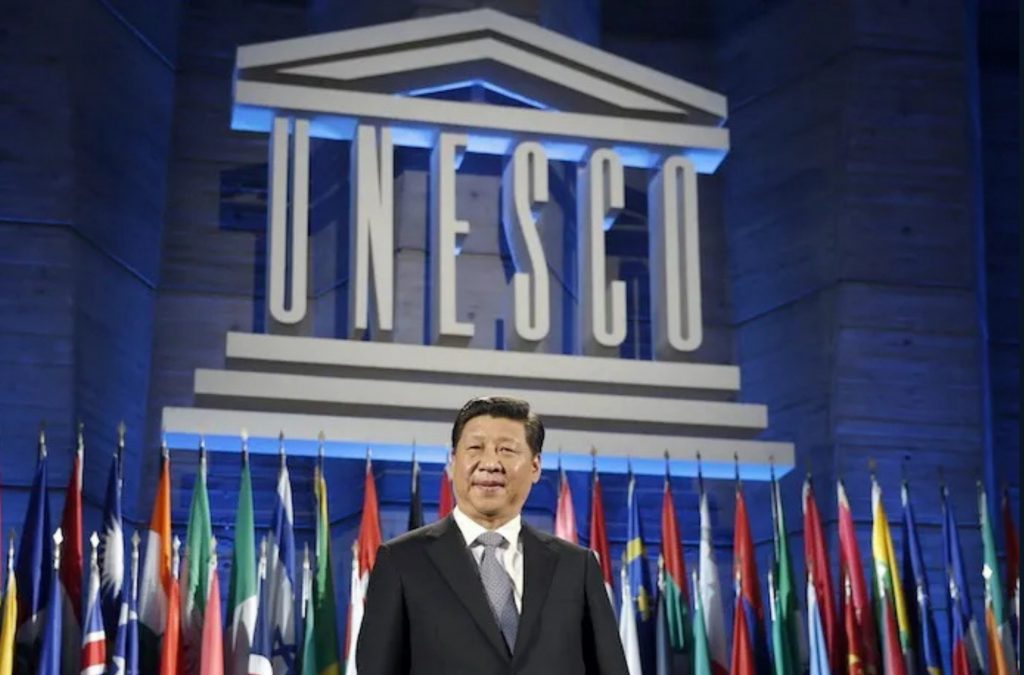
But even their methods of bumping the U.S. off its pinnacle are quite different. China is fundamentally a status quo power, because it benefits tremendously from the current global system. It prefers to operate in a stable world since it controls most global supply chains which operate much better in a conflict-free environment. So, its approach is twofold: use current international institutions to its advantage, while also building parallel systems that it dominates. This means placing Chinese nationals in key positions in international organizations and using its influence to press other nations to advance Chinese goals through those institutions (and whenever possible block U.S. candidates and goals).
At the same time China has been energetically promoting the development of new organizations/institutions where it can play a dominant role. A prime example is the BRICS – a collection of major emerging economies – which has grown from its 2009 founding by five nations, to 11 countries representing about 40% of the global economy. Others include the Shanghai Cooperation Organization (for Eurasian nations), the Asian Infrastructure Development Bank, and the New Development Bank (for the BRICS). More recently, China established the International Organization of Mediation to serve as a competitor to the long-established Hague-based International Court of Justice and Permanent Court of Arbitration.
A clear advantage China has over the West is the ability to direct its trade, investment, and commerce to serve the national interest, not what makes business sense for individual firms. I saw this first-hand when I served as Assistant Secretary of State for Africa (2018-2021) and saw Chinese companies everywhere engaged in activities which made little business sense but advanced China’s overall interests. I was constantly frustrated when people pointed to new Chinese-built stadiums and asked, “so what has America built?” It’s difficult to explain that there would be many fewer people to fill the stadium if not for America’s generosity in providing HIV/AIDS medicines. In Uganda, while meeting with the leadership, I was told: “Uganda has the perfect arrangement, China builds our infrastructure while America takes care of our health.” I pointed out that Uganda pays China to build infrastructure, while America’s taxpayers provide $600 million annually to support Uganda’s health system!
While China is a status quo power carefully advancing its goal of global domination but avoiding direct conflicts, uncertain situations, and unpredictable outcomes, Russia is just the opposite. Moscow ignores global norms and is willing to stir up trouble wherever and whenever opportunities arise. This is evident with its brazen invasion of Ukraine and willingness to conduct hybrid warfare against the West, its maintaining frozen conflicts around the former Soviet sphere, and is unhesitant in getting involved in various African conflicts where it can block U.S. and other western interests. Death, destruction, and horrifying violence matter little to Putin as long as he perceives a positive outcome for Russia or wealth for his cronies.
Another factor which is obvious is that Russia is now very much the junior partner in the Moscow-Beijing axis and has less and less to offer China.
Given the different interests of each power, one has to ask how truly solid is the “no limits” partnership. For now, unfortunately it is quite firm, based on the principle of the “enemy of my enemy is my friend,” as well as their common embrace of autocratic governance, antipathy toward democracy, and the fact that they have few other allies. In practical terms, beyond China and Russia’s close alliance, there is only North Korea as a sidekick, with a few additional “fellow travelers” – Iran, Yemen, Venezuela, Cuba, Nicaragua – who are more of a hindrance than benefit. And even with North Korea, China and Russia have very different approaches. China needs North Korea as a stable buffer and is horrified at the possibility of a nuclear conflagration on the Korean peninsula, while Russia doesn’t care about North Korean provocations as long as it distracts the U.S.
Meanwhile, the U.S. has an elaborate system of alliances cultivated over 80 years, with new ones added in recent years specifically in response to Chinese adventurism, i.e., Australia/United Kingdom/U.S. (AUKUS); India, Australia, Japan, U.S. (The Quad); and Japan, South Korea, U.S. As far as non-allied nations are concerned, especially those in the vicinity of China, most prefer stable relations with both China and the U.S. While China is the major trading partner for most, and can exert the greatest economic pressure, these nations are also keen to have the U.S. as a counterbalance to prevent being totally dominated by Beijing.
Another important and proven maxim in this equation: “geography is history.” Russia and China can’t do anything about their location – with Russia stretching over 11 time zones and bordering 14 countries and China also bordering 14. And every neighbor has, is, or can in the future, present problems. As mentioned above, China and Russia even have competing interests in North Korea, their closest common ally. At some point in the not-too-distant future, they will no doubt have a falling-out over Central Asia, once firmly in Russia’s sphere of influence, but now rapidly shifting toward Beijing. Given Russia’s worldview, it is difficult to imagine Russia placidly allowing itself to be displaced in countries once part of the Soviet Union. Another factor which is obvious is that Russia is now very much the junior partner in the Moscow-Beijing axis and has less and less to offer China. China’s geopolitical moves are not abrupt or haphazard but carefully calculated. And who knows at what point President Xi may decide that it’s no longer in China’s interest to have a “no limits” partnership with Putin.
But any fraying is in the future, and the U.S. cannot simply wait for the eventual falling-out. Even without Russia at its side, China presents a long-term formidable global challenge to America’s safety, security, and economic well-being. So, in calculating a geostrategic response, the U.S. needs to consider Russia’s adventurism as a shorter-term threat, while focusing on China as the single global power competitor for future decades. It’s a complicated equation because the U.S. needs to act preventively and reactively in foreign and domestic policy. But America’s weakness here is that with its separation of powers and capitalist system, U.S. leaders cannot simply and quickly command the resources of the nation and direct how to face our adversaries’ threats. And the policies of one U.S. administration can be quickly changed when a new President is elected.
Over the past several years—beginning with the first Trump administration, continuing through Biden, and now entering Trump 2.0—the United States has finally grasped the full scale of China’s global ambitions. Russia’s assault on Ukraine similarly exposed Putin’s willingness to overturn the rules-based order, forcing Washington and its allies to confront a harsher strategic reality. In this environment, the U.S. needs a renewed national consensus on how to meet the challenge posed by the China–Russia axis. That requires not a list of disconnected initiatives, but a coherent strategy: revitalizing alliances that drifted into complacency after the Cold War, pushing European partners to rebuild atrophied militaries, and engaging far more assertively in international institutions where Beijing and Moscow have sought to accumulate influence. It also means working closely with allies to restructure global supply chains that China has long monopolized—especially in critical minerals—and using diplomatic weight to prevent Russia and China from weaponizing global commerce and multilateral governance.
Yet meeting this dual challenge will also demand a different kind of competition—economic, technological, and informational at once. Washington and its partners must coordinate with the private sector to compete in global energy and mineral development, enforce strict controls on advanced technologies with military applications, and defend freedom of navigation and overflight wherever Beijing or Moscow test the boundaries of international law. At the same time, the U.S. must regain the public-diplomacy instincts it honed during the Cold War: exposing China’s and Russia’s coercive practices, countering hybrid-warfare tactics, and presenting a more compelling vision of what the West offers to the developing world. Ultimately, confronting the China–Russia axis will require not only sharper policies but also the revival of the industrial and strategic foundations—shipbuilding among them—that once underwrote Western power.
Today, the world is literally at a crossroads with several divergent paths. The rockiest path leads to a world where China becomes the world’s global power and exerts control over global economics, sets all the rules, and dominates future technologies, including space exploration. The U.S. would be relegated to a position akin to what Britain or France occupy today. Another road would lead to the type of multipolar world order China and Russia favor – with the major powers, including the U.S., dominating their regions, and middle powers, such as Türkiye or Brazil, also having significant leverage in their immediate neighborhoods. This would mimic the pre-World War One global order and would be characterized by constant instability and tensions as powers rub up against each other. The best outcome would be the evolution of the post-World War Two rules-based international order, updated to reflect today’s geopolitical and technological realities. It would require major reforms to international organizations and treaties, and consensus from major powers and blocs (e.g., EU, AU) in the process and outcome – unfortunately not a realistic scenario. So, the most practical approach to dealing with the autocrats is to apply the suggested steps above until there is a dramatic internal change in China and Russia, or the two “no limit” partners figure out that their true interests lie elsewhere.
But even their methods of bumping the U.S. off its pinnacle are quite different. China is fundamentally a status quo power, because it benefits tremendously from the current global system. It prefers to operate in a stable world since it controls most global supply chains which operate much better in a conflict-free environment. So, its approach is twofold: use current international institutions to its advantage, while also building parallel systems that it dominates. This means placing Chinese nationals in key positions in international organizations and using its influence to press other nations to advance Chinese goals through those institutions (and whenever possible block U.S. candidates and goals).
At the same time China has been energetically promoting the development of new organizations/institutions where it can play a dominant role. A prime example is the BRICS – a collection of major emerging economies – which has grown from its 2009 founding by five nations, to 11 countries representing about 40% of the global economy. Others include the Shanghai Cooperation Organization (for Eurasian nations), the Asian Infrastructure Development Bank, and the New Development Bank (for the BRICS). More recently, China established the International Organization of Mediation to serve as a competitor to the long-established Hague-based International Court of Justice and Permanent Court of Arbitration.
A clear advantage China has over the West is the ability to direct its trade, investment, and commerce to serve the national interest, not what makes business sense for individual firms. I saw this first-hand when I served as Assistant Secretary of State for Africa (2018-2021) and saw Chinese companies everywhere engaged in activities which made little business sense but advanced China’s overall interests. I was constantly frustrated when people pointed to new Chinese-built stadiums and asked, “so what has America built?” It’s difficult to explain that there would be many fewer people to fill the stadium if not for America’s generosity in providing HIV/AIDS medicines. In Uganda, while meeting with the leadership, I was told: “Uganda has the perfect arrangement, China builds our infrastructure while America takes care of our health.” I pointed out that Uganda pays China to build infrastructure, while America’s taxpayers provide $600 million annually to support Uganda’s health system!
While China is a status quo power carefully advancing its goal of global domination but avoiding direct conflicts, uncertain situations, and unpredictable outcomes, Russia is just the opposite. Moscow ignores global norms and is willing to stir up trouble wherever and whenever opportunities arise. This is evident with its brazen invasion of Ukraine and willingness to conduct hybrid warfare against the West, its maintaining frozen conflicts around the former Soviet sphere, and is unhesitant in getting involved in various African conflicts where it can block U.S. and other western interests. Death, destruction, and horrifying violence matter little to Putin as long as he perceives a positive outcome for Russia or wealth for his cronies.
Given the different interests of each power, one has to ask how truly solid is the “no limits” partnership. For now, unfortunately it is quite firm, based on the principle of the “enemy of my enemy is my friend,” as well as their common embrace of autocratic governance, antipathy toward
democracy, and the fact that they have few other allies. In practical terms, beyond China and Russia’s close alliance, there is only North Korea as a sidekick, with a few additional “fellow travelers” – Iran, Yemen, Venezuela, Cuba, Nicaragua – who are more of a hindrance than benefit. And even with North Korea, China and Russia have very different approaches. China needs North Korea as a stable buffer and is horrified at the possibility of a nuclear conflagration on the Korean peninsula, while Russia doesn’t care about North Korean provocations as long as it distracts the U.S.
Meanwhile, the U.S. has an elaborate system of alliances cultivated over 80 years, with new ones added in recent years specifically in response to Chinese adventurism, i.e., Australia/United Kingdom/U.S. (AUKUS); India, Australia, Japan, U.S. (The Quad); and Japan, South Korea, U.S. As far as non-allied nations are concerned, especially those in the vicinity of China, most prefer stable relations with both China and the U.S. While China is the major trading partner for most, and can exert the greatest economic pressure, these nations are also keen to have the U.S. as a counterbalance to prevent being totally dominated by Beijing.
Another important and proven maxim in this equation: “geography is history.” Russia and China can’t do anything about their location – with Russia stretching over 11 time zones and bordering 14 countries and China also bordering 14. And every neighbor has, is, or can in the future, present problems. As mentioned above, China and Russia even have competing interests in North Korea, their closest common ally. At some point in the not-too-distant future, they will no doubt have a falling-out over Central Asia, once firmly in Russia’s sphere of influence, but now rapidly shifting toward Beijing. Given Russia’s worldview, it is difficult to imagine Russia placidly allowing itself to be displaced in countries once part of the Soviet Union. Another factor which is obvious is that Russia is now very much the junior partner in the Moscow-Beijing axis and has less and less to offer China. China’s geopolitical moves are not abrupt or haphazard but carefully calculated. And who knows at what point President Xi may decide that it’s no longer in China’s interest to have a “no limits” partnership with Putin.
But any fraying is in the future, and the U.S. cannot simply wait for the eventual falling-out. Even without Russia at its side, China presents a long-term formidable global challenge to America’s safety, security, and economic well-being. So, in calculating a geostrategic response, the U.S. needs to consider Russia’s adventurism as a shorter-term threat, while focusing on China as the single global power competitor for future decades. It’s a complicated equation because the U.S. needs to act preventively and reactively in foreign and domestic policy. But America’s weakness here is that with its separation of powers and capitalist system, U.S. leaders cannot simply and quickly command the resources of the nation and direct how to face our adversaries’ threats. And the policies of one U.S. administration can be quickly changed when a new President is elected.
Over the past several years—beginning with the first Trump administration, continuing through Biden, and now entering Trump 2.0—the United States has finally grasped the full scale of China’s global ambitions. Russia’s assault on Ukraine similarly exposed Putin’s willingness to overturn the rules-based order, forcing Washington and its allies to confront a harsher strategic reality. In this environment, the U.S. needs a renewed national consensus on how to meet the challenge posed by the China–Russia axis. That requires not a list of disconnected initiatives, but a coherent strategy: revitalizing alliances that drifted into complacency after the Cold War, pushing European partners to rebuild atrophied militaries, and engaging far more assertively in international institutions where Beijing and Moscow have sought to accumulate influence. It also means working closely with allies to restructure global supply chains that China has long monopolized—especially in critical minerals—and using diplomatic weight to prevent Russia and China from weaponizing global commerce and multilateral governance.
Yet meeting this dual challenge will also demand a different kind of competition—economic, technological, and informational at once. Washington and its partners must coordinate with the private sector to compete in global energy and mineral development, enforce strict controls on advanced technologies with military applications, and defend freedom of navigation and overflight wherever Beijing or Moscow test the boundaries of international law. At the same time, the U.S. must regain the public-diplomacy instincts it honed during the Cold War: exposing China’s and Russia’s coercive practices, countering hybrid-warfare tactics, and presenting a more compelling vision of what the West offers to the developing world. Ultimately, confronting the China–Russia axis will require not only sharper policies but also the revival of the industrial and strategic foundations—shipbuilding among them—that once underwrote Western power.
Today, the world is literally at a crossroads with several divergent paths. The rockiest path leads to a world where China becomes the world’s global power and exerts control over global economics, sets all the rules, and dominates future technologies, including space exploration. The U.S. would be relegated to a position akin to what Britain or France occupy today. Another road would lead to the type of multipolar world order China and Russia favor – with the major powers, including the U.S., dominating their regions, and middle powers, such as Türkiye or Brazil, also having significant leverage in their immediate neighborhoods. This would mimic the pre-World War One global order and would be characterized by constant instability and tensions as powers rub up against each other. The best outcome would be the evolution of the post-World War Two rules-based international order, updated to reflect today’s geopolitical and technological realities. It would require major reforms to international organizations and treaties, and consensus from major powers and blocs (e.g., EU, AU) in the process and outcome – unfortunately not a realistic scenario. So, the most practical approach to dealing with the autocrats is to apply the suggested steps above until there is a dramatic internal change in China and Russia, or the two “no limit” partners figure out that their true interests lie elsewhere.
Recommended
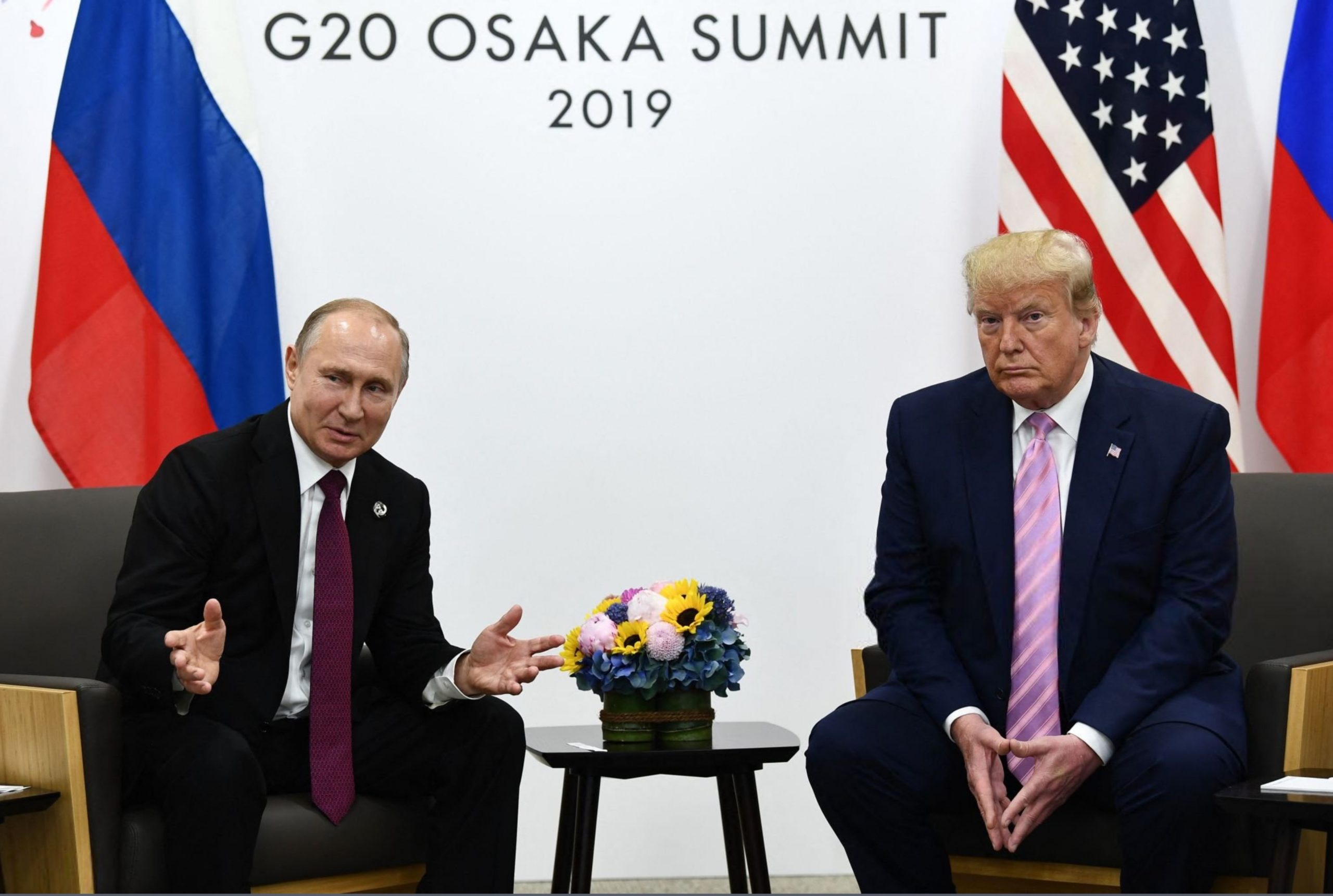
Why Trump’s Russia Strategy Won’t Work
No More Free Rides in a Transactional World
Why Trump’s Russia Strategy Won’t Work
How Semiconductors Shape the New World Order
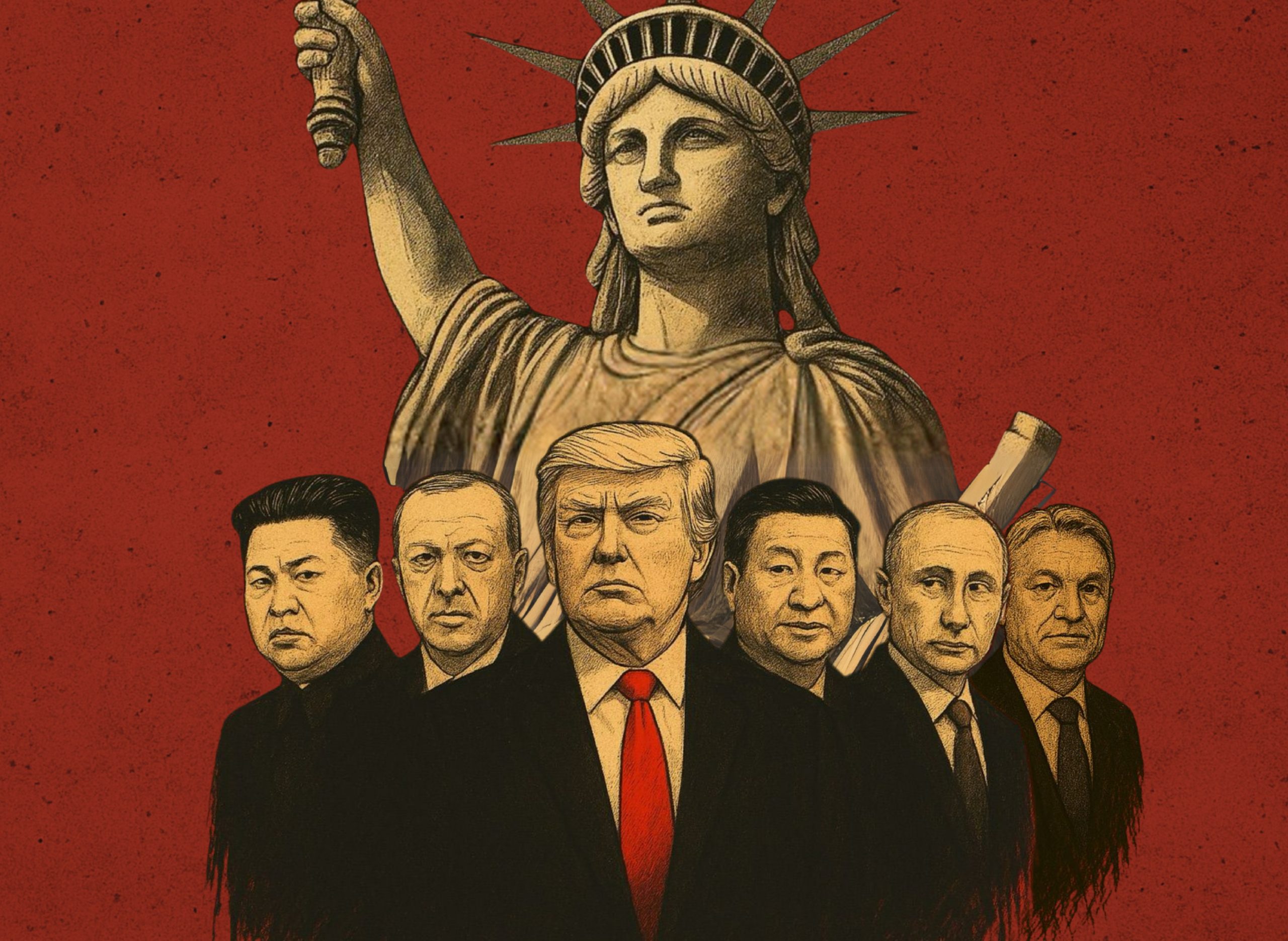
However it Can Be Saved