

YAN CHANG BENNETT &
BRENDAN MIRRA
The world watches with caution as the two preeminent world powers, the United States and the People’s Republic of China, navigate an era of intensifying competition. Since the end of the Second World War, the United States has served as the center of gravity for geopolitics, economics, and military might. While the Soviet Union emerged as a formidable rival during the Cold War, the post-Cold War era identifies China as the primary state to watch in the contest for leadership in the 21st century.
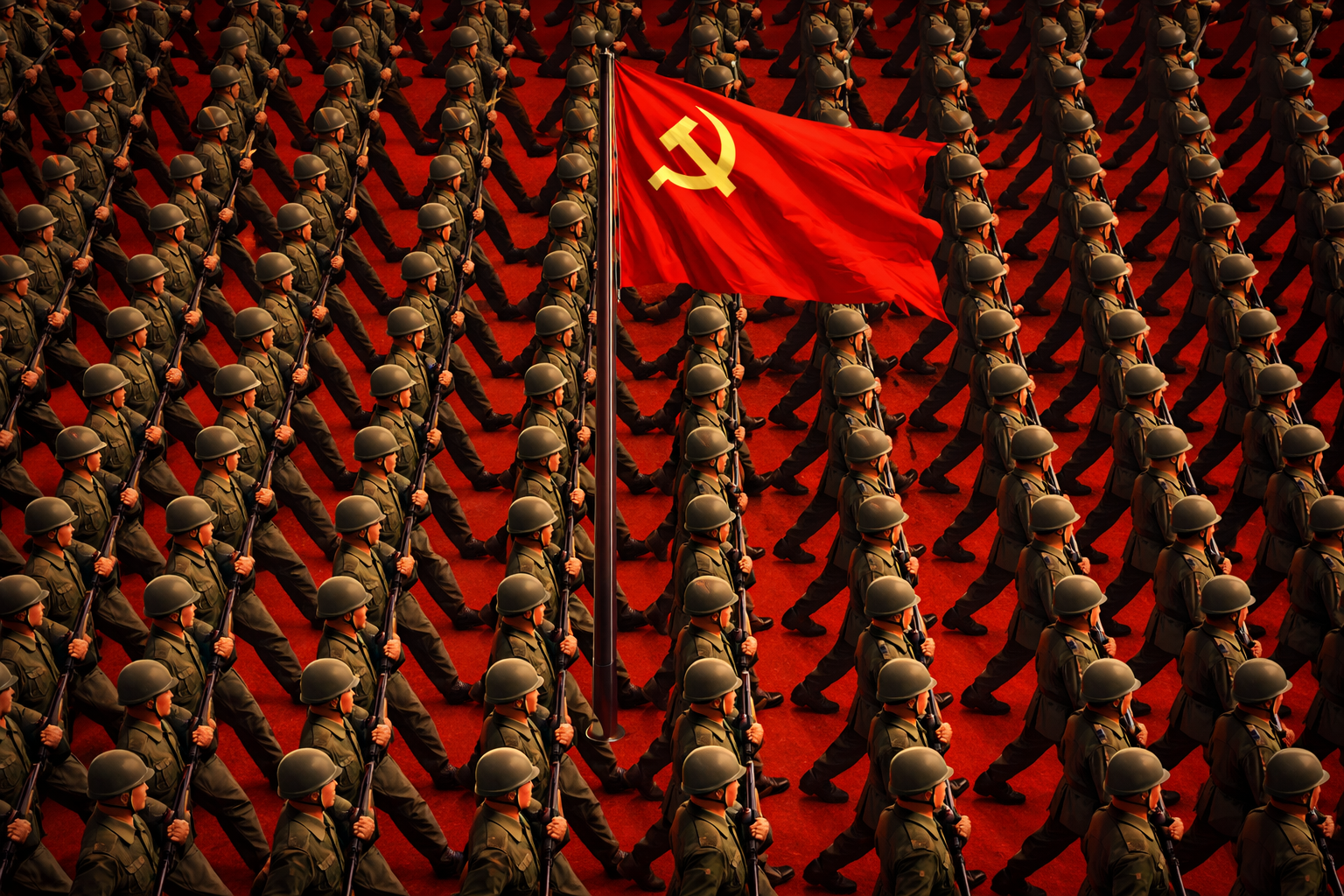
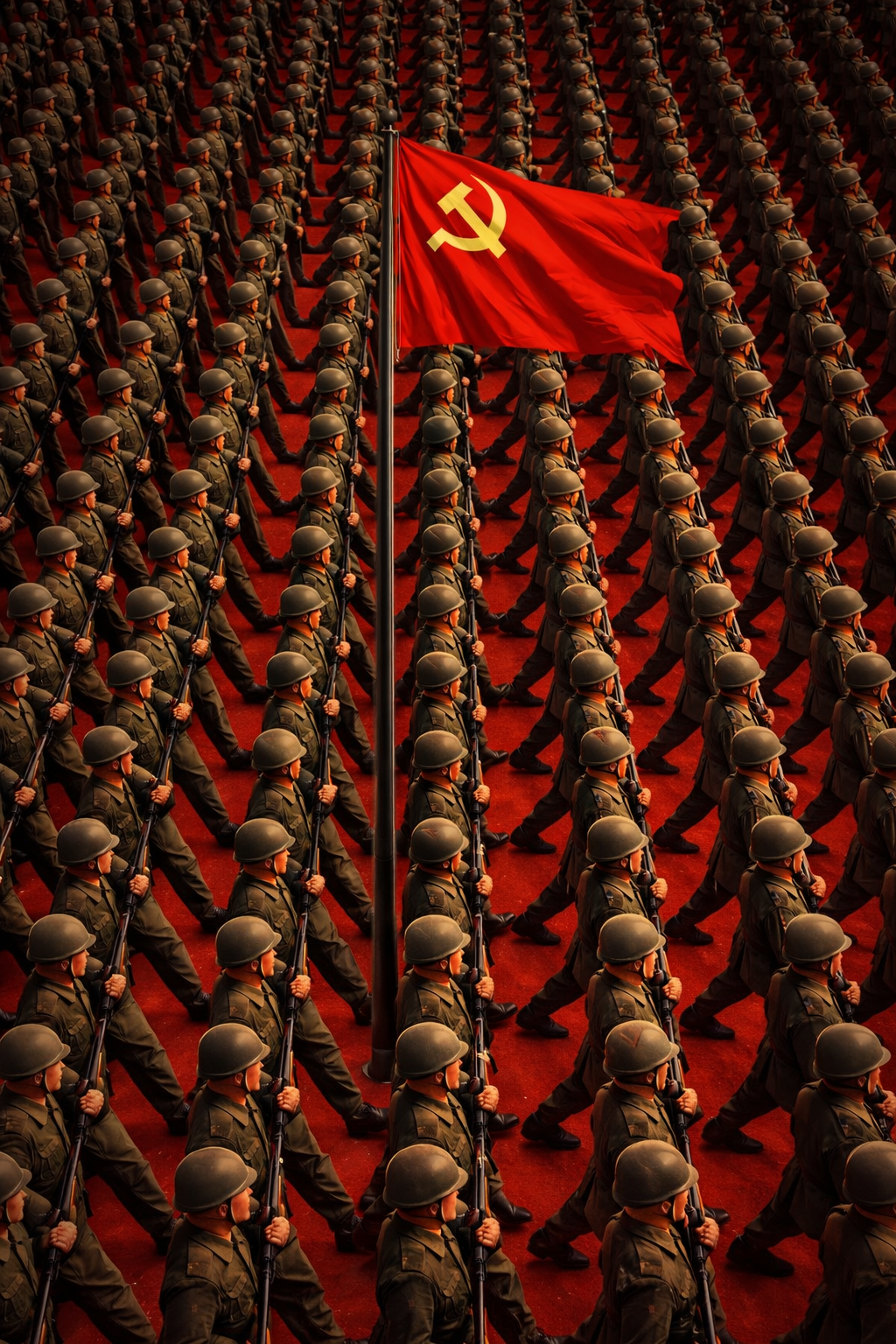
While China presents the outward appearance of a “normal” state—complete with executive, legislative, and judicial branches—it is unique as a party-state led exclusively by the Chinese Communist Party (CCP or Party). Since routing the Nationalists from mainland China in 1949, the CCP has maintained uninterrupted rule through five distinct leadership eras: Mao Zedong, Deng Xiaoping, Jiang Zemin, Hu Jintao, and now Xi Jinping. Each Party leader has had distinct styles that have manifested in different objectives and outcomes. While the country has endured massive transitions and upheavals due to leadership transitions, two pillars have remained constant: the Party and its armed wing, the People’s Liberation Army (PLA).
As the world’s largest military force, the PLA is viewed by experts with a mix of caution and speculation. As a “Party army,” its primary function is the defense of the CCP against political enemies—a mandate that can include elements of Chinese society itself, as noted by Nan Li in Chinese Civil-Military Relations in the Post-Deng Era (2010). However, with domestic security handled by the People’s Armed Police and the Ministries of State and Public Security (which collectively command a budget exceeding the PLA’s), the PLA focuses primarily on external enemies of the state.
Unlike many Western militaries, the various branches are not separate entities but are subordinate components of the PLA. These branches include the PLA Navy (PLAN), PLA Air Force (PLAAF), and PLA Rocket Force (PLARF). The PLA, with its subordinate branches, operates under the centralized authority of the Central Military Commission (CMC). The CMC itself is a Party organ, ensuring that military decision-making remains firmly in the hands of CCP leadership.
Historically, the General Secretary of the CCP serves as the Chairman of the Central Military Commission (CMC), overseeing a body composed of senior military officers. While every Party leader has managed the PLA differently, the Xi Jinping era has subjected the military to the same sweeping measures as broader Chinese society: relentless anti-corruption campaigns, political “rectifications,” and a rigorous hardening of ideological standards. While these purges are seemingly designed to guarantee absolute loyalty, they also address inherent PLA characteristics that Xi views as obstacles: systemic corruption, graft, and patronage networks. Rather than a response to a looming military coup, these internal “cleansings” represent a foundational effort to align the PLA with the “New Era” as envisioned in Xi Jinping Thought.
Nevertheless, the PLA continues to grapple with an entrenched culture of self-dealing and patronage that prioritizes interpersonal loyalty over professional merit and combat efficacy. Despite these anti-corruption campaigns and purges, the PLA today lacks the institutional drive to amass authority as a rival power center to the Party. As Xi insists on changing the fundamental nature of the force, the question remains: will the PLA fundamentally transform, and what role will it play in the post-Xi era?
The Party in Uniform
Developing a nuanced perspective requires decoding the unique, inseparable bond between the CCP and the PLA. Founded in 1921 amidst the fervor of the indigenous May Fourth Movement, the CCP was born from a sense of betrayal after former German territories were awarded to Japan following the First World War. Initially a small, urban organization, the CCP formed a “First United Front” with the Nationalist Party (Kuomintang, or KMT) to combat warlordism. This alliance ended violently in 1927 when the KMT purged the Communists, forcing the CCP into the countryside. During the Long March (1934–1935), the CCP established a base in Yan’an, where Mao Zedong consolidated leadership and refined the guerrilla tactics that would win the hearts and minds of the peasantry. Following years of resistance against Japanese occupation and a subsequent Civil War, the CCP seized control of the mainland on October 1, 1949.
is currently Deputy Chair of Global Issues at the National Foreign Affairs Training Center, U.S. Department of State, and a Professorial Lecturer at the Elliott School of International Affairs, George Washington University, specializing in China policy.
is an MA candidate in Political Science (American Politics) at The George Washington University. He currently works on Capitol Hill, and his research interests include U.S. foreign policy, civil-military relations, and emerging threats.
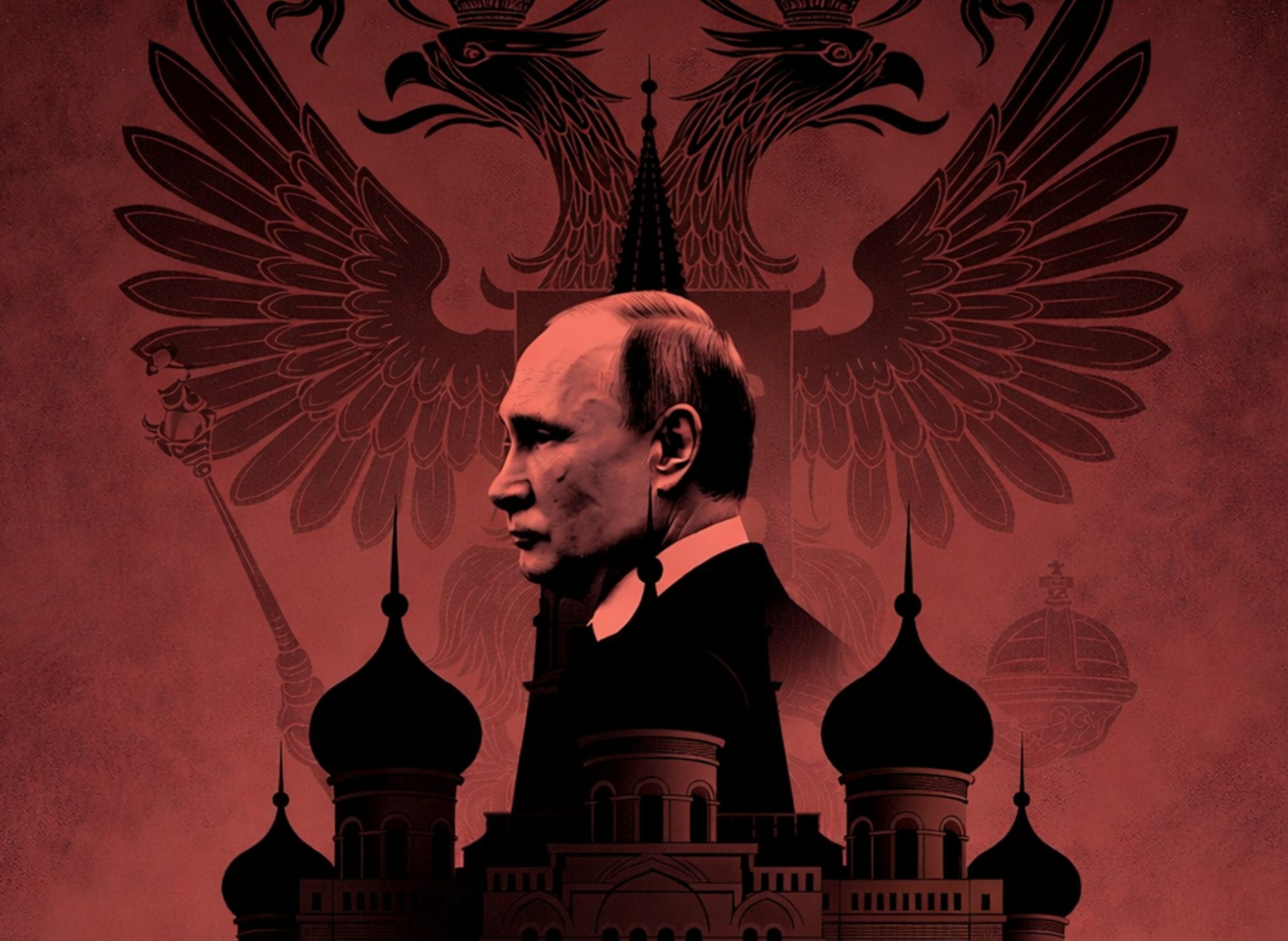

During the revolutionary period, the relationship between the CCP and its military wing—eventually named the People’s Liberation Army (PLA)—was defined by the absolute subordination of the gun to the Party. This was and is not a traditional state-military relationship; rather, the PLA was meant to engender political revolution and was inextricably tied to the party’s political survival and ideology. The PLA is not a national army sworn to a constitution; it is the “armed wing” of a Leninist one-party state.
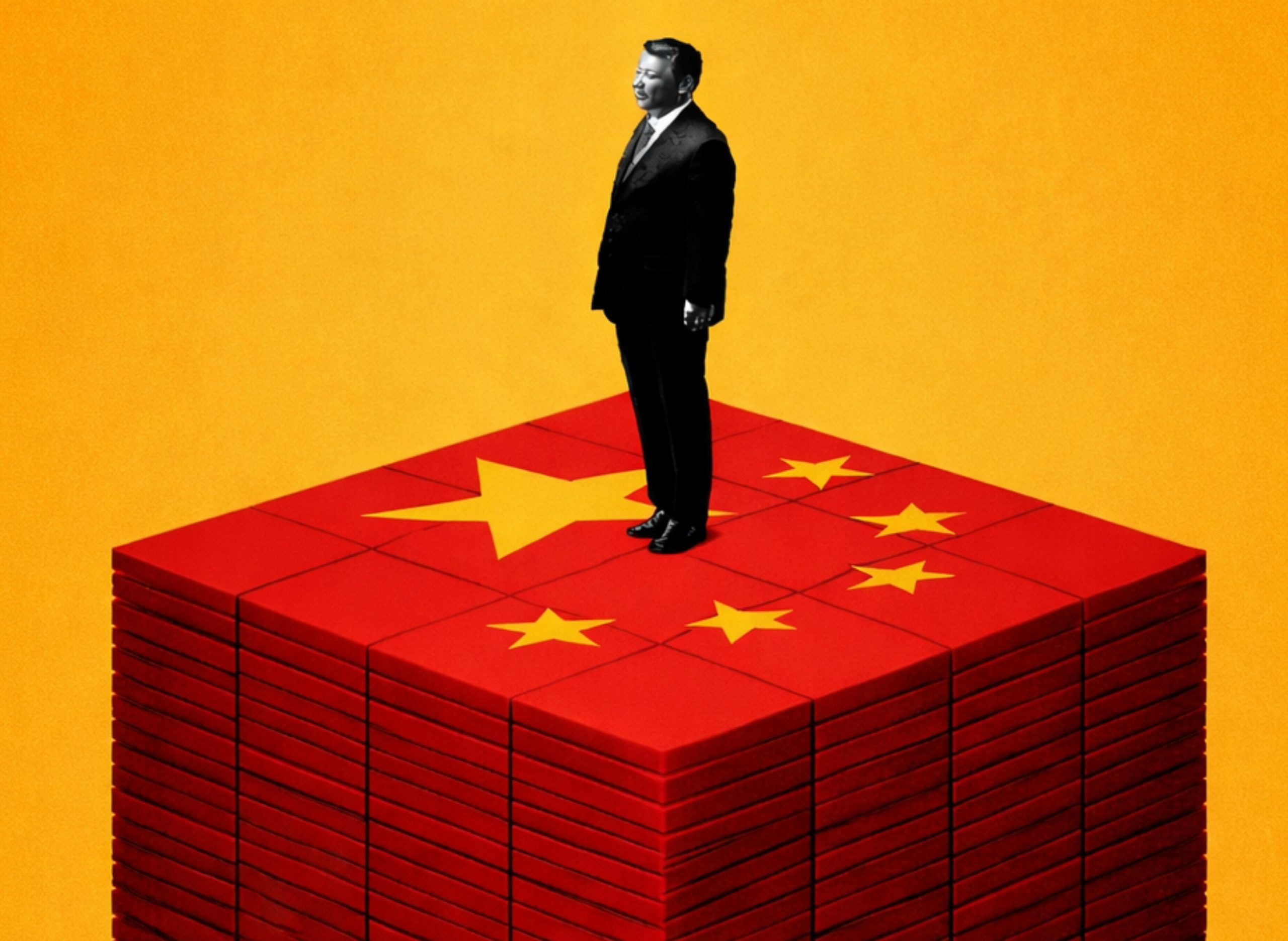
With over 100 million members, the CCP’s highest priority is maintaining “perennial rule” that governs every aspect of Chinese life. This creates a dual-track system: Xi Jinping, for instance, serves as both the President of the PRC (a state title) and General Secretary of the Party (his supreme role). As such, the CCP is a Leninist one-party state intolerant of independent power centers and directs every facet of Chinese life, including the state, the military, and civil society, operating under the premise that “without the CCP, there would be chaos,” according to Party ideology.
While the PRC maintains a formal government structure that nominally mirrors democratic systems—complete with executive, legislative, and judicial branches—this architecture often obscures the reality of party-state integration. In practice, every significant state position is held by a CCP official who carries dual titles, with the Party role always taking precedence; for example, Xi Jinping’s authority as General Secretary fundamentally supersedes his role as State President. Although leadership transitions are ostensibly managed through the quinquennial National Party Congress to refresh the Politburo and the Central Military Commission, these processes remain opaque and frequently a result of “horse dealing.” This system ensures that while the state structure provides a facade of conventional governance, the Party remains the singular, undisputed source of power.
While international media often characterizes the Xi Jinping era as “unprecedented,” these shifts are primarily revisions to a membership-based organization founded in 1921. These changes affect the Party Charter and its internal traditions rather than state-level institutional government guidelines. Under the guise of “democratic centralism,” the CCP remains an elitist hierarchy managed by a small inner circle. As he nears a potential fourth term, Xi Jinping has not yet designated a clear successor, and he has used the country-wide anti-corruption campaigns to seemingly consolidate personal control.
Despite the opaque nature of the Xi era, his long-term objectives are clearly articulated in Xi Jinping Thought, which was codified into the CCP Charter in 2017. This ideology functions as a “regime maintenance paradigm,” designed to cement the Party as the central authority over every facet of Chinese life. The core of this vision is the “Chinese Dream of national rejuvenation,” a plan to restore China to its rightful preeminence by the centenary of the PRC’s founding in 2049 (the Second Centenary; the First Centenary was 2021, based on the founding of the Party in 1921).
Unlike the American Dream’s focus on individual liberty, the Chinese Dream demands that citizens prioritize national rejuvenation over personal ambition. This shift is most visible in the transition from the previous era’s “to get rich is glorious” mantra toward “common prosperity,” a policy move designed to curb capitalist excess and strengthen Party oversight of the private sector. A fundamental tenet of the ideology is that “the Party leads everything—east, west, south, north, and center,” as noted by Xi himself. The CCP operates with a dual imperative: ensuring its own political survival while modernizing the state to reclaim what it views as China’s rightful place in the world.
To achieve this Second Centenary Goal, Xi has established a military roadmap with critical benchmarks in 2027 (the PLA’s centenary) and 2035 (the completion of fundamental modernization). Under this framework, the PLA remains the “armed wing of the Party” rather than a national army sworn to a constitution. At its apex sits the Central Military Commission (CMC), chaired by Xi, which functions as both a command center and an ideological watchdog. In this system, an officer’s career is defined more by political reliability and “unquestionable obedience” than by warfighting prowess—a striking shift from China’s founding leaders, who possessed extensive combat or operational experience that modern PLA officers largely lack.
During the revolutionary period, the relationship between the CCP and its military wing—eventually named the People’s Liberation Army (PLA)—was defined by the absolute subordination of the gun to the Party. This was and is not a traditional state-military relationship; rather, the PLA was meant to engender political revolution and was inextricably tied to the party’s political survival and ideology. The PLA is not a national army sworn to a constitution; it is the “armed wing” of a Leninist one-party state.
With over 100 million members, the CCP’s highest priority is maintaining “perennial rule” that governs every aspect of Chinese life. This creates a dual-track system: Xi Jinping, for instance, serves as both the President of the PRC (a state title) and General Secretary of the Party (his supreme role). As such, the CCP is a Leninist one-party state intolerant of independent power centers and directs every facet of Chinese life, including the state, the military, and civil society, operating under the premise that “without the CCP, there would be chaos,” according to Party ideology.
While the PRC maintains a formal government structure that nominally mirrors democratic systems—complete with executive, legislative, and judicial branches—this architecture often obscures the reality of party-state integration. In practice, every significant state position is held by a CCP official who carries dual titles, with the Party role always taking precedence; for example, Xi Jinping’s authority as General Secretary fundamentally supersedes his role as State President. Although leadership transitions are ostensibly managed through the quinquennial National Party Congress to refresh the Politburo and the Central Military Commission, these processes remain opaque and frequently a result of “horse dealing.” This system ensures that while the state structure provides a facade of conventional governance, the Party remains the singular, undisputed source of power.
While international media often characterizes the Xi Jinping era as “unprecedented,” these shifts are primarily revisions to a membership-based organization founded in 1921. These changes affect the Party Charter and its internal traditions rather than state-level institutional government guidelines. Under the guise of “democratic centralism,” the CCP remains an elitist hierarchy managed by a small inner circle. As he nears a potential fourth term, Xi Jinping has not yet designated a clear successor, and he has used the country-wide anti-corruption campaigns to seemingly consolidate personal control.
Despite the opaque nature of the Xi era, his long-term objectives are clearly articulated in Xi Jinping Thought, which was codified into the CCP Charter in 2017. This ideology functions as a “regime maintenance paradigm,” designed to cement the Party as the central authority over every facet of Chinese life. The core of this vision is the “Chinese Dream of national rejuvenation,” a plan to restore China to its rightful preeminence by the centenary of the PRC’s founding in 2049 (the Second Centenary; the First Centenary was 2021, based on the founding of the Party in 1921).
Unlike the American Dream’s focus on individual liberty, the Chinese Dream demands that citizens prioritize national rejuvenation over personal ambition. This shift is most visible in the transition from the previous era’s “to get rich is glorious” mantra toward “common prosperity,” a policy move designed to curb capitalist excess and strengthen Party oversight of the private sector. A fundamental tenet of the ideology is that “the Party leads everything—east, west, south, north, and center,” as noted by Xi himself. The CCP operates with a dual imperative: ensuring its own political survival while modernizing the state to reclaim what it views as China’s rightful place in the world.
To achieve this Second Centenary Goal, Xi has established a military roadmap with critical benchmarks in 2027 (the PLA’s centenary) and 2035 (the completion of fundamental modernization). Under this framework, the PLA remains the “armed wing of the Party” rather than a national army sworn to a constitution. At its apex sits the Central Military Commission (CMC), chaired by Xi, which functions as both a command center and an ideological watchdog. In this system, an officer’s career is defined more by political reliability and “unquestionable obedience” than by warfighting prowess—a striking shift from China’s founding leaders, who possessed extensive combat or operational experience that modern PLA officers largely lack.
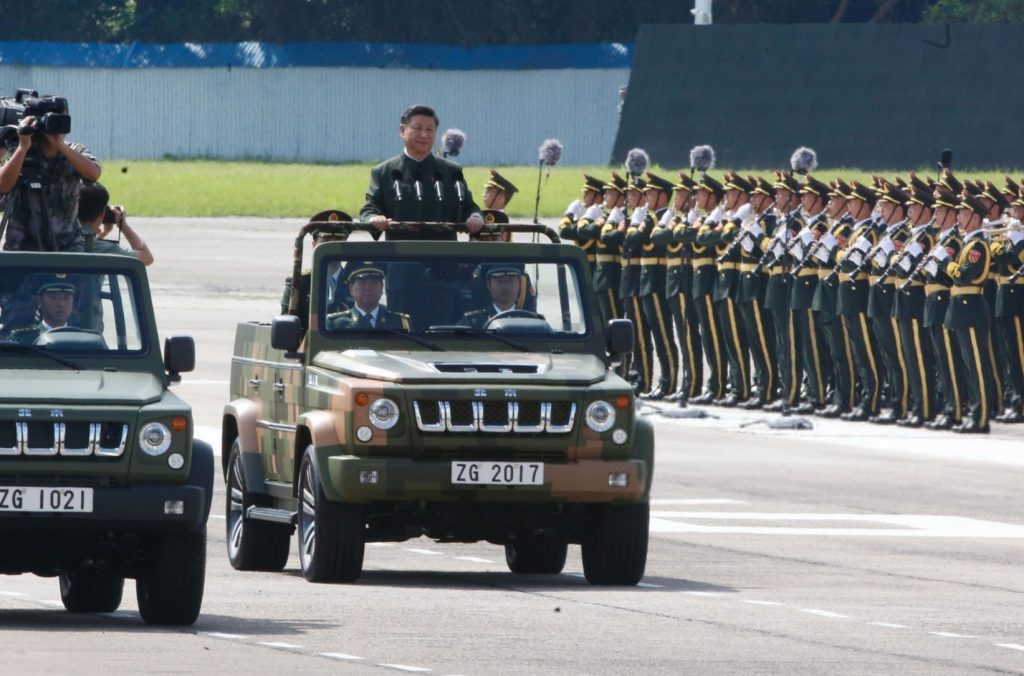
For decades following China’s “opening up,” the PLA was notorious for endemic graft and self-dealing, a trend that extended to the highest levels of Party leadership. A review of Xi’s aggressive anti-corruption campaigns shows clearly a triple purpose. First, Xi is intent on keeping the CCP in power and has reduced threats to its authority within the country, which also includes threats to his personal authority as Party General Secretary. Second, Xi believes rooting out the corruption that would cripple the PLA’s ability to “fight and win” in a modern conflict is essential. Lastly, and most importantly, he is unwilling to compromise the authority and continuing leadership of the CCP at the PRC’s helm as the state and the PLA modernize.
While Western observers often speculate about internal dissatisfaction with Xi’s hardline governance, there is currently no credible evidence of a pending political or military coup. Xi has successfully linked the Party’s survival to the nation’s modernization, signaling that while the methods may be ruthless, the objective remains a prosperous, stable China under undisputed Communist Party rule.
The Deng Bargain
During the Mao Zedong era (1949–1976), the PLA functioned as the ultimate instrument of “continuous revolution.” Mao embedded ideological loyalty directly into the military’s structure, prioritizing political credentials over professional competence. This high level of military-political integration allowed the PLA to act as the final stabilizer of the regime amid the collapse of regular political order during the Cultural Revolution. When Party institutions were paralyzed, the PLA intervened to restore order and prevent the fragmentation of authority. Mao’s emphasis on building a military defined by class struggle meant that many in the officer corps were from peasant families with limited education and professional military experience.
During the transition following Mao’s death, the PLA provided a stable balance of power that ensured regime continuity, enabling the shift from class struggle toward a more pragmatic, professional governing model under Deng Xiaoping (1978–1989). A veteran of the Long March, Deng reoriented the military toward the project of economic modernization, declaring that the PLA must serve the “overall interests of national construction” while ensuring regime continuity. Deng reinstated ranks and professional criteria but also slashed the defense budget, granting the military permission to engage in commercial activities to compensate for funding cuts.
This professionalization served a stabilizing function during the post-Mao transition by redirecting the PLA away from factional politics and toward institutional loyalty to the CMC, rather than to individual Old Guard elders. At the same time, Deng preserved the PLA’s role as the ultimate guarantor of Party rule, a reality made clear during the 1989 Tiananmen Square crackdown. The Deng era, therefore, represents a grand bargain, as the PLA became professionalized and gained institutional autonomy in exchange for political obedience, stabilizing leadership transitions by anchoring authority in formal military institutions rather than personal revolutionary charisma.
Jiang Zemin (1989–2002), lacking a personal military background, relied on formal institutional mechanisms to consolidate authority. He presided over a critical phase of professionalization centered on “informationization” and high-tech warfare. Most significantly, Jiang ordered the PLA’s divestment from its commercial empire, recognizing that the “business of business” degraded the “business of war.”
Additionally, Jiang formalized predictable leadership turnover, most notably the “Seven Up, Eight Down” (Qi shang, ba xia) retirement convention, which reduced uncertainty around succession and insulated the PLA from personalized factional struggles. Under Jiang, the PLA stabilized politics not through revolutionary loyalty or personal authority, but through institutional continuity defined by predictability, professional norms, and adherence to formal rules. The leadership transition from Jiang to Hu Jintao further demonstrates the PLA’s stabilizing role through institutional continuity, as Jiang retained the CMC chairmanship while Hu assumed the position of General Secretary of the CCP. In this cooperative handover, the military provided a security guarantee as civilian leadership transitioned, with Hu focusing on state governance and Jiang centered on the military.
The campaign reinforces the idea that loyalty to the Party is synonymous with loyalty to Xi.
During Hu’s tenure (2002–2012), the PLA increasingly stabilized the political system through the externalization of the military’s mission. Hu, a rules-minded leader without military credentials or a personal power base, advanced a model that can be understood as “objective control with Chinese characteristics,” emphasizing the need for budget increases, regularized procedures, delegation of authority, and a clearer separation between military and civilian bureaucracies. The PLA under Hu was largely prevented from intervening in intra-Party rivalries or domestic political struggles, and was instead tasked with expanding external and technical missions, such as maritime security, outer space, and international peacekeeping. This shift in focus reinforced the PLA’s legitimacy as a professional institution defined by competence rather than ideology.
However, Hu’s tenure was defined by a “weak center,” which allowed military corruption to flourish under powerful generals such as Xu Caihou and Guo Boxiong, limiting the power and influence of Hu. Despite these internal struggles, the PLA continued to act as a stabilizing force by remaining out of political disputes and institutionalizing cohesion during leadership transitions. The Hu era, defined by this professional restraint and growth in systemic corruption, laid the groundwork for Xi Jinping’s efforts to reassert personal, centralized control over the military.
Xi’s Ultimate Test
Xi’s reforms are driven by “Xi Jinping Thought on Socialism with Chinese Characteristics for a New Era” as incorporated into the CCP Charter in 2017. This is a “regime maintenance paradigm” designed to ensure the Party remains the center of gravity for all Chinese life. The Chinese Dream of national rejuvenation aims for China’s reemergence as the world’s greatest power by the 2049 Second Centenary.
Since taking office in 2012, Xi Jinping has instituted a country-wide anti-corruption campaign aimed at purging the Party of “tigers” (high-ranking officials) and “flies” (low-level bureaucrats). While Western observers focus on the consolidation of power, CCP rhetoric centers on moral revival and ideological purity. Xi warns that corruption is a symptom of “ideological wavering.” By purging officials, the Party aims to strip away Western-style liberal influences and “lazy” governance, replacing them with a disciplined, ascetic commitment to Marxist-Leninist roots.
The campaign reinforces the idea that loyalty to the Party is synonymous with loyalty to Xi. Deviating from central policy is categorized as political corruption, emphasizing a return to the revolutionary spirit of the Mao era. This purge ensures that those in power possess the “Red Gene,” prioritizing the Party’s survival over personal gain.
Xi’s anti-corruption campaign is the largest in the PLA’s history. It has progressed in two waves: first, removing the appointees of his predecessors (2014–2016), and second, targeting his own hand-picked leaders (2023–present). According to Jon Czin, a former top analyst at the CIA, the CCP utilizes a “mafioso-style ‘decapitation strategy’” to keep the PLA in line and enforces “political red lines” regarding social interactions and the exercise of power, leading to the removal of more generals than during the Mao era.
This “decapitation strategy” serves three goals. First, it reinforces that “the Party commands the gun,” eliminating independent power centers. Secondly, it seeks to avoid the “Russian Mistake” seen in Ukraine, where corruption weakened military efficacy. Finally, Xi believes rooting out graft is essential to achieving a “world-class” force by 2049 capable of winning “informationized” wars.
The 2023 purge of the PLA Rocket Force (PLARF) serves as a case study. Triggered by a procurement probe, the investigation decapitated leadership, including Commander General Li Yuchao, and ensnared successive Defense Ministers Wei Fenghe and Li Shangfu for allegations of rocket fuel replaced with water and nonfunctioning silo lids. While some Western analysts suggest the “water-filled” rockets may be a literal interpretation of a Chinese idiom for price inflation, the missing fuel and faulty silo lids highlighted a critical connection for Xi: endemic graft is not merely a financial drain but a direct threat to combat readiness.
In January 2026, Xi issued new military regulations that formalize combat readiness and warfare preparation as the PLA’s primary mandates. According to the Party journal Qiushi, these rules seek to “award the excellent and punish violators,” signaling a transition toward stricter performance-based accountability. While Xi’s early purges were often dismissed as “province stacking”—the replacement of predecessors’ appointees with loyalists from his own Shaanxi and Fujian cliques—the recent targeting of his own hand-picked leaders suggests a shift in priority.
The January 2026 arrests of high-ranking figures such as General Zhang Youxia and General Liu Zhenli for “undermining the system of ultimate responsibility” indicate that personal loyalty no longer guarantees immunity from professional failure. Zhang’s downfall, in particular, may stem from his skepticism regarding the 2027 Taiwan readiness timeline. This suggests that Xi is no longer merely purging political rivals, but is now removing any official perceived as an impediment to his 2035 and 2049 modernization benchmarks.
The recent purges and the introduction of new military regulations underscore Xi’s uncompromising commitment to his twin mandates: achieving full modernization by 2035 and establishing a “world-class” military by 2049. Within this framework, the 2027 benchmark for Taiwan’s invasion readiness is a metric of progress rather than an isolated objective. These upheavals signal Xi’s recognition that the PLA is currently failing to meet its internal modernization benchmarks. By removing even his own appointees, Xi has demonstrated that personal loyalty will not shield leadership from the consequences of failing to meet his modernization timeline.
Strategically, this push represents a decisive pivot from a traditional, land-based force toward a highly lethal, integrated military centered on air, naval, and nuclear capabilities. Xi’s focus on a lethal, technologically advanced force is designed for asymmetric dominance, yet the “Taiwan question” remains a high-stakes gamble for the Party’s continued leadership. The CCP’s authority rests on its role as the vanguard of the Chinese people. It maintains its legitimacy through a dialectical mandate: the people provide political compliance and “struggle” in exchange for the Party’s ability to guarantee collective security and “Common Prosperity.”
An unsuccessful invasion would represent a catastrophic failure of the Party’s historic mission, fundamentally severing its connection to the “masses.” While Chinese society has demonstrated a profound capacity for sacrifice—having emerged from the “century of humiliation” and extreme poverty through the Party’s guidance—this endurance is predicated on the state’s ability to successfully manage China’s rise. A military defeat would expose the CCP as unable to fulfill its prime directive, potentially triggering a cycle of “social contradictions” and instability that could lead to the demise of the Party’s perennial rule.
For decades following China’s “opening up,” the PLA was notorious for endemic graft and self-dealing, a trend that extended to the highest levels of Party leadership. A review of Xi’s aggressive anti-corruption campaigns shows clearly a triple purpose. First, Xi is intent on keeping the CCP in power and has reduced threats to its authority within the country, which also includes threats to his personal authority as Party General Secretary. Second, Xi believes rooting out the corruption that would cripple the PLA’s ability to “fight and win” in a modern conflict is essential. Lastly, and most importantly, he is unwilling to compromise the authority and continuing leadership of the CCP at the PRC’s helm as the state and the PLA modernize.
While Western observers often speculate about internal dissatisfaction with Xi’s hardline governance, there is currently no credible evidence of a pending political or military coup. Xi has successfully linked the Party’s survival to the nation’s modernization, signaling that while the methods may be ruthless, the objective remains a prosperous, stable China under undisputed Communist Party rule.
The Deng Bargain
During the Mao Zedong era (1949–1976), the PLA functioned as the ultimate instrument of “continuous revolution.” Mao embedded ideological loyalty directly into the military’s structure, prioritizing political credentials over professional competence. This high level of military-political integration allowed the PLA to act as the final stabilizer of the regime amid the collapse of regular political order during the Cultural Revolution. When Party institutions were paralyzed, the PLA intervened to restore order and prevent the fragmentation of authority. Mao’s emphasis on building a military defined by class struggle meant that many in the officer corps were from peasant families with limited education and professional military experience.
During the transition following Mao’s death, the PLA provided a stable balance of power that ensured regime continuity, enabling the shift from class struggle toward a more pragmatic, professional governing model under Deng Xiaoping (1978–1989). A veteran of the Long March, Deng reoriented the military toward the project of economic modernization, declaring that the PLA must serve the “overall interests of national construction” while ensuring regime continuity. Deng reinstated ranks and professional criteria but also slashed the defense budget, granting the military permission to engage in commercial activities to compensate for funding cuts.
This professionalization served a stabilizing function during the post-Mao transition by redirecting the PLA away from factional politics and toward institutional loyalty to the CMC, rather than to individual Old Guard elders. At the same time, Deng preserved the PLA’s role as the ultimate guarantor of Party rule, a reality made clear during the 1989 Tiananmen Square crackdown. The Deng era, therefore, represents a grand bargain, as the PLA became professionalized and gained institutional autonomy in exchange for political obedience, stabilizing leadership transitions by anchoring authority in formal military institutions rather than personal revolutionary charisma.
Jiang Zemin (1989–2002), lacking a personal military background, relied on formal institutional mechanisms to consolidate authority. He presided over a critical phase of professionalization centered on “informationization” and high-tech warfare. Most significantly, Jiang ordered the PLA’s divestment from its commercial empire, recognizing that the “business of business” degraded the “business of war.”
Additionally, Jiang formalized predictable leadership turnover, most notably the “Seven Up, Eight Down” (Qi shang, ba xia) retirement convention, which reduced uncertainty around succession and insulated the PLA from personalized factional struggles. Under Jiang, the PLA stabilized politics not through revolutionary loyalty or personal authority, but through institutional continuity defined by predictability, professional norms, and adherence to formal rules. The leadership transition from Jiang to Hu Jintao further demonstrates the PLA’s stabilizing role through institutional continuity, as Jiang retained the CMC chairmanship while Hu assumed the position of General Secretary of the CCP. In this cooperative handover, the military provided a security guarantee as civilian leadership transitioned, with Hu focusing on state governance and Jiang centered on the military.
These purges have induced institutional paralysis, where lower-level leaders prioritize political survival over initiative.
Combining these elements, we can see that Xi’s governance is a unified project of regime maintenance. On one side, the military purges ensure that the “armed wing” is technically and ideologically prepared for the 2035 and 2049 milestones. On the other, Common Prosperity secures the home front, attempting to build a resilient, socialist society that can withstand the external pressures of a potential conflict over Taiwan.
For the CCP, modernization is not an end in itself; it is the means by which the Party fulfills its historic mission of national rejuvenation. Any failure in this mission—whether through military incompetence or economic inequality—threatens to sever the dialectical bond between the vanguard and the masses, an outcome the Party views as an existential catastrophe. This context reveals that Xi’s current “mass-line” approach is not just a policy shift, but a fundamental reclamation of the Party’s role as the revolutionary vanguard, reversing the professionalizing trends of his predecessors.
The Price of Absolute Control
Historically, both the PLA and the broader CCP have utilized patron-client dynamics to solidify hierarchies. In this model, interpersonal loyalty often superseded professional merit. Advancement was rooted in patronage networks, creating vertical “pyramids” of loyalty and independent power centers. Xi views these as existential threats. He has implemented “rotation” and “decapitation” strategies to force the officer corps to look exclusively to Xi and the CMC for career security. While framed as necessary to “eliminate toxins” and “remove rot,” these purges have induced institutional paralysis, where lower-level leaders prioritize political survival over initiative, animated by fear that a perceived ideological lapse could result in a career-ending purge.
Analytically, this strategy may have the knock-on effect of creating a dangerous “echo chamber.” By systematically removing senior leaders—often the very individuals with the experience to offer unvarnished assessments—Xi risks insulating himself from objective truths regarding the PLA’s actual capabilities. If veteran generals feel too vulnerable to express that modernization targets for 2027 or 2035 are lagging, the likelihood of strategic miscalculation increases. This environment of enforced consensus may ultimately embolden Xi to act on flawed intelligence, particularly regarding a high-stakes contingency like Taiwan.
On the other hand, some Western analysts also claim that the PLA leadership is hiding from him the realities of the PLA’s capabilities in an invasion of Taiwan. However, Xi’s persistent purges of military leadership, even those with personal ties to him, show that he is clearly aware that the PLA is not on track to modernize and certainly not on the timeline that he has designated.
Control Today, Uncertainty Tomorrow
After more than a decade in power, Xi Jinping has emerged as China’s most dominant political figure since Mao Zedong. However, this centralized authority has dismantled the power-sharing norms and elite consensus developed since the 1980s. By removing term limits and delaying the designation of a successor, Xi has secured immediate control while simultaneously exposing the state to a potential succession crisis. He faces a classic autocratic dilemma: naming an heir too early creates a rival and renders him vulnerable to his own decapitation, while naming one too late risks a chaotic struggle upon his departure.
Despite Western speculation of a looming crisis, an orderly transition remains probable. Xi has “loaded the deck” with loyalists defined by socialist credentials. High-profile purges—like that of Foreign Minister Qin Gang—signal that neither ties nor seniority protect those who succumb to “decadent” Western tendencies. By the 2027 National Party Congress, Xi will likely utilize the Beidaihe Summer Summit to reaffirm his leadership mandate, operating entirely within the formal, albeit opaque, machinery of the Party.
During Hu’s tenure (2002–2012), the PLA increasingly stabilized the political system through the externalization of the military’s mission. Hu, a rules-minded leader without military credentials or a
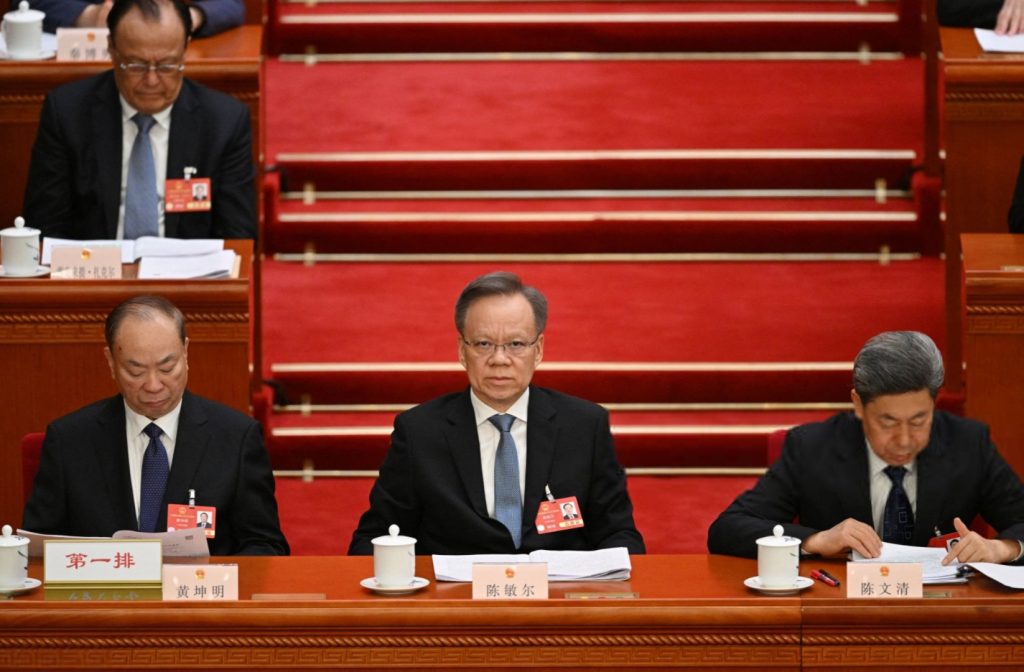
It is unlikely that Xi will adopt the “rule from behind the scenes” model favored by his predecessors. Unlike Deng Xiaoping, who wielded ultimate authority without holding the top Party title, or Jiang Zemin, who retained his chairmanship of the CMC for several years after relinquishing his role as General Secretary, Xi has centralized all pillars of power into a singular, integrated mandate. Substantiating the Party’s “perennial rule” and achieving the “Long-Range Objectives Through the Year 2035” requires his active, direct leadership.
The year 2035 holds immense strategic and symbolic weight: it is the benchmark for “basic socialist modernization” and the age at which Xi will turn 82—the same age at which Mao Zedong died. For Xi, 2035 may represent the opportunity to symbolically rectify the social fragmentation of the Mao era by achieving a “prosperous and strong” China. Consequently, he will likely delay appointing a successor until the 2032 Party Congress, maintaining uncontested authority while allowing a vetted protégé a few years to prove their ideological worthiness.
The only real unknown is if Xi is suddenly incapacitated and is unable to tap a successor. In the event of sudden incapacitation, the transition would likely be managed by Li Qiang, the Premier and number-two official on the Politburo Standing Committee. As a Xi loyalist with no independent power base, Li functions as the “fixer”—evidenced by his role in navigating the chaotic end of the Zero-COVID policy and managing the current housing crisis. His presence ensures that Xi’s vision remains the institutional north star. While he may not be a “Xi whisperer,” Li has proven himself as identically aligned with Xi’s own views.
Beyond Li, the primary contenders for eventual leadership are Cai Qi and Ding Xuexiang. Number Five in the Politburo Standing Committee, Cai Qi is an ideological enforcer whose victory in internal power struggles (reportedly over the ousted Zhang Youxia) confirms his standing as a guardian of Xi’s hardline policies. Number Seven, Ding Xuexiang was Xi’s long-time personal secretary and holds the deepest understanding of Xi’s strategic vision. Both men are Xi loyalists and lack independent factional bases. In the “New Era,” charisma—once possessed by disgraced figures like Bo Xilai—is viewed as a liability. The current Standing Committee consists of disciplined “Party men” unlikely to risk the collective survival of the vanguard for personal ambition.
For the military, this continuity suggests that the traditional era of decentralized patronage and systemic corruption is being forcibly closed. Having eliminated senior rivals like Zhang and Liu, Xi is now free to populate the PLA with a younger cadre of “red and professional” officers whose career security is tethered exclusively to the Party’s ideological roadmap. Whether through an orderly handover in 2032 or the “behind-closed-doors” horse-trading that would follow a sudden vacancy, the PLA’s historical trajectory and current structural constraints suggest it will remain a loyal instrument of the Party. The “gun” remains firmly in the hands of the vanguard, ensuring the pursuit of the 2049 goal continues unabated by internal military interference.
Ultimately, the PLA’s loyalty serves as the ultimate guarantor of institutional continuity, but the military remains at the Party’s direction rather than an independent political actor. The recent removal of General Zhang Youxia—who reportedly voiced public disagreement on the feasibility of the 2027 Taiwan timeline—has effectively neutralized the last significant pocket of potential resistance within the high command. By successfully purging a figure of Zhang’s stature, Xi has signaled that even “untouchable” veterans must align with his strategic vision.
Western observers frequently dismiss “Xi Jinping Thought” as empty rhetoric or impenetrable jargon, but it is analytically reckless to ignore the official discourse that the CCP has consistently doubled down on for two decades. While some rely on anecdotal evidence of private dissatisfaction among the Chinese public, empirical data suggests a more complex reality. While direct polling often reflects a “standard” 90% satisfaction rate with the central government, more sophisticated list experiments—such as those conducted by USC Dornsife and Stanford—reveal that even when anonymity is protected, support for the regime remains remarkably high, hovering between 50% and 70%. This indicates that the CCP enjoys a deep reservoir of genuine legitimacy rooted in decades of material improvement.
The international community stands at a crossroads where old assumptions of Chinese institutional drift or inevitable liberalization must be discarded. The persistent “cleansing” of the PLA is not merely a series of paranoid purges, but a deliberate refinement of a critical tool to ensure it can fulfill its historical mission. By tethering the military’s advancement to ideological purity and performance-based benchmarks, Xi has effectively reasserted the primacy of the vanguard over the gun. As we move toward the 2035 and 2049 milestones, the world must recognize that the “Chinese Dream” is backed by a military being forged into a loyal, professional extension of the Party’s will. Success or failure in the 21st century will not be determined by waiting for a collapse that may never come, but by a clear-eyed engagement with a party-state that is actively preparing for its self-defined era of preeminence.
personal power base, advanced a model that can be understood as “objective control with Chinese characteristics,” emphasizing the need for budget increases, regularized procedures, delegation of authority, and a clearer separation between military and civilian bureaucracies. The PLA under Hu was largely prevented from intervening in intra-Party rivalries or domestic political struggles, and was instead tasked with expanding external and technical missions, such as maritime security, outer space, and international peacekeeping. This shift in focus reinforced the PLA’s legitimacy as a professional institution defined by competence rather than ideology.
However, Hu’s tenure was defined by a “weak center,” which allowed military corruption to flourish under powerful generals such as Xu Caihou and Guo Boxiong, limiting the power and influence of Hu. Despite these internal struggles, the PLA continued to act as a stabilizing force by remaining out of political disputes and institutionalizing cohesion during leadership transitions. The Hu era, defined by this professional restraint and growth in systemic corruption, laid the groundwork for Xi Jinping’s efforts to reassert personal, centralized control over the military.
Xi’s Ultimate Test
Xi’s reforms are driven by “Xi Jinping Thought on Socialism with Chinese Characteristics for a New Era” as incorporated into the CCP Charter in 2017. This is a “regime maintenance paradigm” designed to ensure the Party remains the center of gravity for all Chinese life. The Chinese Dream of national rejuvenation aims for China’s reemergence as the world’s greatest power by the 2049 Second Centenary.
Since taking office in 2012, Xi Jinping has instituted a country-wide anti-corruption campaign aimed at purging the Party of “tigers” (high-ranking officials) and “flies” (low-level bureaucrats). While Western observers focus on the consolidation of power, CCP rhetoric centers on moral revival and ideological purity. Xi warns that corruption is a symptom of “ideological wavering.” By purging officials, the Party aims to strip away Western-style liberal influences and “lazy” governance, replacing them with a disciplined, ascetic commitment to Marxist-Leninist roots.
The campaign reinforces the idea that loyalty to the Party is synonymous with loyalty to Xi. Deviating from central policy is categorized as political corruption, emphasizing a return to the revolutionary spirit of the Mao era. This purge ensures that those in power possess the “Red Gene,” prioritizing the Party’s survival over personal gain.
Xi’s anti-corruption campaign is the largest in the PLA’s history. It has progressed in two waves: first, removing the appointees of his predecessors (2014–2016), and second, targeting his own hand-picked leaders (2023–present). According to Jon Czin, a former top analyst at the CIA, the CCP utilizes a “mafioso-style ‘decapitation strategy’” to keep the PLA in line and enforces “political red lines” regarding social interactions and the exercise of power, leading to the removal of more generals than during the Mao era.
This “decapitation strategy” serves three goals. First, it reinforces that “the Party commands the gun,” eliminating independent power centers. Secondly, it seeks to avoid the “Russian Mistake” seen in Ukraine, where corruption weakened military efficacy. Finally, Xi believes rooting out graft is essential to achieving a “world-class” force by 2049 capable of winning “informationized” wars.
The 2023 purge of the PLA Rocket Force (PLARF) serves as a case study. Triggered by a procurement probe, the investigation decapitated leadership, including Commander General Li Yuchao, and ensnared successive Defense Ministers Wei Fenghe and Li Shangfu for allegations of rocket fuel replaced with water and nonfunctioning silo lids. While some Western analysts suggest the “water-filled” rockets may be a literal interpretation of a Chinese idiom for price inflation, the missing fuel and faulty silo lids highlighted a critical connection for Xi: endemic graft is not merely a financial drain but a direct threat to combat readiness.
In January 2026, Xi issued new military regulations that formalize combat readiness and warfare preparation as the PLA’s primary mandates. According to the Party journal Qiushi, these rules seek to “award the excellent and punish violators,” signaling a transition toward stricter performance-based accountability. While Xi’s early purges were often dismissed as “province stacking”—the replacement of predecessors’ appointees with loyalists from his own Shaanxi and Fujian cliques—the recent targeting of his own hand-picked leaders suggests a shift in priority.
The January 2026 arrests of high-ranking figures such as General Zhang Youxia and General Liu Zhenli for “undermining the system of ultimate responsibility” indicate that personal loyalty no longer guarantees immunity from professional failure. Zhang’s downfall, in particular, may stem from his skepticism regarding the 2027 Taiwan readiness timeline. This suggests that Xi is no longer merely purging political rivals, but is now removing any official perceived as an impediment to his 2035 and 2049 modernization benchmarks.
The recent purges and the introduction of new military regulations underscore Xi’s uncompromising commitment to his twin mandates: achieving full modernization by 2035 and establishing a “world-class” military by 2049. Within this framework, the 2027 benchmark for Taiwan’s invasion readiness is a metric of progress rather than an isolated objective. These upheavals signal Xi’s recognition that the PLA is currently failing to meet its internal modernization benchmarks. By removing even his own appointees, Xi has demonstrated that personal loyalty will not shield leadership from the consequences of failing to meet his modernization timeline.
Strategically, this push represents a decisive pivot from a traditional, land-based force toward a highly lethal, integrated military centered on air, naval, and nuclear capabilities. Xi’s focus on a lethal, technologically advanced force is designed for asymmetric dominance, yet the “Taiwan question” remains a high-stakes gamble for the Party’s continued leadership. The CCP’s authority rests on its role as the vanguard of the Chinese people. It maintains its legitimacy through a dialectical mandate: the people provide political compliance and “struggle” in exchange for the Party’s ability to guarantee collective security and “Common Prosperity.”
An unsuccessful invasion would represent a catastrophic failure of the Party’s historic mission, fundamentally severing its connection to the “masses.” While Chinese society has demonstrated a profound capacity for sacrifice—having emerged from the “century of humiliation” and extreme poverty through the Party’s guidance—this endurance is predicated on the state’s ability to successfully manage China’s rise. A military defeat would expose the CCP as unable to fulfill its prime directive, potentially triggering a cycle of “social contradictions” and instability that could lead to the demise of the Party’s perennial rule.
Combining these elements, we can see that Xi’s governance is a unified project of regime maintenance. On one side, the military purges ensure that the “armed wing” is technically and ideologically prepared for the 2035 and 2049 milestones. On the other, Common Prosperity secures
the home front, attempting to build a resilient, socialist society that can withstand the external pressures of a potential conflict over Taiwan.
For the CCP, modernization is not an end in itself; it is the means by which the Party fulfills its historic mission of national rejuvenation. Any failure in this mission—whether through military incompetence or economic inequality—threatens to sever the dialectical bond between the vanguard and the masses, an outcome the Party views as an existential catastrophe. This context reveals that Xi’s current “mass-line” approach is not just a policy shift, but a fundamental reclamation of the Party’s role as the revolutionary vanguard, reversing the professionalizing trends of his predecessors.
The Price of Absolute Control
Historically, both the PLA and the broader CCP have utilized patron-client dynamics to solidify hierarchies. In this model, interpersonal loyalty often superseded professional merit. Advancement was rooted in patronage networks, creating vertical “pyramids” of loyalty and independent power centers. Xi views these as existential threats. He has implemented “rotation” and “decapitation” strategies to force the officer corps to look exclusively to Xi and the CMC for career security. While framed as necessary to “eliminate toxins” and “remove rot,” these purges have induced institutional paralysis, where lower-level leaders prioritize political survival over initiative, animated by fear that a perceived ideological lapse could result in a career-ending purge.
Analytically, this strategy may have the knock-on effect of creating a dangerous “echo chamber.” By systematically removing senior leaders—often the very individuals with the experience to offer unvarnished assessments—Xi risks insulating himself from objective truths regarding the PLA’s actual capabilities. If veteran generals feel too vulnerable to express that modernization targets for 2027 or 2035 are lagging, the likelihood of strategic miscalculation increases. This environment of enforced consensus may ultimately embolden Xi to act on flawed intelligence, particularly regarding a high-stakes contingency like Taiwan.
On the other hand, some Western analysts also claim that the PLA leadership is hiding from him the realities of the PLA’s capabilities in an invasion of Taiwan. However, Xi’s persistent purges of military leadership, even those with personal ties to him, show that he is clearly aware that the PLA is not on track to modernize and certainly not on the timeline that he has designated.
Control Today, Uncertainty Tomorrow
After more than a decade in power, Xi Jinping has emerged as China’s most dominant political figure since Mao Zedong. However, this centralized authority has dismantled the power-sharing norms and elite consensus developed since the 1980s. By removing term limits and delaying the designation of a successor, Xi has secured immediate control while simultaneously exposing the state to a potential succession crisis. He faces a classic autocratic dilemma: naming an heir too early creates a rival and renders him vulnerable to his own decapitation, while naming one too late risks a chaotic struggle upon his departure.
Despite Western speculation of a looming crisis, an orderly transition remains probable. Xi has “loaded the deck” with loyalists defined by socialist credentials. High-profile purges—like that of Foreign Minister Qin Gang—signal that neither ties nor seniority protect those who succumb to “decadent” Western tendencies. By the 2027 National Party Congress, Xi will likely utilize the Beidaihe Summer Summit to reaffirm his leadership mandate, operating entirely within the formal, albeit opaque, machinery of the Party.
It is unlikely that Xi will adopt the “rule from behind the scenes” model favored by his predecessors. Unlike Deng Xiaoping, who wielded ultimate authority without holding the top Party title, or Jiang Zemin, who retained his chairmanship of the CMC for several years after relinquishing his role as General Secretary, Xi has centralized all pillars of power into a singular, integrated mandate. Substantiating the Party’s “perennial rule” and achieving the “Long-Range Objectives Through the Year 2035” requires his active, direct leadership.
The year 2035 holds immense strategic and symbolic weight: it is the benchmark for “basic socialist modernization” and the age at which Xi will turn 82—the same age at which Mao Zedong died. For Xi, 2035 may represent the opportunity to symbolically rectify the social fragmentation of the Mao era by achieving a “prosperous and strong” China. Consequently, he will likely delay appointing a successor until the 2032 Party Congress, maintaining uncontested authority while allowing a vetted protégé a few years to prove their ideological worthiness.
The only real unknown is if Xi is suddenly incapacitated and is unable to tap a successor. In the event of sudden incapacitation, the transition would likely be managed by Li Qiang, the Premier and number-two official on the Politburo Standing Committee. As a Xi loyalist with no independent power base, Li functions as the “fixer”—evidenced by his role in navigating the chaotic end of the Zero-COVID policy and managing the current housing crisis. His presence ensures that Xi’s vision remains the institutional north star. While he may not be a “Xi whisperer,” Li has proven himself as identically aligned with Xi’s own views.
Beyond Li, the primary contenders for eventual leadership are Cai Qi and Ding Xuexiang. Number Five in the Politburo Standing Committee, Cai Qi is an ideological enforcer whose victory in internal power struggles (reportedly over the ousted Zhang Youxia) confirms his standing as a guardian of Xi’s hardline policies. Number Seven, Ding Xuexiang was Xi’s long-time personal secretary and holds the deepest understanding of Xi’s strategic vision. Both men are Xi loyalists and lack independent factional bases. In the “New Era,” charisma—once possessed by disgraced figures like Bo Xilai—is viewed as a liability. The current Standing Committee consists of disciplined “Party men” unlikely to risk the collective survival of the vanguard for personal ambition.
For the military, this continuity suggests that the traditional era of decentralized patronage and systemic corruption is being forcibly closed. Having eliminated senior rivals like Zhang and Liu, Xi is now free to populate the PLA with a younger cadre of “red and professional” officers whose career security is tethered exclusively to the Party’s ideological roadmap. Whether through an orderly handover in 2032 or the “behind-closed-doors” horse-trading that would follow a sudden vacancy, the PLA’s historical trajectory and current structural constraints suggest it will remain a loyal instrument of the Party. The “gun” remains firmly in the hands of the vanguard, ensuring the pursuit of the 2049 goal continues unabated by internal military interference.
Ultimately, the PLA’s loyalty serves as the ultimate guarantor of institutional continuity, but the military remains at the Party’s direction rather than an independent political actor. The recent removal of General Zhang Youxia—who reportedly voiced public disagreement on the feasibility of the 2027 Taiwan timeline—has effectively neutralized the last significant pocket of potential resistance within the high command. By successfully purging a figure of Zhang’s stature, Xi has signaled that even “untouchable” veterans must align with his strategic vision.
Western observers frequently dismiss “Xi Jinping Thought” as empty rhetoric or impenetrable jargon, but it is analytically reckless to ignore the official discourse that the CCP has consistently doubled down on for two decades. While some rely on anecdotal evidence of private dissatisfaction among the Chinese public, empirical data suggests a more complex reality. While direct polling often reflects a “standard” 90% satisfaction rate with the central government, more sophisticated list experiments—such as those conducted by USC Dornsife and Stanford—reveal that even when anonymity is protected, support for the regime remains remarkably high, hovering between 50% and 70%. This indicates that the CCP enjoys a deep reservoir of genuine legitimacy rooted in decades of material improvement.
The international community stands at a crossroads where old assumptions of Chinese institutional drift or inevitable liberalization must be discarded. The persistent “cleansing” of the PLA is not merely a series of paranoid purges, but a deliberate refinement of a critical tool to ensure it can fulfill its historical mission. By tethering the military’s advancement to ideological purity and performance-based benchmarks, Xi has effectively reasserted the primacy of the vanguard over the gun. As we move toward the 2035 and 2049 milestones, the world must recognize that the “Chinese Dream” is backed by a military being forged into a loyal, professional extension of the Party’s will. Success or failure in the 21st century will not be determined by waiting for a collapse that may never come, but by a clear-eyed engagement with a party-state that is actively preparing for its self-defined era of preeminence.
Recommended

What Does a Strong Europe Mean for America?
Why a Weak Russia Is Still Dangerous
Failure Through Weakness
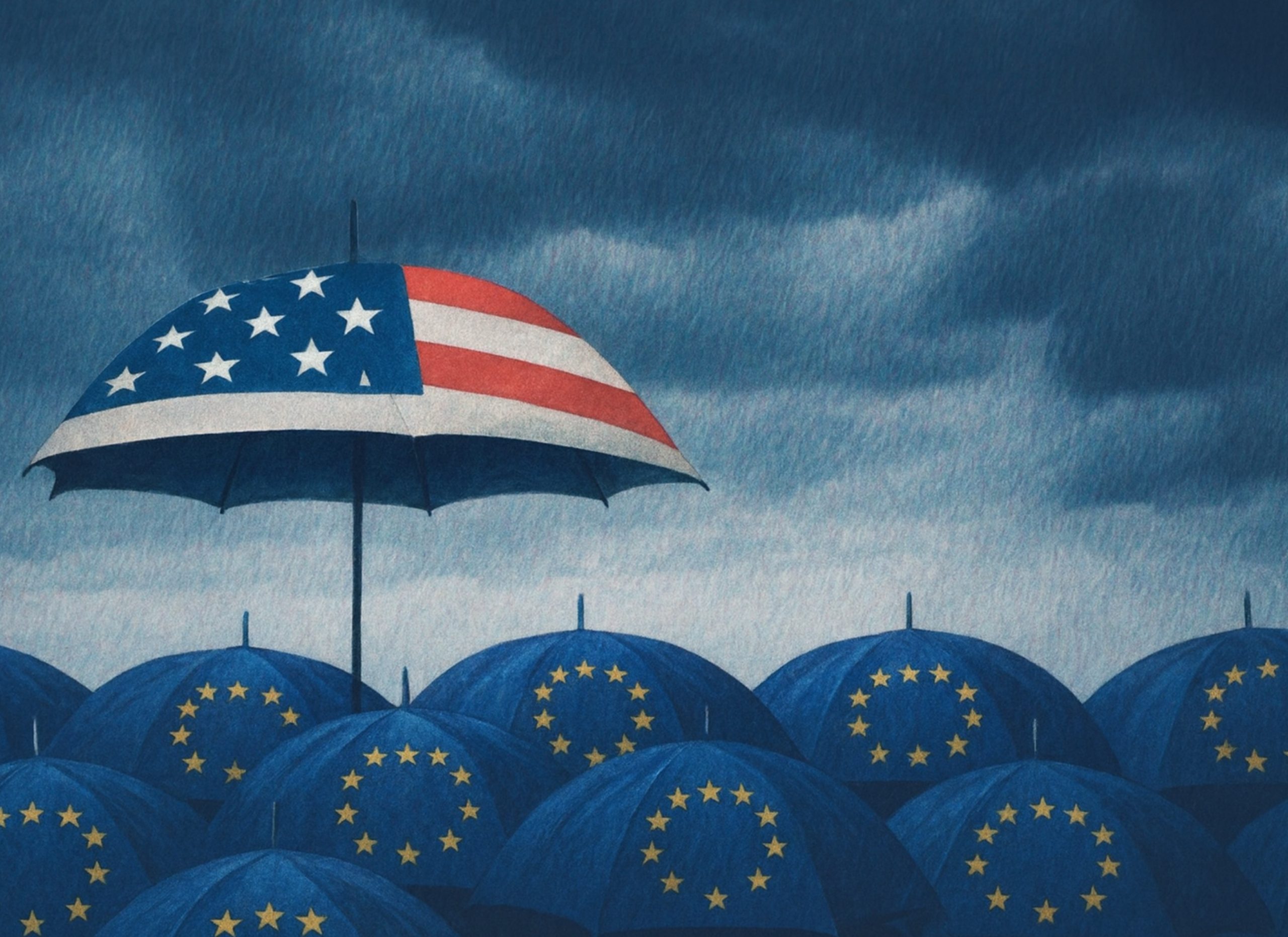
How Europe Balances Russia, China, and Itself
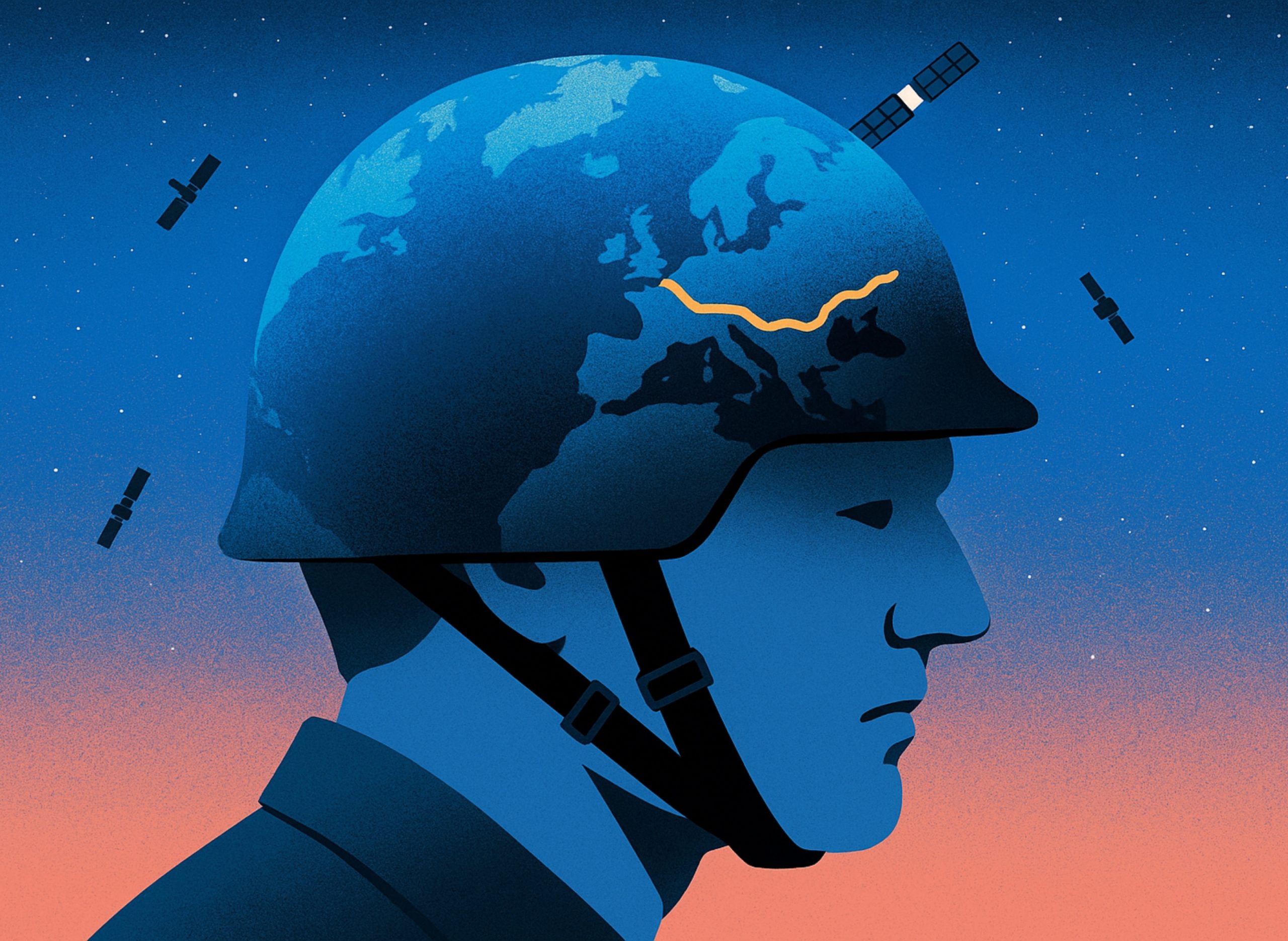
How Warsaw and Kyiv Anchor Europe’s Defense