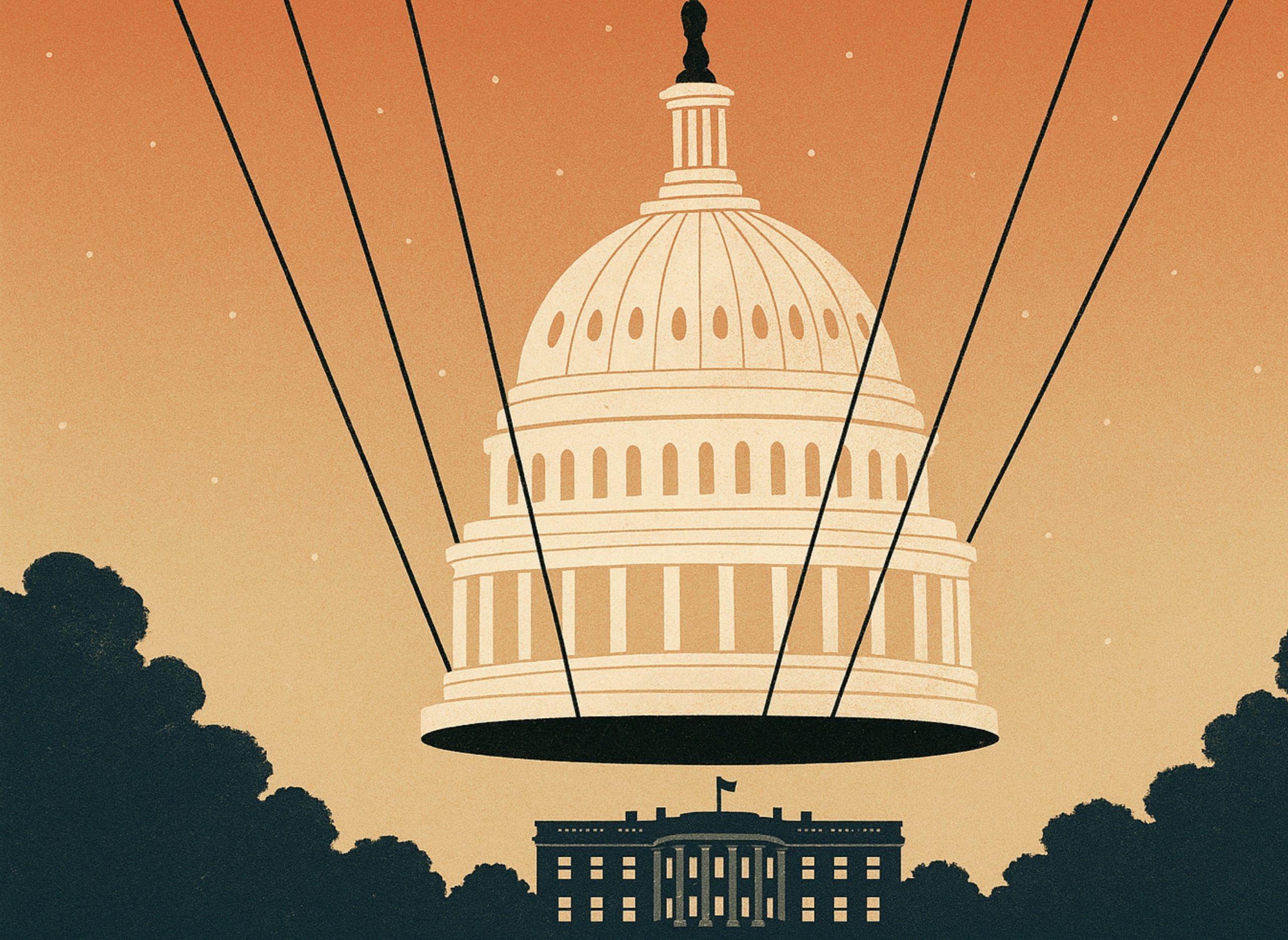



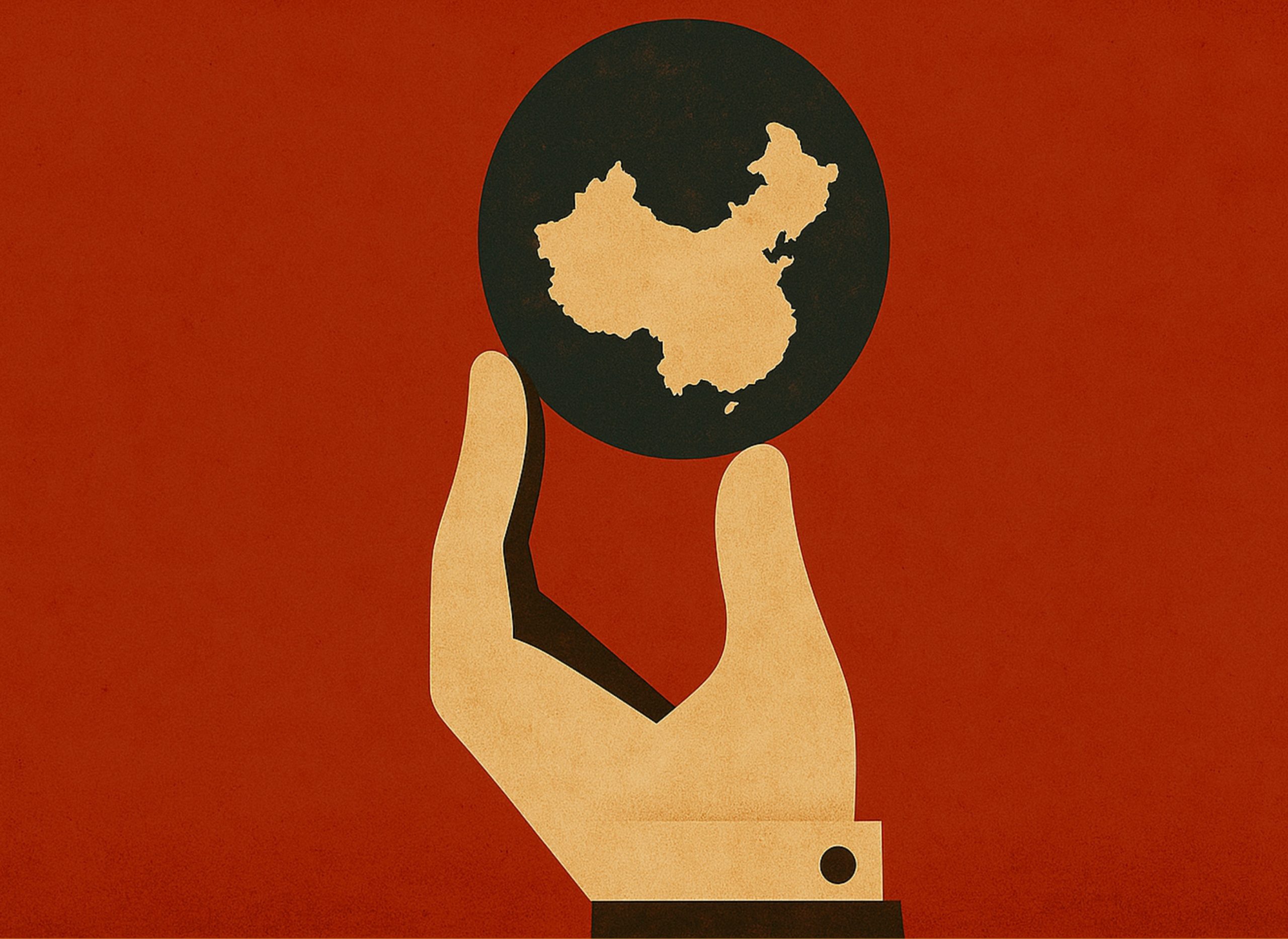
This illustration has been created by AI to use only in this article.
For three decades after the Cold War, the liberal imagination rested on a deceptively simple narrative: modernization would yield prosperity; prosperity would generate a middle class; and the middle class, armed with education and rising expectations, would inevitably demand democratic institutions. Markets would liberalize politics, globalization would universalize norms, and history itself would bend toward freedom. This teleology shaped Western strategy long after its assumptions had begun to fray. Integrating China into global markets was expected not only to enrich it but to liberalize it. Economic openness was presumed to be incompatible with one-party rule.
China’s rise has shattered that storyline. Four decades of rapid development—lifting hundreds of millions from poverty, building world-class infrastructure, and becoming a central node in global supply chains—have produced neither political liberalization nor ideological convergence with the West. Instead, China has demonstrated that a modern economy can flourish under an adaptive, technocratic, and increasingly centralized authoritarian state. Its middle class has expanded without demanding systemic reform; its civil society has grown without crystallizing into organized opposition; and its governance capacity has strengthened without diluting the primacy of the Party. China is not simply an exception to modernization theory—it is its refutation.
The consequence is not just an empirical surprise but an ideological rupture. If economic development does not require democratization, then liberalism loses its claim to historical inevitability. If a state can integrate deeply into global markets while rejecting the normative architecture of the liberal order, then Western leadership becomes contingent rather than self-evident. And if China continues to rise without internalizing liberal norms, the central question of the twenty-first century becomes unavoidable: What does power look like after ideology?
China’s answer is subtle but profound. It does not seek global domination in the Cold War sense, nor does it promote a universal doctrine meant to supplant liberalism. Instead, China advances a vision of world order where legitimacy is measured not by values but by performance; where sovereignty eclipses rights; where stability outweighs participation; and where states are judged by their capacity to deliver outcomes rather than conform to moral standards set elsewhere. In this emerging landscape, compliance replaces conversion as the currency of influence.
China wins, in other words, not by persuading the world to become more like itself, but by demonstrating that the world does not need to be like the West. It wins by making Western leadership unnecessary—by constructing a global environment in which liberal norms no longer command automatic deference, and in which alternative models of governance can coexist without apology. In the post-liberal international order now taking shape, victory is no longer defined by the spread of values—it is defined by the erosion of their gravitational pull.
The Myth of Universal Democracy
China’s challenge to the liberal order does not take the form of an ideological crusade or a revolutionary blueprint; instead, it advances a more fundamental proposition: that governance is culturally embedded and historically contingent, not a universal science with a single normative destination. Against the liberal assumption that democracy represents the culmination of political development, China asserts the legitimacy of “plural modernities”—multiple pathways to prosperity, each shaped by civilizational heritage, institutional memory, and developmental priorities. In this view, liberalism is not the telos of modernization but one option among many, and not necessarily the most effective for all societies.
is an M.S. and M.P.A. candidate in international development and policy at the University of Pennsylvania, School of Social Policy & Practice and Fels Institute of Government.
For three decades after the Cold War, the liberal imagination rested on a deceptively simple narrative: modernization would yield prosperity; prosperity would generate a middle class; and the middle class, armed with education and rising expectations, would inevitably demand democratic institutions. Markets would liberalize politics, globalization would universalize norms, and history itself would bend toward freedom. This teleology shaped Western strategy long after its assumptions had begun to fray. Integrating China into global markets was expected not only to enrich it but to liberalize it. Economic openness was presumed to be incompatible with one-party rule.
China’s rise has shattered that storyline. Four decades of rapid development—lifting hundreds of millions from poverty, building world-class infrastructure, and becoming a central node in global supply chains—have produced neither political liberalization nor ideological convergence with the West. Instead, China has demonstrated that a modern economy can flourish under an adaptive, technocratic, and increasingly centralized authoritarian state. Its middle class has expanded without demanding systemic reform; its civil society has grown without crystallizing into organized opposition; and its governance capacity has strengthened without diluting the primacy of the Party. China is not simply an exception to modernization theory—it is its refutation.
The consequence is not just an empirical surprise but an ideological rupture. If economic development does not require democratization, then liberalism loses its claim to historical inevitability. If a state can integrate deeply into global markets while rejecting the normative architecture of the liberal order, then Western leadership becomes contingent rather than self-evident. And if China continues to rise without internalizing liberal norms, the central question of the twenty-first century becomes unavoidable: What does power look like after ideology?
China’s answer is subtle but profound. It does not seek global domination in the Cold War sense, nor does it promote a universal doctrine meant to supplant liberalism. Instead, China advances a vision of world order where legitimacy is measured not by values but by performance; where sovereignty eclipses rights; where stability outweighs participation; and where states are judged by their capacity to deliver outcomes rather than conform to moral standards set elsewhere. In this emerging landscape, compliance replaces conversion as the currency of influence.
China wins, in other words, not by persuading the world to become more like itself, but by demonstrating that the world does not need to be like the West. It wins by making Western leadership unnecessary—by constructing a global environment in which liberal norms no longer command automatic deference, and in which alternative models of governance can coexist without apology. In the post-liberal international order now taking shape, victory is no longer defined by the spread of values—it is defined by the erosion of their gravitational pull.
The Myth of Universal Democracy
China’s challenge to the liberal order does not take the form of an ideological crusade or a revolutionary blueprint; instead, it advances a more fundamental proposition: that governance is culturally embedded and historically contingent, not a universal science with a single normative destination. Against the liberal assumption that democracy represents the culmination of political development, China asserts the legitimacy of “plural modernities”—multiple pathways to prosperity, each shaped by civilizational heritage, institutional memory, and developmental priorities. In this view, liberalism is not the telos of modernization but one option among many, and not necessarily the most effective for all societies.
is an M.S. and M.P.A. candidate in international development and policy at the University of Pennsylvania, School of Social Policy & Practice and Fels Institute of Government.

At Beijing’s 2019 Conference on Dialogue of Asian Civilizations, Xi Jinping called for “civilization self-confidence” and rejected the notion that one political system or cultural model should become the sole benchmark of progress. The invocation of China as a “civilizational state” serves a dual purpose: it elevates Chinese governance as the product of millennia of administrative tradition—meritocracy, hierarchy, and moral authority—while simultaneously insulating it from external judgment. If China embodies a distinct civilizational logic, then evaluations grounded in Western political theory are not merely misplaced; they are epistemologically invalid.
Crucially, China wields this civilizational narrative with strategic ambiguity. It speaks the language of globalization—championing trade openness, South–South cooperation, and climate collaboration—yet its political discourse remains firmly sovereignty-first, positioning China as a non-aligned counterweight to Western interventionism. This dual posture allows Beijing to appear constructive in global governance while resisting any pressure to internalize liberal norms. China is therefore both globalist and anti-universalist, outward-facing but normatively insulated—a combination that gives it extraordinary room to maneuver.
At the core of this post-liberal vision lies the primacy of regime security. The legitimacy of the Chinese Communist Party is built not on electoral representation but on the delivery of tangible outcomes: growth, order, predictability, and national rejuvenation. Since the turbulence of the late twentieth century—from the Cultural Revolution to the 1989 protests—the CCP has reconstituted itself as an adaptive authoritarian state. Administrative reforms professionalized governance, technocratic meritocracy elevated expertise, and the post-2013 anti-corruption campaign recentralized authority under a disciplined political hierarchy. Rather than liberalizing, China innovated within authoritarianism, creating a system that is simultaneously flexible and controlled.
Within this framework, rights become conditional upon stability, not inherent constraints on state power. Political participation is not a mechanism for contesting authority but a channel for expressing grievances that the state, in turn, manages. Conflict is preempted, not aggregated through elections. Social harmony is a political objective, not a byproduct of pluralism. What emerges is a performance-based model of legitimacy that claims superiority not on ideological grounds but on administrative efficacy. Liberalism may prioritize rights; China prioritizes results.
This governance logic, once viewed as peculiar to China, increasingly resonates across the Global South. In countries grappling with inequality, polarization, urban insecurity, or chronic institutional weakness, the appeal of “normless stability” has grown. Leaders facing legitimacy crises or governance gridlock often see in China a model that promises order without the unpredictability of electoral politics. China does not ask its partners to adopt its ideology; it offers a template for “effective modernity” in which development can proceed without political liberalization.
The COVID-19 pandemic amplified this dynamic. In the early months, when China mobilized its administrative machinery with dramatic speed while the United States and parts of Europe struggled to contain the virus, Beijing promoted a narrative of systemic competence. State media contrasted China’s coordinated response with what it portrayed as Western disarray—partisan conflict, institutional paralysis, and inconsistent public health measures. Though this narrative later encountered challenges as China faced its own pandemic complications, the initial contrast left a lasting impression in many capitals: Chinese governance might be restrictive, but it delivers.
At Beijing’s 2019 Conference on Dialogue of Asian Civilizations, Xi Jinping called for “civilization self-confidence” and rejected the notion that one political system or cultural model should become the sole benchmark of progress. The invocation of China as a “civilizational state” serves a dual purpose: it elevates Chinese governance as the product of millennia of administrative tradition—meritocracy, hierarchy, and moral authority—while simultaneously insulating it from external judgment. If China embodies a distinct civilizational logic, then evaluations grounded in Western political theory are not merely misplaced; they are epistemologically invalid.
Crucially, China wields this civilizational narrative with strategic ambiguity. It speaks the language of globalization—championing trade openness, South–South cooperation, and climate collaboration—yet its political discourse remains firmly sovereignty-first, positioning China as a non-aligned counterweight to Western interventionism. This dual posture allows Beijing to appear constructive in global governance while resisting any pressure to internalize liberal norms. China is therefore both globalist and anti-universalist, outward-facing but normatively insulated—a combination that gives it extraordinary room to maneuver.
At the core of this post-liberal vision lies the primacy of regime security. The legitimacy of the Chinese Communist Party is built not on electoral representation but on the delivery of tangible outcomes: growth, order, predictability, and national rejuvenation. Since the turbulence of the late twentieth century—from the Cultural Revolution to the 1989 protests—the CCP has reconstituted itself as an adaptive authoritarian state. Administrative reforms professionalized governance, technocratic meritocracy elevated expertise, and the post-2013 anti-corruption campaign recentralized authority under a disciplined political hierarchy. Rather than liberalizing, China innovated within authoritarianism, creating a system that is simultaneously flexible and controlled.
Within this framework, rights become conditional upon stability, not inherent constraints on state power. Political participation is not a mechanism for contesting authority but a channel for expressing grievances that the state, in turn, manages. Conflict is preempted, not aggregated through elections. Social harmony is a political objective, not a byproduct of pluralism. What emerges is a performance-based model of legitimacy that claims superiority not on ideological grounds but on administrative efficacy. Liberalism may prioritize rights; China prioritizes results.
This governance logic, once viewed as peculiar to China, increasingly resonates across the Global South. In countries grappling with inequality, polarization, urban insecurity, or chronic institutional weakness, the appeal of “normless stability” has grown. Leaders facing legitimacy crises or governance gridlock often see in China a model that promises order without the unpredictability of electoral politics. China does not ask its partners to adopt its ideology; it offers a template for “effective modernity” in which development can proceed without political liberalization.
The COVID-19 pandemic amplified this dynamic. In the early months, when China mobilized its administrative machinery with dramatic speed while the United States and parts of Europe struggled to contain the virus, Beijing promoted a narrative of systemic competence. State media contrasted China’s coordinated response with what it portrayed as Western disarray—partisan conflict, institutional paralysis, and inconsistent public health measures. Though this narrative later encountered challenges as China faced its own pandemic complications, the initial contrast left a lasting impression in many capitals: Chinese governance might be restrictive, but it delivers.

Countries such as Rwanda, Ethiopia (prior to the civil war), Singapore, and several Gulf states have openly praised aspects of China’s governance capacity: long-term planning horizons, infrastructure-driven development, rapid administrative mobilization, and the insulation of policy from electoral volatility. Even in some Western democracies, think tanks and policymakers have scrutinized elements of Chinese state capacity—from industrial policy to technological deployment—as potential correctives to their own governance shortcomings.
The global diffusion of admiration for China’s administrative model does not imply convergence toward authoritarianism. Rather, it demonstrates a broader erosion of confidence in liberal democracy’s ability to solve contemporary problems. As political gridlock, populism, and social fragmentation challenge the functionality of democratic systems, China positions itself as the exemplar of an alternative: a government that promises competence without contestation, development without disorder, modernity without liberalism.
In this post-liberal vision, sovereignty and stability replace rights and representation as the cornerstones of political legitimacy. China does not seek to universalize its model, but it does seek to delegitimize the presumption that liberalism is universal. That shift—philosophical, gradual, and deeply consequential—forms the ideological foundation for China’s rise as a post-liberal superpower.
The Systems China Builds
China’s rise has not relied on territorial expansion or ideological proselytizing. Instead, it grows through a quieter set of instruments that reshape incentives, dependencies, and institutional environments far beyond its borders. Beijing’s approach is best understood not as an attempt to impose a new world order, but to reconfigure the architecture of globalization so that states increasingly operate within systems China finances, builds, or influences. These tools allow China to win without commanding, to steer outcomes without issuing directives, and to make alignment with its interests a structural condition rather than a political choice.
This strategy is most visible in the transformation of the Belt and Road Initiative (BRI). Initially branded as an ambitious connectivity project linking Asia, Africa, and Europe, BRI has entered a second phase—one marked less by rapid expansion and more by strategic entrenchment. More than 150 countries have joined, but the significance today lies not in the number of participants, but in the durability of the ties the initiative creates. Chinese firms design, finance, and build infrastructure that many developing economies desperately need; yet these projects also embed long-term leverage in ways that outlast political cycles.
Sri Lanka illustrates how this leverage evolves over time. After the country’s 2022 sovereign default, Colombo’s economic survival depended on the cooperation of its major creditors, especially China Exim Bank and China Development Bank. Throughout 2023 and 2024, debt restructuring negotiations unfolded in parallel with IMF talks, underscoring China’s pivotal position in determining the pace and shape of Sri Lanka’s recovery. By 2025, Sri Lanka had renegotiated key obligations with Japan and other lenders, but China’s restructuring terms remained the linchpin for restoring macroeconomic stability. The process revealed not a predatory “trap,” as Western commentators sometimes claim, but a more nuanced reality: China becomes indispensable because the alternatives are limited, and because BRI loans are often intertwined with critical national assets.
Infrastructure is not merely concrete and steel, but a channel of influence that endures long after construction ends.
The symbolic center of this entanglement remains Hambantota Port, leased to China for 99 years after Sri Lanka struggled to service its loans. Hambantota is less a military outpost than a geopolitical reminder: infrastructure is not merely concrete and steel, but a channel of influence that endures long after construction ends. The risks of such dependence were amplified in 2025, when Cyclone Ditwah caused severe flooding along the southern coast. Engineers and environmental groups argued that a Chinese-built expressway segment—constructed by filling wetlands rather than elevating the roadway—had worsened the disaster by obstructing natural drainage routes. Whether or not this design choice was solely responsible, the episode highlighted how infrastructure decisions made under conditions of financial pressure or limited oversight can impose long-term externalities on recipient states, while insulating lenders and builders from accountability.
These dynamics reveal a broader truth: BRI works not because China coerces governments, but because the infrastructure it provides becomes too embedded to unwind. Highways require Chinese maintenance; ports run on Chinese standards; energy grids depend on Chinese parts. Refinancing becomes a recurring negotiation, one in which Beijing holds both technical knowledge and financial leverage. China is not just a creditor; it is simultaneously planner, builder, operator, and data custodian. In this way, connectivity becomes a form of power—quiet, cumulative, and difficult to escape.
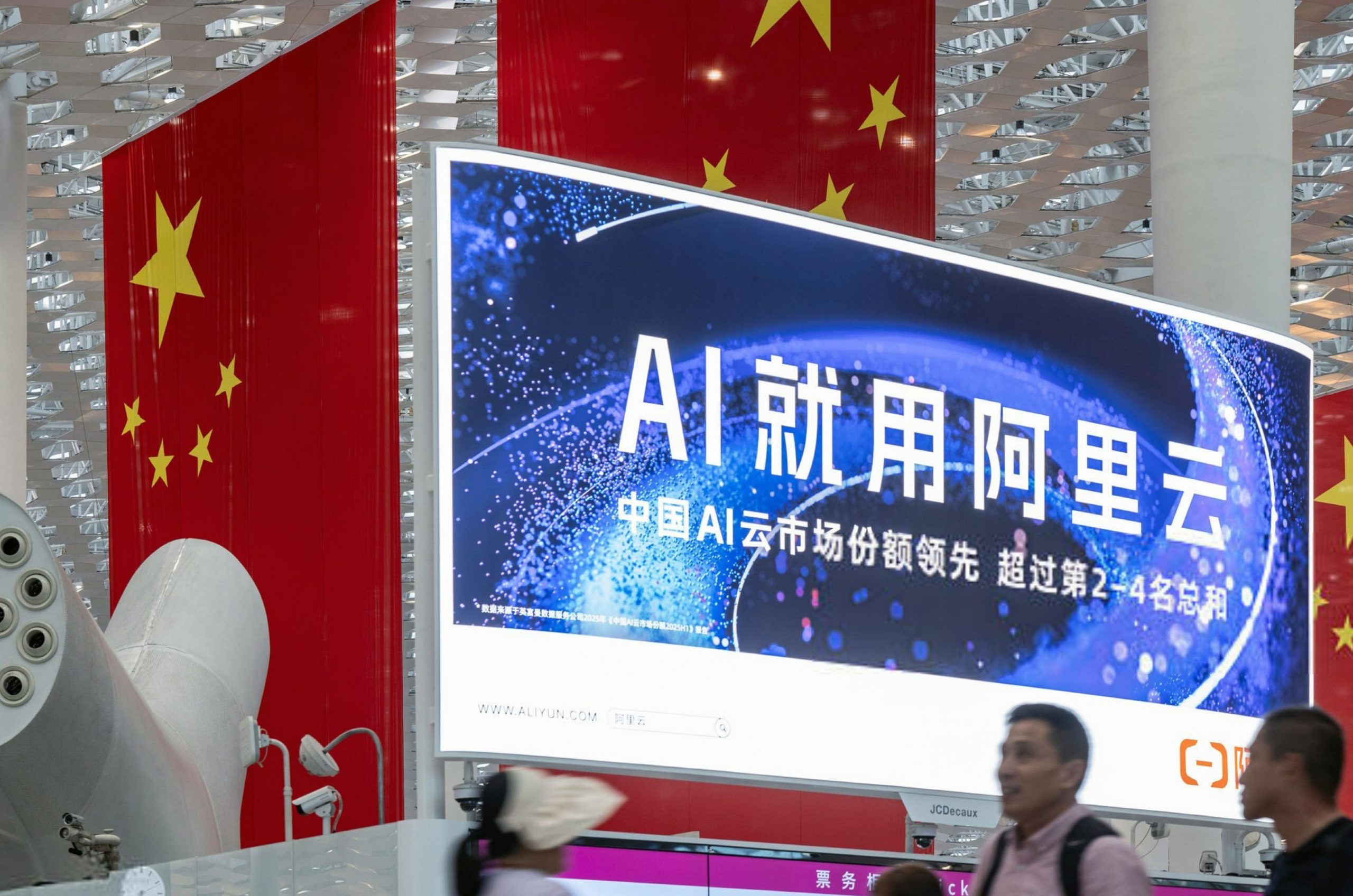
A similar logic governs China’s digital influence. If physical infrastructure locks countries into China’s economic orbit, digital infrastructure binds them into its governance ecosystem. Under the Digital Silk Road, Chinese firms such as Huawei and ZTE have built 5G networks, fiber-optic cables, data centers, and “smart city” platforms across Southeast Asia, the Middle East, and Africa. These systems promise efficiency and modernization, but they also reshape relationships between state authorities and their populations. And Serbia provides one of the most striking examples.
Over the past decade, Belgrade has installed thousands of Huawei high-definition cameras equipped with facial recognition technologies as part of a “Safe City” initiative. What began as a public security project has expanded into a national surveillance infrastructure deeply enmeshed with the country’s internal security apparatus. Chinese cloud services and engineers continue to maintain the system, making Serbia reliant not just on Chinese hardware but on Chinese-administered data architecture. Similar arrangements exist in Kenya, Ecuador, Pakistan, Laos, and the Gulf states. In each case, the technology arrives bundled with an implicit philosophy: that effective governance is inseparable from pervasive monitoring and algorithmic management.
This export of digital authoritarianism is often subtle. China does not demand that other governments adopt its political model; rather, it provides tools that make certain governance choices easier and others unnecessary. Leaders facing rising crime, protest movements, or political fragmentation find in Chinese technologies an expedient solution—one that enhances control without requiring institutional reform. As these systems spread, they normalize the idea that state power should be data-driven, preventive, and unencumbered by the privacy norms that define liberal democracies. The technology embeds the logic; the logic reshapes the state.
China’s influence also extends into the realm of international institutions, where Beijing has mastered the art of participating without conforming. In organizations like the UN Human Rights Council, China has championed language emphasizing “mutually beneficial cooperation,” “development rights,” and the de-politicization of human rights critique. These formulations do not reject human rights outright; they redefine them in ways that privilege sovereignty and economic development over individual protections. In doing so, China shifts the normative baseline from liberal universalism to a flexible, context-bound framework more compatible with authoritarian governance. At the World Health Organization and World Trade Organization, Beijing’s strategy is more procedural than doctrinal. China rarely confronts institutions directly; instead, it works to dilute norms, reinterpret rules, and navigate regulatory gaps that allow state-led capitalism and opaque governance to coexist with formal commitments to multilateralism. The goal is not to dismantle these institutions but to de-center Western influence within them.
Simultaneously, China has constructed alternative institutions that offer states options beyond the Western-led order. The Asian Infrastructure Investment Bank, now with more than 100 members, provides development financing with fewer political conditions than the World Bank or IMF. The transformation of BRICS into BRICS+ in 2023–2024 expanded the grouping to include Egypt, Ethiopia, Iran, and the United Arab Emirates, while Argentina’s withdrawal and Saudi Arabia’s hesitation revealed the geopolitical calculations states must make when choosing between competing frameworks of international cooperation. The addition of “partnership countries” such as Indonesia, Nigeria, Türkiye, and Vietnam widened BRICS into a multi-layered constellation where China’s economic gravity is often decisive.
These institutional strategies are reinforced by a sophisticated narrative engine. Beijing consistently portrays liberalism as chaotic, self-undermining, and hypocritical. The polarization of American politics, the turmoil of Brexit, and the January 6 attack on the U.S. Capitol serve as recurring symbols of democratic dysfunction. China’s tightly coordinated pandemic response—especially in the early months—was contrasted with Western institutional paralysis to argue that liberal systems are ill-suited for crises requiring discipline and centralized action. In this narrative, sovereignty becomes a moral principle, and criticism from the West becomes a form of imperial presumption.
Nothing exemplifies this narrative confidence more vividly than the 2023 Saudi–Iran rapprochement brokered in Beijing. The agreement did not resolve deep structural tensions in the region, but it signaled that China could mediate outcomes where the United States lacked credibility, bandwidth, or leverage. By facilitating dialogue between two longstanding rivals, China presented itself as a stabilizing force—a state capable of shaping regional security dynamics without military alliances or coercive power.
Across these domains, China’s influence is cumulative and systemic. Infrastructure binds, technology governs, institutions legitimize, and narratives persuade. None of these tools alone remake the international order. But together, they cultivate a world increasingly shaped by Chinese preferences—not through conquest, but through the quiet consolidation of interdependence and the normalization of a post-liberal political logic.
America’s Crisis, China’s Opening
China’s rise has been driven by its own strategic creativity, but it has also been made easier by something more basic: the liberal order is suffering a crisis of confidence. For decades, the strength of that order rested not only on American power but on a shared belief that the United States offered a compelling vision of political and economic modernity. That belief has thinned. As China has steadily refined its tools of influence, the United States has struggled to project a version of governance that looks stable, functional, or morally coherent to much of the world. China’s ascent, in other words, is as much about American retreat as it is about Chinese ambition.
Nothing exposed this vulnerability more starkly than the deepening fracture within the United States itself. Political divisions that once simmered have boiled over into open hostility, making bipartisan governance rare and long-term policymaking almost impossible. The 2020 election—and the shocking scenes of January 6 that followed—showed foreign audiences something they had never expected to see from the world’s self-proclaimed model of democracy: institutions buckling under the weight of domestic mistrust. For China, this was more than a propaganda victory. It allowed Beijing to point, with growing confidence, to the instability of liberal democracy and present its own system as steadier and more reliable. For leaders abroad grappling with unrest or stagnation at home, America’s turmoil made China’s emphasis on continuity and control appear newly compelling.
Countries such as Rwanda, Ethiopia (prior to the civil war), Singapore, and several Gulf states have openly praised aspects of China’s governance capacity: long-term planning horizons, infrastructure-driven development, rapid administrative mobilization, and the insulation of policy from electoral volatility. Even in some Western democracies, think tanks and policymakers have scrutinized elements of Chinese state capacity—from industrial policy to technological deployment—as potential correctives to their own governance shortcomings.
The global diffusion of admiration for China’s administrative model does not imply convergence toward authoritarianism. Rather, it demonstrates a broader erosion of confidence in liberal democracy’s ability to solve contemporary problems. As political gridlock, populism, and social fragmentation challenge the functionality of democratic systems, China positions itself as the exemplar of an alternative: a government that promises competence without contestation, development without disorder, modernity without liberalism.
In this post-liberal vision, sovereignty and stability replace rights and representation as the cornerstones of political legitimacy. China does not seek to universalize its model, but it does seek to delegitimize the presumption that liberalism is universal. That shift—philosophical, gradual, and deeply consequential—forms the ideological foundation for China’s rise as a post-liberal superpower.
The Systems China Builds
China’s rise has not relied on territorial expansion or ideological proselytizing. Instead, it grows through a quieter set of instruments that reshape incentives, dependencies, and institutional environments far beyond its borders. Beijing’s approach is best understood not as an attempt to impose a new world order, but to reconfigure the architecture of globalization so that states increasingly operate within systems China finances, builds, or influences. These tools allow China to win without commanding, to steer outcomes without issuing directives, and to make alignment with its interests a structural condition rather than a political choice.
This strategy is most visible in the transformation of the Belt and Road Initiative (BRI). Initially branded as an ambitious connectivity project linking Asia, Africa, and Europe, BRI has entered a second phase—one marked less by rapid expansion and more by strategic entrenchment. More than 150 countries have joined, but the significance today lies not in the number of participants, but in the durability of the ties the initiative creates. Chinese firms design, finance, and build infrastructure that many developing economies desperately need; yet these projects also embed long-term leverage in ways that outlast political cycles.
Sri Lanka illustrates how this leverage evolves over time. After the country’s 2022 sovereign default, Colombo’s economic survival depended on the cooperation of its major creditors, especially China Exim Bank and China Development Bank. Throughout 2023 and 2024, debt restructuring negotiations unfolded in parallel with IMF talks, underscoring China’s pivotal position in determining the pace and shape of Sri Lanka’s recovery. By 2025, Sri Lanka had renegotiated key obligations with Japan and other lenders, but China’s restructuring terms remained the linchpin for restoring macroeconomic stability. The process revealed not a predatory “trap,” as Western commentators sometimes claim, but a more nuanced reality: China becomes indispensable because the alternatives are limited, and because BRI loans are often intertwined with critical national assets.
The symbolic center of this entanglement remains Hambantota Port, leased to China for 99 years after Sri Lanka struggled to service its loans. Hambantota is less a military outpost than a geopolitical reminder: infrastructure is not merely concrete and steel, but a
channel of influence that endures long after construction ends. The risks of such dependence were amplified in 2025, when Cyclone Ditwah caused severe flooding along the southern coast. Engineers and environmental groups argued that a Chinese-built expressway segment—constructed by filling wetlands rather than elevating the roadway—had worsened the disaster by obstructing natural drainage routes. Whether or not this design choice was solely responsible, the episode highlighted how infrastructure decisions made under conditions of financial pressure or limited oversight can impose long-term externalities on recipient states, while insulating lenders and builders from accountability.
These dynamics reveal a broader truth: BRI works not because China coerces governments, but because the infrastructure it provides becomes too embedded to unwind. Highways require Chinese maintenance; ports run on Chinese standards; energy grids depend on Chinese parts. Refinancing becomes a recurring negotiation, one in which Beijing holds both technical knowledge and financial leverage. China is not just a creditor; it is simultaneously planner, builder, operator, and data custodian. In this way, connectivity becomes a form of power—quiet, cumulative, and difficult to escape.
A similar logic governs China’s digital influence. If physical infrastructure locks countries into China’s economic orbit, digital infrastructure binds them into its governance ecosystem. Under the Digital Silk Road, Chinese firms such as Huawei and ZTE have built 5G networks, fiber-optic cables, data centers, and “smart city” platforms across Southeast Asia, the Middle East, and Africa. These systems promise efficiency and modernization, but they also reshape relationships between state authorities and their populations. And Serbia provides one of the most striking examples.
Over the past decade, Belgrade has installed thousands of Huawei high-definition cameras equipped with facial recognition technologies as part of a “Safe City” initiative. What began as a public security project has expanded into a national surveillance infrastructure deeply enmeshed with the country’s internal security apparatus. Chinese cloud services and engineers continue to maintain the system, making Serbia reliant not just on Chinese hardware but on Chinese-administered data architecture. Similar arrangements exist in Kenya, Ecuador, Pakistan, Laos, and the Gulf states. In each case, the technology arrives bundled with an implicit philosophy: that effective governance is inseparable from pervasive monitoring and algorithmic management.
This export of digital authoritarianism is often subtle. China does not demand that other governments adopt its political model; rather, it provides tools that make certain governance choices easier and others unnecessary. Leaders facing rising crime, protest movements, or political fragmentation find in Chinese technologies an expedient solution—one that enhances control without requiring institutional reform. As these systems spread, they normalize the idea that state power should be data-driven, preventive, and unencumbered by the privacy norms that define liberal democracies. The technology embeds the logic; the logic reshapes the state.
China’s influence also extends into the realm of international institutions, where Beijing has mastered the art of participating without conforming. In organizations like the UN Human Rights Council, China has championed language emphasizing “mutually beneficial cooperation,” “development rights,” and the de-politicization of human rights critique. These formulations do not reject human rights outright; they redefine them in ways that privilege sovereignty and economic development over individual protections. In doing so, China shifts the normative baseline from liberal universalism to a flexible, context-bound framework more compatible with authoritarian governance. At the World Health Organization and World Trade Organization, Beijing’s strategy is more procedural than doctrinal. China rarely confronts institutions directly; instead, it works to dilute norms, reinterpret rules, and navigate regulatory gaps that allow state-led capitalism and opaque governance to coexist with formal commitments to multilateralism. The goal is not to dismantle these institutions but to de-center Western influence within them.
Simultaneously, China has constructed alternative institutions that offer states options beyond the Western-led order. The Asian Infrastructure Investment Bank, now with more than 100 members, provides development financing with fewer political conditions than the World Bank or IMF. The transformation of BRICS into BRICS+ in 2023–2024 expanded the grouping to include Egypt, Ethiopia, Iran, and the United Arab Emirates, while Argentina’s withdrawal and Saudi Arabia’s hesitation revealed the geopolitical calculations states must make when choosing between competing frameworks of international cooperation. The addition of “partnership countries” such as Indonesia, Nigeria, Türkiye, and Vietnam widened BRICS into a multi-layered constellation where China’s economic gravity is often decisive.
These institutional strategies are reinforced by a sophisticated narrative engine. Beijing consistently portrays liberalism as chaotic, self-undermining, and hypocritical. The polarization of American politics, the turmoil of Brexit, and the January 6 attack on the U.S. Capitol serve as recurring symbols of democratic dysfunction. China’s tightly coordinated pandemic response—especially in the early months—was contrasted with Western institutional paralysis to argue that liberal systems are ill-suited for crises requiring discipline and centralized action. In this narrative, sovereignty becomes a moral principle, and criticism from the West becomes a form of imperial presumption.
Nothing exemplifies this narrative confidence more vividly than the 2023 Saudi–Iran rapprochement brokered in Beijing. The agreement did not resolve deep structural tensions in the region, but it signaled that China could mediate outcomes where the United States lacked credibility, bandwidth, or leverage. By facilitating dialogue between two longstanding rivals, China presented itself as a stabilizing force—a state capable of shaping regional security dynamics without military alliances or coercive power.
Across these domains, China’s influence is cumulative and systemic. Infrastructure binds, technology governs, institutions legitimize, and narratives persuade. None of these tools alone remake the international order. But together, they cultivate a world increasingly shaped by Chinese preferences—not through conquest, but through the quiet consolidation of interdependence and the normalization of a post-liberal political logic.
America’s Crisis, China’s Opening
China’s rise has been driven by its own strategic creativity, but it has also been made easier by something more basic: the liberal order is suffering a crisis of confidence. For decades, the strength of that order rested not only on American power but on a shared belief that the United States offered a compelling vision of political and economic modernity. That belief has thinned. As China has steadily refined its tools of influence, the United States has struggled to project a version of governance that looks stable, functional, or morally coherent to much of the world. China’s ascent, in other words, is as much about American retreat as it is about Chinese ambition.
Nothing exposed this vulnerability more starkly than the deepening fracture within the United States itself. Political divisions that once simmered have boiled over into open hostility, making bipartisan governance rare and long-term policymaking almost impossible. The 2020 election—and the shocking scenes of January 6 that followed—showed foreign audiences something they had never expected to see from the world’s self-proclaimed model of democracy: institutions buckling under the weight of domestic mistrust. For China, this was more than a propaganda victory. It allowed Beijing to point, with growing confidence, to the instability of liberal democracy and present its own system as steadier and more reliable. For leaders abroad grappling with unrest or stagnation at home, America’s turmoil made China’s emphasis on continuity and control appear newly compelling.
Europe’s struggles have deepened this impression. The European Union—once celebrated as the world’s most ambitious political experiment—has spent the last decade wrestling with crises that exposed its internal fragility. The migration surge, disputes over austerity and fiscal governance, and high-profile cases of democratic
backsliding have all chipped away at Europe’s moral authority. Brexit made the tension between national sovereignty and supranational governance painfully visible. Meanwhile, the rise of far-right and illiberal parties across the continent has caused many outside observers to wonder whether the West can still uphold the democratic ideals it claims to defend. If the guardians of the liberal order seem unable to keep their own houses in order, how can they claim the right to set global standards?
This erosion of domestic credibility has created a parallel crisis in foreign policy. For generations, Washington justified its global role by invoking the defense of democracy and human rights. Yet the United States has long maintained close partnerships with authoritarian states—Saudi Arabia, Egypt, the UAE—whose practices run directly counter to the values America espouses. During the Cold War, such contradictions were tolerated. In today’s world of social media transparency and a more assertive Global South, they are harder to explain away. When U.S. officials criticize China’s governance model, many governments quietly ask: Why should we accept lectures from a country that does not apply its own principles consistently?
China has learned to turn this skepticism into a diplomatic advantage. By positioning itself as a champion of sovereignty and non-interference, Beijing offers something Western powers often do not: political respect without political conditions. For leaders facing domestic insecurity—whether from protests, corruption scandals, or economic stagnation—Western demands for reform can feel like existential threats. China offers a different deal: support without judgment, investment without strings. Even when Chinese financing carries long-term risks, the short-term relief can be irresistible. Beijing steps in where Western governments hesitate or impose conditions, and in doing so fills a vacuum the United States helped create.
This pattern is most visible in the Global South. Instead of choosing sides between Beijing and Washington, many states—India, Brazil, South Africa, Indonesia, Mexico—have embraced strategic non-alignment. They do not necessarily want China to lead, but they value China’s presence as leverage. The simple fact that a second major power exists gives them bargaining power they lacked in the unipolar era. The United States, accustomed to being the default partner, now finds that its influence must be earned.
Compounding this shift are America’s own strategic inconsistencies. U.S. administrations oscillate between labeling China a competitor, a rival, or a potential partner. Allies and adversaries alike struggle to understand Washington’s long-term intentions. The result is a foreign policy that often seems reactive, moralizing in language but transactional in practice. Against this backdrop, China’s slower, steadier, and more predictable diplomacy can appear, to many developing nations, less volatile and more dependable.
Taken together, these trends create a geopolitical landscape in which China does not need to defeat the United States; it only needs to outlast the liberal order’s growing incoherence. Beijing advances not because it is omnipotent, but because the West repeatedly retreats from the principles and responsibilities that once anchored its global leadership. Where the United States hesitates, China steps forward. Where the liberal order fractures, China offers an alternative. In that space, China’s model of post-liberal governance becomes not a universal aspiration, but a workable option.
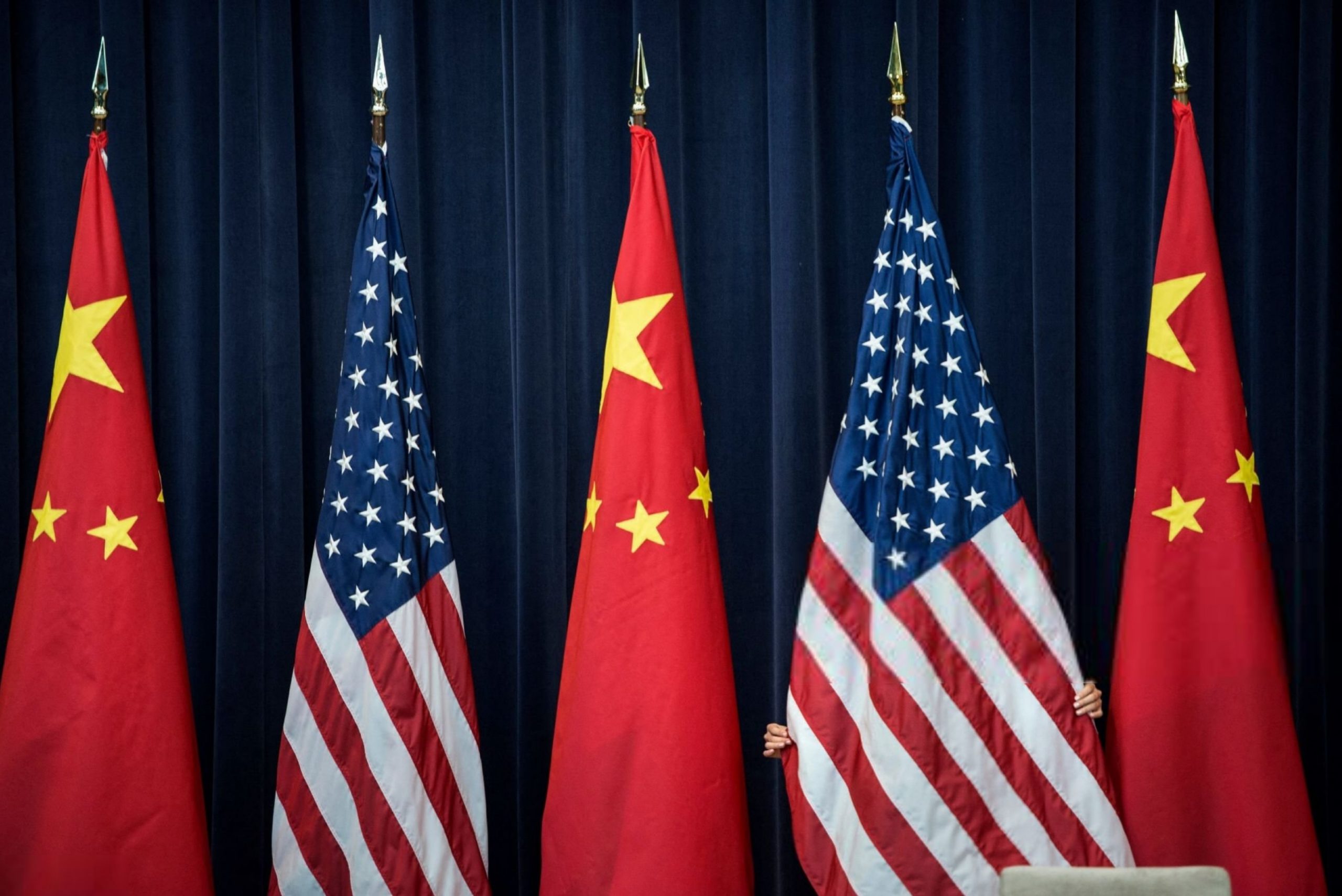
China’s rise, then, cannot be separated from the West’s crisis of identity and purpose. As the United States and Europe wrestle with internal polarization, strategic drift, and eroding moral authority, China gains more room to shape the norms and expectations of international life. It wins not because America is defeated, but because America has—for now—lost the clarity, confidence, and coherence that once made its leadership seem inevitable.
What Victory Looks Like for China
China’s rise is often described as a challenge to the liberal international order, but its ambition is not to replace that order with a fully articulated alternative. Beijing is not constructing a new ideological blueprint, nor does it seek global conversion to a Chinese political model. Rather, China is engaged in something more subtle and transformative: the gradual redefinition of the rules, norms, and expectations that govern international behavior. It does not ask the world to admire it—only to accept a world in which Beijing’s preferences must be considered. Victory, in China’s view, lies not in dominance but in normalization: a world that no longer presumes liberalism to be the default measure of legitimacy.
This shift begins with a reorientation of what constitutes political authority. In the liberal tradition, legitimacy rests on procedural foundations—free elections, individual rights, and adherence to universal norms. China offers a starkly different premise: that legitimacy derives from effective governance, national stability, and developmental delivery. In this framework, sovereignty becomes not only a legal shield but a moral imperative. States must be free to govern according to their historical conditions and cultural preferences, unencumbered by external judgment. When Beijing promotes the language of “mutual respect,” “non-interference,” or “win-win cooperation,” it is not uttering diplomatic bromides; it is advancing a paradigm in which political diversity is accepted and liberal convergence is neither expected nor desirable.
The institutional implications of this vision reverberate far beyond Beijing. China does not oppose multilateral institutions; it reinterprets them. At the United Nations, Chinese diplomats have worked diligently to insert concepts such as “development-centered human rights” and “mutually beneficial cooperation” into official resolutions. These terms do not dismantle the human rights framework outright, but they decouple it from liberal assumptions by elevating economic development and state sovereignty as equally valid metrics of political progress. In effect, China shifts the axis of legitimacy from universal rights to context-dependent performance—an adjustment that resonates with many governments in the Global South, where the liberal rights agenda is often viewed as intrusive or politically destabilizing.
The economic domain reflects a similar pattern of reframing. The Bretton Woods institutions, born of a 20th-century American vision, once epitomized a world in which development was inseparable from governance reform. China’s initiatives present an alternative. The Asian Infrastructure Investment Bank offers development financing without political conditions; the Belt and Road Initiative provides long-term economic partnerships without governance oversight. Even China’s trade diplomacy—whether through the Regional Comprehensive Economic Partnership or bilateral agreements across Africa and Latin America—advances the idea that global integration can proceed without liberalization. Through these mechanisms, China normalizes a form of globalization that is open commercially but closed politically.
The evolution of BRICS into a broader geopolitical grouping demonstrates how this normalization manifests in practice. The expansion of BRICS in 2023–2024 brought Egypt, Ethiopia, Iran, and the UAE into a consortium that already included some of the world’s largest emerging economies. Although the bloc remains heterogeneous and its internal cohesion uneven, its very growth signals a quiet rebellion against Western institutional dominance. BRICS does not seek to become a unified alternative to the G7; it seeks to dilute the idea that any single set of norms or institutions should define global governance. Countries like Indonesia, Nigeria, Türkiye, and Vietnam—now recognized as “partner states”—find in BRICS a space where they can negotiate economic cooperation and political coordination without the normative constraints attached to Western alliances. What emerges is not a rival order, but a pluralized order—one in which China’s institutional presence is unavoidable.
China’s vision extends beyond institutions to the broader concept of multipolarity. In Western discourse, multipolarity connotes a redistribution of power among several major states. But for Beijing,
multipolarity is not simply about balancing the United States; it is about diffusing authority across regions and platforms in ways that reduce the ability of any single actor to impose universal standards. A fragmented system benefits China by elevating the value of bilateral ties, economic dependency, and issue-specific cooperation. In such an environment, China does not need to lead every institution or dominate every domain; it only needs to ensure that no system exists in which it must conform to norms it did not help define.
The consequences of this shift are far-reaching. In a world where sovereignty and performance outweigh rights and representation, criticism of authoritarian practices becomes diplomatically costly. Countries deeply embedded in Chinese supply chains—whether through solar panels, electric vehicles, telecommunications equipment, or rare-earth minerals—are reluctant to jeopardize these dependencies for the sake of abstract principles. States that rely on Chinese financing or digital infrastructure may face implicit constraints on foreign policy choices. Even U.S. allies find themselves subtly adjusting their positions to avoid unnecessary friction with Beijing. China does not demand alignment; the structure of global interconnectedness nudges it into being.
This is what Chinese victory looks like: not ideological conversion, territorial expansion, or global hegemony, but the erosion of liberalism’s gravitational pull. As China embeds itself in the material, digital, institutional, and normative systems that shape global behavior, it ensures that its preferences must always be considered—whether or not they are embraced. The world does not have to become Chinese; it only has to become less liberal for China to succeed.
In this sense, victory is not a destination but a condition: a world in which China can rise unconstrained, govern on its own terms, and engage internationally without ideological scrutiny. That victory is already taking shape—not because China has overtaken the West, but because the West’s capacity to define the terms of global order is steadily diminishing.
Power Without Leadership
China’s rise marks a profound shift in the architecture of global order—one that cannot be understood through the familiar lexicon of competition, containment, or ideological struggle. Beijing has not sought to replace liberalism with a new universal doctrine. It has not attempted to export revolution or impose its model on unwilling states. Its ambition has been quieter and, in many ways, more transformative: to build a world in which its system can thrive without external pressure, moral judgment, or structural disadvantage. In doing so, China has redefined what it means to win in international politics.
The tools of this victory—connectivity, technology, institutional reinterpretation, and narrative discipline—work not by conquering territory but by shaping the pathways through which states pursue development and security. Infrastructure binds economies to Beijing; digital networks entangle political authority with Chinese technology; multilateral participation dilutes norms the West once considered universal; and diplomatic storytelling recasts stability as a higher virtue than freedom. China’s success lies not in overturning the liberal order but in making it increasingly irrelevant to those seeking growth without political upheaval.
Yet the deeper reason for China’s ascendancy is not found in Beijing, but in Washington and Brussels. As Western democracies grapple with polarization, incoherent strategies, and eroding faith in their own institutions, the normative confidence that once animated the liberal project has weakened. The world has not turned against liberalism; it has simply watched the West lose faith in the narrative that sustained its global leadership. Into that vacuum, China offers not a superior ideology, but a workable alternative at a moment when many states feel unserved by the existing order.
If the twenty-first century represents a new ideological moment, it is one defined by the retreat of ideology itself. China’s rise does not herald the triumph of authoritarianism; it heralds the normalization of political pluralism in which liberalism is no longer the assumed horizon of modernity. The quiet triumph of post-ideological power lies precisely in this shift: a world where China does not need to lead for the West to lose its monopoly on what leadership means.
The question is no longer whether China can reshape global order. It is whether the West can rediscover the conviction that once allowed it to define that order at all.
If the guardians of the liberal order seem unable to keep their own houses in order, how can they claim the right to set global standards?
Europe’s struggles have deepened this impression. The European Union—once celebrated as the world’s most ambitious political experiment—has spent the last decade wrestling with crises that exposed its internal fragility. The migration surge, disputes over austerity and fiscal governance, and high-profile cases of democratic backsliding have all chipped away at Europe’s moral authority. Brexit made the tension between national sovereignty and supranational governance painfully visible. Meanwhile, the rise of far-right and illiberal parties across the continent has caused many outside observers to wonder whether the West can still uphold the democratic ideals it claims to defend. If the guardians of the liberal order seem unable to keep their own houses in order, how can they claim the right to set global standards?
This erosion of domestic credibility has created a parallel crisis in foreign policy. For generations, Washington justified its global role by invoking the defense of democracy and human rights. Yet the United States has long maintained close partnerships with authoritarian states—Saudi Arabia, Egypt, the UAE—whose practices run directly counter to the values America espouses. During the Cold War, such contradictions were tolerated. In today’s world of social media transparency and a more assertive Global South, they are harder to explain away. When U.S. officials criticize China’s governance model, many governments quietly ask: Why should we accept lectures from a country that does not apply its own principles consistently?
China has learned to turn this skepticism into a diplomatic advantage. By positioning itself as a champion of sovereignty and non-interference, Beijing offers something Western powers often do not: political respect without political conditions. For leaders facing domestic insecurity—whether from protests, corruption scandals, or economic stagnation—Western demands for reform can feel like existential threats. China offers a different deal: support without judgment, investment without strings. Even when Chinese financing carries long-term risks, the short-term relief can be irresistible. Beijing steps in where Western governments hesitate or impose conditions, and in doing so fills a vacuum the United States helped create.
This pattern is most visible in the Global South. Instead of choosing sides between Beijing and Washington, many states—India, Brazil, South Africa, Indonesia, Mexico—have embraced strategic non-alignment. They do not necessarily want China to lead, but they value China’s presence as leverage. The simple fact that a second major power exists gives them bargaining power they lacked in the unipolar era. The United States, accustomed to being the default partner, now finds that its influence must be earned.
Compounding this shift are America’s own strategic inconsistencies. U.S. administrations oscillate between labeling China a competitor, a rival, or a potential partner. Allies and adversaries alike struggle to understand Washington’s long-term intentions. The result is a foreign policy that often seems reactive, moralizing in language but transactional in practice. Against this backdrop, China’s slower, steadier, and more predictable diplomacy can appear, to many developing nations, less volatile and more dependable.
Taken together, these trends create a geopolitical landscape in which China does not need to defeat the United States; it only needs to outlast the liberal order’s growing incoherence. Beijing advances not because it is omnipotent, but because the West repeatedly retreats from the principles and responsibilities that once anchored its global leadership. Where the United States hesitates, China steps forward. Where the liberal order fractures, China offers an alternative. In that space, China’s model of post-liberal governance becomes not a universal aspiration, but a workable option.
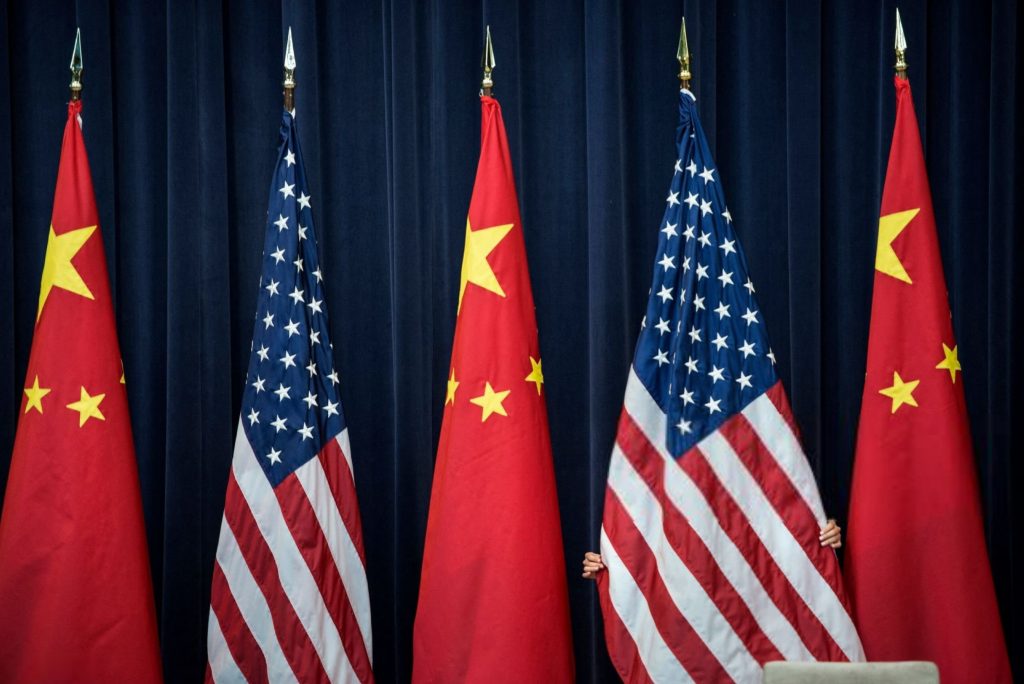
China’s rise, then, cannot be separated from the West’s crisis of identity and purpose. As the United States and Europe wrestle with internal polarization, strategic drift, and eroding moral authority, China gains more room to shape the norms and expectations of international life. It wins not because America is defeated, but because America has—for now—lost the clarity, confidence, and coherence that once made its leadership seem inevitable.
What Victory Looks Like for China
China’s rise is often described as a challenge to the liberal international order, but its ambition is not to replace that order with a fully articulated alternative. Beijing is not constructing a new ideological blueprint, nor does it seek global conversion to a Chinese political model. Rather, China is engaged in something more subtle and transformative: the gradual redefinition of the rules, norms, and expectations that govern international behavior. It does not ask the world to admire it—only to accept a world in which Beijing’s preferences must be considered. Victory, in China’s view, lies not in dominance but in normalization: a world that no longer presumes liberalism to be the default measure of legitimacy.
This shift begins with a reorientation of what constitutes political authority. In the liberal tradition, legitimacy rests on procedural foundations—free elections, individual rights, and adherence to universal norms. China offers a starkly different premise: that legitimacy derives from effective governance, national stability, and developmental delivery. In this framework, sovereignty becomes not only a legal shield but a moral imperative. States must be free to govern according to their historical conditions and cultural preferences, unencumbered by external judgment. When Beijing promotes the language of “mutual respect,” “non-interference,” or “win-win cooperation,” it is not uttering diplomatic bromides; it is advancing a paradigm in which political diversity is accepted and liberal convergence is neither expected nor desirable.
The institutional implications of this vision reverberate far beyond Beijing. China does not oppose multilateral institutions; it reinterprets them. At the United Nations, Chinese diplomats have worked diligently to insert concepts such as “development-centered human rights” and “mutually beneficial cooperation” into official resolutions. These terms do not dismantle the human rights framework outright, but they decouple it from liberal assumptions by elevating economic development and state sovereignty as equally valid metrics of political progress. In effect, China shifts the axis of legitimacy from universal rights to context-dependent performance—an adjustment that resonates with many governments in the Global South, where the liberal rights agenda is often viewed as intrusive or politically destabilizing.
The economic domain reflects a similar pattern of reframing. The Bretton Woods institutions, born of a 20th-century American vision, once epitomized a world in which development was inseparable from governance reform. China’s initiatives present an alternative. The Asian Infrastructure Investment Bank offers development financing without political conditions; the Belt and Road Initiative provides long-term economic partnerships without governance oversight. Even China’s trade diplomacy—whether through the Regional Comprehensive Economic Partnership or bilateral agreements across Africa and Latin America—advances the idea that global integration can proceed without liberalization. Through these mechanisms, China normalizes a form of globalization that is open commercially but closed politically.
The evolution of BRICS into a broader geopolitical grouping demonstrates how this normalization manifests in practice. The expansion of BRICS in 2023–2024 brought Egypt, Ethiopia, Iran, and the UAE into a consortium that already included some of the world’s largest emerging economies. Although the bloc remains heterogeneous and its internal cohesion uneven, its very growth signals a quiet rebellion against Western institutional dominance. BRICS does not seek to become a unified alternative to the G7; it seeks to dilute the idea that any single set of norms or institutions should define global governance. Countries like Indonesia, Nigeria, Türkiye, and Vietnam—now recognized as “partner states”—find in BRICS a space where they can negotiate economic cooperation and political coordination without the normative constraints attached to Western alliances. What emerges is not a rival order, but a pluralized order—one in which China’s institutional presence is unavoidable.
China does not oppose multilateral institutions; it reinterprets them.
China’s vision extends beyond institutions to the broader concept of multipolarity. In Western discourse, multipolarity connotes a redistribution of power among several major states. But for Beijing, multipolarity is not simply about balancing the United States; it is about diffusing authority across regions and platforms in ways that reduce the ability of any single actor to impose universal standards. A fragmented system benefits China by elevating the value of bilateral ties, economic dependency, and issue-specific cooperation. In such an environment, China does not need to lead every institution or dominate every domain; it only needs to ensure that no system exists in which it must conform to norms it did not help define.
The consequences of this shift are far-reaching. In a world where sovereignty and performance outweigh rights and representation, criticism of authoritarian practices becomes diplomatically costly. Countries deeply embedded in Chinese supply chains—whether through solar panels, electric vehicles, telecommunications equipment, or rare-earth minerals—are reluctant to jeopardize these dependencies for the sake of abstract principles. States that rely on Chinese financing or digital infrastructure may face implicit constraints on foreign policy choices. Even U.S. allies find themselves subtly adjusting their positions to avoid unnecessary friction with Beijing. China does not demand alignment; the structure of global interconnectedness nudges it into being.
This is what Chinese victory looks like: not ideological conversion, territorial expansion, or global hegemony, but the erosion of liberalism’s gravitational pull. As China embeds itself in the material, digital, institutional, and normative systems that shape global behavior, it ensures that its preferences must always be considered—whether or not they are embraced. The world does not have to become Chinese; it only has to become less liberal for China to succeed.
In this sense, victory is not a destination but a condition: a world in which China can rise unconstrained, govern on its own terms, and engage internationally without ideological scrutiny. That victory is already taking shape—not because China has overtaken the West, but because the West’s capacity to define the terms of global order is steadily diminishing.
Power Without Leadership
China’s rise marks a profound shift in the architecture of global order—one that cannot be understood through the familiar lexicon of competition, containment, or ideological struggle. Beijing has not sought to replace liberalism with a new universal doctrine. It has not attempted to export revolution or impose its model on unwilling states. Its ambition has been quieter and, in many ways, more transformative: to build a world in which its system can thrive without external pressure, moral judgment, or structural disadvantage. In doing so, China has redefined what it means to win in international politics.
The tools of this victory—connectivity, technology, institutional reinterpretation, and narrative discipline—work not by conquering territory but by shaping the pathways through which states pursue development and security. Infrastructure binds economies to Beijing; digital networks entangle political authority with Chinese technology; multilateral participation dilutes norms the West once considered universal; and diplomatic storytelling recasts stability as a higher virtue than freedom. China’s success lies not in overturning the liberal order but in making it increasingly irrelevant to those seeking growth without political upheaval.
Yet the deeper reason for China’s ascendancy is not found in Beijing, but in Washington and Brussels. As Western democracies grapple with polarization, incoherent strategies, and eroding faith in their own institutions, the normative confidence that once animated the liberal project has weakened. The world has not turned against liberalism; it has simply watched the West lose faith in the narrative that sustained its global leadership. Into that vacuum, China offers not a superior ideology, but a workable alternative at a moment when many states feel unserved by the existing order.
If the twenty-first century represents a new ideological moment, it is one defined by the retreat of ideology itself. China’s rise does not herald the triumph of authoritarianism; it heralds the normalization of political pluralism in which liberalism is no longer the assumed horizon of modernity. The quiet triumph of post-ideological power lies precisely in this shift: a world where China does not need to lead for the West to lose its monopoly on what leadership means.
The question is no longer whether China can reshape global order. It is whether the West can rediscover the conviction that once allowed it to define that order at all.
Recommended
Trump’s America and the End of Global Trust
One Chapter Closed, A Harder One Begins

How the War in Ukraine Redefined Europe?
The Chinese Experience That Challenges the Universality of Liberalism
Why Trump’s Russia Strategy Won’t Work