

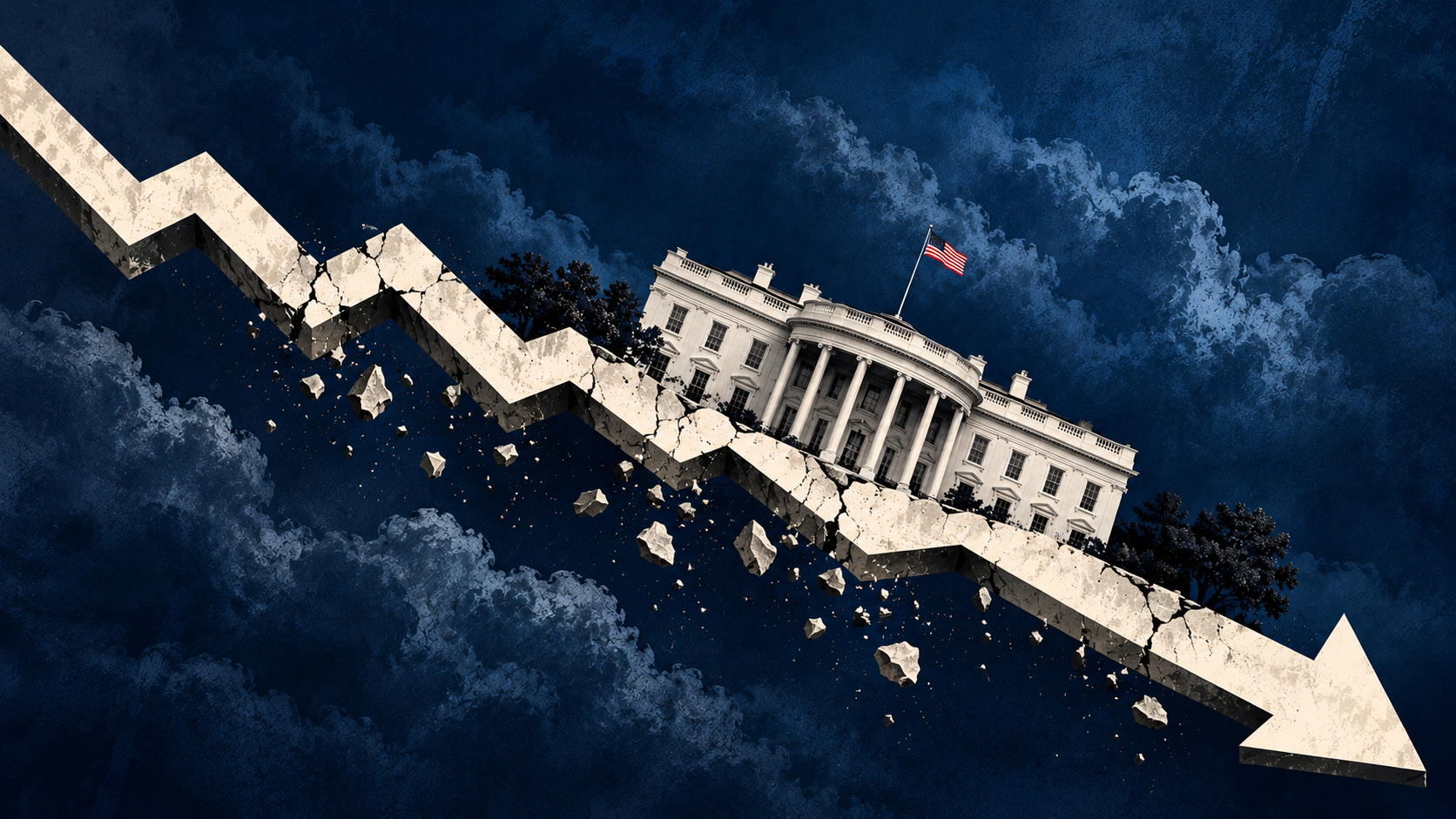
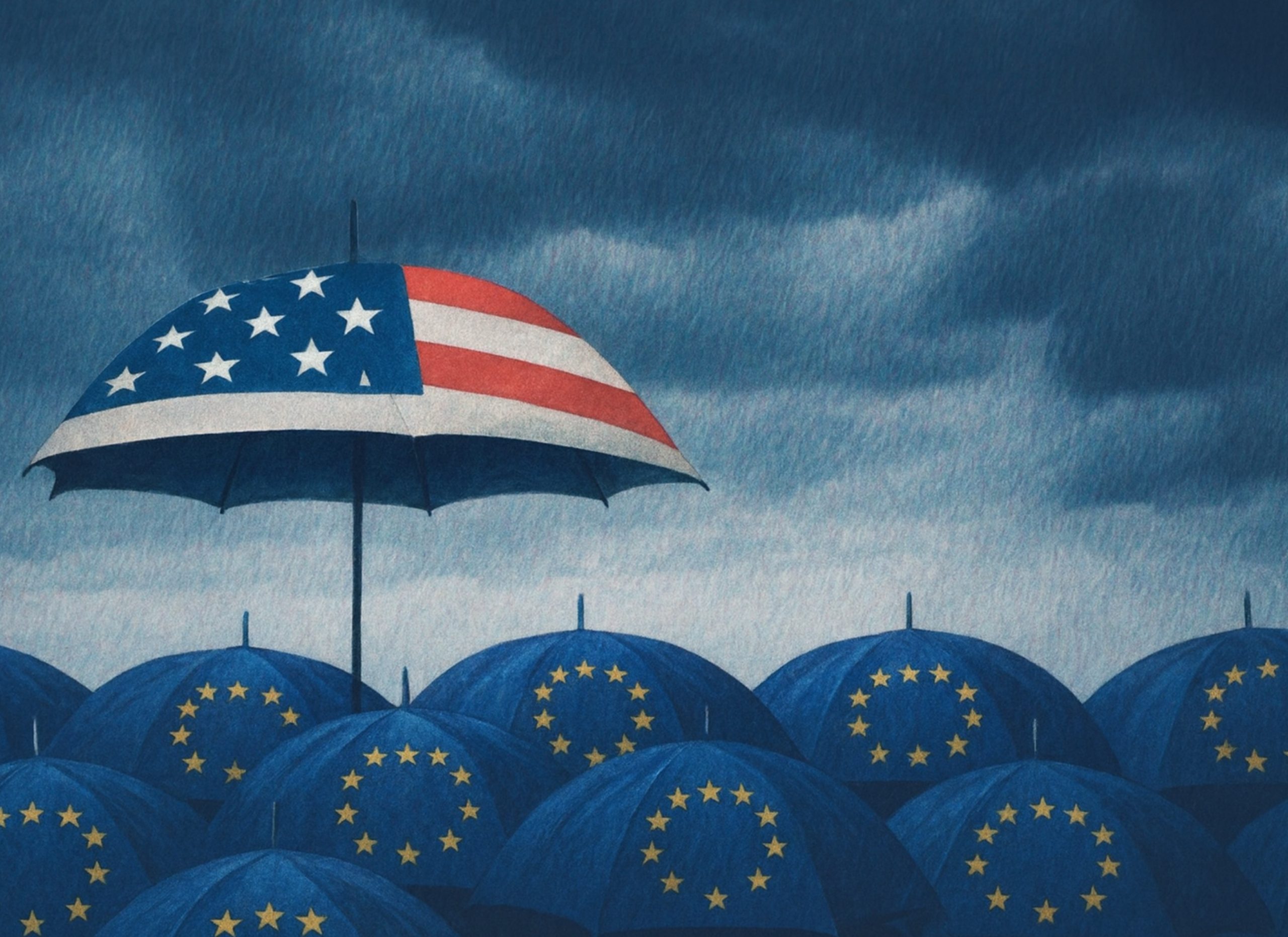
This illustration has been created by AI to use only in this article.
Since the end of World War II, the United States has acted as the implicit landlord of the global order, setting the terms of tenancy, drawing rent from compliance, and deciding who gets a seat at the table it built. America emerged from World War Two militarily and economically triumphant and ideologically unified, and it moved quickly to demonstrate its ability to lead worldwide. However, military and economic power alone were insufficient to sustain the leadership needed to guide the emerging world order. It was a bipartisan national ideological consensus, the shared belief that American-led liberal internationalism was the most favorable strategy for world order, that breathed life into American primacy and gave rise to the Liberal International Order (LIO). The post-1945 consensus succeeded due to domestic coherence, and it is now unraveling for precisely the same reason it once thrived.
Liberal internationalism, broadly, was the belief that American power should be used to build and defend a world of democracies, open markets, and cooperative institutions, rather than simply dominate. This belief took hold across many facets of American society—liberals, conservatives, Democrats, Republicans, free-market internationalists, elites, and other groups and forces within civil society rallied around the idea that the United States would carry the world into a new era. Because the American liberal state was accessible and articulate, civilian support for America’s foreign policy vision increased; as support grew, global diplomatic efforts intensified, multilateral institutions were established, collective security agreements were forged, and support for democracy, human rights, and expansion of global markets gave meaning to the internationalist project writ large.
Today, the liberal international order has experienced gradual fragmentation. This is demonstrated by a staggering underlying truth: the post-1945 bipartisan consensus has weakened and lost legitimacy over time, eroding the international system as we have known it since the late 1940s. The gradual rupture of the domestic consensus arose from a series of contentious policies, political figures, and cultural upheavals. Thus, the crisis of American leadership within the LIO is not sudden, but the product of a gradual erosion of the domestic consensus that has historically sustained it.
World War II made one thing clear: every effort must be made to prevent such a catastrophe from happening again. To prevent democratic backsliding into a power vacuum, proper action must be taken to ensure the rise of benevolent actors. This marked a deliberate break from the past. Great powers could no longer retreat into isolationism and would need to take tangible and sustained action to prevent a recurrence of the conditions that made global war possible. Out of this newfound conviction emerged a grand strategy: one aimed at restoring relative peace, wealth, freedom, order, and democracy to states across the globe.
A mission this ambitious could not rest on U.S. leadership alone; it required endorsement and support from allies and countries worldwide to establish a set of shared views, values, and goals for world order that would bolster liberal internationalism. Political scientist G. John Ikenberry notes in his work that the American-led global order has a distinctively liberal form due to its cooperative and integrative features, which enabled power to be dispersed among allies and participants rather than concentrated and confined. This, he suggests, is precisely what enhanced the strength and legitimacy of U.S. leadership: a supporting transnational network that gave other states a stake in the order rather than merely subjecting them to it. This meant the project also demanded a more inclusive and consensual approach to international relations on a grand scale, one built not through unilateral command, but through institutions.
is a graduate student in International Relations at American University School of International Service. Her work explores questions of U.S. foreign policy, diplomacy, international order, and the evolving relationship between domestic politics and American engagement abroad.
Since the end of World War II, the United States has acted as the implicit landlord of the global order, setting the terms of tenancy, drawing rent from compliance, and deciding who gets a seat at the table it built. America emerged from World War Two militarily and economically triumphant and ideologically unified, and it moved quickly to demonstrate its ability to lead worldwide. However, military and economic power alone were insufficient to sustain the leadership needed to guide the emerging world order. It was a bipartisan national ideological consensus, the shared belief that American-led liberal internationalism was the most favorable strategy for world order, that breathed life into American primacy and gave rise to the Liberal International Order (LIO). The post-1945 consensus succeeded due to domestic coherence, and it is now unraveling for precisely the same reason it once thrived.
Liberal internationalism, broadly, was the belief that American power should be used to build and defend a world of democracies, open markets, and cooperative institutions, rather than simply dominate. This belief took hold across many facets of American society—liberals, conservatives, Democrats, Republicans, free-market internationalists, elites, and other groups and forces within civil society rallied around the idea that the United States would carry the world into a new era. Because the American liberal state was accessible and articulate, civilian support for America’s foreign policy vision increased; as support grew, global diplomatic efforts intensified, multilateral institutions were established, collective security agreements were forged, and support for democracy, human rights, and expansion of global markets gave meaning to the internationalist project writ large.
Today, the liberal international order has experienced gradual fragmentation. This is demonstrated by a staggering underlying truth: the post-1945 bipartisan consensus has weakened and lost legitimacy over time, eroding the international system as we have known it since the late 1940s. The gradual rupture of the domestic consensus arose from a series of contentious policies, political figures, and cultural upheavals. Thus, the crisis of American leadership within the LIO is not sudden, but the product of a gradual erosion of the domestic consensus that has historically sustained it.
World War II made one thing clear: every effort must be made to prevent such a catastrophe from happening again. To prevent democratic backsliding into a power vacuum, proper action must be taken to ensure the rise of benevolent actors. This marked a deliberate break from the past. Great powers could no longer retreat into isolationism and would need to take tangible and sustained action to prevent a recurrence of the conditions that made global war possible. Out of this newfound conviction emerged a grand strategy: one aimed at restoring relative peace, wealth, freedom, order, and democracy to states across the globe.
A mission this ambitious could not rest on U.S. leadership alone; it required endorsement and support from allies and countries worldwide to establish a set of shared views, values, and goals for world order that would bolster liberal internationalism. Political scientist G. John Ikenberry notes in his work that the American-led global order has a distinctively liberal form due to its cooperative and integrative features, which enabled power to be dispersed among allies and participants rather than concentrated and confined. This, he suggests, is precisely what enhanced the strength and legitimacy of U.S. leadership: a supporting transnational network that gave other states a stake in the order rather than merely subjecting them to it. This meant the project also demanded a more inclusive and consensual approach to international relations on a grand scale, one built not through unilateral command, but through institutions.
is a graduate student in International Relations at American University School of International Service. Her work explores questions of U.S. foreign policy, diplomacy, international order, and the evolving relationship between domestic politics and American engagement abroad.

The creation of bodies such as the International Monetary Fund, the World Bank, the United Nations, and the North Atlantic Treaty Organization formed the backbone of the economic, diplomatic, and alliance architecture that sustained the rise of American leadership on the global stage. These institutions and democratic networks expanded trade, underwrote reconstruction, and gave the Western world a sense of ideological unity. It was the connection of these successes with American leadership, more than the successes themselves, that cemented the bipartisan, near-ubiquitous agreement that American primacy was worth preserving at nearly any cost.
A truly significant notion that molded the post-1945 consensus was ideological solidarity against a common existential threat that would erode a liberal world order: the face of that threat being the illiberal communist world order. Bolstering an anti-communist national framework was imperative to uniting all facets of the political spectrum so that the liberal internationalist project could rally support and, more importantly, foster allyship and collective security frameworks with Western Europe, Japan, and other democratic states—centered on deterrence against Soviet expansion. Both the American left and right converged on strategies that enabled alliance-building success and international engagement with the larger Western liberal philosophy.
This ideological convergence was not merely rhetorical—it was reinforced by tangible economic gains that made the liberal internationalist project feel self-evidently correct to the American public. Within this timeframe, U.S. economic output reached new heights: the nation produced half of the global economy’s manufactured goods, became the world’s largest exporter, and held an outsized share of global wealth and credit. Economic success on this scale cemented America’s primacy on the world stage. As relative domestic prosperity rose, so did the belief—naive in hindsight—that this prosperity would translate into broader international engagement and support for the liberal internationalist project.
These economic laurels fortified American industry, and by 1950, the minimum wage had risen, labor unions strengthened, the American workforce expanded, and social mobility became more tangible. Increased wealth, greater resources, indulgent comfort, and widespread satisfaction with America’s newfound economic disposition inculcated society with the notion of the American dream. Material success encouraged the continuation of American hegemonic leadership as a strategy for an international and domestic social contract, which boosted the vitality of the liberal international project.
The consensus was never seamless: Vietnam split the Democratic Party, Congress moved to rein in the executive, détente drew backlash from both the right and the left, social movements altered political landscapes, and the economic circumstances fluctuated. Yet the disagreements were mostly over how to lead, not whether to. The Soviet rivalry kept both parties inside that frame, which is why the consensus bent without breaking. It took the collapse of the Soviet Union in the early 1990s to deliver liberal internationalism’s quintessential triumph, and to remove the pressure that had held the frame in place. The Soviet collapse ushered in an era of post-Cold War triumphalism, marked by the confident belief that liberal democracy was the best form of governance for the world. Political scientist Francis Fukuyama gave it its most famous expression, arguing in his “End of History” thesis that ideological evolution had reached its end point and that liberal democracy would be the final form of government.
The creation of bodies such as the International Monetary Fund, the World Bank, the United Nations, and the North Atlantic Treaty Organization formed the backbone of the economic, diplomatic, and alliance architecture that sustained the rise of American leadership on the global stage. These institutions and democratic networks expanded trade, underwrote reconstruction, and gave the Western world a sense of ideological unity. It was the connection of these successes with American leadership, more than the successes themselves, that cemented the bipartisan, near-ubiquitous agreement that American primacy was worth preserving at nearly any cost.
A truly significant notion that molded the post-1945 consensus was ideological solidarity against a common existential threat that would erode a liberal world order: the face of that threat being the illiberal communist world order. Bolstering an anti-communist national framework was imperative to uniting all facets of the political spectrum so that the liberal internationalist project could rally support and, more importantly, foster allyship and collective security frameworks with Western Europe, Japan, and other democratic states—centered on deterrence against Soviet expansion. Both the American left and right converged on strategies that enabled alliance-building success and international engagement with the larger Western liberal philosophy.
This ideological convergence was not merely rhetorical—it was reinforced by tangible economic gains that made the liberal internationalist project feel self-evidently correct to the American public. Within this timeframe, U.S. economic output reached new heights: the nation produced half of the global economy’s manufactured goods, became the world’s largest exporter, and held an outsized share of global wealth and credit. Economic success on this scale cemented America’s primacy on the world stage. As relative domestic prosperity rose, so did the belief—naive in hindsight—that this prosperity would translate into broader international engagement and support for the liberal internationalist project.
These economic laurels fortified American industry, and by 1950, the minimum wage had risen, labor unions strengthened, the American workforce expanded, and social mobility became more tangible. Increased wealth, greater resources, indulgent comfort, and widespread satisfaction with America’s newfound economic disposition inculcated society with the notion of the American dream. Material success encouraged the continuation of American hegemonic leadership as a strategy for an international and domestic social contract, which boosted the vitality of the liberal international project.
The consensus was never seamless: Vietnam split the Democratic Party, Congress moved to rein in the executive, détente drew backlash from both the right and the left, social movements altered political landscapes, and the economic circumstances fluctuated. Yet the disagreements were mostly over how to lead, not whether to. The Soviet rivalry kept both parties inside that frame, which is why the consensus bent without breaking. It took the collapse of the Soviet Union in the early 1990s to deliver liberal internationalism’s quintessential triumph, and to remove the pressure that had held the frame in place. The Soviet collapse ushered in an era of post-Cold War triumphalism, marked by the confident belief that liberal democracy was the best form of governance for the world. Political scientist Francis Fukuyama gave it its most famous expression, arguing in his “End of History” thesis that ideological evolution had reached its end point and that liberal democracy would be the final form of government.
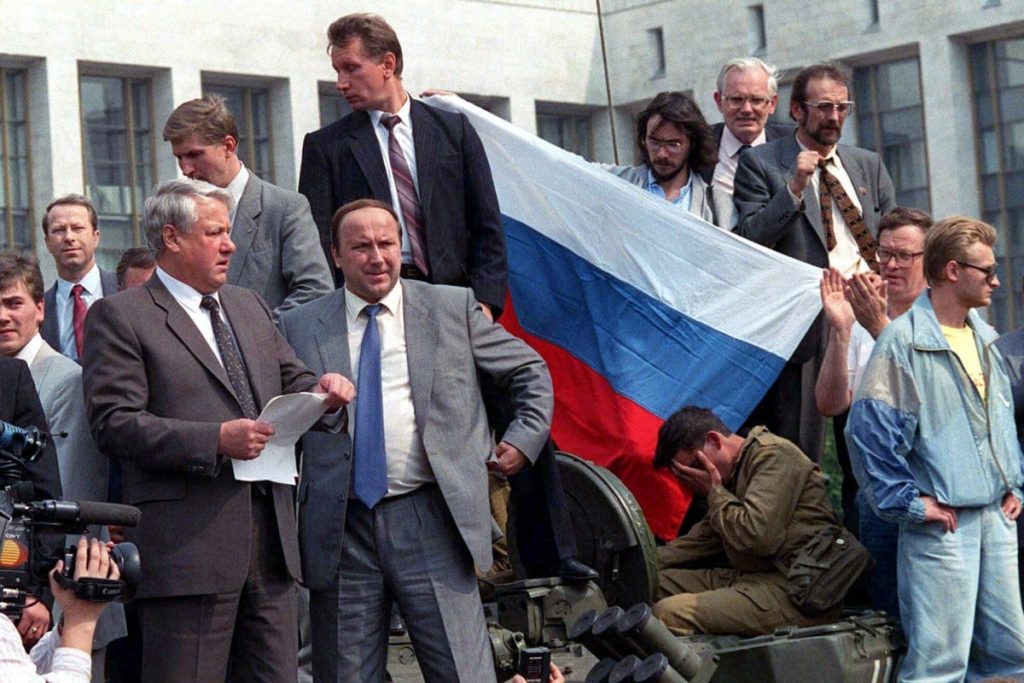
History gave these ideas some backing. Alliance networks enlarged and formalized—NATO in the West, a web of bilateral security pacts across Asia—while trade, finance, and supply chains knit economies together at a pace and scale the world had never seen. Living standards rose in step: postwar reconstruction gave way to sustained growth, rising incomes, and expanding middle classes across much of the industrialized world. With these developments came a spike of confidence in the United States and its liberalist policies as the pioneer. Yet, as globalization’s cost materialized and the Soviet threat disappeared, the United States entered a period of domestic dislocation. Once the fear was gone, the burdens of leadership had to be justified on their own merits, at exactly the moment those burdens began falling unevenly at home.
Nowhere was this breakdown more visible than in the deindustrialization of the American heartland during the late 1980s and early 1990s. Ironically, the industrial base that had made America’s postwar economy so formidable became one of the first casualties of the global order it helped build. As U.S. GDP climbed and trade interconnectivity deepened, outsourcing manufacturing abroad, particularly to Mexico and China, grew steadily cheaper and more efficient than producing at home, not because these economies had discovered some manufacturing advantage, but because a widening international wealth gap, falling shipping costs, and trade policies favorable to corporate interests made it far more profitable to draw on labor the Global South had little power to price fairly.
The result of this was a hollowing-out of the domestic industrial base, and with it, the careers and economic stability of millions of American workers. What had once been framed as a mutually beneficial system increasingly felt like a zero-sum game: global economic integration was producing clear winners and clear losers, and the losers were concentrated in the same communities that had once anchored American economic strength. Amid these unfolding economic tensions and stressors, many American citizens began to feel the carpet being pulled out from under them. They sensed that a larger, elite-driven geopolitical agenda was overwriting their voices and needs. Consequential economic pressures such as corporate downsizing, new regional trade agreements like the North American Free Trade Agreement, and the steady uptick in labor outsourcing left millions of working-class Americans feeling jilted by both traditional Democrats and Republicans. This economic anxiety, compounded by elite indifference, elicited feelings of institutional distrust and triggered a deepening dissonance between the American elite and the working class—one that manifested in party polarization, socioeconomic stratification, and racial tensions.
That distrust found an amplifier. Media fragmented into bias-affirming echo chambers, wedging the political parties further apart and catalyzing a growing movement of identity politics. One result was hardened cultural polarization that weakened the country’s sense of patriotic unity and undermined the national consensus surrounding America’s role in the world, as citizens further delegitimized foreign policy actions they believed came at the expense of their well-being at home.
The events of the late 1990s and early 2000s tested the durability of the post-1945 consensus in a new way: they took foreign policy, long a domain of relative bipartisan accord, and folded it into the domestic culture wars. What began as strategic disagreement over America’s role abroad hardened over the following two decades into a proxy battle for identity, ideology, and party allegiance at home. The outset of this shift occurred during the transition from the Cold War to the Global War on Terror. The Cold War’s end in 1991 removed the threat that underwrote the need for American leadership, and the Global War on Terror proved too contested to replace it. As drawn-out wars in Iraq and Afghanistan dragged on, public confidence in the foreign policy establishment wore down. Citizens at home and abroad began to view American power as imperial in nature, and strategic fatigue set in—the expectations placed on the liberal international order began to buckle under their own weight, producing more instability than order.
Trump’s America First movement challenged the postwar consensus underpinning liberal internationalism’s legitimacy.
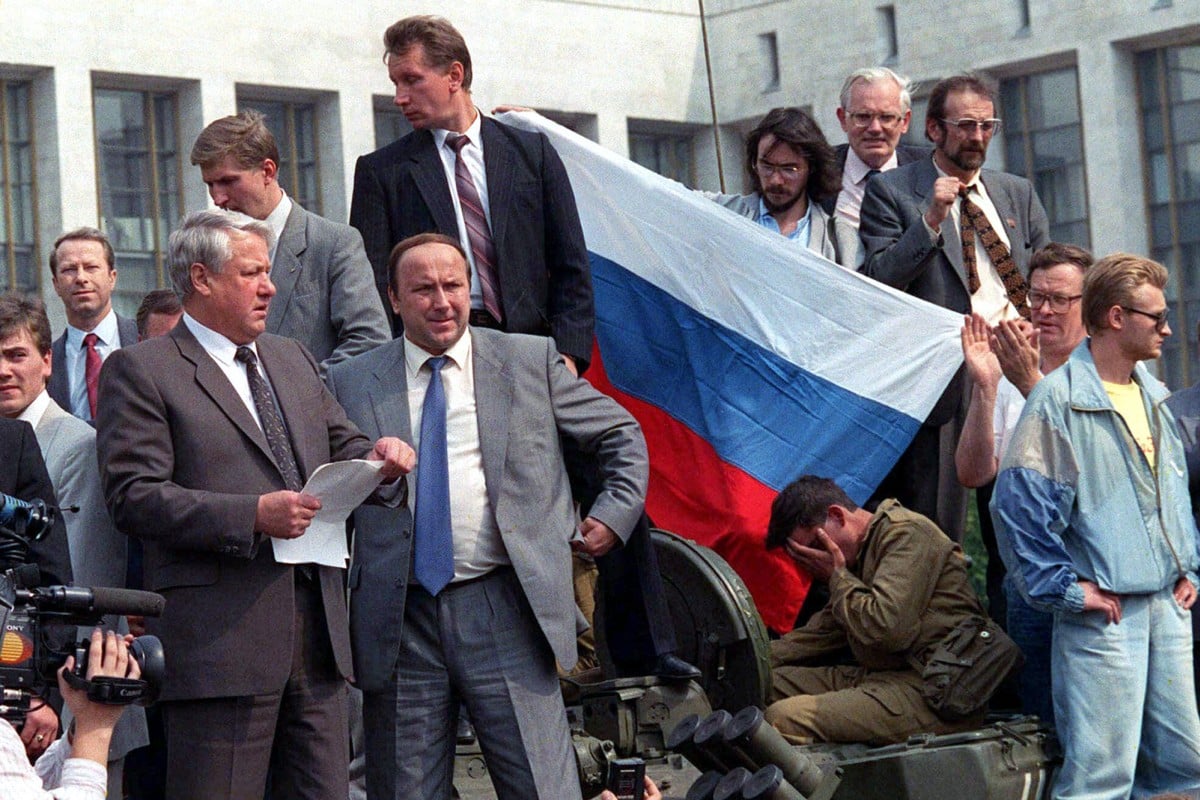
This erosion of confidence—among both U.S. citizens and allies alike—revealed a defect in the LIO’s multi-stakeholder promise: a framework designed to distribute power and voice among allies and constituents, but one the United States ultimately steered unilaterally, retaining the wheel it claimed to be sharing. Americans, despite burgeoning party lines, feared an economy drained by endless conflict, a rise in global insurgency, and foreign policy actions that would further destabilize both domestic and global prosperity. Trepidation informed a deeper skepticism about overseas commitments and policies, characterized by a genuine disconnect between foreign policy goals and American identity and society.
As global conflicts persisted, namely the Global War on Terrorism, and U.S. foreign policy clung desperately to interventionist measures, American citizens felt increasingly disconnected from the liberal internationalist agenda that had once been acclaimed as the foundation of the American-led LIO’s success. This disjunction fed a new era of populist politics. Influential international relations scholar John Mearsheimer has been particularly convincing on this point, describing why and how foreign policy elites are more invested in pursuing liberal internationalist goals abroad than in safeguarding the interests of their own broader public, deepening the divide between ordinary citizens and the institutions meant to represent them. This growing sentiment did not stay abstract for long; it demanded a name, a movement, and eventually, a political home.
This political home was found in Donald Trump’s “America First” movement, which rose to prominence in the mid-2010s and began to wreak havoc on the post-1945 consensus that had served as the strong, legitimizing base of the liberal internationalist project. This era ushered in a pervasive sense of pessimism and domestic disunity, driven in part by rising polarization. Foreign policy discourse shifted accordingly: institutional distrust curdled into a pessimism toward globalism, deep state skepticism gained mainstream traction, and economic nationalism and isolationism reemerged as viable, even popular, alternatives to the internationalist consensus that had defined the postwar decades.
With the rise of America First ideology and the declining resonance of liberal internationalist foreign policy, the world stage entered a period of trade wars, alliance skepticism, and hostility toward various elements of globalization such as growing technological interconnectedness. One explicit sentiment that underscores these views toward foreign policy is that the liberal internationalist agenda benefits the wealthy and the elite, which further accelerated the acceptance of populist ideals and rhetoric, creating a prominent rift between the political left and right.
Due to this divergence, foreign policy, once a domain of relative bipartisan consensus, has become an extension of the domestic culture wars. Fundamental decisions and goals surrounding alliances, trade, and the role of U.S. leadership in foreign affairs have lost cross-party consensus. This erosion is producing a kind of paralysis in the American polity: a rejection of liberal internationalism that leaves no clear alternative in its place, only deeper polarization. Yet, this same rejection reveals a counterpart of this cultural rift; it galvanized shared identity among the political factions of the right, tore apart the vision of the left, and subsequently fractured the national consensus. Now, as global partners and adversaries alike are forced to confront the United States’ shifting attitudes, strategies, and posture, the strategic inconsistency born of a divided America and a crumbled post-1945 consensus leaves many unsettled by the road ahead.
For eighty years, the rules of the international order bore an unmistakably American signature. Now, that signature is fading—and no one, least of all Washington, seems fully in control of what replaces it. The United States still maintains one of the highest levels of influence and power globally; that is irrefutable. China’s rise and the natural shift in relative power since 1945 are real pressures on American primacy. But they are pressures a confident, unified power could have managed, and the greater vulnerability lies at home. Unless the United States can resolve and repair its fragmented domestic consensus, no amount of military or economic strength will be enough to sustain its leadership on the world stage.
The old consensus let allies plan around American policy for decades. That confidence has thinned. Washington’s 2018 and 2025 tariffs, along with the withdrawal from the Paris Agreement and the Iran nuclear deal, and pressure on NATO to increase defense spending, have strained relations with allies. Allies now doubt that Washington will uphold its end of the bargain. This has led some allies to express keen interest in strategic autonomy, or in decoupling from certain U.S. industries, such as energy and technology, to achieve a new level of independence.
Ruffled alliances and continued domestic polarization have exposed weaknesses in the liberal internationalist project and created space for adversaries such as Russia and China to exploit them. Adversarial tactics—such as ideological, rhetorical, and industrial exploitation—demand increasing attention as the world order experiences a broad shift from uncontested American primacy towards managed multipolarity. Russia has leaned into disinformation campaigns and influence operations designed to deepen America’s existing social and political fractures. China, meanwhile, has pursued a quieter, more structural approach, expanding its economic footprint through initiatives like the Belt and Road Initiative and positioning itself as a more stable, reliable alternative to an erratic American partner. Together, these strategies reflect a recalibration among adversarial powers: rather than directly challenging American military primacy, they have opted to erode the ideological and institutional legitimacy that has long underpinned U.S. leadership.
The LIO appears to be reaching the limits of its capacity for effective leadership, forcing not only the United States but also its allies and stakeholders to confront alternatives and conceptualize new ways of renewing their vested interest in liberal internationalism. Though the world stage still bears many characteristics of singular hegemonic power, the diminishing LIO and the shifting roles of various states and actors suggest a future defined by multiple predominant powers and competing spheres of influence. The post-1945 consensus was never only about power. It was an agreement, among parties, elites, and a public that mostly trusted its institutions, that leading the world was worth its cost. That agreement rested on conditions that no longer hold, and it is impossible to ignore that the very forces that built the order also wore it down. Economic openness fueled American growth, then hollowed out the communities that had powered it. Interventionist zeal that once legitimized America’s role as guarantor of the liberal order gradually developed into war-weariness and public disillusionment, as citizens increasingly questioned the costs and consequences of maintaining primacy.
That leaves questions the old consensus never had to answer. Is it something to restore, or something to replace? Can a country that no longer agrees on why it leads agree on whether it should? Will allies build their futures around a partner whose commitments may change with each election? And if American power was once sustained by the belief that it served ordinary citizens, what would have to be true for that belief to return? The landlord built a global system assuming his own household would back him. Now the tenants abroad are hedging, and the family at home is unsure it wants the property.
History gave these ideas some backing. Alliance networks enlarged and formalized—NATO in the West, a web of bilateral security pacts across Asia—while trade, finance, and supply chains knit economies together at a pace and scale the world had never seen. Living standards rose in step: postwar reconstruction gave way to sustained growth, rising incomes, and expanding middle classes across much of the industrialized world. With these developments came a spike of confidence in the United States and its liberalist policies as the pioneer. Yet, as globalization’s cost materialized and the Soviet threat disappeared, the United States entered a period of domestic dislocation. Once the fear was gone, the burdens of leadership had to be justified on their own merits, at exactly the moment those burdens began falling unevenly at home.
Nowhere was this breakdown more visible than in the deindustrialization of the American heartland during the late 1980s and early 1990s. Ironically, the industrial base that had made America’s postwar economy so formidable became one of the first casualties of the global order it helped build. As U.S. GDP climbed and trade interconnectivity deepened, outsourcing manufacturing abroad, particularly to Mexico and China, grew steadily cheaper and more efficient than producing at home, not because these economies had discovered some manufacturing advantage, but because a widening international wealth gap, falling shipping costs, and trade policies favorable to corporate interests made it far more profitable to draw on labor the Global South had little power to price fairly.
The result of this was a hollowing-out of the domestic industrial base, and with it, the careers and economic stability of millions of American workers. What had once been framed as a mutually beneficial system increasingly felt like a zero-sum game: global economic integration was producing clear winners and clear losers, and the losers were concentrated in the same communities that had once anchored American economic strength. Amid these unfolding economic tensions and stressors, many American citizens began to feel the carpet being pulled out from under them. They sensed that a larger, elite-driven geopolitical agenda was overwriting their voices and needs. Consequential economic pressures such as corporate downsizing, new regional trade agreements like the North American Free Trade Agreement, and the steady uptick in labor outsourcing left millions of working-class Americans feeling jilted by both traditional Democrats and Republicans. This economic anxiety, compounded by elite indifference, elicited feelings of institutional distrust and triggered a deepening dissonance between the American elite and the working class—one that manifested in party polarization, socioeconomic stratification, and racial tensions.
That distrust found an amplifier. Media fragmented into bias-affirming echo chambers, wedging the political parties further apart and catalyzing a growing movement of identity politics. One result was hardened cultural polarization that weakened the country’s sense of patriotic unity and undermined the national consensus surrounding America’s role in the world, as citizens further delegitimized foreign policy actions they believed came at the expense of their well-being at home.
The events of the late 1990s and early 2000s tested the durability of the post-1945 consensus in a new way: they took foreign policy, long a domain of relative bipartisan accord, and folded it into the domestic culture wars. What began as strategic disagreement over America’s role abroad hardened over the following two decades into a proxy battle for identity, ideology, and party allegiance at home. The outset of this shift occurred during the transition from the Cold War to the Global War on Terror. The Cold War’s end in 1991 removed the threat that underwrote the need for American leadership, and the Global War on Terror proved too contested to replace it. As drawn-out wars in Iraq and Afghanistan dragged on, public confidence in the foreign policy establishment wore down. Citizens at home and abroad began to view American power as imperial in nature, and strategic fatigue set in—the expectations placed on the liberal international order began to buckle under their own weight, producing more instability than order.
This erosion of confidence—among both U.S. citizens and allies alike—revealed a defect in the LIO’s multi-stakeholder promise: a framework designed to distribute power and voice among allies and constituents, but one the United States ultimately steered unilaterally, retaining the wheel it claimed to be
sharing. Americans, despite burgeoning party lines, feared an economy drained by endless conflict, a rise in global insurgency, and foreign policy actions that would further destabilize both domestic and global prosperity. Trepidation informed a deeper skepticism about overseas commitments and policies, characterized by a genuine disconnect between foreign policy goals and American identity and society.
As global conflicts persisted, namely the Global War on Terrorism, and U.S. foreign policy clung desperately to interventionist measures, American citizens felt increasingly disconnected from the liberal internationalist agenda that had once been acclaimed as the foundation of the American-led LIO’s success. This disjunction fed a new era of populist politics. Influential international relations scholar John Mearsheimer has been particularly convincing on this point, describing why and how foreign policy elites are more invested in pursuing liberal internationalist goals abroad than in safeguarding the interests of their own broader public, deepening the divide between ordinary citizens and the institutions meant to represent them. This growing sentiment did not stay abstract for long; it demanded a name, a movement, and eventually, a political home.
This political home was found in Donald Trump’s “America First” movement, which rose to prominence in the mid-2010s and began to wreak havoc on the post-1945 consensus that had served as the strong, legitimizing base of the liberal internationalist project. This era ushered in a pervasive sense of pessimism and domestic disunity, driven in part by rising polarization. Foreign policy discourse shifted accordingly: institutional distrust curdled into a pessimism toward globalism, deep state skepticism gained mainstream traction, and economic nationalism and isolationism reemerged as viable, even popular, alternatives to the internationalist consensus that had defined the postwar decades.
With the rise of America First ideology and the declining resonance of liberal internationalist foreign policy, the world stage entered a period of trade wars, alliance skepticism, and hostility toward various elements of globalization such as growing technological interconnectedness. One explicit sentiment that underscores these views toward foreign policy is that the liberal internationalist agenda benefits the wealthy and the elite, which further accelerated the acceptance of populist ideals and rhetoric, creating a prominent rift between the political left and right.
Due to this divergence, foreign policy, once a domain of relative bipartisan consensus, has become an extension of the domestic culture wars. Fundamental decisions and goals surrounding alliances, trade, and the role of U.S. leadership in foreign affairs have lost cross-party consensus. This erosion is producing a kind of paralysis in the American polity: a rejection of liberal internationalism that leaves no clear alternative in its place, only deeper polarization. Yet, this same rejection reveals a counterpart of this cultural rift; it galvanized shared identity among the political factions of the right, tore apart the vision of the left, and subsequently fractured the national consensus. Now, as global partners and adversaries alike are forced to confront the United States’ shifting attitudes, strategies, and posture, the strategic inconsistency born of a divided America and a crumbled post-1945 consensus leaves many unsettled by the road ahead.
For eighty years, the rules of the international order bore an unmistakably American signature. Now, that signature is fading—and no one, least of all Washington, seems fully in control of what replaces it. The United States still maintains one of the highest levels of influence and power globally; that is irrefutable. China’s rise and the natural shift in relative power since 1945 are real pressures on American primacy. But they are pressures a confident, unified power could have managed, and the greater vulnerability lies at home. Unless the United States can resolve and repair its fragmented domestic consensus, no amount of military or economic strength will be enough to sustain its leadership on the world stage.
The old consensus let allies plan around American policy for decades. That confidence has thinned. Washington’s 2018 and 2025 tariffs, along with the withdrawal from the Paris Agreement and the Iran nuclear deal, and pressure on NATO to increase defense spending, have strained relations with allies. Allies now doubt that Washington will uphold its end of the bargain. This has led some allies to express keen interest in strategic autonomy, or in decoupling from certain U.S. industries, such as energy and technology, to achieve a new level of independence.
Ruffled alliances and continued domestic polarization have exposed weaknesses in the liberal internationalist project and created space for adversaries such as Russia and China to exploit them. Adversarial tactics—such as ideological, rhetorical, and industrial exploitation—demand increasing attention as the world order experiences a broad shift from uncontested American primacy towards managed multipolarity. Russia has leaned into disinformation campaigns and influence operations designed to deepen America’s existing social and political fractures. China, meanwhile, has pursued a quieter, more structural approach, expanding its economic footprint through initiatives like the Belt and Road Initiative and positioning itself as a more stable, reliable alternative to an erratic American partner. Together, these strategies reflect a recalibration among adversarial powers: rather than directly challenging American military primacy, they have opted to erode the ideological and institutional legitimacy that has long underpinned U.S. leadership.
The LIO appears to be reaching the limits of its capacity for effective leadership, forcing not only the United States but also its allies and stakeholders to confront alternatives and conceptualize new ways of renewing their vested interest in liberal internationalism. Though the world stage still bears many characteristics of singular hegemonic power, the diminishing LIO and the shifting roles of various states and actors suggest a future defined by multiple predominant powers and competing spheres of influence. The post-1945 consensus was never only about power. It was an agreement, among parties, elites, and a public that mostly trusted its institutions, that leading the world was worth its cost. That agreement rested on conditions that no longer hold, and it is impossible to ignore that the very forces that built the order also wore it down. Economic openness fueled American growth, then hollowed out the communities that had powered it. Interventionist zeal that once legitimized America’s role as guarantor of the liberal order gradually developed into war-weariness and public disillusionment, as citizens increasingly questioned the costs and consequences of maintaining primacy.
That leaves questions the old consensus never had to answer. Is it something to restore, or something to replace? Can a country that no longer agrees on why it leads agree on whether it should? Will allies build their futures around a partner whose commitments may change with each election? And if American power was once sustained by the belief that it served ordinary citizens, what would have to be true for that belief to return? The landlord built a global system assuming his own household would back him. Now the tenants abroad are hedging, and the family at home is unsure it wants the property.
Recommended
Why the Cold War Never Ended in the Kremlin
How Warsaw and Kyiv Anchor Europe’s Defense
How Iran and Gaza Operations Undermine the NSS of the U.S.
How Europe Balances Russia, China, and Itself
The Last Ayatollah