The Rise and Fall of the Post-1945 Consensus
How America’s Liberal Order Lost Its Domestic Foundation
KELSEY AMELIA JACKMAN
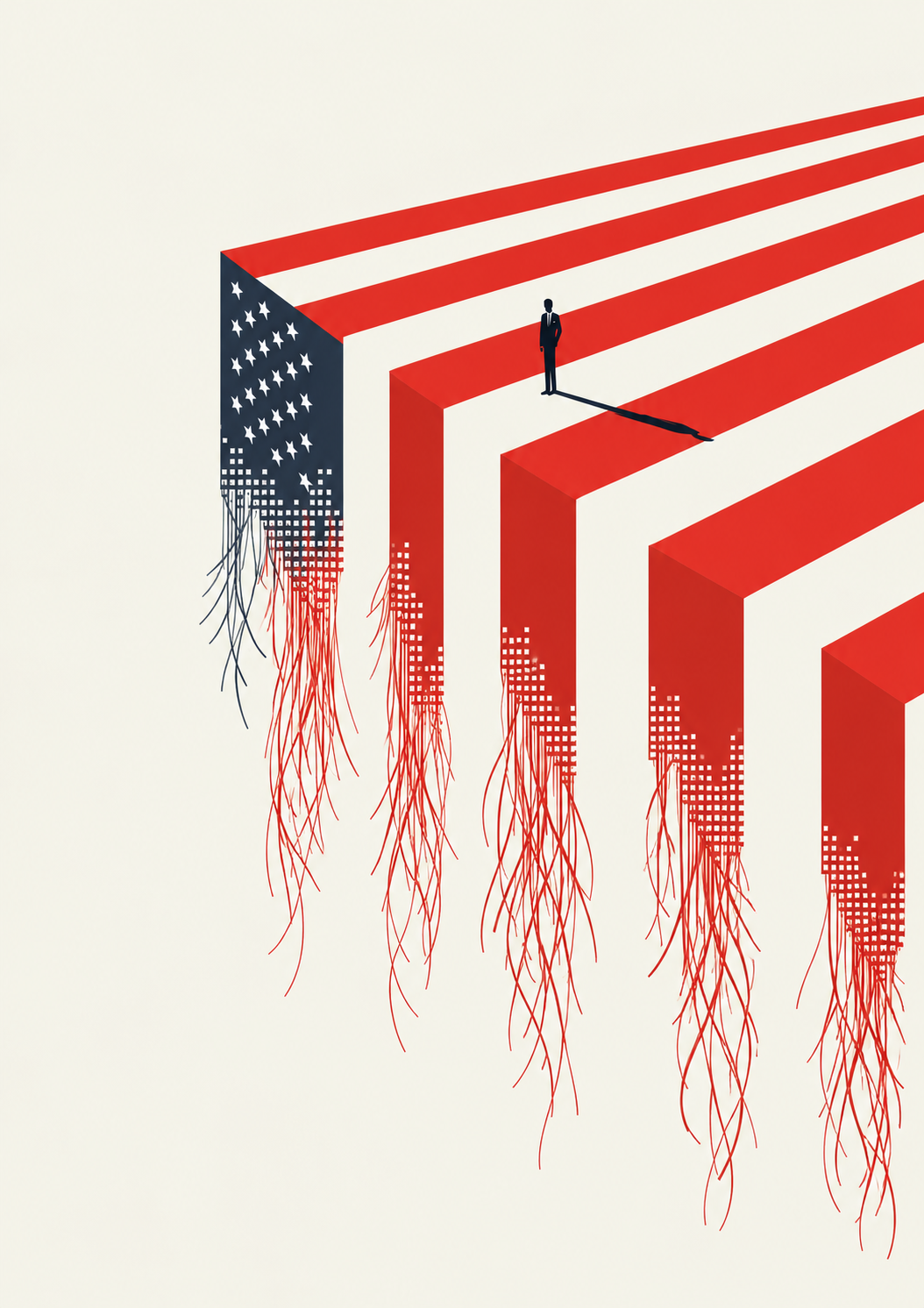
Can a world dependent on American leadership find stability without it? The United States sits at a crossroads in global leadership. No longer is the domestic political landscape such that the country is a reliable global leader and partner. Political instability and fractures have spread beyond the physical and metaphorical borders of the country, pushing domestic instability into the global arena, undermining international security. Since World War II, America has deliberately crafted an international system dependent on both its leadership and participation. This dependence was no accident. Such a system suited America’s need for hegemonic control but has left the rest of the world exposed at any hint of American withdrawal. That moment is here. The United States is a superpower divided against itself.
Polarization, inequality, cultural conflict, and institutional distrust have eroded America’s world standing from within. Inequality blamed on internationalism has left the electorate feeling fatigued and forgotten. An empire faces true peril from external forces only when its internal structures are weakened. Internal disunity allows others’ chaos to take hold, allowing them to exponentially increase global instability for their gain. The most perilous threat to the American way of life is not autocracy or terrorism; it’s its own inattention, leaving room for bad actors to weaponize internal fractures. This results in an electorate turning inward and suspicious of both each other and the world it has worked to shape. So stands the current global crisis of legitimacy surrounding America. If America’s power comes from its people, and if one truly rises out of many, then when the many are divided, the one lacks a base of power.
This devolution allows politicians to triumph over public servants. They blame domestic problems on simplified foreign issues to mobilize the electorate around one point. And when politicians garner success by blaming global instability, which itself stems from domestic instability, they have no incentive to fix the issues. How did the current disunity of American politics, and therefore the fracturing of alliances that maintain the international order, come to be? How, when leading international relations theorists no less than 30 years ago posited that the end of history had arrived? The electorate believed them. When they were promised that liberalism and democracy were the natural order of things, they grew apathetic. The internet made trivial things feel as weighty as matters of true importance, causing polarization to trump compromise.
American grand strategy is a fickle concept to define. However, its clarity is directly tied to a feeling of national unity and commitment to democracy (as messy as it may be). Domestic cohesion means having the consensus needed to act under the American political system. As the country faces greater polarization within its system, as it seeps into daily life and pits neighbor against neighbor, the core of American grand strategy—democratic resilience—is at risk. The great American democratic undertaking faces structural erosion from within. If American society rests strongly on the pillars of economic growth, institutional trust, and middle-class stability, domestic disputes need not wade into international waters. While America’s influence abroad may be controversial at times, it has maintained longevity through balance: by famously walking softly and carrying a big stick (or nuclear triad), and by offering a carrot first, even when the stick is inevitable. The United States took the reins of global leadership after World War II, based on the American political model of equality and monetary prosperity. Over the next seventy years, America not only championed this ideal but also accepted its role as the leader of the free world, a position American foreign policy had previously been wary of taking.
A world ravaged by war, seeking a stable form of government, brought on the dawn of Pax Americana, a period of relative peace following World War II in which major powers took on the American way of governance, American Dream and all. Such influence was not granted overnight, but action by action, the United States proved itself to be a friend and ally to the growth of democracy, building a global network of democratic and economic institutions. The world had been burning, and America, rather than return to its pre-WWII relative isolationist stance, stepped up to the plate. America’s power then stemmed not only from the military might it proved in the war, but from ideological soft power.
is an MA graduate in National Security and Statecraft from The Institute of World Politics. Her research interests include national security, modern fascist movements, and finding blindspots in U.S. foreign policy.
How America’s Liberal Order Lost Its Domestic Foundation
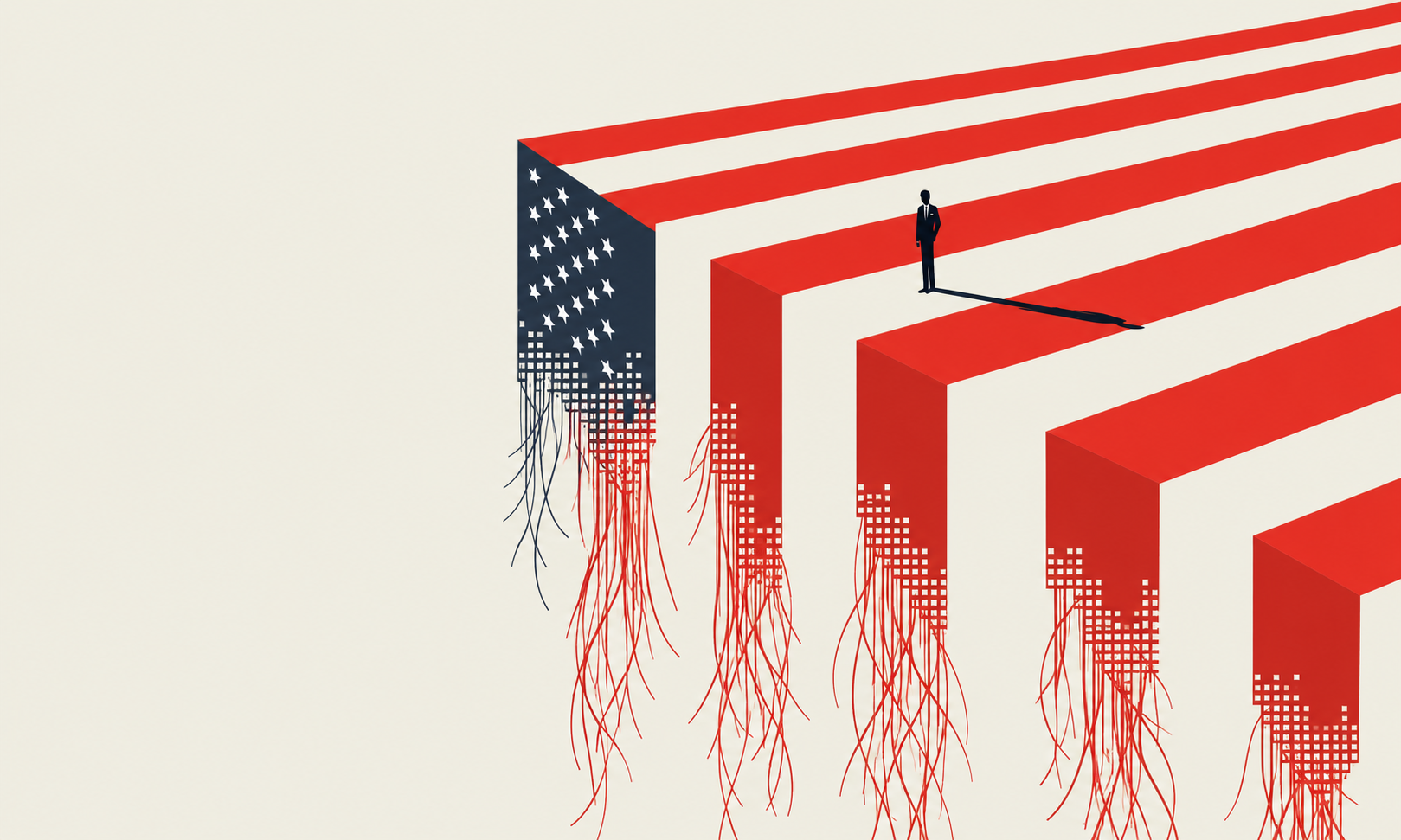
The history of America is a history of beating back those who oppose democracy. This is not the first time, nor will it be the last, that antidemocratic forces seek to undermine the stability of the American Experiment. The domestic American political and social landscape during the Cold War was anything but harmonious. However, even amid the Civil Rights Movement and widespread protest of America’s role in Vietnam, the United States was able to maintain durability when it came to foreign policy. The threat posed by the USSR, one which endangered the very American way of life, was great enough not to overshadow domestic disunity, but to ensure it operated under a commitment to internationalism. The shared understanding of a need for a strong foreign policy was so great that domestic disagreements stayed away from harming institutional credibility.
Once, the American Dream sold itself: work hard, get ahead, and trust that what you want will be yours. Now, drive an hour outside any city and find shuttered factories, empty storefronts, and dilapidated schools—the dream is now a fairy tale. The middle class shrinks, the wealth gap widens, and America’s global influence fades. During its growth on the world stage, people clamored to America’s shores, and its middle class was the envy of the world—a living advertisement for democracy. America needn’t monopolize its energy shouting its values; the steady stream of immigrants did just that. Actions overpower the abstract.
The American Dream was anything but abstract; it was a living, breathing middle class. Democracy spread because it promised prosperity for all people, not just the few. The ideological power that validates the use of American military might stems directly from the national emphasis on human goals rather than militaristic ones. No longer is that the case. America can no longer hold the same role if its claims reek of hypocrisy. A shrinking middle class has turned that promise more into a fairy tale than a life path. With the top 10% holding two-thirds of total wealth and wage growth lagging behind prices, the American Dream’s promise of prosperity rings hollow for many. Yes, the uber-wealthy harnessed that dream. But if the American Dream of the few causes the American Dream of the many to die while politicians seem to be in their pockets, the ideological weight lending legitimacy to America’s soft power erodes from within.
Postwar American leadership relied on stability and the American Dream, a concept so universal that democracy felt contagious, and other civilian populations did everything in their power to make it so. Allies could count on the U.S. to defend democracy, not just with troops and aid but with soft power, preaching the promise that this system can work for everyone. That promise is now in question. The current fragmentation of American society did not happen overnight. Empires, autocracies, and every other form of government throughout history did not fall without first eroding—but why now?
And they were rewarded for their endurance. The end of the Cold War brought the promise of democracy vanquishing communism and autocracy. However, the legacy of communism soon came home to roost, promises aside. Wars in the Middle East found their way to American soil not only in the form of military body counts, but civilian ones in the September 11th attacks. Regime wars in Central and South America and famines in Africa spelled humanitarian crises and immigration waves. A prolonged war in Afghanistan brought on war fatigue. Americans had been promised that democracy was now the natural way of things, so why was their economy flailing and their loved ones dying at the hands of antidemocratic forces?
As evidenced by the ability of domestic disunity not to overshadow foreign policy, it is not necessary for politicians to weaponize foreign policy to mobilize the voter. The Cold War, the same period with the greatest growth in the middle class, had incredibly similar conditions to today (such as years of conflict, divided race relations, and waves of immigrants). Yet, the same downward spiral did not occur. America’s global security leadership mattered more than whatever political credibility could be earned at home by using foreign policy to pit voter against voter. And the economic abundance brought on by devotion to capitalism and democracy meant the United States had the resources to maintain a large global presence through military bases and humanitarian programs. Democratic transparency made America’s actions relatively predictable, and common democratic values meant allies could trust that America had a vested interest in their success. Their success meant American success. A system of intersecting alliances crisscrossed the world so that allies could rely on America in times of need, and enemies knew threats were not hollow.
The history of America is a history of beating back those who oppose democracy. This is not the first time, nor will it be the last, that antidemocratic forces seek to undermine the stability of the American Experiment. The domestic American political and social landscape during the Cold War was anything but harmonious. However, even amid the Civil Rights Movement and widespread protest of America’s role in Vietnam, the United States was able to maintain durability when it came to foreign policy. The threat posed by the USSR, one which endangered the very American way of life, was great enough not to overshadow domestic disunity, but to ensure it operated under a commitment to internationalism. The shared understanding of a need for a strong foreign policy was so great that domestic disagreements stayed away from harming institutional credibility.
Once, the American Dream sold itself: work hard, get ahead, and trust that what you want will be yours. Now, drive an hour outside any city and find shuttered factories, empty storefronts, and dilapidated schools—the dream is now a fairy tale. The middle class shrinks, the wealth gap widens, and America’s global influence fades. During its growth on the world stage, people clamored to America’s shores, and its middle class was the envy of the world—a living advertisement for democracy. America needn’t monopolize its energy shouting its values; the steady stream of immigrants did just that. Actions overpower the abstract.
The American Dream was anything but abstract; it was a living, breathing middle class. Democracy spread because it promised prosperity for all people, not just the few. The ideological power that validates the use of American military might stems directly from the national emphasis on human goals rather than militaristic ones. No longer is that the case. America can no longer hold the same role if its claims reek of hypocrisy. A shrinking middle class has turned that promise more into a fairy tale than a life path. With the top 10% holding two-thirds of total wealth and wage growth lagging behind prices, the American Dream’s promise of prosperity rings hollow for many. Yes, the uber-wealthy harnessed that dream. But if the American Dream of the few causes the American Dream of the many to die while politicians seem to be in their pockets, the ideological weight lending legitimacy to America’s soft power erodes from within.
Postwar American leadership relied on stability and the American Dream, a concept so universal that democracy felt contagious, and other civilian populations did everything in their power to make it so. Allies could count on the U.S. to defend democracy, not just with troops and aid but with soft power, preaching the promise that this system can work for everyone. That promise is now in question. The current fragmentation of American society did not happen overnight. Empires, autocracies, and every other form of government throughout history did not fall without first eroding—but why now?
And they were rewarded for their endurance. The end of the Cold War brought the promise of democracy vanquishing communism and autocracy. However, the legacy of communism soon came home to roost, promises aside. Wars in the Middle East found their way to American soil not only in the form of military body counts, but civilian ones in the September 11th attacks. Regime wars in Central and South America and famines in Africa spelled humanitarian crises and immigration waves. A prolonged war in Afghanistan brought on war fatigue. Americans had been promised that democracy was now the natural way of things, so why was their economy flailing and their loved ones dying at the hands of antidemocratic forces?
As evidenced by the ability of domestic disunity not to overshadow foreign policy, it is not necessary for politicians to weaponize foreign policy to mobilize the voter. The Cold War, the same period with the greatest growth in the middle class, had incredibly similar conditions to today (such as years of conflict, divided race relations, and waves of immigrants). Yet, the same downward spiral did not occur. America’s global security leadership mattered more than whatever political credibility could be earned at home by using foreign policy to pit voter against voter. And the economic abundance brought on by devotion to capitalism and democracy meant the United States had the resources to maintain a large global presence through military bases and humanitarian programs. Democratic transparency made America’s actions relatively predictable, and common democratic values meant allies could trust that America had a vested interest in their success. Their success meant American success. A system of intersecting alliances crisscrossed the world so that allies could rely on America in times of need, and enemies knew threats were not hollow.
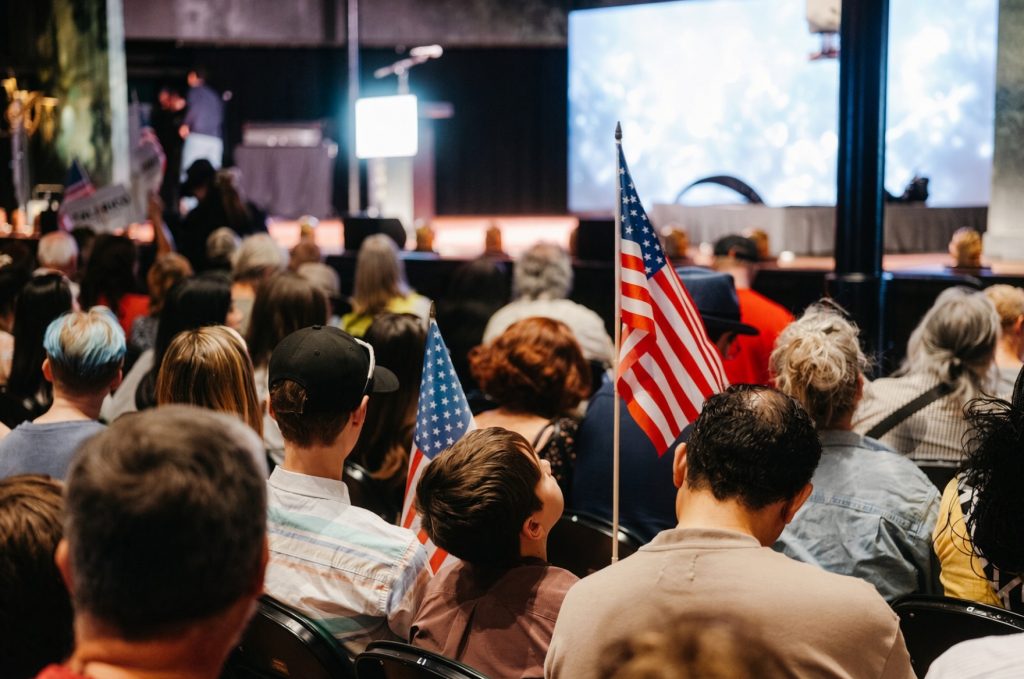
At the turn of the century, the greater threat that unified Americans during the Cold War was no longer intangible. Rather, these threats crept into daily life via inflation, the Dover Test, TSA, and a feeling that this new, bright, promised world was more dangerous for democracy. When a single large threat no longer dominates the narrative, threats can be around any corner. The American people were, and remain, exhausted. They understandably seek a single factor to blame rather than grapple with the fact that life is complex. When the members of a system no longer feel it works for them, they look for other avenues of advancement. Across the board, Americans no longer trust the system. Reasons vary, but one point of consensus across groups is that the system is broken. There may not be a clear solution, but the breakdown of the international system spells a major national security threat for America, as foreign actors take hold through economic and ideological influence.
Globalization has a political cost. An interconnected world creates wealth and spreads democracy, fact. However, it also means explaining creative destruction for economic evolution and voting to send troops and money abroad, all while one’s constituents feel the pain. It is completely understandable to want to believe in the politician who promises to save your job and keep your children off the front lines. People have grown skeptical of the success rate of nation-building and internationalism. Politicians then make domestic promises with global impacts. There is a middle way where compromise and consensus on foreign policy lie. But the middle, agreement, is not what stirs people to the polls or goes viral. There is little incentive today for those in power to do anything but what will get them noticed. To the apathetic voter looking for someone to blame for their troubles, measured fiscal policy and creative destruction aren’t as optically advantageous as blaming their neighbor for the fact they are paying more for less. Post-Cold War globalization left the country fatigued. Trumpism and MAGA arose by offering simple solutions to complex problems, constructing a narrative where these complex problems were simple so long as there was someone to blame, placing priority on being right rather than correct.
For most of history, government has existed to tackle complex problems, so the average individual need not. When trust in government erodes, whether this distrust is valid or manufactured to prey on their minds and votes, no longer is that burden trusted to be shouldered. Rather, every day must be spent worrying both about the larger questions of national security and democratic resilience and what you want to make for dinner. It’s exhausting. If the 2016 election of President Trump was the first blatantly obvious indicator of this fatigue coming to a head, the end of his first term made clear just how far dueling narratives on reality have divided the country. The January 6th insurrection, fueled by a belief in a stolen election, showed not that democratic backsliding and the propaganda machine were taking hold of America, but that they had long ago captured the electorate. The United States seemed to be becoming akin to one of the countries it would take it upon itself to make safe for democracy.
The electorate, gripped by dueling narratives of reality, no longer disagrees on policy, but on factual truth. The effect on international security began to increase at a rate that even the subsequent democratic transition of power could not slow. As this continues to fracture, identity has devolved into politick. Affiliations are no longer something to bridge gaps; they are principles to stand upon unwaveringly. Those with the privilege of not being affected by this shift, often classified as the “detached elite,” become something for anti-establishment individuals to rally against, even as the rallies themselves are held by members of the same class they organize against. Politicians call for distrust in the same sectors of government they run. A Spring 2026 Gallup poll showed a record high 90% of U.S. adults believe in rampant corruption of the U.S. government, the highest in the past two decades. America has the highest distrust of its institutions by its own people among advanced economies. If a country’s own people publicly distrust their institutions, the same can be reasonably expected of allies.
A shrinking middle class and declining institutional trust are causing Americans to lose faith in their democracy—and the world is noticing. Democracy spreads through good faith, through foreign civilian populations wanting a share in the prosperity. No prosperity, no global faith. The pitch for democracy is drowned out by unfulfilled promises. As a result, America faces a crisis of legitimacy. If the government gets its power from the people, and the people no longer trust their government, from where does its legitimacy stem? The last decade has been a knockout, drag-out fight over the evolving foundation of American grand strategy between liberal internationalism and the America First mentality. The United States is a country divided against itself, and it is splitting the world.
As America grows ever inward, its withdrawal is coupled with a seeming emphasis on unilateral military action abroad. This contradiction leaves old alliances wavering and strengthens antidemocratic forces. America’s leaders are no longer reliable on the international stage due to the aforementioned crisis of legitimacy, causing the international system America built to depend on its leadership to lack a unifying force. Anti-democratic actors take hold of the distracted superpower, and U.S. domestic turmoil only worsens from international instability. So long as political infighting remains the status quo, this cycle will continue to feed upon itself.
The postwar world order still leans on American leadership, but America’s word isn’t what it used to be.
While there has rarely, if ever, been a time when America hasn’t put itself first, there was a greater understanding that the “America First” mentality meant American ideals, not the blatant self-interest and monetary advantage for those at the wheel that it has come to mean. When the Trump administration began striking Iran in early 2026, actions were taken under the guise of supporting the people’s wish for regime change. However, this narrative rapidly devolved in the face of evidence of transactional economic objectives. Trade policy became not a way to spread democracy and expand markets, but rather a way to target and vilify other economies and isolate America. Isolationism was pursued not only through immigration and diplomatic policy, but also through sweeping measures against foreign powers, friend or foe. Even NATO, a core pillar of postwar stability, has been targeted and vilified. It is true, and criticized, that the United States carries a lot of weight in the international order, but it’s an international order it crafted.
But the structure of the American electoral cycle, both the four- or eight-year turnover in leadership and the distrust by the electorate, fuels instability that has left global actors incapable of predicting American long-term behavior. Politicians are finding success in vilifying international commitments, leaning instead towards rhetoric of withdrawal, tit-for-tat diplomacy, and independent military action. A leader lacking credibility is a leader looking for something to prove, giving small disputes among rivals the potential to become unnecessary flashpoints. This leaves the United States unreliable to the former and dangerously unstable to the latter.
Historically, American Grand Strategy, ambiguous as it may be, offered a promise: a steady hand to stoke democracy even when domestic politics got messy. As this backbone of American grand strategy diminishes, strategic continuity across administrations ceases to exist. This is both a symptom and a cause of domestic conflict bleeding into the downward cycle of international security. Allies are no longer willing to wait, no longer willing to trust that the next cycle will bring back their long-term ally. The postwar world order still leans on American leadership, but America’s word isn’t what it used to be. Allies watch the U.S. election cycle with anxiety, knowing promises may evaporate with the next inauguration; but enemies watch with bated breath, knowing threats may as well. Abrupt policy changes create volatile conditions for strategic planning. Global chaos grows under America’s domestic preoccupation, no longer the first priority of American grand strategy. America’s allies face a well-deserved crisis of confidence.
In Europe, allies worry they no longer have a strong partner against Russian encroachment. The American public makes known its hesitance about longstanding alliances and commitments. Rather, they have opted to diversify their allies and bolster defense capabilities. The European market made up over 21% of global spending on defense in 2025, a 4% increase since 2022 (IISS). A part of this comes from the Trump Administration’s push for NATO allies to increase their share of NATO spending while decreasing the American military footprint in Europe, but not all. European countries were able to rebuild their cities and economic status post-WWII and the Cold War by being able to prioritize spending on social and industrial infrastructure.
As such, many citizens of European countries have grown accustomed to a level of state social support that will face funding cuts amid a projected continued rise in defense spending. This creates similar conditions in Europe for a disgruntled populace that allowed polarization and fatigue to take over America. And it is. Influential European Union member Germany has seen varying levels of support for far-right party Alternative für Deutschland over the past decade, but recent elections see a surge in support for the isolationist party. Giorgia Meloni’s conservative (historically considered far-right) Fratelli d’Italia has held onto power in Italy for nearly four years. Marine Le Pen, having mainstreamed the National Rally, is poised as a frontrunner in next year’s French presidential elections. While domestic disunity within Europe may stem from American turmoil, a lean towards parties in want of wide-sweeping powers has already taken root.
In Asia, democratic powers worry whether their defenses are strong enough to hold alone against China. They are left to set a strategic heading by diversifying avenues of egress, building up military might and diplomatic back channels. A recent announcement that the U.S. will no longer conduct joint marine drills due to military constraints caused by deployment in Iran has left Asian democracies reeling under concerns that while the U.S. may say it is still committed to Taiwan, it will not be able to act if China decides to stage an incursion. This concern spreads to other small Pacific democracies that rely on the American defense umbrella. Japan and Australia have signed new economic and military pacts, South Korea and Japan have signed new cooperation agreements with the EU, and Taiwan, South Korea, Japan, and India are implementing surges in defense spending across the board. Asia-Pacific allies are not implementing these posture shifts out of a wish to distance themselves from the U.S., but out of necessity as they find themselves faced with an unpredictable ally. Allies rightfully fear that standing agreements will not hold, no longer assured by administrative continuity. Good grand strategy requires reliability. Great grand strategy holds its course even without it. The grand strategy of antidemocratic actors relies on America’s unreliability. It thrives on it. The grand strategy of America’s allies relies on American predictability. Only one side is getting their wish.
The American government knows better than most the power of propaganda and disinformation. The same actors who watched and waited for their time to strike, who took Fukuyama’s promise of democracy as a challenge rather than as hope, are the ones now weaponizing American-style influence campaigns. The threats domestic polarization poses are greater than ever before. Powers vying to fill the void left by America’s withdrawal (which they also helped to precipitate), Russia and China, along with their proxies, craft a national security threat that they can overshadow by stoking domestic tension. The Brennan Center for Justice reports that China, Russia, and Iran aim to maintain campaigns in the 2026 midterm elections. This is done both through influence campaigns directly targeting voters and open monetary contributions (to the tune of $14.3 million in 2022 and 2023). They take the electorate’s attention away from the issues that matter and instead turn them against each other, giving them space to increase their hold on the world. The Cold War did not end great power competition. A globalized world is a good thing, but it also means enemies are closer than ever before.
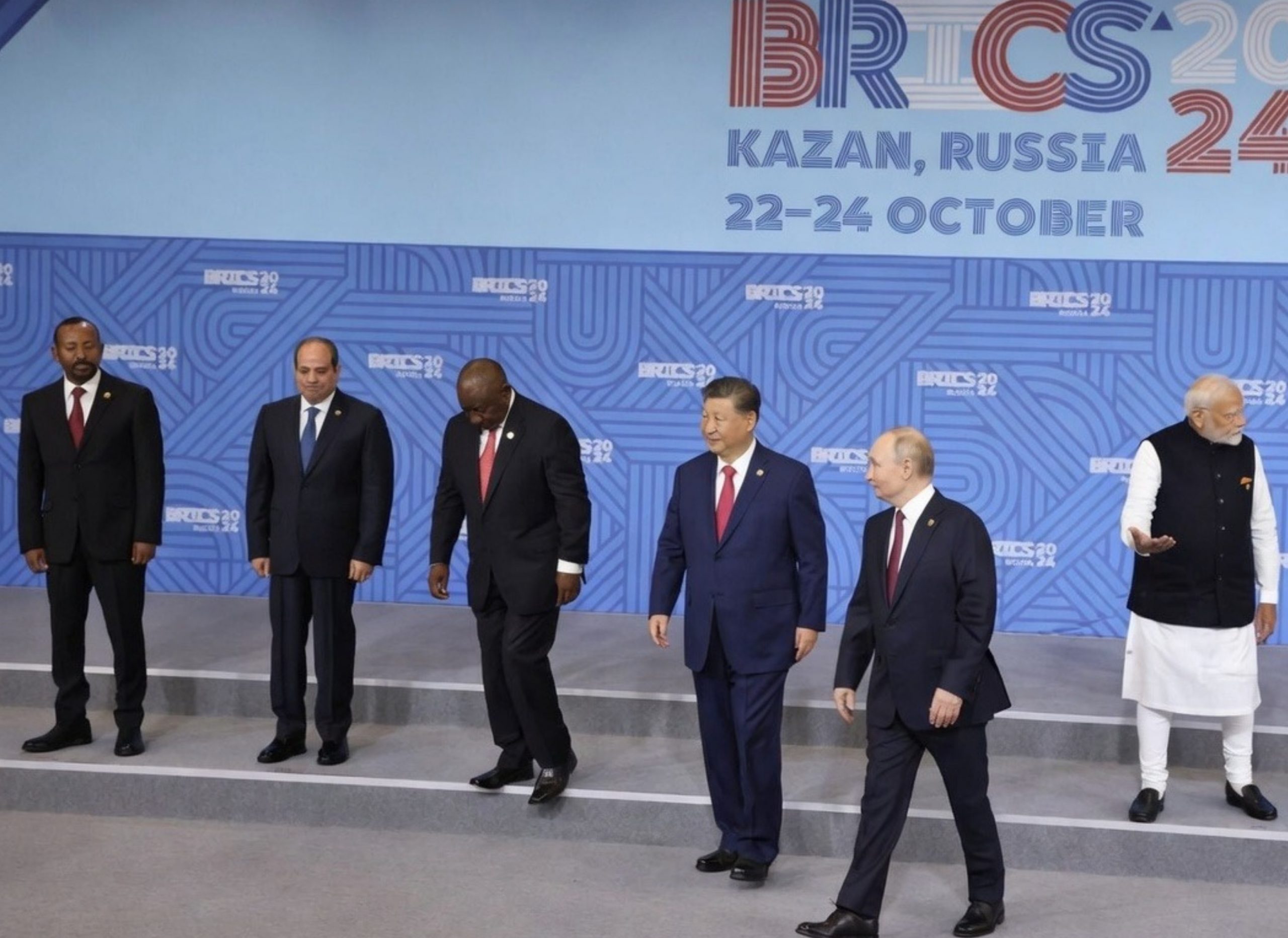
No single power has proven capable of filling the growing gap left by America’s retreat. Rather, revisionist powers and those who prey on Western instability all vie for a piece of the void, bringing back a multipower world not seen this century. More so, democratic institutions such as the United Nations and World Trade Organization, crafted to push back against this encroachment, are weakened by vilifying American dialogue. Soft power that fuels American leadership and goodwill is faltering. Its reputation—once built on stability and prosperity—is now undermined by domestic chaos and self-interest. The leader of Western democracy is no longer an exemplar case study, harming democratic movements everywhere.
This feeds directly into narratives crafted by authoritarian governments which frame democracy as something weak and chaotic. That if a country trusts its population more than a select few, it will be vulnerable to the unpredictable nature of compromise. That they will suffer without a strong leader with sweeping powers. These same powers weaponize democratic backsliding within the United States, asking why it is so wrong when they do controversial things if America did them first. This increasingly normalizes illiberalism, backsliding, and populism as part of a valid democratic system. America’s enemies offer authoritarianism as a capable, dependable alternative.
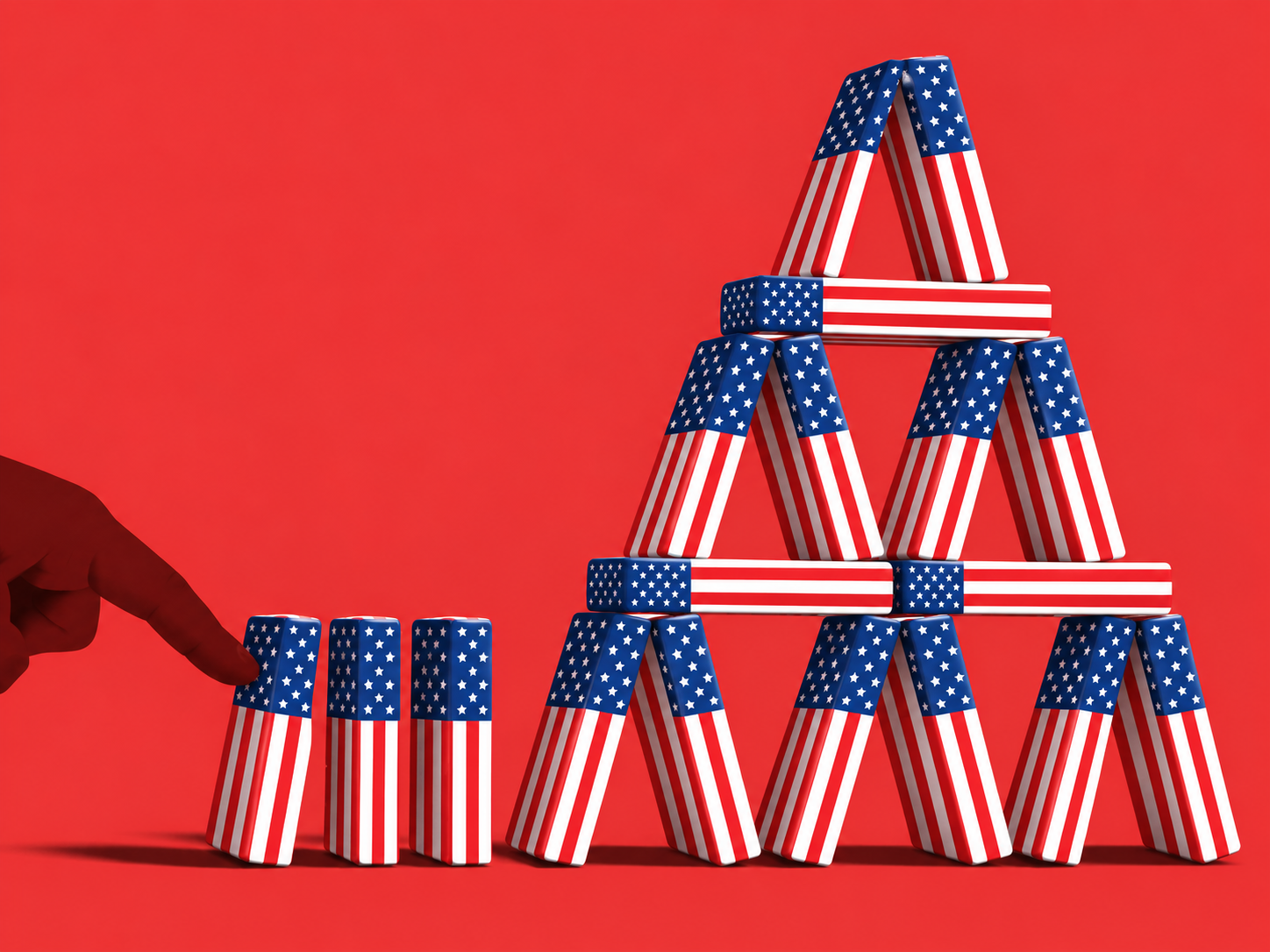
Domestic cohesion and global stability in an evolving world are directly linked. While disunity does not exactly spell isolationism, it does spell inaction. Inaction in a world whose stability has come to depend on American action. The United States built an international world reliant on its participation. Being a democratic republic, when some voters no longer viewed this system as advantageous, they pushed their elected officials to begin to creep back from this role. Politicians took note of this interest and amplified these voices in order to stoke fear and drive supporters to the polls. This slide into domestic disorder happened because of, and to the delight of, antidemocratic actors who then sowed dissent among the American people and distrust by both the American people of the world and the world of the American people. Such a timeline brings us to the current moment: domestic turmoil stokes isolationist sentiment, U.S. enemies capitalize on the moment to increase global influence, the international security landscape spirals, Americans fear a dangerous world, isolationist sentiment further increases and institutional trust erodes, and the malcontent cycle continues.
Those who argue that this slide toward global autocracy over democracy is inevitable are wrong. Just as those who argued that democracy was the inevitable, natural way of things following the end of the Cold War were wrong. Its backsliding is not inevitable. Its existence is not inevitable. A cycle can be stopped. Democracy takes commitment to its ideals and an understanding that contradictory forces will always exist. Just as democracy is not permanent without commitment to its furtherance, current levels of polarization need not be structural. Yes, current domestic instability does stem from structural issues. Yes, social media has weaponized algorithms to funnel feeds that support opinions to keep you scrolling and engaged. Yes, dueling narratives of reality make it difficult to agree on the facts. Yes, the same shared national identity, underpinned by commitment to democratic resilience and the ideals that made the American Experiment such a pragmatically grand undertaking, seems to be eroding.
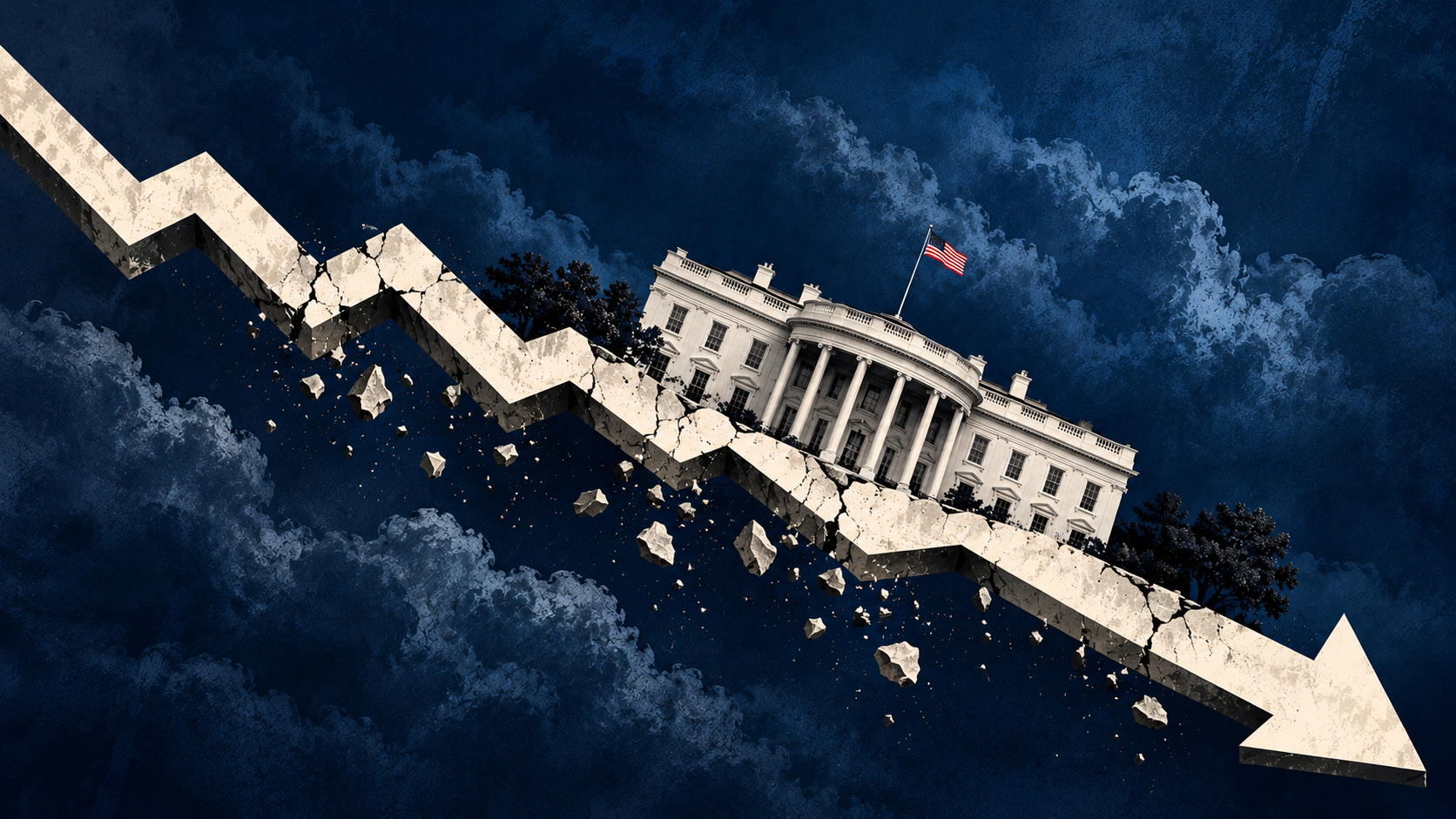
Accepting the reality of a situation need not be pessimistic. American decline cannot be tied to a single moment; rather, it is a convergence of economic, political, and defense trends working in tandem to undermine the international order by way of domestic disunity. A multipronged problem requires a multipronged solution, and this undertaking will be trifold: rebuilding institutional trust and political accountability, advancing economic inclusion, and rediscovering a commitment to civic responsibility and a shared vision for the role of the United States. Politicians must remember they are first public servants. Restoring cohesion will require the right person with the right message. One that places America back in its ideals of life, liberty, and the pursuit of happiness. Who remembers the middle-class backbone and economic inclusion. Electoral reforms, institutional trust, and political accountability must be the name of the game. Not to vilify others, but as factors that must be rebuilt. Realism must be realistic. International security is crippling because of the blind spot that arises from ignoring the effect of domestic tranquility. A core pillar of the American identity is a belief that it is a truly unique country. However, the Great American Experiment remains so proud of this individuality that it fails to remember that everything that will happen already has, and those who fail to learn from history are doomed to watch it repeat. This time under a 24/7 news cycle.
A weak America begets a weak world. Criticizing governmental actions does not make one an unpatriotic citizen. The ability to voice dissent is something Americans have fought for over the past 250 years. Amid the chaos, much of America has lost sight of the fact that one can be patriotic and understand that their country needs to change. If anything, patriotism means fighting for the betterment of your country. However, maintaining this principle means being able to differentiate between true dissent and the narratives of those seeking to undermine American power and promote global instability. Only by reinvesting in a culture of civic responsibility and a commitment to democratic principles will the United States be able to take the reins of the international order once again. The future of democracy relies on it.
At the turn of the century, the greater threat that unified Americans during the Cold War was no longer intangible. Rather, these threats crept into daily life via inflation, the Dover Test, TSA, and a feeling that this new, bright, promised world was more dangerous for democracy. When a single large threat no longer dominates the narrative, threats can be around any corner. The American people were, and remain, exhausted. They understandably seek a single factor to blame rather than grapple with the fact that life is complex. When the members of a system no longer feel it works for them, they look for other avenues of advancement. Across the board, Americans no longer trust the system. Reasons vary, but one point of consensus across groups is that the system is broken. There may not be a clear solution, but the breakdown of the international system spells a major national security threat for America, as foreign actors take hold through economic and ideological influence.
Globalization has a political cost. An interconnected world creates wealth and spreads democracy, fact. However, it also means explaining creative destruction for economic evolution and voting to send troops and money abroad, all while one’s constituents feel the pain. It is completely understandable to want to believe in the politician who promises to save your job and keep your children off the front lines. People have grown skeptical of the success rate of nation-building and internationalism. Politicians then make domestic promises with global impacts. There is a middle way where compromise and consensus on foreign policy lie. But the middle, agreement, is not what stirs people to the polls or goes viral. There is little incentive today for those in power to do anything but what will get them noticed. To the apathetic voter looking for someone to blame for their troubles, measured fiscal policy and creative destruction aren’t as optically advantageous as blaming their neighbor for the fact they are paying more for less. Post-Cold War globalization left the country fatigued. Trumpism and MAGA arose by offering simple solutions to complex problems, constructing a narrative where these complex problems were simple so long as there was someone to blame, placing priority on being right rather than correct.
For most of history, government has existed to tackle complex problems, so the average individual need not. When trust in government erodes, whether this distrust is valid or manufactured to prey on their minds and votes, no longer is that burden trusted to be shouldered. Rather, every day must be spent worrying both about the larger questions of national security and democratic resilience and what you want to make for dinner. It’s exhausting. If the 2016 election of President Trump was the first blatantly obvious indicator of this fatigue coming to a head, the end of his first term made clear just how far dueling narratives on reality have divided the country. The January 6th insurrection, fueled by a belief in a stolen election, showed not that democratic backsliding and the propaganda machine were taking hold of America, but that they had long ago captured the electorate. The United States seemed to be becoming akin to one of the countries it would take it upon itself to make safe for democracy.
The electorate, gripped by dueling narratives of reality, no longer disagrees on policy, but on factual truth. The effect on international security began to increase at a rate that even the subsequent democratic transition of power could not slow. As this continues to fracture, identity has devolved into politick. Affiliations are no longer something to bridge gaps; they are principles to stand upon unwaveringly. Those with the privilege of not being affected by this shift, often classified as the “detached elite,” become something for anti-establishment individuals to rally against, even as the rallies themselves are held by members of the same class they organize against. Politicians call for distrust in the same sectors of government they run. A Spring 2026 Gallup poll showed a record high 90% of U.S. adults believe in rampant corruption of the U.S. government, the highest in the past two decades. America has the highest distrust of its institutions by its own people among advanced economies. If a country’s own people publicly distrust their institutions, the same can be reasonably expected of allies.
A shrinking middle class and declining institutional trust are causing Americans to lose faith in their democracy—and the world is noticing. Democracy spreads through good faith, through foreign civilian populations wanting a share in the prosperity. No prosperity, no global faith. The pitch for democracy is drowned out by unfulfilled promises. As a result, America faces a crisis of legitimacy. If the government gets its power from the people, and the people no longer trust their government, from where does its legitimacy stem? The last decade has been a knockout, drag-out fight over the evolving foundation of American grand strategy between liberal internationalism and the America First mentality. The United States is a country divided against itself, and it is splitting the world.
As America grows ever inward, its withdrawal is coupled with a seeming emphasis on unilateral military action abroad. This contradiction leaves old alliances wavering and strengthens antidemocratic forces. America’s leaders are no longer reliable on the international stage due to the aforementioned crisis of legitimacy, causing the international system America built to depend on its leadership to lack a unifying force. Anti-democratic actors take hold of the distracted superpower, and U.S. domestic turmoil only worsens from international instability. So long as political infighting remains the status quo, this cycle will continue to feed upon itself.
While there has rarely, if ever, been a time when America hasn’t put itself first, there was a greater understanding that the “America First” mentality meant American ideals, not the blatant self-interest and monetary advantage for those at the
wheel that it has come to mean. When the Trump administration began striking Iran in early 2026, actions were taken under the guise of supporting the people’s wish for regime change. However, this narrative rapidly devolved in the face of evidence of transactional economic objectives. Trade policy became not a way to spread democracy and expand markets, but rather a way to target and vilify other economies and isolate America. Isolationism was pursued not only through immigration and diplomatic policy, but also through sweeping measures against foreign powers, friend or foe. Even NATO, a core pillar of postwar stability, has been targeted and vilified. It is true, and criticized, that the United States carries a lot of weight in the international order, but it’s an international order it crafted.
But the structure of the American electoral cycle, both the four- or eight-year turnover in leadership and the distrust by the electorate, fuels instability that has left global actors incapable of predicting American long-term behavior. Politicians are finding success in vilifying international commitments, leaning instead towards rhetoric of withdrawal, tit-for-tat diplomacy, and independent military action. A leader lacking credibility is a leader looking for something to prove, giving small disputes among rivals the potential to become unnecessary flashpoints. This leaves the United States unreliable to the former and dangerously unstable to the latter.
Historically, American Grand Strategy, ambiguous as it may be, offered a promise: a steady hand to stoke democracy even when domestic politics got messy. As this backbone of American grand strategy diminishes, strategic continuity across administrations ceases to exist. This is both a symptom and a cause of domestic conflict bleeding into the downward cycle of international security. Allies are no longer willing to wait, no longer willing to trust that the next cycle will bring back their long-term ally. The postwar world order still leans on American leadership, but America’s word isn’t what it used to be. Allies watch the U.S. election cycle with anxiety, knowing promises may evaporate with the next inauguration; but enemies watch with bated breath, knowing threats may as well. Abrupt policy changes create volatile conditions for strategic planning. Global chaos grows under America’s domestic preoccupation, no longer the first priority of American grand strategy. America’s allies face a well-deserved crisis of confidence.
In Europe, allies worry they no longer have a strong partner against Russian encroachment. The American public makes known its hesitance about longstanding alliances and commitments. Rather, they have opted to diversify their allies and bolster defense capabilities. The European market made up over 21% of global spending on defense in 2025, a 4% increase since 2022 (IISS). A part of this comes from the Trump Administration’s push for NATO allies to increase their share of NATO spending while decreasing the American military footprint in Europe, but not all. European countries were able to rebuild their cities and economic status post-WWII and the Cold War by being able to prioritize spending on social and industrial infrastructure.
As such, many citizens of European countries have grown accustomed to a level of state social support that will face funding cuts amid a projected continued rise in defense spending. This creates similar conditions in Europe for a disgruntled populace that allowed polarization and fatigue to take over America. And it is. Influential European Union member Germany has seen varying levels of support for far-right party Alternative für Deutschland over the past decade, but recent elections see a surge in support for the isolationist party. Giorgia Meloni’s conservative (historically considered far-right) Fratelli d’Italia has held onto power in Italy for nearly four years. Marine Le Pen, having mainstreamed the National Rally, is poised as a frontrunner in next year’s French presidential elections. While domestic disunity within Europe may stem from American turmoil, a lean towards parties in want of wide-sweeping powers has already taken root.
In Asia, democratic powers worry whether their defenses are strong enough to hold alone against China. They are left to set a strategic heading by diversifying avenues of egress, building up military might and diplomatic back channels. A recent announcement that the U.S. will no longer conduct joint marine drills due to military constraints caused by deployment in Iran has left Asian democracies reeling under concerns that while the U.S. may say it is still committed to Taiwan, it will not be able to act if China decides to stage an incursion. This concern spreads to other small Pacific democracies that rely on the American defense umbrella. Japan and Australia have signed new economic and military pacts, South Korea and Japan have signed new cooperation agreements with the EU, and Taiwan, South Korea, Japan, and India are implementing surges in defense spending across the board. Asia-Pacific allies are not implementing these posture shifts out of a wish to distance themselves from the U.S., but out of necessity as they find themselves faced with an unpredictable ally. Allies rightfully fear that standing agreements will not hold, no longer assured by administrative continuity. Good grand strategy requires reliability. Great grand strategy holds its course even without it. The grand strategy of antidemocratic actors relies on America’s unreliability. It thrives on it. The grand strategy of America’s allies relies on American predictability. Only one side is getting their wish.
The American government knows better than most the power of propaganda and disinformation. The same actors who watched and waited for their time to strike, who took Fukuyama’s promise of democracy as a challenge rather than as hope, are the ones now weaponizing American-style influence campaigns. The threats domestic polarization poses are greater than ever before. Powers vying to fill the void left by America’s withdrawal (which they also helped to precipitate), Russia and China, along with their proxies, craft a national security threat that they can overshadow by stoking domestic tension. The Brennan Center for Justice reports that China, Russia, and Iran aim to maintain campaigns in the 2026 midterm elections. This is done both through influence campaigns directly targeting voters and open monetary contributions (to the tune of $14.3 million in 2022 and 2023). They take the electorate’s attention away from the issues that matter and instead turn them against each other, giving them space to increase their hold on the world. The Cold War did not end great power competition. A globalized world is a good thing, but it also means enemies are closer than ever before.
No single power has proven capable of filling the growing gap left by America’s retreat. Rather, revisionist powers and those who prey on Western instability all vie for a piece of the void, bringing back a multipower world not seen this century. More so, democratic institutions such as the United Nations and World Trade Organization, crafted to push back against this encroachment, are weakened by vilifying American dialogue. Soft power that fuels American leadership and goodwill is faltering. Its reputation—once built on stability and prosperity—is now undermined by domestic chaos and self-interest. The leader of Western democracy is no longer an exemplar case study, harming democratic movements everywhere.
This feeds directly into narratives crafted by authoritarian governments which frame democracy as something weak and chaotic. That if a country trusts its population more than a select few, it will be vulnerable to the unpredictable nature of compromise. That they will suffer without a strong leader with sweeping powers. These same powers weaponize democratic backsliding within the United States, asking why it is so wrong when they do controversial things if America did them first. This increasingly normalizes illiberalism, backsliding, and populism as part of a valid democratic system. America’s enemies offer authoritarianism as a capable, dependable alternative.
Domestic cohesion and global stability in an evolving world are directly linked. While disunity does not exactly spell isolationism, it does spell inaction. Inaction in a world whose stability has come to depend on American action. The United States built an international world reliant on its participation. Being a democratic republic, when some voters no longer viewed this system as advantageous, they pushed their elected officials to begin to creep back from this role. Politicians took note of this interest and amplified these voices in order to stoke fear and drive supporters to the polls. This slide into domestic disorder happened because of, and to the delight of, antidemocratic actors who then sowed dissent among the American people and distrust by both the American people of the world and the world of the American people. Such a timeline brings us to the current moment: domestic turmoil stokes isolationist sentiment, U.S. enemies capitalize on the moment to increase global influence, the international security landscape spirals, Americans fear a dangerous world, isolationist sentiment further increases and institutional trust erodes, and the malcontent cycle continues.
Those who argue that this slide toward global autocracy over democracy is inevitable are wrong. Just as those who argued that democracy was the inevitable, natural way of things following the end of the Cold War were wrong. Its backsliding is not inevitable. Its existence is not inevitable. A cycle can be stopped. Democracy takes commitment to its ideals and an understanding that contradictory forces will always exist. Just as democracy is not permanent without commitment to its furtherance, current levels of polarization need not be structural. Yes, current domestic instability does stem from structural issues. Yes, social media has weaponized algorithms to funnel feeds that support opinions to keep you scrolling and engaged. Yes, dueling narratives of reality make it difficult to agree on the facts. Yes, the same shared national identity, underpinned by commitment to democratic resilience and the ideals that made the American Experiment such a pragmatically grand undertaking, seems to be eroding.
Accepting the reality of a situation need not be pessimistic. American decline cannot be tied to a single moment; rather, it is a convergence of economic, political, and defense trends working in tandem to undermine the international order by way of domestic disunity. A multipronged problem requires a multipronged solution, and this undertaking will be trifold: rebuilding institutional trust and political accountability, advancing economic inclusion, and rediscovering a commitment to civic responsibility and a shared vision for the role of the United States. Politicians must remember they are first public servants. Restoring cohesion will require the right person with the right message. One that places America back in its ideals of life, liberty, and the pursuit of happiness. Who remembers the middle-class backbone and economic inclusion. Electoral reforms, institutional trust, and political accountability must be the name of the game. Not to vilify others, but as factors that must be rebuilt. Realism must be realistic. International security is crippling because of the blind spot that arises from ignoring the effect of domestic tranquility. A core pillar of the American identity is a belief that it is a truly unique country. However, the Great American Experiment remains so proud of this individuality that it fails to remember that everything that will happen already has, and those who fail to learn from history are doomed to watch it repeat. This time under a 24/7 news cycle.
A weak America begets a weak world. Criticizing governmental actions does not make one an unpatriotic citizen. The ability to voice dissent is something Americans have fought for over the past 250 years. Amid the chaos, much of America has lost sight of the fact that one can be patriotic and understand that their country needs to change. If anything, patriotism means fighting for the betterment of your country. However, maintaining this principle means being able to differentiate between true dissent and the narratives of those seeking to undermine American power and promote global instability. Only by reinvesting in a culture of civic responsibility and a commitment to democratic principles will the United States be able to take the reins of the international order once again. The future of democracy relies on it.
Recommended
How Semiconductors Shape the New World Order
Will 2027 Be a Deadline or a Bargaining Tool?
A Zero-Sum Strategy that Expands Jihadist Recruitment and Civilian Harm
The Jacksonian Doctrine
How War Is Redrawing Trade Routes—and Elevating Pakistan